


Louis XIV Tapestry
A louis xiv tapestry brings grand scale and rich woven narrative into a room, offering genuine historic presence through traditional textile art.
Louis XIV Tapestry
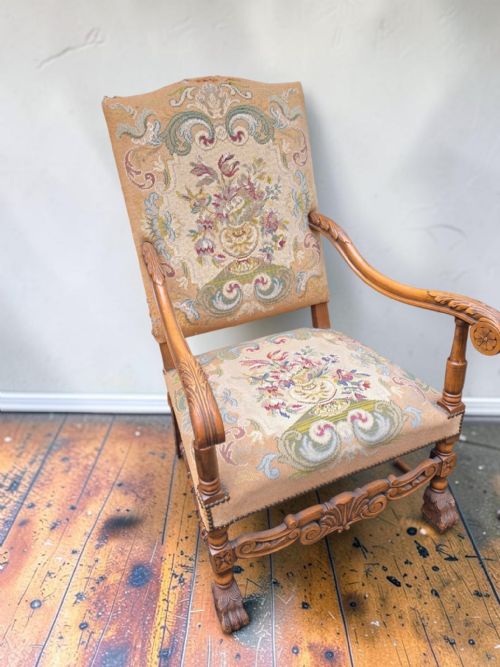
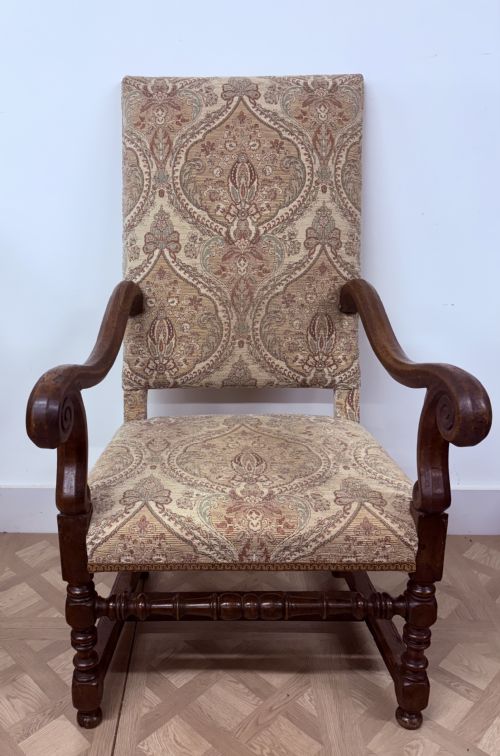
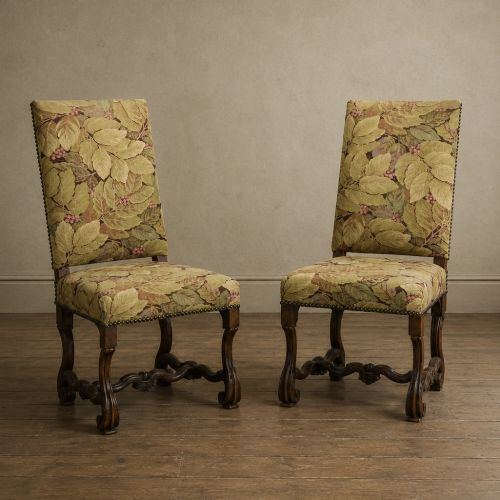
A louis xiv tapestry encompasses both grand wall panels and tactile seating upholstery from multiple periods of French and English design. Buyers searching this phrase encounter substantial wall hangings alongside walnut armchairs and footstools covered in period needlepoint.
The selections span authentic late seventeenth-century work up to later revival interpretations from the nineteenth century. Wall tapestries, verdure scenes, and needlework panels sit alongside carved armchairs and low stools finished with brass tacks.
Seating pieces demonstrate the enduring appeal of French Baroque styling adapted for country houses and chateaus. The mix bridges monumental textile art and functional furniture clad in historic fabric.
How they were made
Makers constructed the structural frames of these armchairs, side chairs, and stools primarily from solid walnut and carved giltwood. Artisans joined these timbers securely before applying heavy textile coverings.
Textiles rely on hand-worked wool and silk yarns, often executed as needlepoint or woven tapestry panels. Workshops frequently secured these heavy fabric covers to the wooden frames using decorative brass tacks.
Current listings demonstrate a material crossover between carved walnut furniture and hand-stitched wool textile art spanning four distinct centuries.
What varies in quality
The refinement of the carved woodwork dictates the initial distinction between standard seating and superior examples. Crisp detailing on walnut frames and giltwood surfaces reflects the skill of the original carver.
The density and pictorial depth of the wool and silk needlework determine the merit of the textile elements. Tighter stitching and nuanced colour variation elevate verdure scenes and tapestry panels far above simpler execution.
The Louis XIV Tapestry Glossary
- Verdure tapestry
- A wall hanging or textile panel featuring a dense landscape of foliage, trees, and often animals. These pastoral scenes dominated interior decoration during the seventeenth century.
- Needlepoint
- A form of canvas work embroidery executed with wool or silk yarn. Historic pieces display meticulous hand-stitched detail across armchairs and wall panels.
- French Baroque
- An ornate design style favouring grand proportions, rich materials, and dramatic carved detail. This aesthetic underpins many seventeenth-century seating forms and revival pieces.
- Giltwood
- Wood coated with a thin layer of gold leaf or metallic powder. It provides a brilliant reflective surface on formal eighteenth-century frames.
Louis XIV Tapestry: Frequently Asked Questions
How do I hang a large wall tapestry?
Heavy textile art requires even weight distribution across a sturdy wooden batten or hidden metal rod. Secure the hanging system directly into structural wall studs rather than relying on standard plaster fixings.
allow the fabric to hang naturally without excessive tension to prevent distortion of the wool and silk fibres over time.
Are these chairs comfortable for daily use?
Seating from these periods typically offers a firm, upright posture rather than deep cushioning. The historic construction relies on supportive webbing and traditional stuffing materials.
placement in low-traffic reception rooms preserves the integrity of the fragile wool needlework and delicate walnut frames.
How do I identify a revival piece?
Nineteenth-century revival works often combine seventeenth-century stylistic motifs with machine-sawn timber framing methods. Examining the underside of armchairs reveals modern tool marks and standardised screw construction.
comparing the patina of the wood against authenticated seventeenth-century examples clarifies the actual date of manufacture.
How should I clean historic wool textiles?
Dust accumulation requires only very gentle surface treatment using a soft-bristled brush or a low-suction vacuum applied through protective mesh. Professional textile conservators should handle any deeper intervention.
avoiding direct sunlight prevents fading and preserves the delicate colour balance of the original wool and silk threads.