



Flemish Landscape Tapestry
A flemish landscape tapestry brings monumental woodland greenery and classical myth into an interior through centuries-old woven wool, silk and linen.
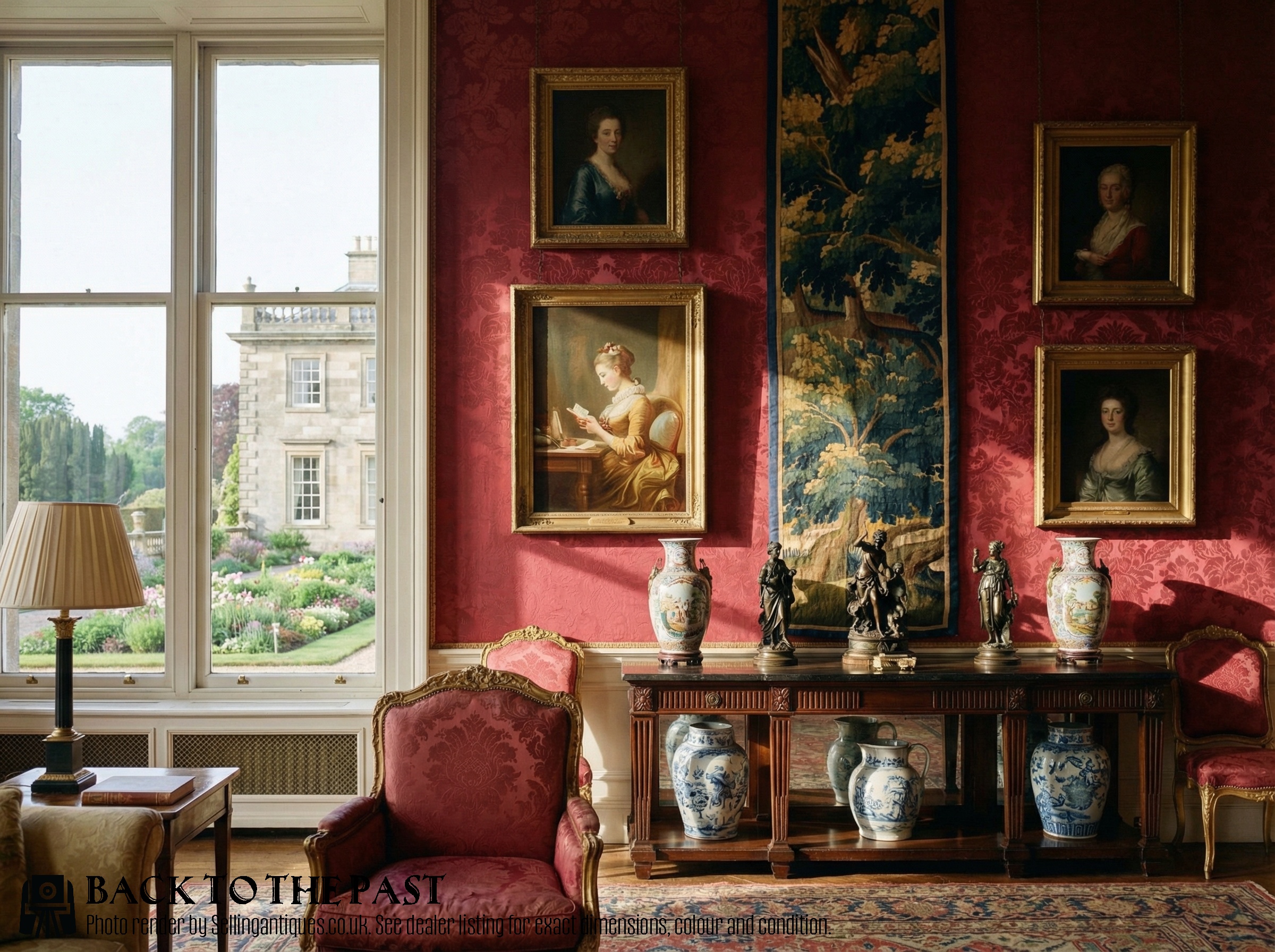
Flemish Landscape Tapestry
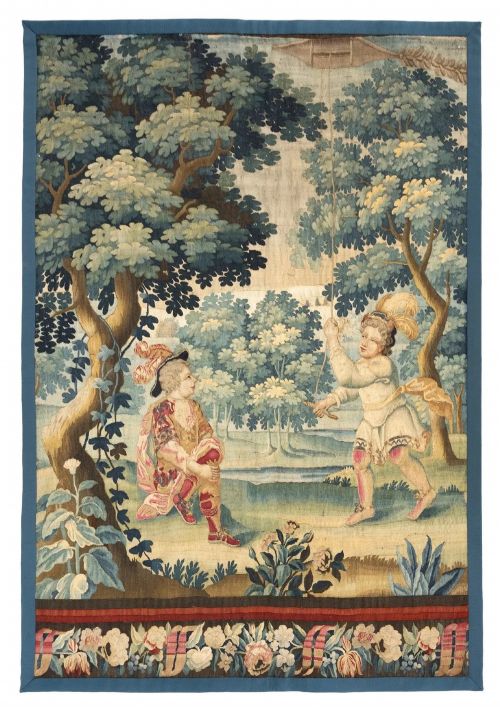
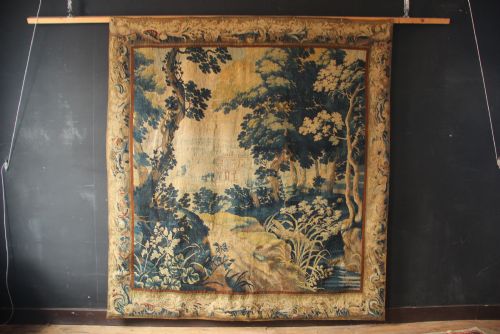
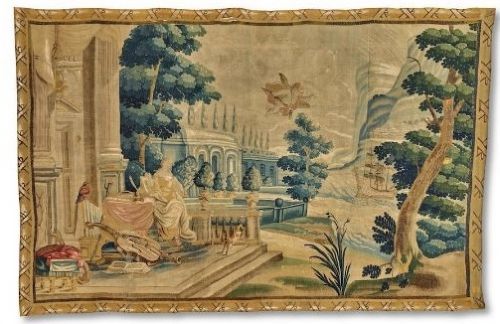
A flemish landscape tapestry presents densely woven scenes of foliage, verdure, and occasionally mythological figures rendered in rich textile form. These pieces primarily date from the seventeenth and eighteenth centuries, originating from workshops in centres such as Audenarde.
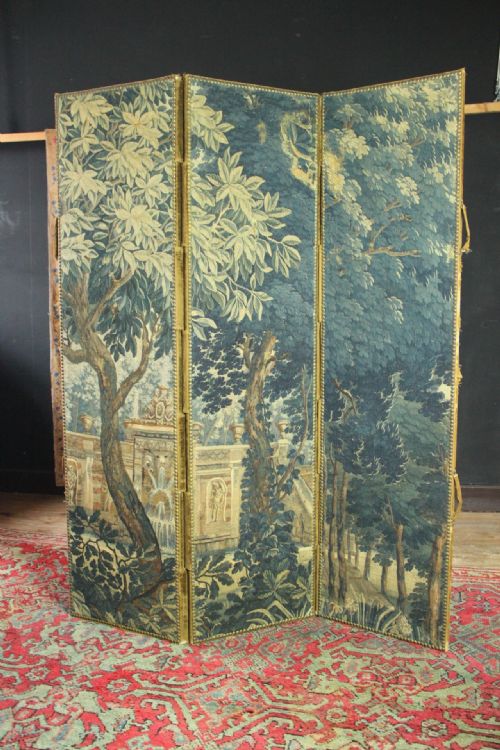
Buyers encounter both traditional wall hangings and functional domestic forms, including folding screens incorporating these large textiles. The dimensions range from narrow band panels to grand scale wall pieces spanning over two metres.
The aesthetic centres on naturalistic woodland motifs, often described as verdure, where layered leaves, trees, and distant vistas dominate the composition. These textiles function visually as architectural elements within a room, absorbing light and sound.
Materials and construction
Weavers constructed these large panels using combinations of wool, silk, and linen yarns, dyed in earthy greens, browns, and blues. The integration of silk threads allowed for subtle highlights in foliage and drapery, contrasting against the heavier wool warp andweft.
Structural framing often involved secondary materials like wood and brass, particularly when textiles were mounted into folding screens or stretched over supportive wooden battens. The weaving technique demanded precise tension and colour blending to achieve the deep perspective seen in verdure landscapes.
Flemish Landscape Tapestry Retail Price Guide 2026
Typical asking prices for flemish landscape tapestry among the pieces listed under this phrase on Sellingantiques today, from the lower quarter to the upper quarter. They describe what is for sale here now, not the wider market.
Listings feature flemish landscape tapestry works spanning the seventeenth and eighteenth centuries, utilising wool, silk, linen, wood, and brass.
Assessing quality
Quality rests upon the complexity of the woven design, the depth of the perspective, and the survival rate of the delicate silk threads. Verdure compositions with intricate botanical detail and varied leaf textures demand greater weaving skill than repetitive background foliage.
The choice of materials and the scale of the piece dictate its visual impact, with grander mythological scenes requiring higher technical proficiency from the weaver. The clarity of the remaining colour palette indicates the initial quality of the dyed wool and silk yarns used in the workshop.
The Flemish Landscape Tapestry Glossary
- Verdure
- A tapestry style dominated by lush foliage, trees, and woodland plants rather than historical or human figures. These pieces focus heavily on botanical detail and green colour palettes.
- Warp
- The vertical or longitudinal threads held under tension on a loom before the weft is passed through. These foundational threads are typically made of sturdy linen or wool.
- Weft
- The horizontal threads passed through the warp to create the visible pattern and picture. Silk and dyed wool weft yarns form the pictorial surface of the textile.
- Audenaarde
- A historical centre of tapestry production in Flanders known for distinct landscape and verdure designs. Pieces attributed to this origin often display characteristic botanical motifs.
Flemish Landscape Tapestry: Frequently Asked Questions
Where should I hang a flemish landscape tapestry?
These large textiles suit principal reception rooms or hallways where wall space permits grand proportions. Avoid direct sunlight to protect the wool and silk fibres from fading.
Ensure the wall has adequate ventilation behind the textile to prevent moisture accumulation in the historic fibres. Professional hanging methods distribute the weight evenly across the wooden or fabric support.
What is a verdure tapestry?
A verdure tapestry depicts dense woodland foliage, trees, and landscape views without a primary narrative or historical scene. The palette relies heavily on greens, blues, and browns.
These designs served as decorative woodland scenes to bring nature inside wealthy homes during the seventeenth and eighteenth centuries.
How do I date a flemish landscape tapestry?
Dating relies on stylistic analysis of the border designs, the complexity of the landscape perspective, and the types of materials used. Seventeenth-century examples often feature heavier baroque framing elements.
Eighteenth-century pieces transition towards lighter, more open composition styles. Comparing the weave density and yarn types helps narrow the period of production.