


Antique Floral Border Tapestry
An antique floral border tapestry brings centuries of textile artistry into a room, offering rich botanical motifs woven in wool and silk.
Antique Floral Border Tapestry
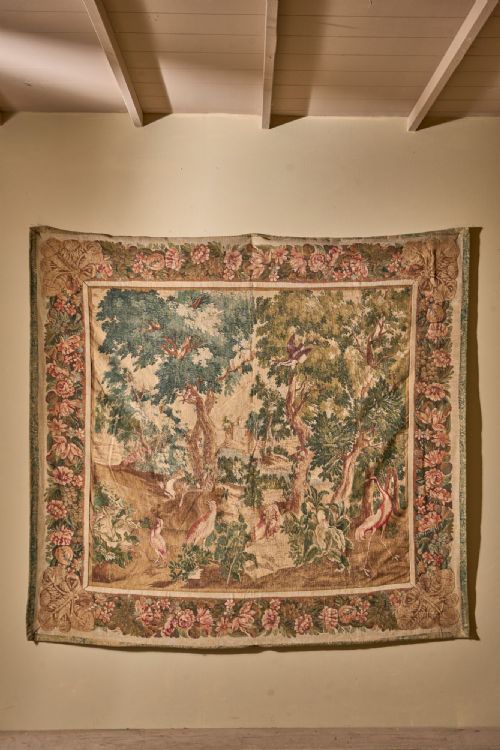
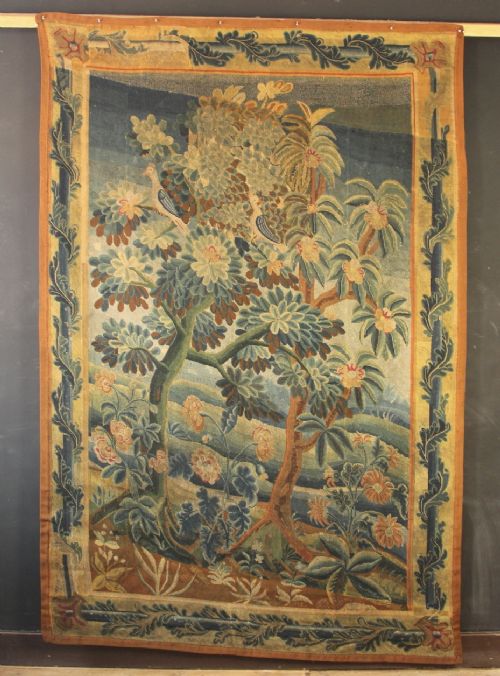
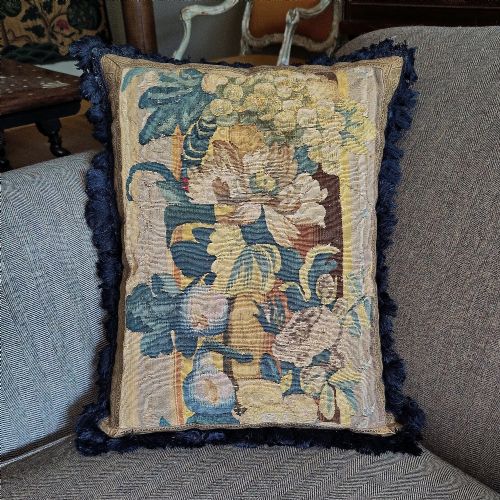
When you search for an antique floral border tapestry, you encounter woven textiles spanning from the sixteenth century through the early twentieth century. These pieces encompass large wall hangings, verdure scenes, cushions, needlework samplers, and rugs featuring botanical framing.
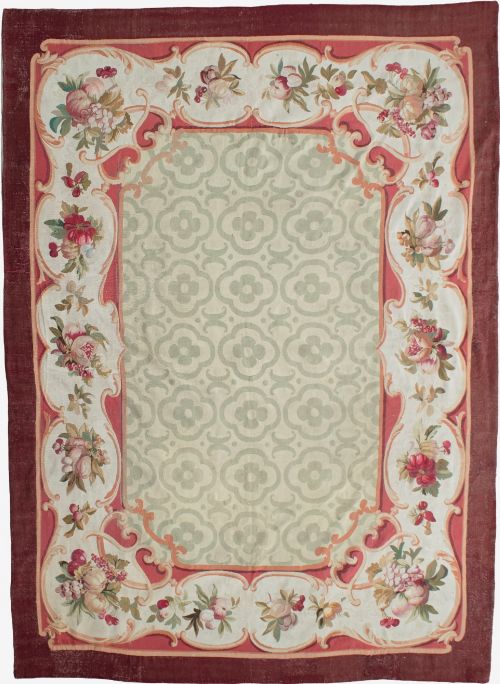
The most frequent examples on this page date from the seventeenth and nineteenth centuries, including French panels and Flemish fragments. Many incorporate distinct floral framing elements surrounding central landscapes or geometric patterns.
Origins stretch across Europe, with pieces originating from France, Flanders, Germany, and Italy. Formats range from expansive wall art down to smaller decorative cushions and kilims.
Materials and construction methods
The materials recorded in these textiles rely primarily on wool, silk, cotton, and linen fibres. Silk thread and cotton thread are often employed for finer detail work within the floral borders.
Construction techniques combine traditional weaving and needlework methods. Supporting elements incorporate wood and glass where pieces are mounted or framed.
Styles represented include French Baroque, French Rococo, Flemish, Bessarabian, and Georgian needlework samplers.
Evaluating textile quality
Quality in an antique floral border tapestry depends upon the fineness of the thread work and the complexity of the botanical design. Tightly woven wool and silk show greater durability and chromatic depth than coarser equivalents.
The preservation of the original border motifs and the integrity of the textile structure dictate the standing of each piece. Intact panels demonstrate superior survival through the centuries compared to smaller assembled fragments.
The Antique Floral Border Tapestry Glossary
- Verdure tapestry
- A wall hanging featuring a stylized landscape background dominated by foliage, trees, and floral borders. These scenes were particularly popular in seventeenth-century Flemish and French weaving centres.
- Kilim
- A flat woven carpet or rug lacking a pile, often featuring geometric and floral motifs. Bessarabian examples represent a specific regional variation within this tradition.
- Needlework
- Hand-stitched textile art created using yarn or thread on a canvas or linen ground. Samplers and cushions often utilise this technique rather than traditional loom weaving.
- Aubusson
- A style of carpet and tapestry named after the French town renowned for its production. These pieces frequently incorporate classical floral borders and architectural framing.
Antique Floral Border Tapestry: Frequently Asked Questions
How were antique tapestries displayed?
Large textile panels were traditionally hung on stone walls within chateaux and manor houses to provide insulation and decoration. The dense weave of wool and silk helped retain heat in large draughty rooms.
Smaller fragments and borders were frequently repurposed into cushions and decorative furnishings in later periods. This allowed textile art to be integrated into everyday domestic seating.
What is a verdure tapestry?
A verdure tapestry depicts a landscape dominated by trees, foliage, plants, and prominent floral borders. These forest scenes often include birds or distant chateaux woven in verdant greens and earth tones.
They represent a major category of European wall art produced across Flanders and France during the seventeenth and eighteenth centuries.
Where were Bessarabian kilims made?
Bessarabian kilims originate from the historical region of Bessarabia, situated in Eastern Europe. These flat-woven rugs are distinguished by dark grounds and naturalistic floral patterns.
They combine traditional flat-weaving techniques with rich botanical designs influenced by both Ottoman and European decorative arts.
How do you care for textile panels?
Textile panels require protection from direct sunlight to prevent the fading of wool and silk threads. Gentle vacuuming through a mesh screen helps remove dust without disturbing fragile fibres.
Wall hangings should be mounted using breathable support systems that distribute weight evenly across the entire upper edge of the fabric.