





Georgian Embroidered Picture
A georgian embroidered picture brings pastoral scenes and needlework artistry directly to the wall.
Georgian Embroidered Picture
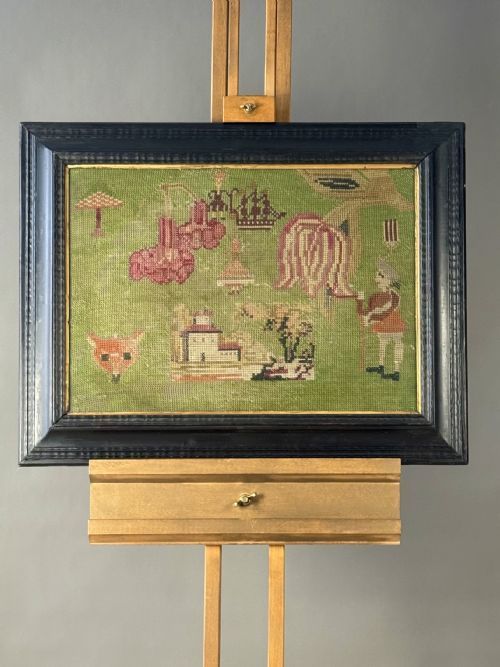
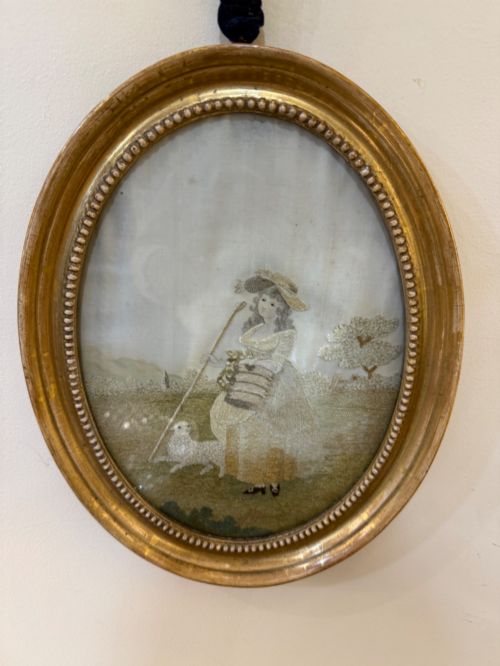
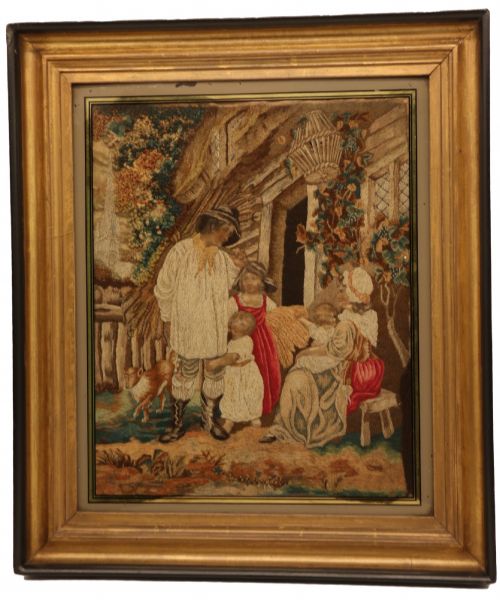
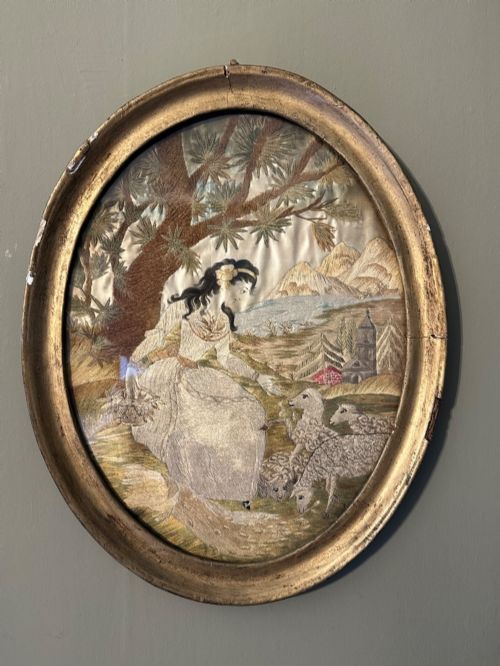
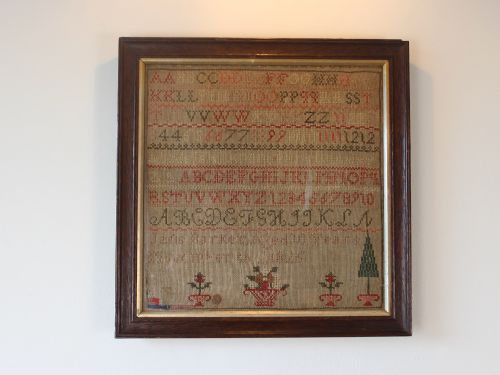
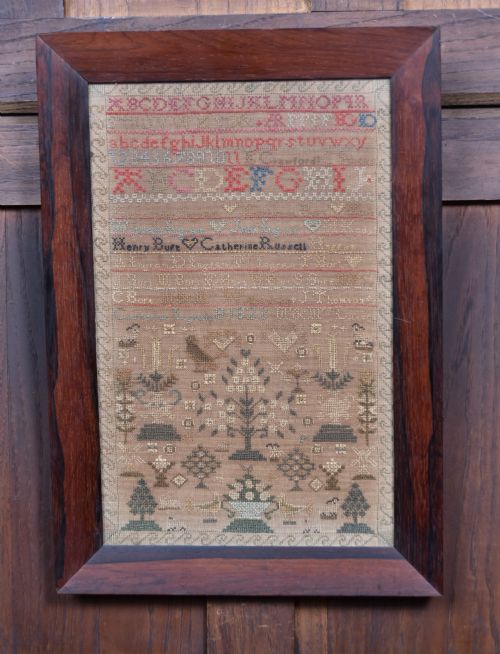
A georgian embroidered picture combines silk, wool and linen threads to create framed textile art and needlework samplers. These works frequently depict pastoral farming scenes, figures in gardens and literary tales.
Buyers will encounter framed wall art originating from the eighteenth and nineteenth centuries, including Regency and George III periods. Many examples arrive preserved behind glass within original giltwood or water-gilded frames.
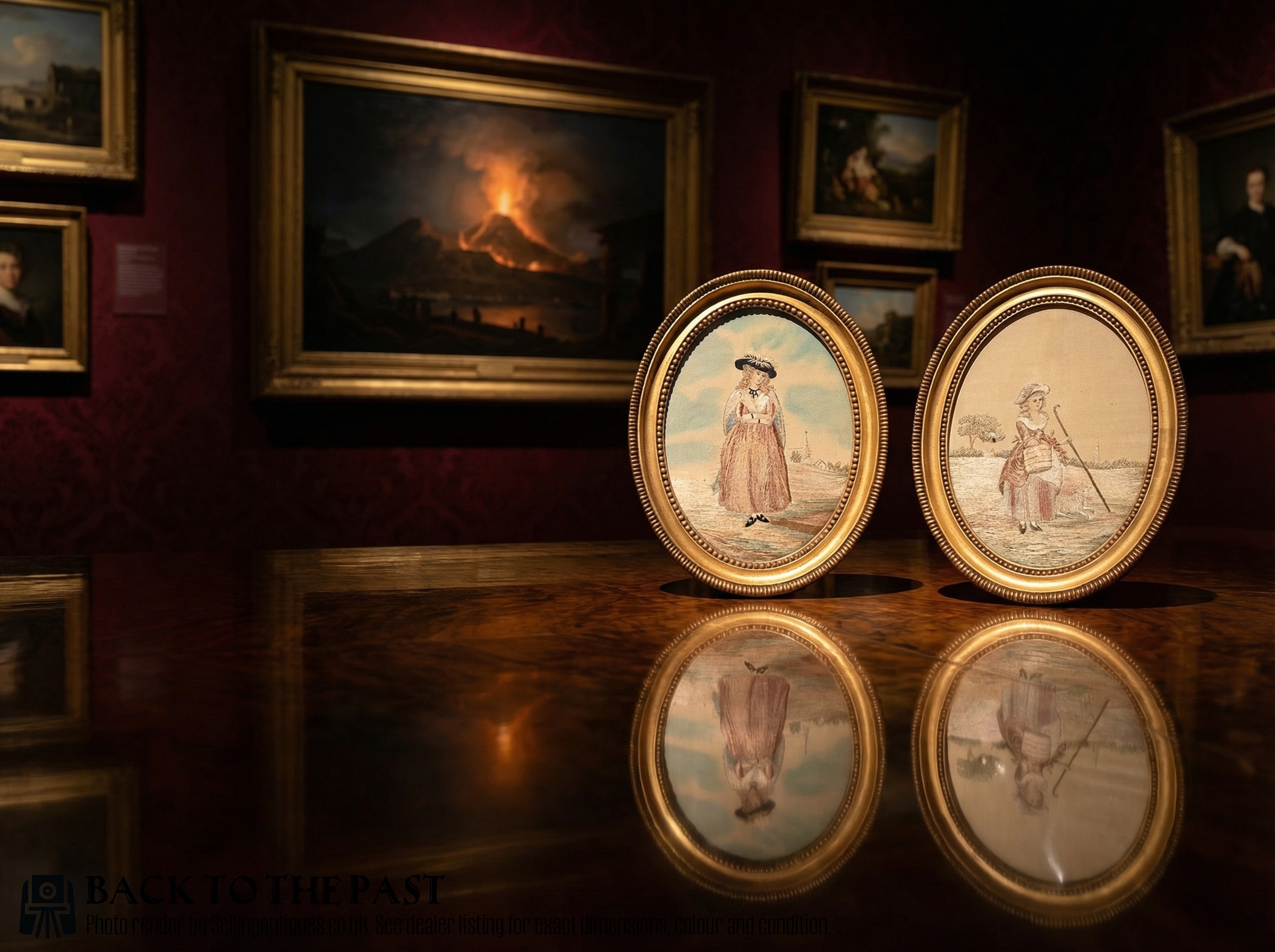
The selection ranges from detailed silkwork pictures of characters like oyster sellers to structured alphabet samplers and Scottish needlework. Pairs of framed textile panels also appear among the offerings.
How they were made
Artisans worked silk floss, wool and crewel threads onto linen grounds to form pictorial compositions. Some examples incorporate hand-painted silk elements alongside the stitched areas.
Makers housed finished embroideries within specialised surrounds such as Verre Églomisé glass or gilt Mezzotint frames. Water-gilded oval and octagonal wooden frames protected the delicate textiles from environmental damage.
The current inventory spans eighteenth and nineteenth-century periods, featuring materials such as silk thread, wool, linen, glass, and giltwood.
What varies in quality
The intricacy of the threadwork and the complexity of the pictorial subject dictate the distinction between standard examples and finer works. Masteries in long stitch and silk embroidery show greater depth of colour and form.
The preservation of the original framing, whether giltwood or Verre Églomisé, influences the overall integrity of the piece. Samplers displaying signed details, dates and makers such as Mary Mason hold specific documentary weight.
The Georgian Embroidered Picture Glossary
- Sampler
- A piece of needlework produced as a demonstration or test of skill in various stitches. These frequently record alphabets, numbers, and the maker's name.
- Crewel work
- Embroidery executed using wool yarn on a fine linen or cotton fabric. This technique yields textured pastoral designs and floral motifs.
- Verre Églomisé
- A cold decoration technique where a design is painted and gilded on glass panels used in picture framing. It provides a distinctive decorative border around antique textiles.
- Silk floss
- Unspun silk fibres utilised for smooth, glossy embroidery work. It allows makers to achieve fine shading in figurative scenes.
Georgian Embroidered Picture: Frequently Asked Questions
How do I hang a textile picture?
Hang these framed embroideries away from direct sunlight to prevent the silk and wool threads from fading over time. Maintain stable indoor humidity levels to protect both the historic fabric and the wooden frames.
Ensure the picture wire and wall fixings safely support the weight of the glass and giltwood surrounds. Professional framing checks help secure fragile textiles for long-term display.
Were these works made by children?
Many samplers were produced by young learners as educational exercises to demonstrate proficiency in needlework stitches and alphabets. Pieces often include the age and name of the maker, such as schoolgirls.
Pictorial silkworks and pastoral scenes were typically created by accomplished needleworkers rather than learners. Both categories reflect domestic textile education and accomplishment of the period.
What frames are original to these pieces?
Eighteenth and nineteenth-century needleworks frequently utilise water-gilded oval wooden frames, octagonal giltwood mouldings, or gilt Mezzotint surrounds. Verre Églomisé glass borders also appear on Regency woolwork pictures.
Frames were often selected to complement the domestic interiors of the Georgian and Regency eras. Finding an embroidery retained in its period frame preserves the historical context of the artwork.
How are 18th and 19th-century works distinguished?
Eighteenth-century examples often favour pastoral farming subjects, classical figures, and specific giltwood or octagonal frames. Samplers from this era frequently display simpler structural layouts.
Nineteenth-century works introduce literary narratives, felt materials, and distinct framing styles like Verre Églomisé. Dated pieces and inscribed names help confirm the exact production period of the textile.