
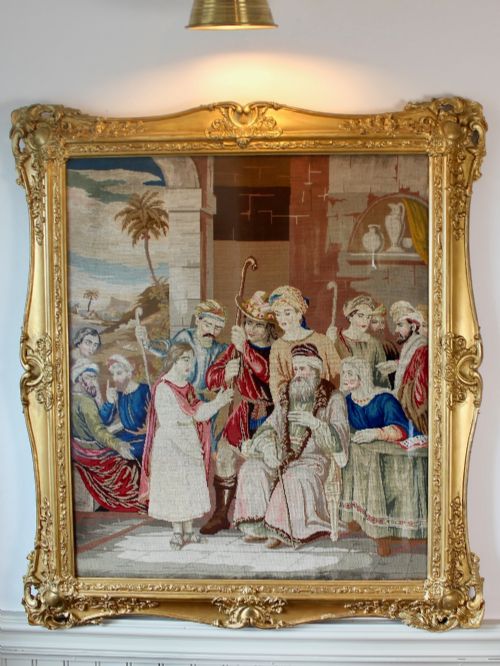


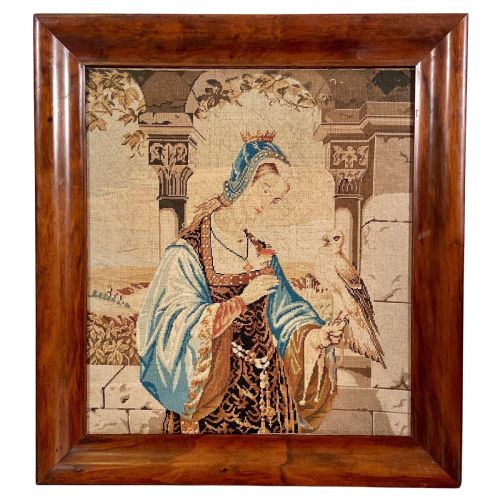


Wool Tapestry Picture
A wool tapestry picture brings centuries of textile art to your walls through hand-worked threads of wool, silk, and canvas.
Materials and Technique
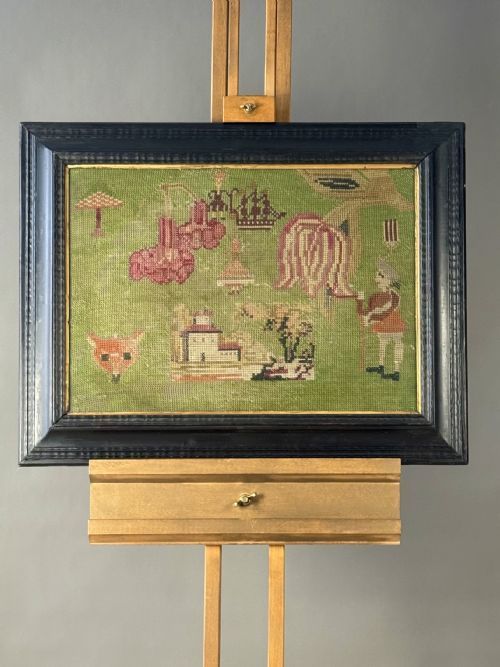
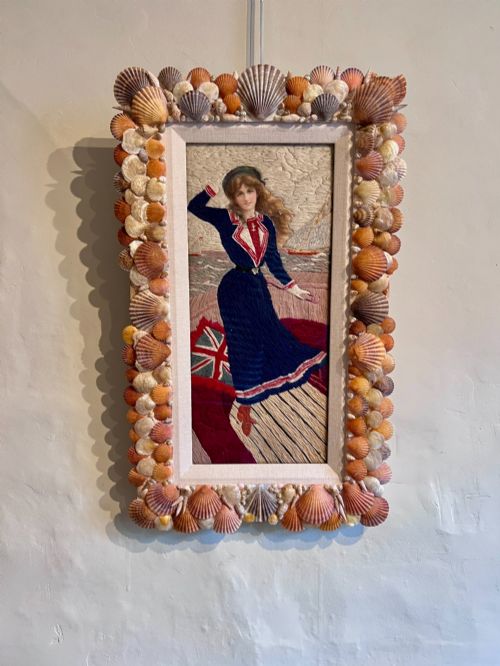
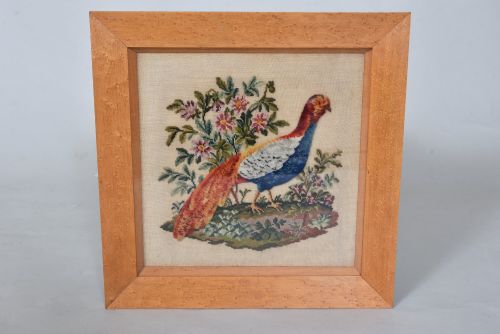
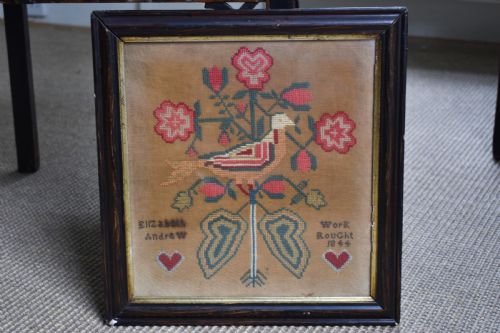
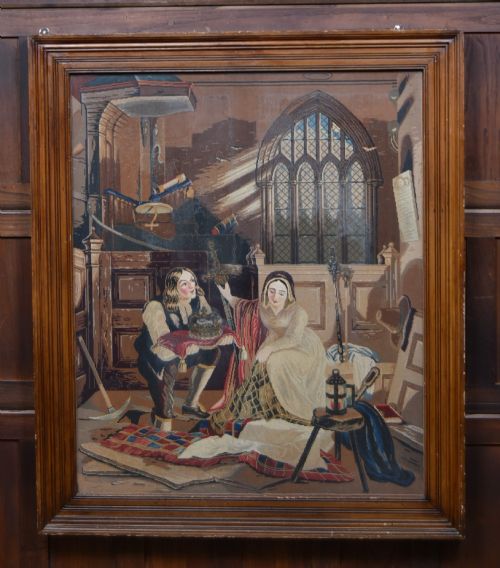
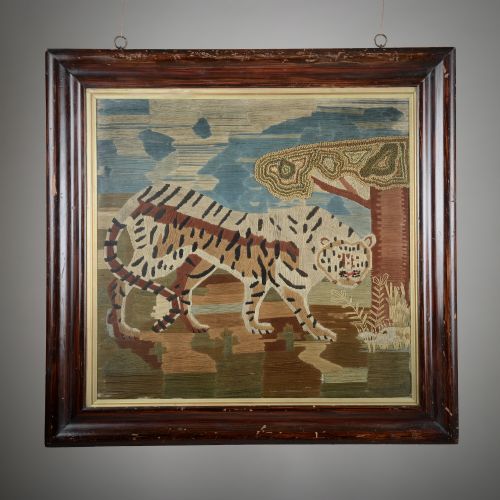
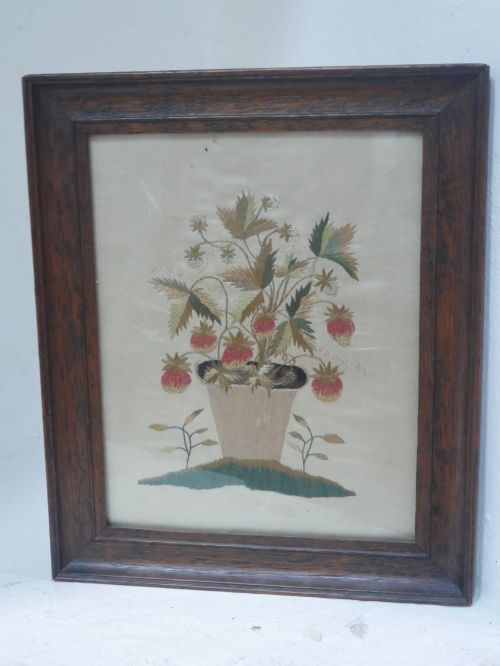
Makers utilised wool yarn, silk, and felt worked across canvas or linen grounds to build up dense pictorial surfaces. Techniques such as gros-point, petit-point, and plushwork allowed artisans to create varied textures and deep relief within the wool tapestry picture.
Completed textile panels were then mounted into substantial frames made of wood, rosewood, burr maple, or giltwood. Many examples incorporate glass protection, occasionally featuring decorative verre églomisé borders to complement the needlework inside.
Factors of Quality
The quality of a wool tapestry picture rests primarily on the tightness of the stitchwork and the complexity of the design. Petit-point execution allows for greater facial detail and finer tonal shading in portrait subjects compared to coarser woolwork.
Survival of original framing materials significantly influences the integrity of the piece. Frames executed in burr maple, rosewood, or gold leaf that remain paired with their historical textile panels elevate the overall standard of the work.
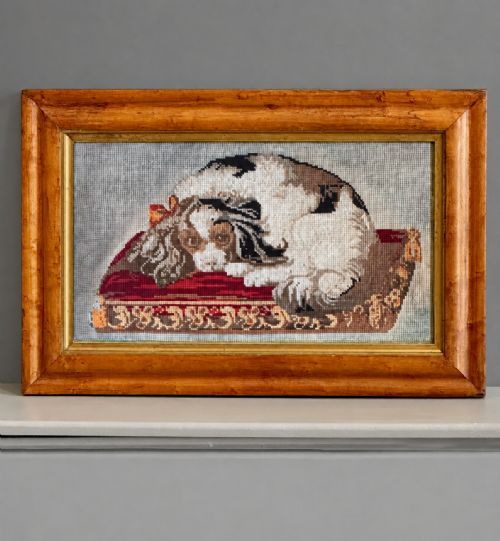
A King Charles spaniel immortalised in wool stares out eternally from its original burr maple frame.
The Wool Tapestry Picture Glossary
- Berlin Work
- A style of charted needlepoint popular in the nineteenth century that used brightly coloured wools on canvas. This technique allowed makers to copy elaborate pictorial patterns with ease.
- Gros-Point
- A coarse needlepoint stitch used in tapestry work. It provides durability and covers large areas of canvas rapidly.
- Petit-Point
- A fine needlepoint stitch worked over a single thread of canvas. This method permits intricate detail in faces and complex motifs.
- Plushwork
- A textile technique involving cut loops of wool that create a raised, velvet-like pile. It adds tactile depth to animal depictions.
- Verre Églomisé
- A process of applying cold gilding and painting to the reverse side of glass. It frequently appears on historical frames surrounding textile pictures.
Wool Tapestry Picture: Frequently Asked Questions
How do I hang a wool tapestry picture safely?
Ensure the wall support matches the weight of the wood and glass frame enclosing the textile.
Keep the piece away from direct sunlight to protect the wool and silk threads from fading.
What periods do these textile pictures cover?
The available pieces stretch from the seventeenth century through the Georgian and Victorian eras up to nineteen hundred.
Earlier examples often feature formal needlework, while later nineteenth-century pieces lean towards popular woolies and Berlin work.
Were these always framed?
Most surviving examples are mounted in period frames made of oak, rosewood, or giltwood.
Glass fronts were frequently added to protect the delicate wool and linen surfaces from dust and handling.
How do I distinguish Berlin work from earlier needlework?
Berlin work typically employs brighter dyed wools and structured grid patterns made popular by printed paper charts.
Earlier eighteenth-century needlework often displays more subdued polychrome wools and pictorial compositions stitched freehand.