


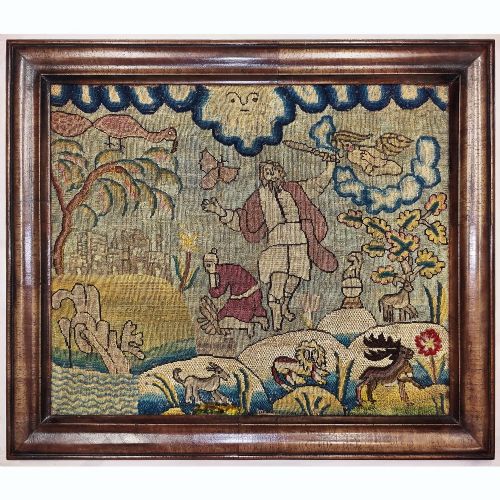


Petit Point Tapestry
Petit point tapestry pieces are finely worked needlework textiles utilising wool, silk, and canvas, prized by collectors for their intricate historic detail and decorative presence.
Petit Point Tapestry
When you search for petit point tapestry, you encounter a specialised range of antique textile art, framed wall panels, and upholstered furniture. These pieces span from the seventeenth century through to the nineteenth century, reflecting various European decorative traditions.
The items most frequently met on this page include nineteenth century French and English armchairs, footstools, and firescreens upholstered with detailed needlework panels. Framed wall art and small evening accessories also appear among the selections.
Makers and artisans created these textiles across several distinct periods, including Georgian, Victorian, and French Rococo Revival styles. The physical forms range from large wall hangings housed in rosewood or gilt frames down to small footstools.
How they were made
Makers constructed these textiles by stitching fine wool and silk threads through a linen or canvas mesh base. The high density of the stitches allowed artisans to achieve remarkable detail and tonal gradation in the finished pictorial scenes.
Carpentry and metalwork complemented the textile creation, with walnut, mahogany, rosewood, brass, and sterling silver forming the frames, furniture structures, and mountings. Artisans housed wall panels in timber frames or mounted evening purses with metal clasps.
Courtly maidens and romantic literary scenes peer out from centuries past, stitched stitch by tiny stitch to charm modern rooms.
What varies in quality
The integrity of the supporting frame and the condition of the underlying canvas foundation influence the overall stability of the piece. Well-preserved wooden frames in walnut, mahogany, or rosewood complement the original textile work more successfully than heavily altered mountings.
The Petit Point Tapestry Glossary
- Petit point
- A very fine needlepoint stitch worked on a single-thread canvas, allowing for high pictorial detail. This technique distinguishes the intricate focal points of a tapestry from coarser background stitching.
- Gros point
- A larger needlepoint stitch used alongside petit point to cover background areas more quickly. The combination of gros and petit point creates depth and texture within the textile.
- Needlework picture
- A framed textile panel created with thread on canvas, designed to hang on a wall like an oil painting. These works often depict pastoral, courtly, or mythological scenes.
- Firescreen
- A moveable wooden or framed screen placed before a fireplace to block radiant heat when the fire was unlit. Many examples feature large embroidered tapestry panels set into walnut or mahogany frames.
- Armchair
- A seated furniture form with side supports, frequently upholstered in period needlework. French and English examples from the eighteenth and nineteenth centuries often showcase carved wooden frames.
Petit Point Tapestry: Frequently Asked Questions
What is petit point tapestry?
Petit point tapestry refers to finely stitched needlework created with wool and silk threads on canvas. The technique allows for intricate detail in historic textile art and furniture upholstery.
Items range from framed wall pictures and firescreens to nineteenth century armchairs and footstools. These decorative pieces reflect centuries of European craftsmanship and design.
How do I care for antique needlework?
Antique textiles require protection from direct sunlight to prevent the fading of wool and silk threads. Keeping pieces away from excessive moisture preserves the integrity of the canvas and wooden frames.
Gentle dusting with a soft brush helps maintain the surface without disturbing the delicate stitching. Avoid using liquid cleaners directly on the historic fabric.
How are different periods identified?
Stylistic clues within the framing, woodwork, and pictorial subject matter help determine the period of a piece. Seventeenth and eighteenth century works often display different aesthetic conventions compared to Victorian or Rococo Revival creations.
The choice of underlying frame materials, such as rosewood, walnut, or mahogany, also provides context for dating the item.
Were these tapestries used as furniture?
Many nineteenth century chairs, stools, and firescreens incorporated needlework as functional upholstery. Petit point panels were specifically designed to withstand daily use while providing decorative elegance.
Frames made from walnut and mahogany supported these heavy woolen textiles in domestic drawing rooms and salons.