





Vintage Needlework Picture
A vintage needlework picture brings domestic handwork from past centuries straight to the wall, offering texture and colour that printed art simply cannot match.
Vintage Needlework Picture
A vintage needlework picture is a framed textile piece created by hand using threads, beads, or yarn on a fabric ground. Buyers seeking these works encounter a broad chronological span, ranging from early seventeenth-century panels to twentieth-century folk pieces and samplers.
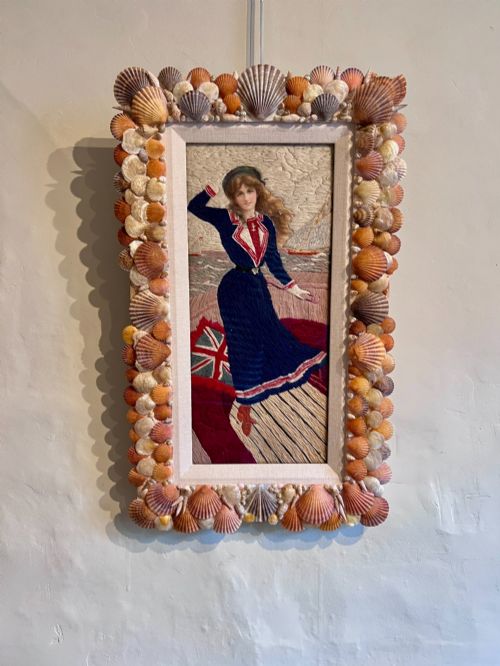
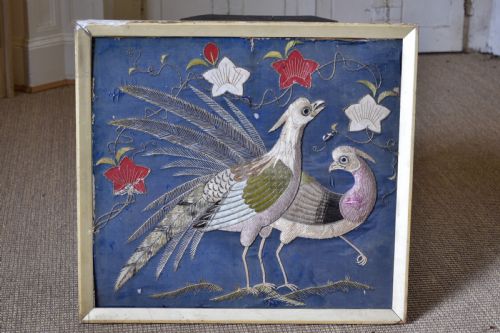
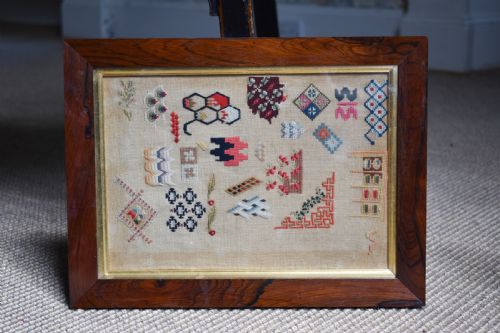
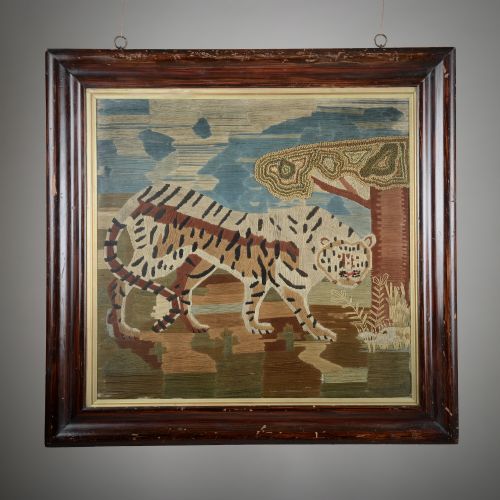
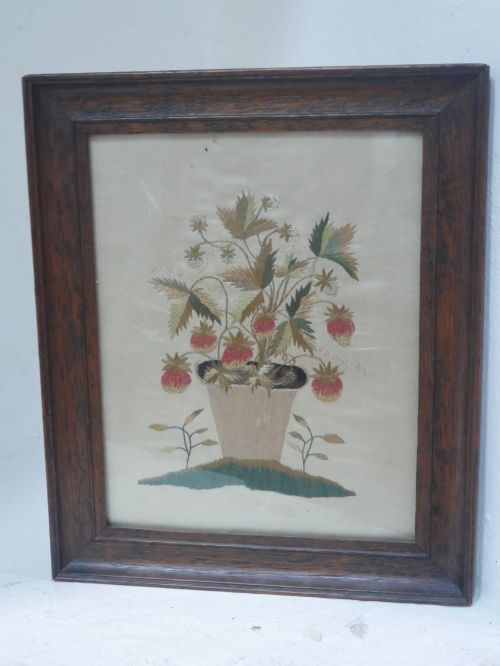
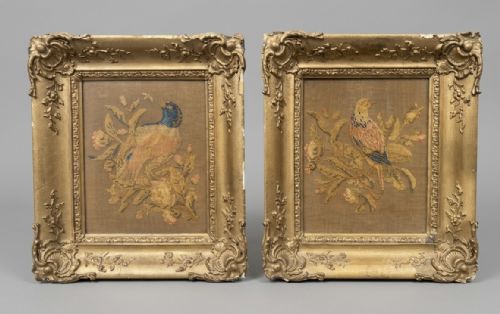
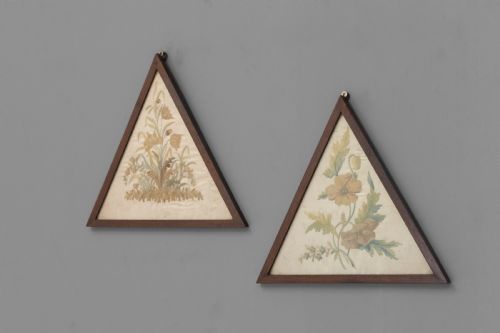
The selections on this page draw heavily from nineteenth-century and eighteenth-century examples, alongside select seventeenth-century fragments and later twentieth-century works. Common formats include botanical studies, animal portraits, traditional samplers, and maritime woolies.
Makers ranged from young girls working alphabet exercises to skilled artisans producing elaborate silk or wool tapestries. Each piece functions as wall art, preserved within period frames of wood, gilt, or glass.
Materials and construction
Makers utilised natural fibres such as wool, silk, linen, and canvas as the foundation for their stitches. Crewel work, gros-point, and Berlin wool work employed heavy yarns to build rich, raised textures.
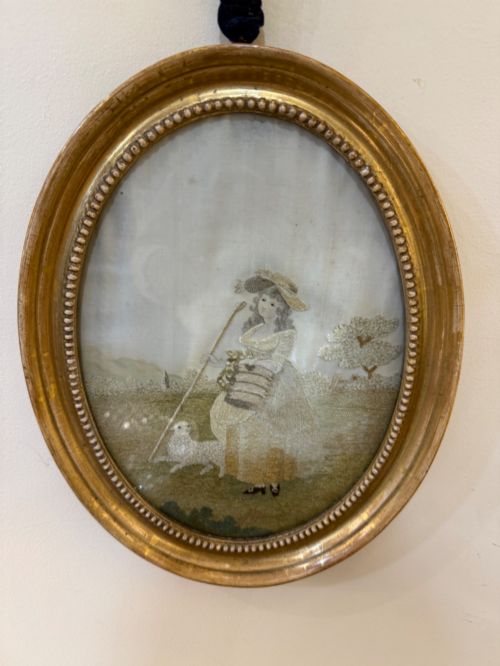
Silk thread allowed for fine shading in detailed pictorial scenes, while beads introduced reflective light and rigid geometry. Canvases and linens were stretched tightly over wooden supports before stitching began.
Finished textiles were frequently mounted behind glass in giltwood or dark wooden frames to protect the delicate threads from dust and environmental degradation.
Listings feature works spanning from the 17th century through the 1930s, utilising materials including silk, wool, glass, canvas, and giltwood.
Assessing craftsmanship and condition
Quality rests upon the precision of the stitchwork and the complexity of the design. Finer examples display meticulous control over tension and colour blending, creating depth in portraits, landscapes, and floral arrangements.
The survival of the textile ground determines much of the overall integrity. Pieces free from extensive fibre loss, fading, or water staining hold their visual impact more clearly than heavily repaired or degraded examples.
The Vintage Needlework Picture Glossary
- Sampler
- A piece of needlework produced to demonstrate proficiency in various stitches and alphabets. These exercises often record the maker's name and age.
- Woolie
- A type of sailor's embroidery made from coloured wool yarn, frequently depicting ships or maritime scenes. These nineteenth-century works often utilise thick padding for texture.
- Crewel work
- Embroidery executed with wool yarn on a linen or cotton twill fabric. This technique creates robust, curving botanical and animal motifs.
- Gros-point
- A type of needlepoint stitched with coarse wool yarn on a stiff canvas mesh. It produces a durable, textured surface suitable for heavy tapestries.
- Reverse glass print
- An image painted or printed on the reverse side of a pane of glass and viewed from the front. They appear alongside textiles in historical wall art displays.
Vintage Needlework Picture: Frequently Asked Questions
How should I hang needlework pictures?
Keep textile art away from direct sunlight to prevent the silk and wool threads from fading over time. Stable indoor humidity protects both the fabric ground and the original wooden frame.
Use secure picture hooks suited to the weight of the framed piece. Professional framing with conservation glass offers additional protection against dust and ultraviolet light.
How do I date an antique sampler?
Many samplers include embroidered dates alongside the name and age of the maker. Lettering styles, motifs, and the type of linen ground also provide clues to the period of origin.
Examining the back of the frame can reveal older paper backings, adhesives, or framing techniques that help confirm the age of the piece.
Are these pieces made on canvas or linen?
Earlier works from the seventeenth and eighteenth centuries typically utilise evenly woven linen grounds for fine thread stitching. Later nineteenth-century pieces frequently employ stiff canvas mesh designed for wool work.
The choice of ground material directly influences the scale of the stitches and the overall weight of the finished wall art.