




Gold Framed Needlework
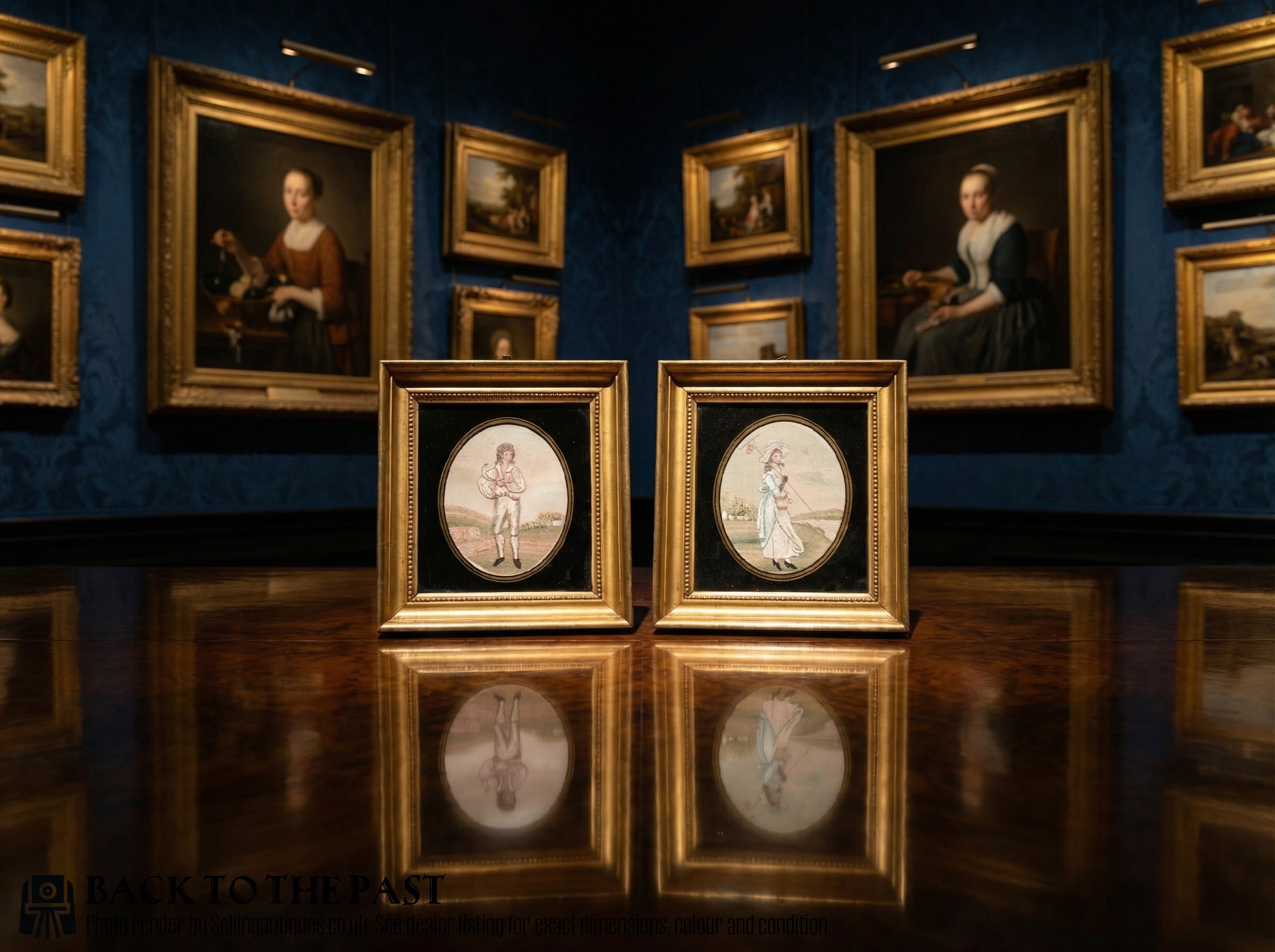
Gold framed needlework brings together centuries of textile art and gilded timber, offering interior settings a rich focal point.
Gold Framed Needlework
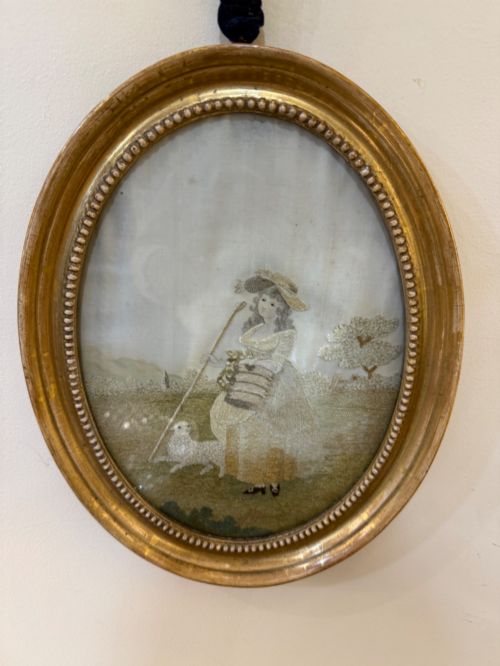
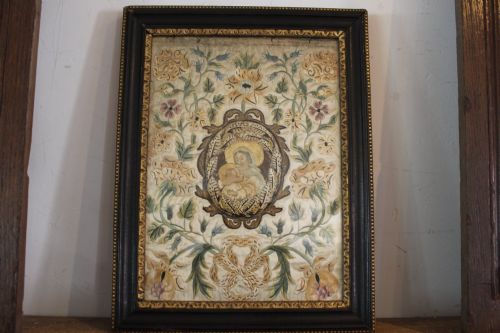
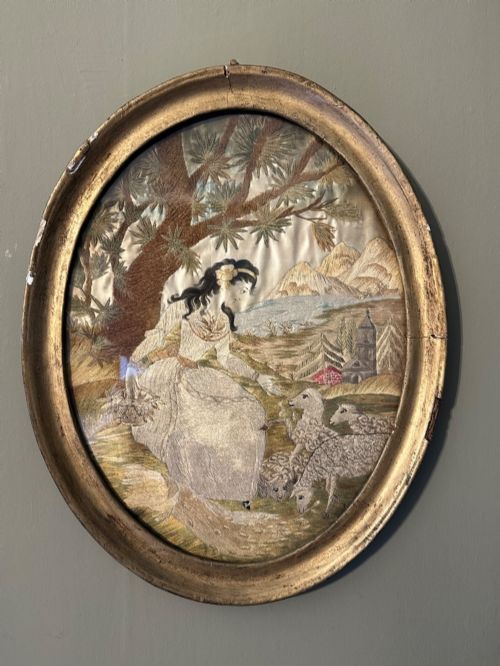
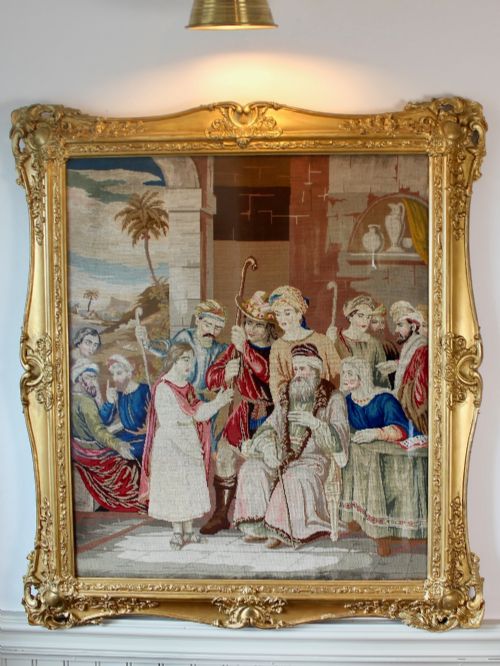
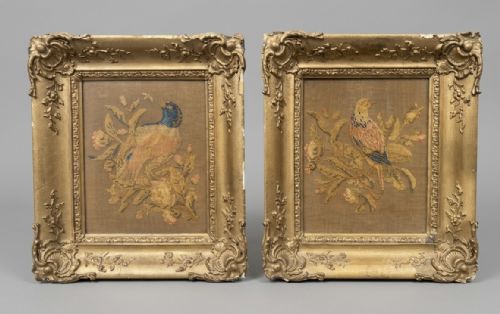
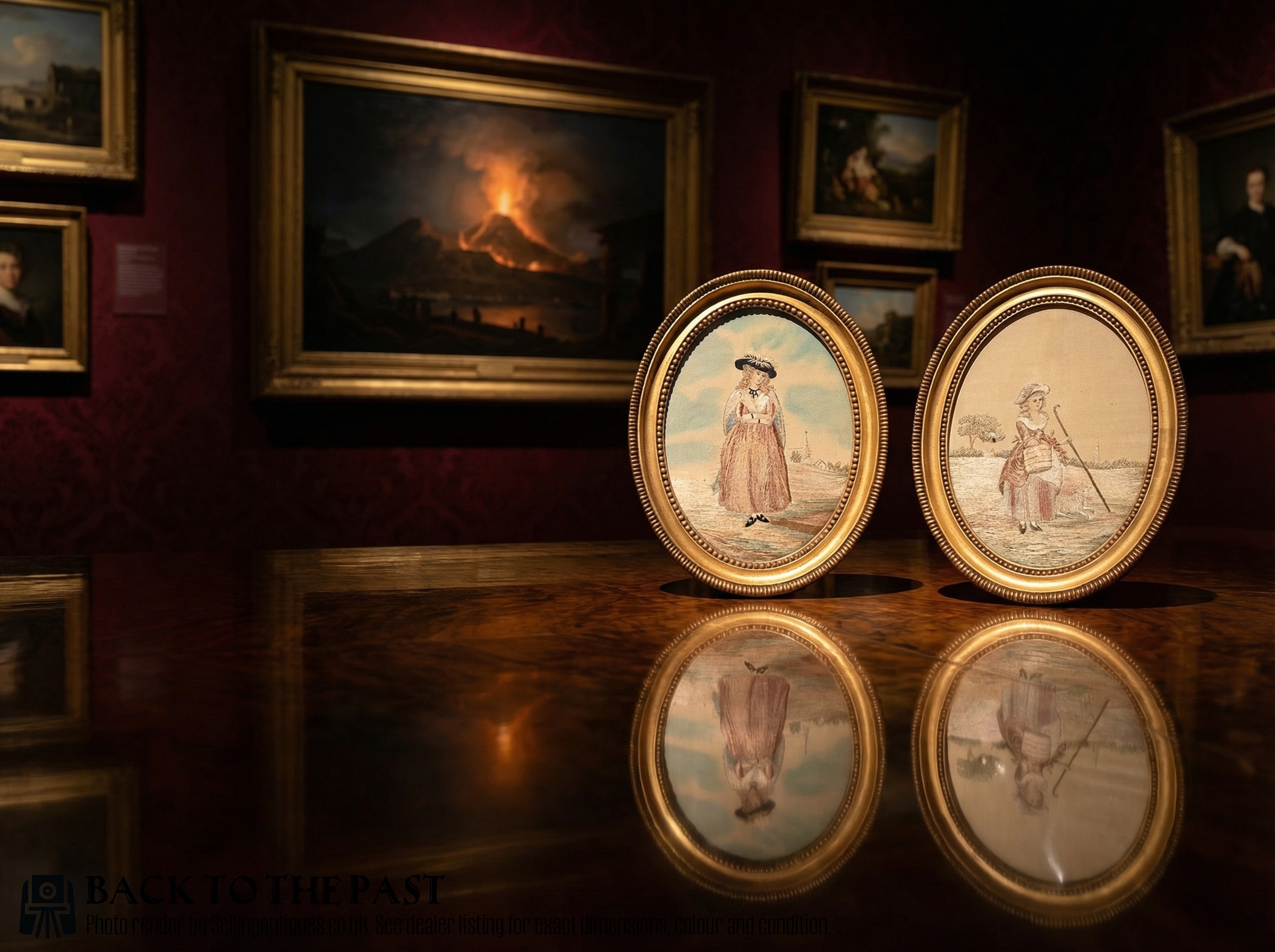
Gold framed needlework encompasses textile pieces enclosed in giltwood, gilded wood, or water gilded frames, ranging from wall art and framed artwork to detailed needlework pictures. These items span periods from the 17th century through the 18th century, Georgian, Regency, and Victorian eras, up to 1900 and 1930.
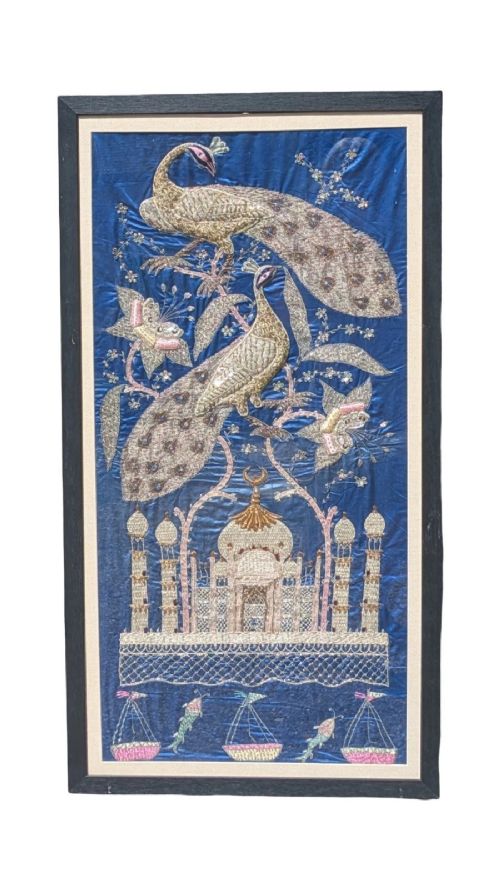
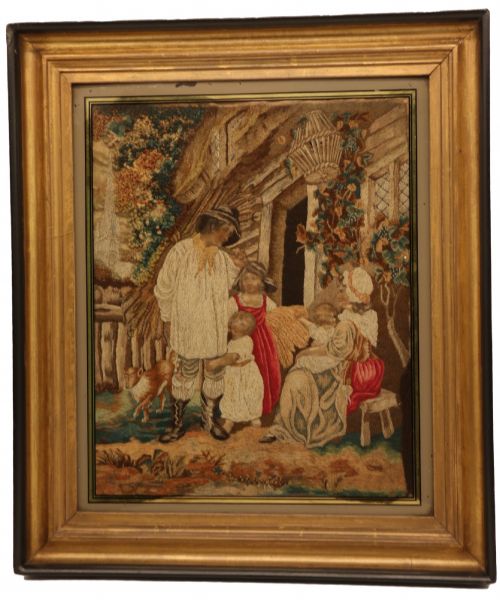
Buyers are most likely to encounter 19th century and Georgian examples on this page, often featuring silk work, wool work, or Berlin woolwork. Subjects vary widely from architectural landmarks like the Taj Mahal and horse racing tracks to biblical scenes such as Pharaoh's dream and royal military commemoratives.
The selection also includes Continental, Dutch 18th century, and Anglo-Indian productions alongside English works. Frames range from simple gilt surrounds to oval and octagonal water gilded formats, occasionally incorporating mezzotint black glass.
Materials and construction
Makers utilised silk, wool, metallic thread, and canvas as the foundation for stitches, frequently combining needlework with hand painted elements or watercolour. Crewel work, long stitch, and tapestry techniques create the textured surface of the textile art.
Wood provides the structure for the surrounding frames, finished with gilding or water gilding to produce the characteristic gold surface. Glass protects the delicate threads and painted silk panels from environmental wear.
Gold Framed Needlework Retail Price Guide 2026
Typical asking prices for gold framed needlework among the pieces listed under this phrase on Sellingantiques today, from the lower quarter to the upper quarter. They describe what is for sale here now, not the wider market.
King Charles II and his favourite mistress make an embroidered appearance in the 17th-century stumpwork selections.
Distinctions in quality
Quality rests in the precision of the needlework and the harmony between the textile and its original giltwood frame. Finely executed silk embroidery and detailed wool work demonstrate superior technical skill from the maker.
The sophistication of the framing elevates certain pieces, particularly those retaining water gilded oval or octagonal frames with mezzotint glass. Condition of the delicate threads and painted components also dictates the standing of a piece.
The Gold Framed Needlework Glossary
- Berlin woolwork
- A type of counted-thread embroidery popular in the 19th century that utilised charted designs and brightly coloured wools. It often resulted in large, highly detailed pictorial scenes.
- Giltwood
- Timber that has been coated with gold leaf or gold powder. It forms the decorative border characteristic of these framed textiles.
- Stumpwork
- A raised embroidery style from the 17th century that used padded elements to create a three-dimensional effect. Figures and motifs stand proud of the background fabric.
- Mezzotint glass
- Darkened or black glass used in framing during the Georgian and Regency periods. It creates a contrasting border that enhances the colours of silk embroidery.
- Crewel work
- Traditional embroidery executed using wool yarn on a plain-weave fabric. It permits fluid, curved lines in floral and pictorial compositions.
Gold Framed Needlework: Frequently Asked Questions
How do I date a gold framed needlework piece?
Dating relies on stylistic clues in the costume, subject matter, and the construction of the frame itself. 17th-century pieces often feature raised stumpwork or complex silk embroidery, while Georgian and Regency works frequently utilise silk on canvas.
Frame profiles also change across eras, moving from simple mouldings to elaborate Victorian Rococo Revival styles or water gilded oval formats. Examining the reverse of the frame and the type of glass can provide further chronological context.
What is the difference between Berlin woolwork and crewel work?
Berlin woolwork emerged in the 19th century and used printed grid patterns to guide the stitcher in creating dense, colourful pictorial scenes. The work relied heavily on wool yarn on canvas.
Crewel work is an older technique dating back earlier, employing wool thread to work freeform designs on linen or twill. The resulting textures and visual styles reflect the distinct decorative preferences of their respective periods.
How should I hang and care for antique textile art?
Antique textiles require protection from direct sunlight to prevent the fading of silk threads and watercolours. Maintaining a stable indoor climate away from damp walls preserves both the fabric and the wooden frame.
Displaying pieces behind glass shields the delicate fibres from dust and atmospheric pollution. Avoid hanging them in areas subject to heavy vibrations or extreme temperature fluctuations.
Are the frames usually original to the needlework?
Many pieces retain their original giltwood or water gilded frames, particularly those from the Regency and 18th-century periods. Original frames often show consistent ageing that matches the wear on the textile within.
Some works may have been reframed later in their lifespan to suit changing interior tastes. Inspecting the rebate and fixings helps determine if the frame and needlework have a shared history.