




Gilt Framed Embroidery
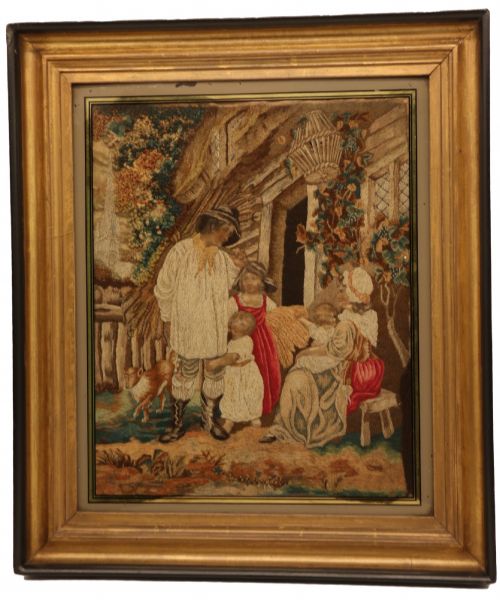
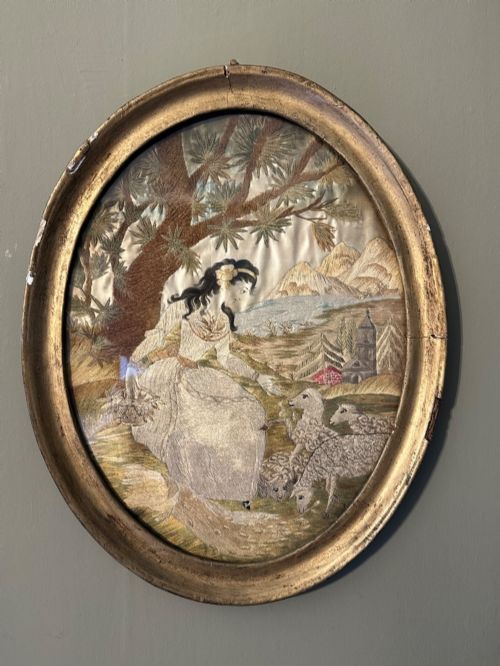
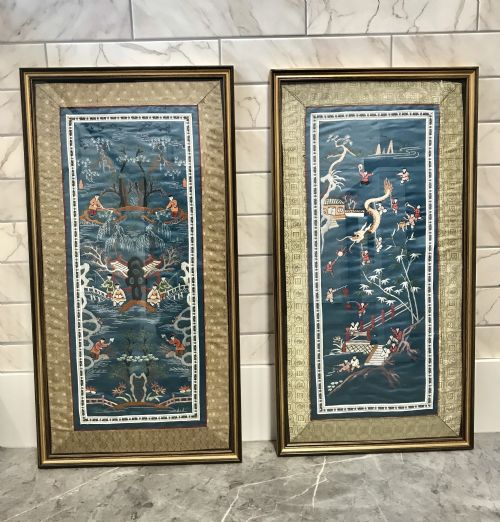
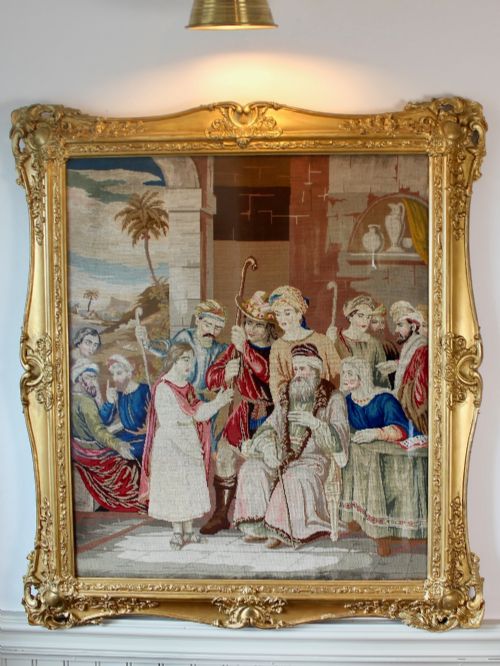
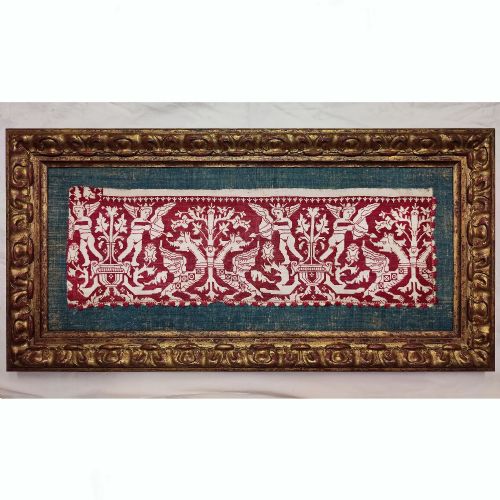
These gilt framed embroidery pieces bring needlework art into rooms with gilded wood surrounds.
What these pieces are
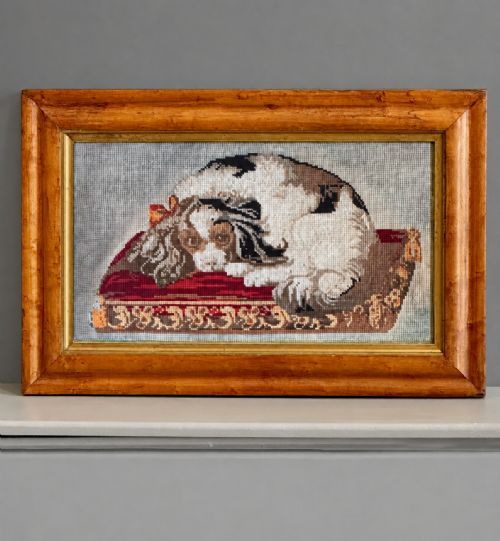
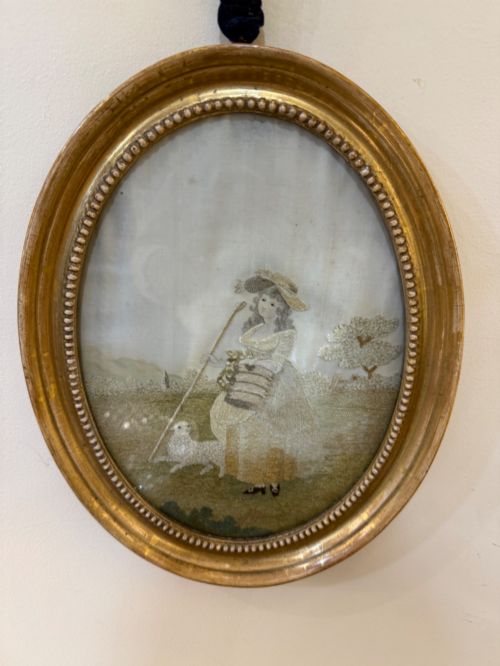
Gilt framed embroidery combines textile art with gilded wooden surrounds, presenting needlework pictures and wall art from past centuries. Buyers examining this category encounter pieces spanning the Georgian era and the nineteenth century.
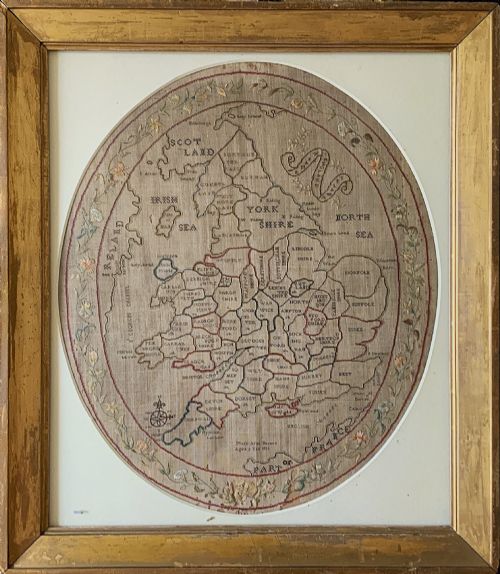
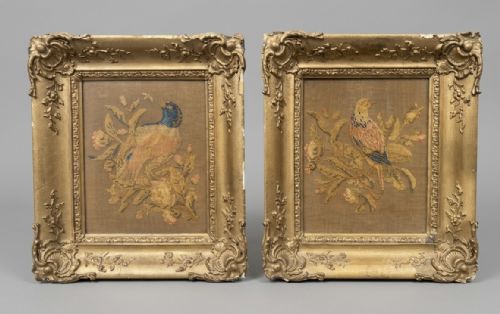
The selection includes pastoral farming pictures, crewel work embroidery, bird subjects, samplers, and religious needlework. Most examples date from the eighteenth and nineteenth centuries, taking the form of framed pictures and textile panels.
How they were made
Maker execution relies on silk, wool, and fabric stitched over grounds to form pictorial and geometric compositions. Needleworkers deploy various thread techniques to build texture across pastoral, avian, and religious subjects.
Framing involves wood shaped and finished in gilt, enclosing the textile behind protective glass. The combination secures the fabric while providing the characteristic metallic border seen across the selection.
Retail Price Guide 2026
Typical UK retail prices for gilt framed embroidery, calculated from the Sellingantiques database of over a million retail prices indexed since 2003. This retail price guide relies exclusively on Sellingantiques data; no external sources or auction records are used, so the figures do not describe the wider market.
Birds peer out from gilded wooden borders, frozen mid-stitch since the nineteenth century.
What varies in quality
Quality rests upon the fineness of the needlework and the preservation of the silk and wool threads. Pieces executed with complex pictorial detail and tightly controlled stitching stand apart from simpler samplers and standard panels.
The integrity of the giltwood frame and the clarity of the protective glass contribute to the overall standard of the piece. Well-preserved textile art retains vibrant material tones within its original gilded surround.
The Gilt Framed Embroidery Glossary
- Crewel work
- Embroidery executed in wool on a fabric ground, traditionally using two-ply yarn to build textured surface designs.
- Sampler
- A piece of needlework produced to demonstrate proficiency in various stitches and patterns, often incorporating alphabets or motifs.
- Giltwood
- Wood carved and coated with gold leaf or metallic gilt, forming decorative frames for artworks and mirrors.
- Needlework picture
- A pictorial composition created with thread and fabric rather than paint, designed specifically for wall display.
Frequently Asked Questions
What periods do these embroideries come from?
The available pieces originate primarily from the eighteenth and nineteenth centuries, encompassing Georgian and Victorian eras.
Examples span from the seventeen-hundreds through the early eighteen-hundreds, including specific pieces dated around eighteen hundred.
How should I hang gilt framed embroidery?
Position these works away from direct sunlight to protect the silk and wool threads from fading over time.
Ensure the wall fixings securely support the combined weight of the wooden frame, glass, and textile panel.
What subjects appear in these textile pictures?
Common subjects include pastoral farming scenes, religious compositions, and depictions of birds stitched in silk and wool.
Traditional samplers and crewel work panels also feature within the selection, showing diverse decorative approaches.
Are the frames original to the needlework?
Frames are constructed from gilt wood or giltwood, designed to complement the period aesthetic of the textile.
Each piece pairs needlework art with a matching gilded surround appropriate to its nineteenth or eighteenth-century origin.