
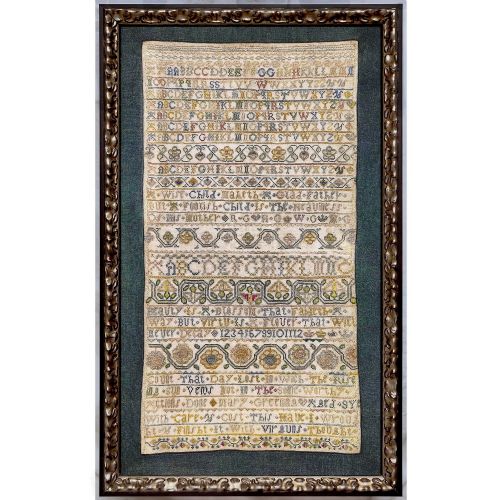
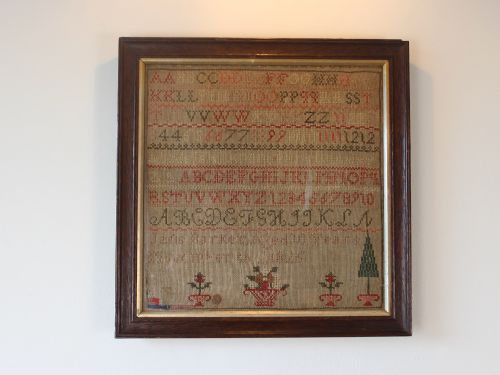


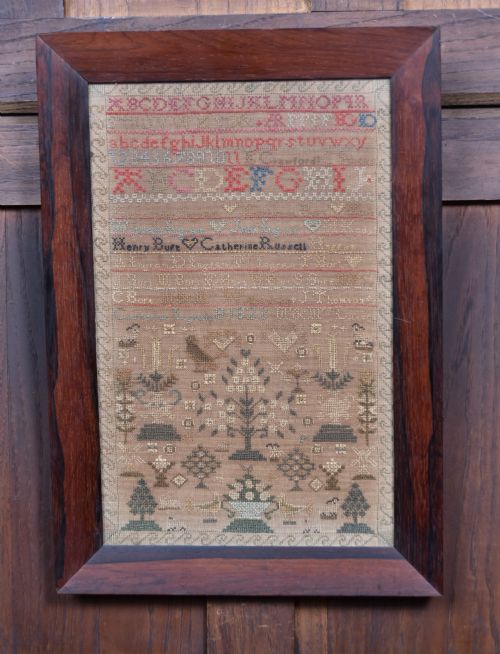


Framed Linen Sampler
A framed linen sampler brings domestic history onto the wall through stitched alphabets, maps and verse worked by young hands centuries ago.
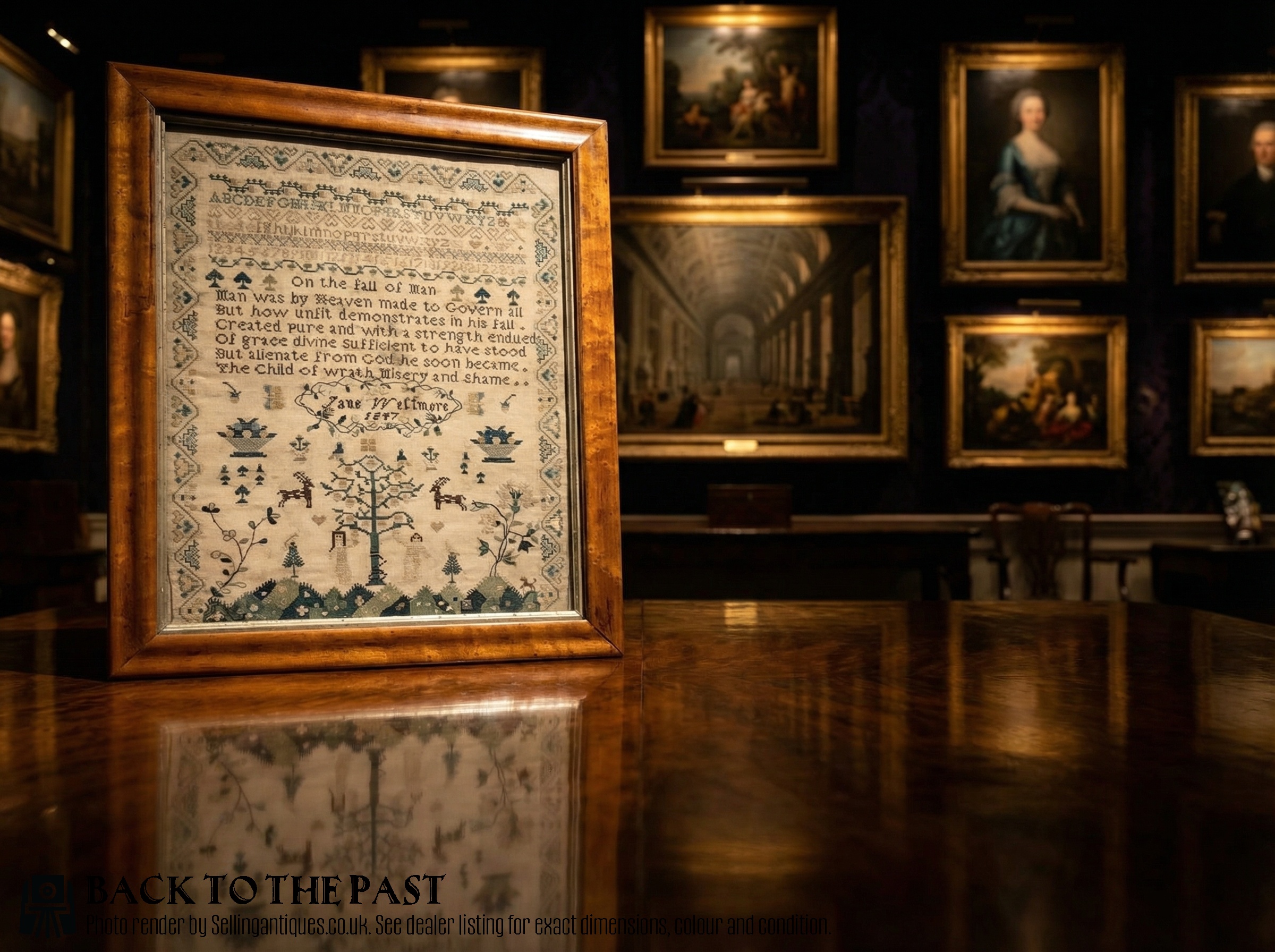
Framed Linen Sampler
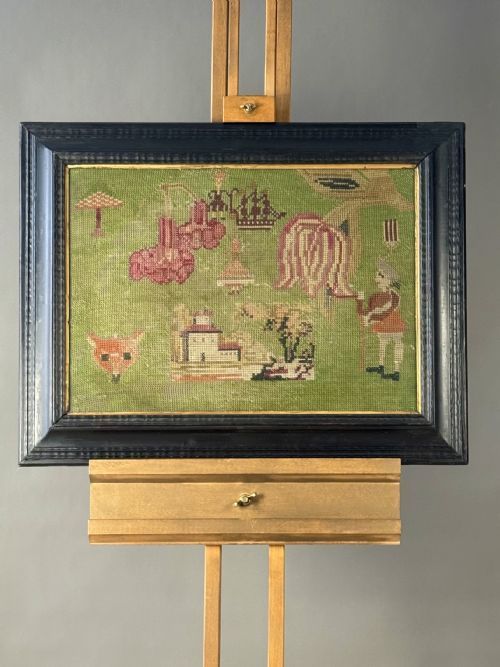
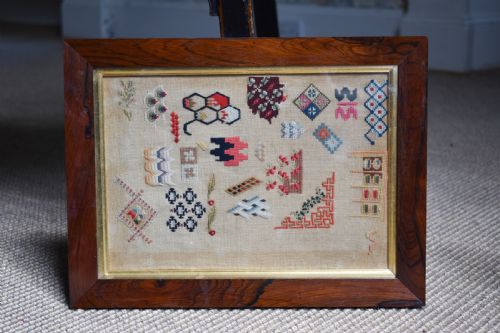
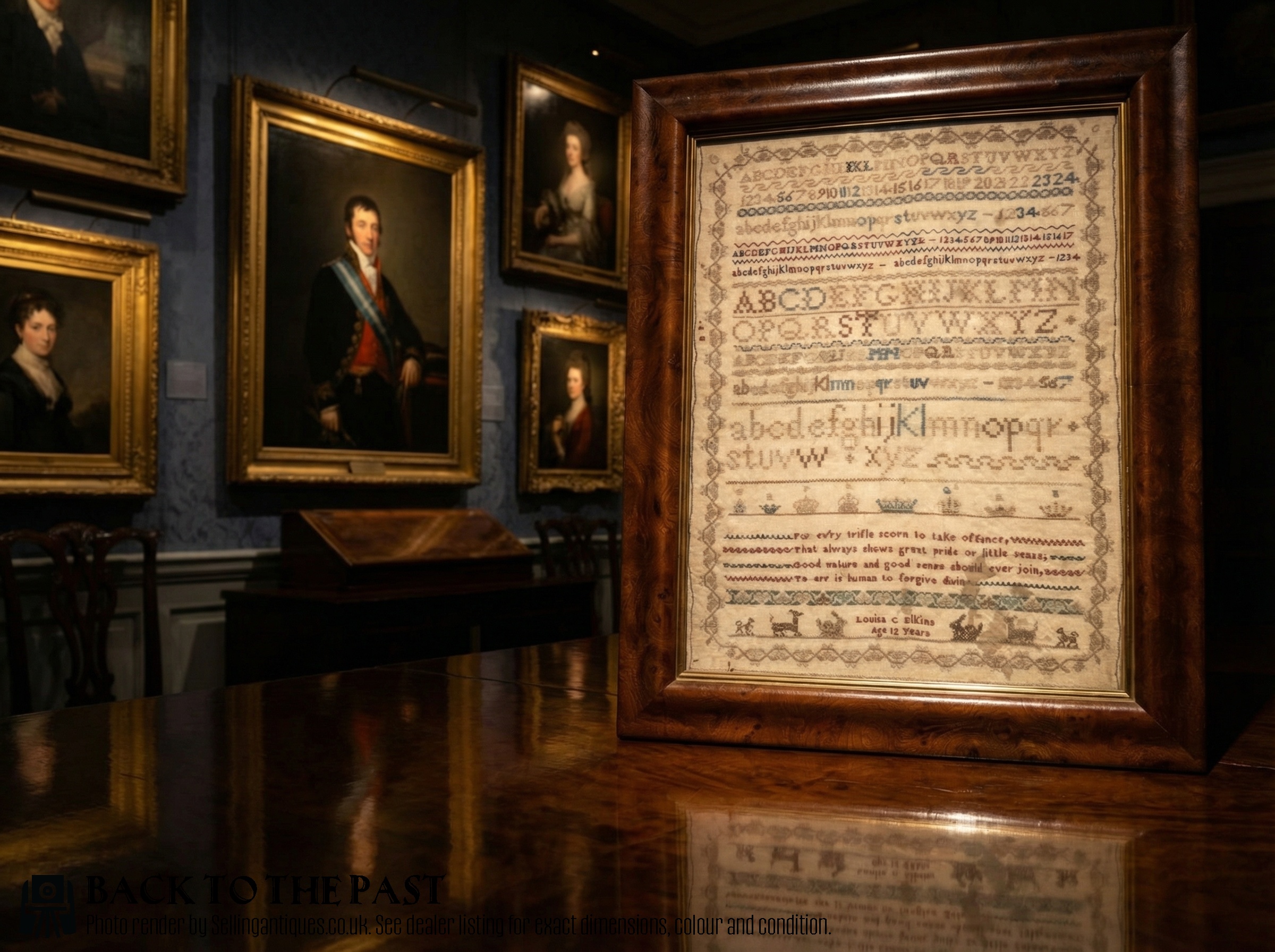
A framed linen sampler comprises a woven linen ground decorated with stitched letters, numbers, motifs or maps, enclosed behind glass in a wooden frame. These textile pieces record domestic education, piety and skill from past centuries.
The examples met most frequently on this page date from the Georgian and Victorian periods, often signed and dated by young girls showing their progress in needlework. Regional varieties include English, Scottish and French pieces, alongside map needlework and biblical texts.
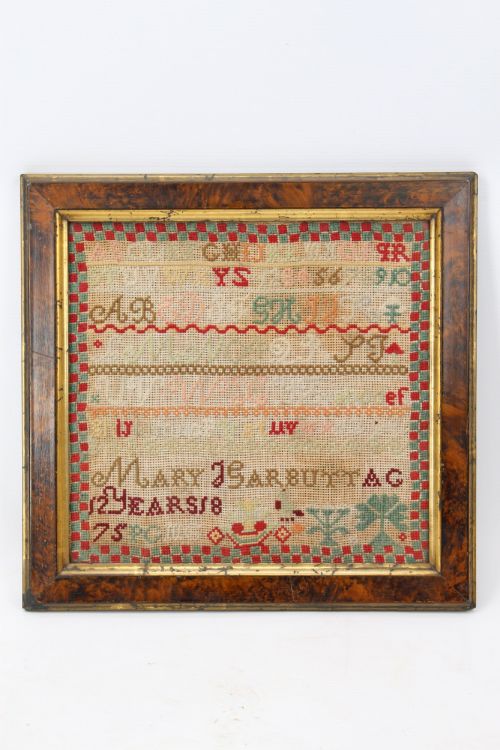
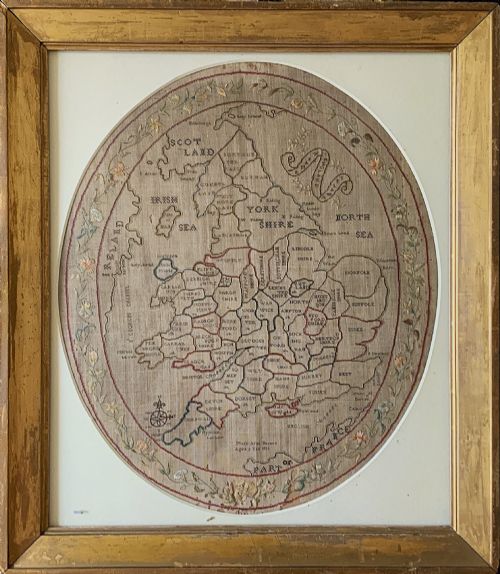
Makers ranged from schoolgirls such as Mary J Garbutt and Margaret Ann Blackow to makers working within establishments like Oswestry National School. Surviving works span alphabets, maps of England and Wales, the Lord's Prayer and the Commandments.
How they were made
Makers stitched onto a woven linen ground using silk thread, silk floss and wool, employing various needlepoint and embroidery stitches to form letters and pictorial elements.
Finished textiles were stretched and placed behind glass within wooden frames to protect the delicate threads from dust and handling.
Framed Linen Sampler Retail Price Guide 2026
Typical asking prices for framed linen sampler among the pieces listed under this phrase on Sellingantiques today, from the lower quarter to the upper quarter. They describe what is for sale here now, not the wider market.
One Scottish Victorian sampler preserves an authentic stitch error left behind by eleven-year-old Maggie Muir.
What varies in quality
Quality rests in the precision of the needlework, the complexity of the subject matter - such as cartography or lengthy verse - and the preservation of the linen ground and original threads.
Pieces with documented makers, precise dates and clear school origins command greater interest than unsigned or simpler alphabet examples.
The Framed Linen Sampler Glossary
- Band sampler
- A long, narrow linen cloth displaying horizontal bands of different embroidery stitches, worked as a reference piece.
- Alphabet sampler
- A textile showing rows of letters and numbers used to demonstrate literacy and needle proficiency.
- Map sampler
- An embroidered cartographic representation, often showing England and Wales, combining geography with needlework.
- Linen ground
- The plain-woven fabric made from flax fibres that serves as the foundation for the stitches.
Framed Linen Sampler: Frequently Asked Questions
What is a framed linen sampler?
A framed linen sampler is a historical needlework piece stitched on a linen backing, preserved behind glass in a wooden frame.
These textiles often display alphabets, dates, names of makers, maps or religious texts.
Who made these samplers?
Young girls and school pupils typically worked these pieces as part of their education in needlecraft and literacy.
Many bear the name, age of the maker, and the date or school location.
How should I hang a sampler?
Keep framed textiles away from direct sunlight to prevent the silk and wool threads from fading over time.
Ensure the room maintains stable humidity to protect both the antique wood frame and the historic linen.
How do I identify the period?
Dating relies on the style of the lettering, framing methods, and any inscribed dates or names identifying the maker.
Georgian and Victorian pieces form the majority of surviving examples available to collectors.