




Schoolgirl Needlework Sampler
These schoolgirl needlework sampler examples are textile pieces worked by young makers, offering a direct window into nineteenth and eighteenth-century education.
Schoolgirl Needlework Sampler
When you search for a schoolgirl needlework sampler, you are looking at stitched textile art created by young girls, primarily spanning the eighteenth, nineteenth, Georgian, and Victorian periods.
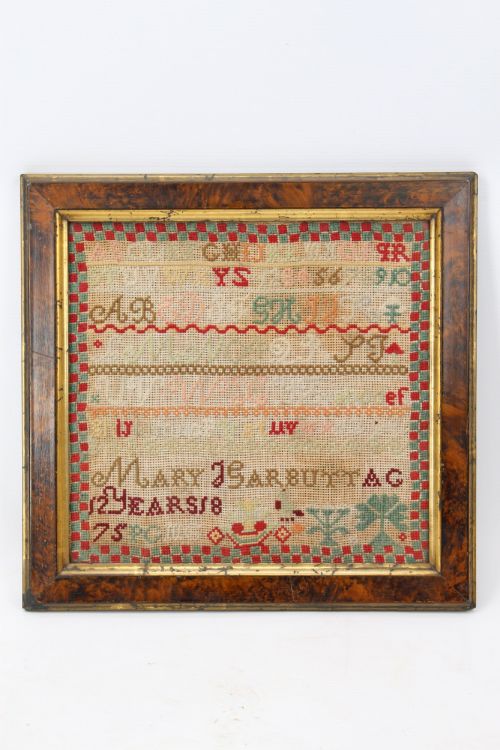
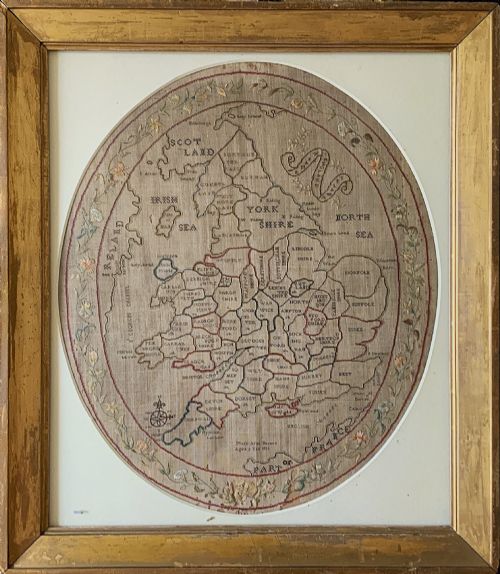
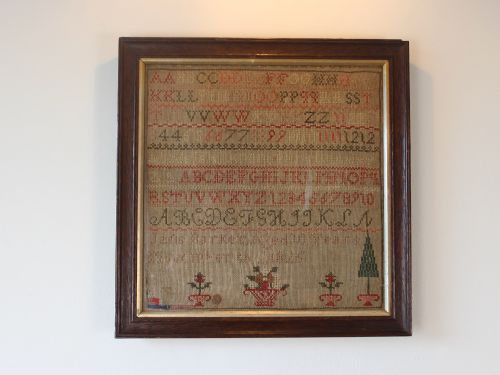
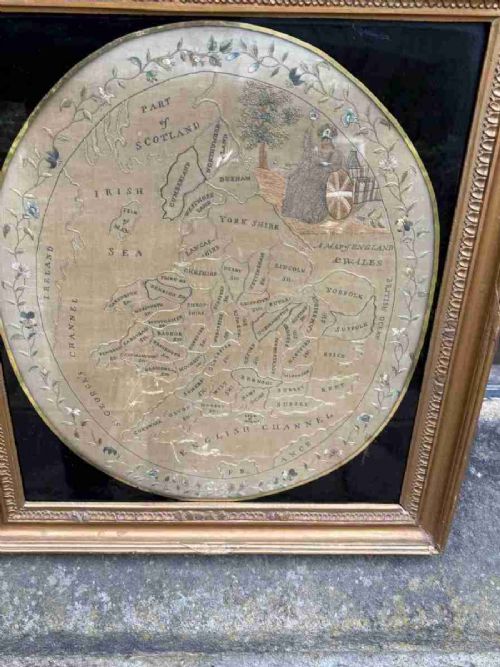
The versions you are most likely to meet on this page include alphabet exercises, topographical maps such as England and Wales, and framed embroidered panels bearing names and ages.
These textile wall art objects record domestic education, often signed by makers aged eleven or twelve years old, alongside dates like 1825, 1851, or 1875.
How they were made
The makers worked with linen grounds as the primary foundation fabric, onto which they applied wool, silk, and silk thread using needlepoint and embroidery stitches.
Finished panels typically reached the market mounted behind glass within wooden frames, preserving the fragile threads and hand-stitched details over centuries.
Maggie Muir left an authentic stitch error in her 1880 Scottish sampler, proving that even diligent schoolgirls hurried their homework.
What varies in quality
Quality rests upon the intricacy of the design and the neatness of the execution, distinguishing simple alphabet drills from complex cartographic maps or pictorial scenes.
The distinction between standard school exercises and superior examples also depends on the clarity of the lettering, the preservation of the silk and wool threads, and the survival of the original wooden frame.
The Schoolgirl Needlework Sampler Glossary
- Sampler
- A piece of textile art created to demonstrate proficiency in various stitches, alphabets, and motifs. Young girls practiced their needle skills on these linen grounds.
- Needlepoint
- A type of canvas work embroidery where yarn or thread is stitched through a stiff open-weave foundation fabric. It creates a dense, durable surface pattern.
- Alphabet Sampler
- A specific needlework format dedicated to practicing upper and lower case lettering and numerals. These often include the maker's name and age.
- Map Sampler
- An advanced geographical embroidery depicting counties, countries, or regions such as England and Wales. These combined needlework training with geography lessons.
Schoolgirl Needlework Sampler: Frequently Asked Questions
Why did girls make these samplers?
Young makers stitched these panels as part of their formal education in schools and domestic establishments during the eighteenth and nineteenth centuries. The exercises demonstrated competence in literacy, numeracy, and fine needlework.
Completing a detailed piece showed a girl's patience and skill, serving as a domestic accomplishment before she entered adulthood.
How can I tell the age of a sampler?
Many examples include stitched dates alongside the maker's name and age, providing a clear timeline of creation. Stylistic shifts between Georgian and Victorian lettering also help date the work.
Framing materials, the type of linen ground, and specific historical references like the Crystal Palace offer further clues to the period of origin.
What materials were used?
The primary foundation fabric is linen, worked with coloured silk thread, wool, and standard thread. These were stitched by hand using various needlepoint techniques.
Most surviving pieces are protected behind glass within wooden frames to shield the delicate textiles from dust and handling.
How do I care for a textile sampler?
Keep framed textile art away from direct sunlight to prevent the silk and wool threads from fading. Maintaining stable indoor humidity protects the linen ground from degradation.
Avoid hanging pieces in damp areas such as kitchens or unheated rooms, as moisture damages old plant and animal fibres.