




Historic Needlework Panel
These historic needlework panels bring centuries of domestic handiwork straight to your walls, offering a rare window into the patient stitchery of past centuries.
What a historic needlework panel is
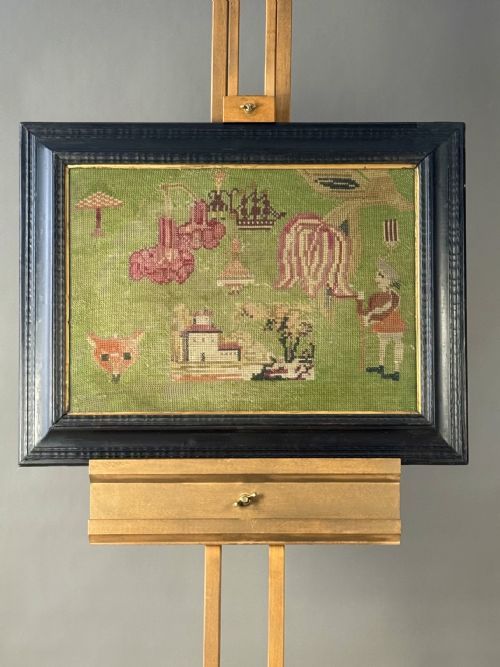
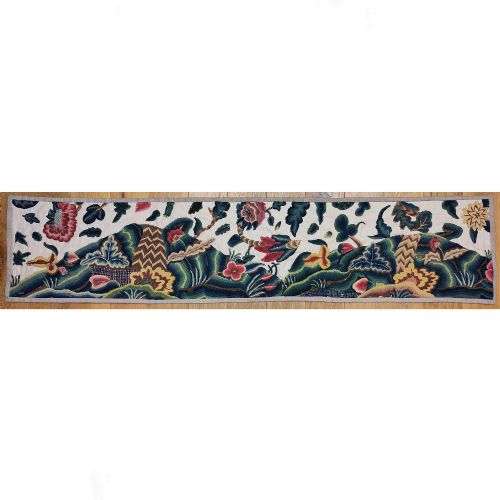
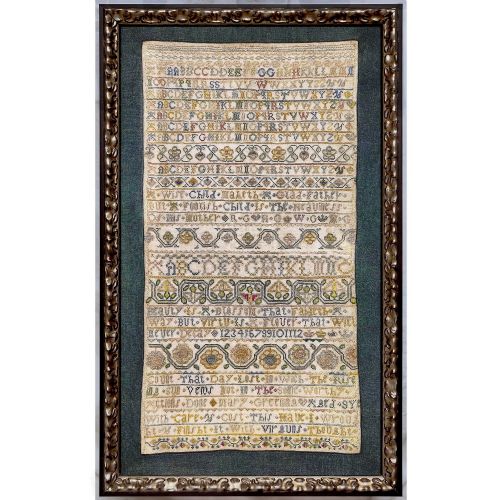
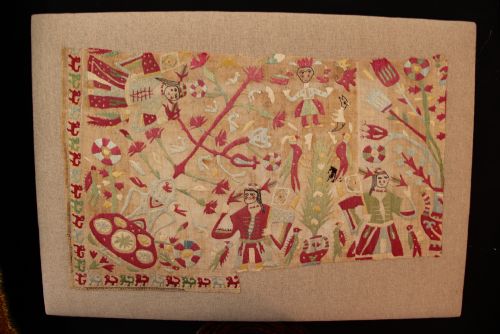
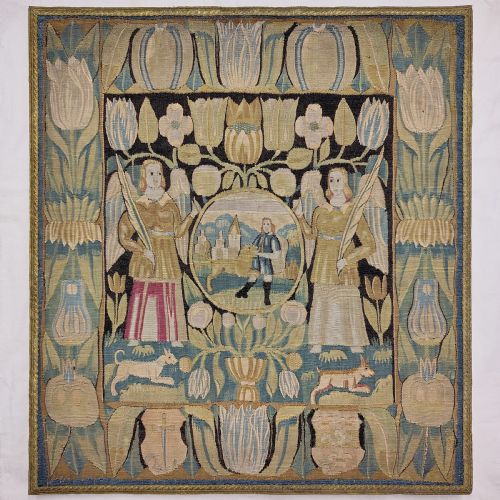
A historic needlework panel is typically a sampler worked on linen or fabric, recording alphabets, verses, or decorative motifs by makers such as Mary Greening, Sarah Baker, Ann B Gilies, and Eleanor Grady. These textile artworks span the late 17th, 18th, and 19th centuries, capturing both Georgian refinement and Victorian folk art expressions.
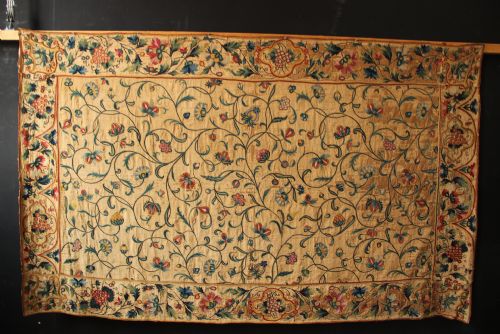
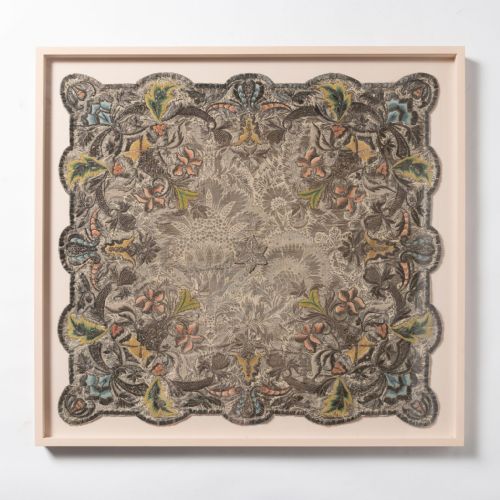
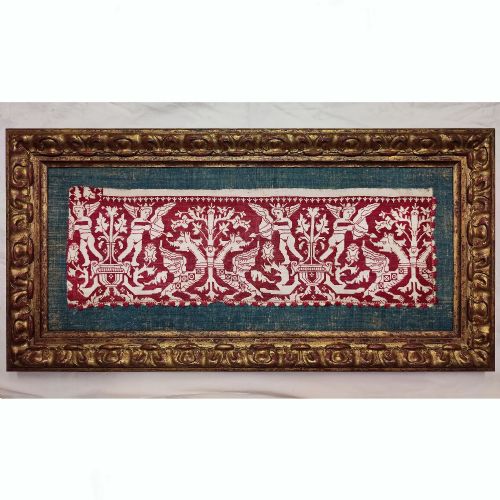
The pieces appearing on this page take the form of framed wall art, framed embroidery, and miniature samplers. They range from formal educational pieces bearing dates like 1820 down to anonymous domestic exercises worked in silk thread.
Collectors seek out these panels for their tangible link to domestic history and the varied needlework techniques preserved within each frame. Every piece displays the distinct hand of its maker, whether signed with a full name or left entirely without attribution.
Materials and construction
The foundation fabric is predominantly linen, providing a stable grid for fine counted-thread embroidery. Stitchers utilised silk thread and standard thread to build intricate alphabets, numbers, and pictorial motifs across the linen ground.
Once completed, these textiles are housed in period surrounds incorporating wood, burr wood, and glass for protection. The framing often reflects the era of the textile, preserving the delicate silk and linen elements away from dust and handling.
Retail Price Guide 2026
Typical UK retail prices for historic needlework panel, calculated from the Sellingantiques database of over a million retail prices indexed since 2003. This retail price guide relies exclusively on Sellingantiques data; no external sources or auction records are used, so the figures do not describe the wider market.
Listings feature periods spanning the 17th, 18th, and 19th centuries, alongside Georgian and Victorian folk art styles.
Assessing quality in needlework
Quality in a historic needlework panel rests upon the regularity of the stitches and the complexity of the design layout. Finer samplers demonstrate superior tension control across the linen ground, creating crisp lettering and balanced pictorial elements.
Provenance and documentation elevate certain pieces above standard examples. Work bearing clear signatures, exact dates, and named makers such as Sarah Baker or Eleanor Grady commands greater interest than anonymous nineteenth-century exercises.
The Historic Needlework Panel Glossary
- Sampler
- A piece of needlework produced as a demonstration or test of skill in various stitches, frequently featuring alphabets, numerals, and moral verses.
- Band sampler
- An early format of needlework characterised by horizontal strips of different embroidery patterns stacked vertically down the linen.
- Linen
- A strong textile made from the fibres of the flax plant, serving as the traditional woven ground for needlework panels.
- Burr wood
- A timber exhibiting swirling grain patterns caused by tree growths, often utilised for decorative picture frames housing antique textiles.
Frequently Asked Questions
How old are these needlework panels?
The pieces span from the late seventeenth century through the eighteenth century and into the nineteenth century.
Specific dates appear on certain examples, such as samplers worked around eighteen-ten or eighteen-twenty.
How were these samplers originally displayed?
Many surviving textile works were mounted behind glass in wood frames to protect the delicate silk and thread embroidery from damage.
Framing often occurred decades after the stitching was finished, preserving the fabric for domestic display.
Are all historic samplers signed by the maker?
Maker attribution varies significantly across these textiles, with some pieces bearing full names and dates while others remain entirely anonymous.
Signed works provide a direct connection to individual women and girls who stitched them centuries ago.
What materials make up these panels?
The base material is typically linen, embroidered using silk thread or standard thread in various counted techniques.
Surviving examples are frequently protected within wooden or burr wood frames under glass.