


Antique Cross Stitch
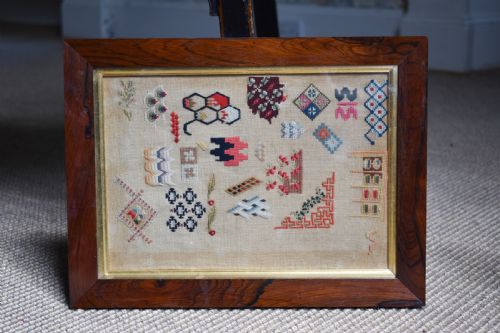
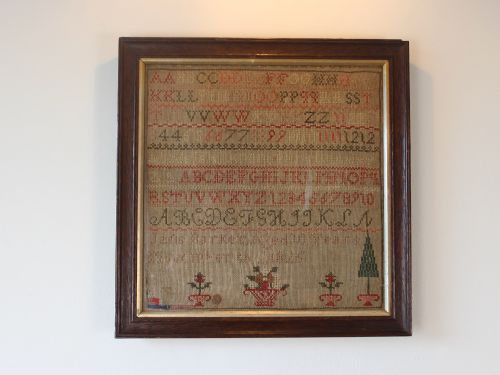
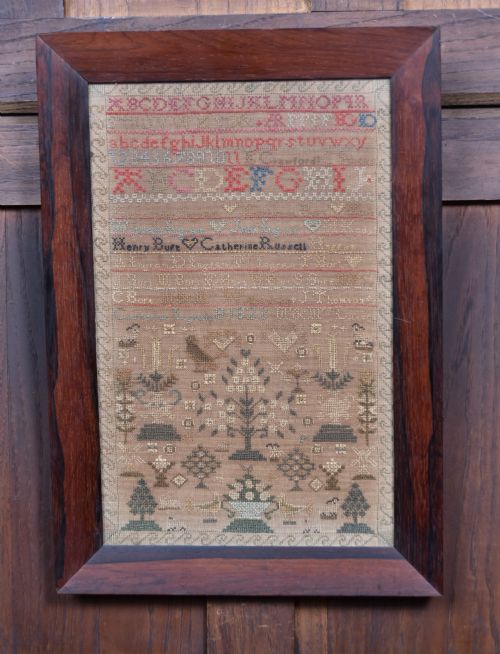
These antique cross stitch pieces are historic textile works and samplers that bring rich domestic heritage and intricate handwork to any interior wall.
Antique Cross Stitch
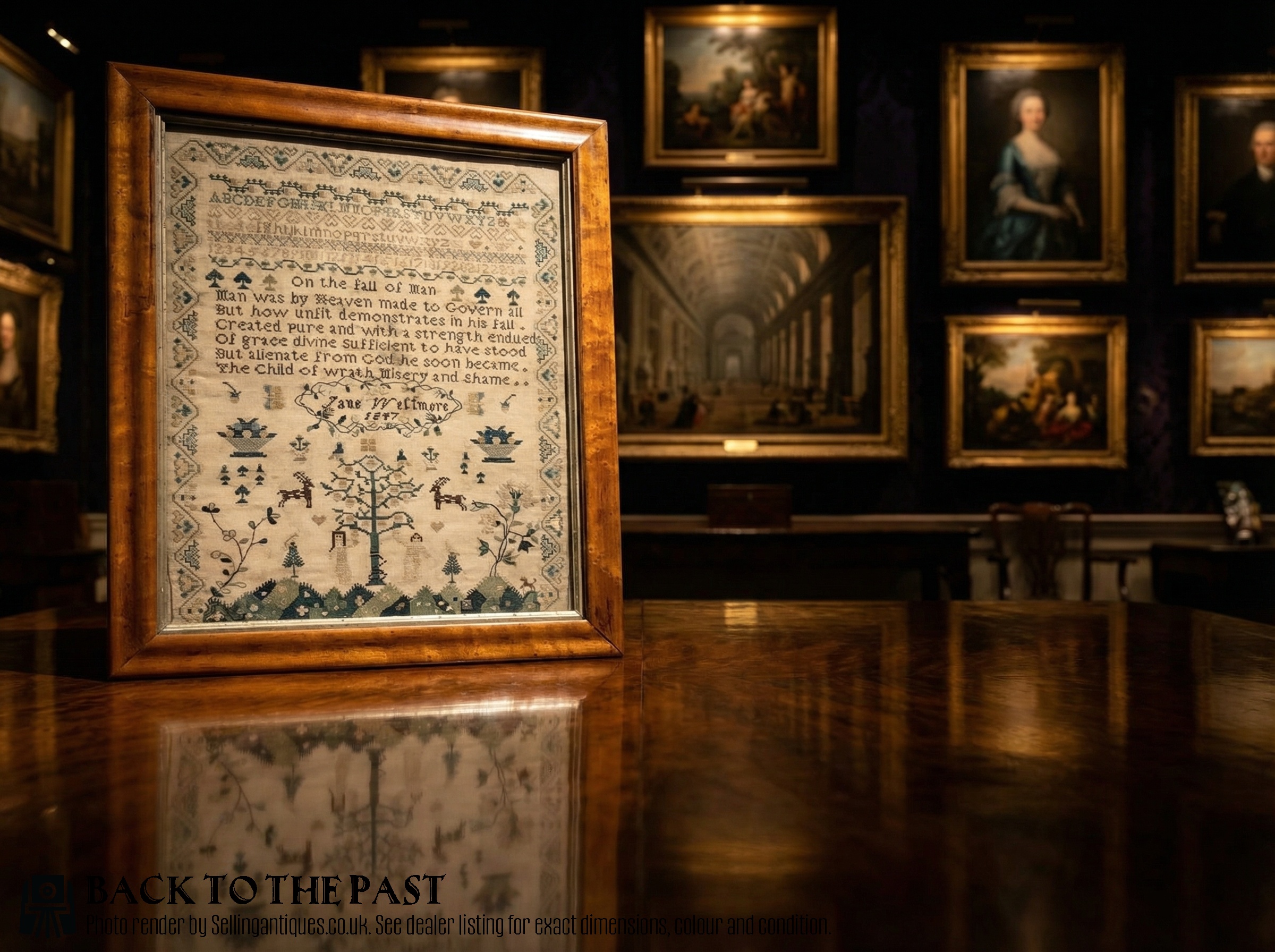
When you search for antique cross stitch, you encounter a range of needlework samplers, framed textile art, and embroidered panels spanning the eighteenth, nineteenth, and mid-twentieth centuries. The pieces on this page are dominated by nineteenth-century and Victorian examples, alongside Georgian works and distinct regional items such as Central Asian tribal hangings.
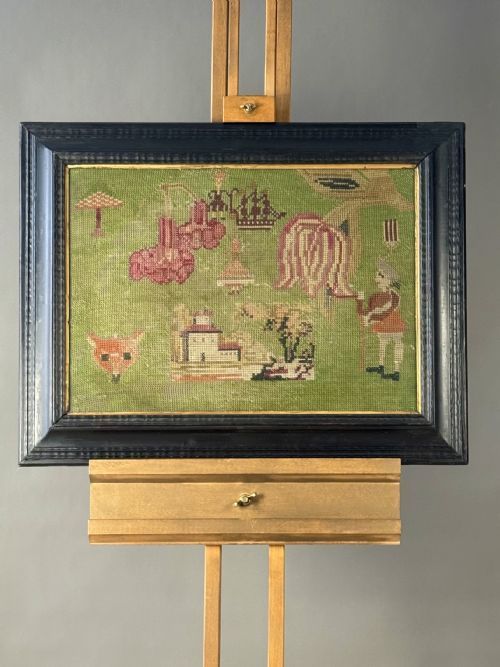
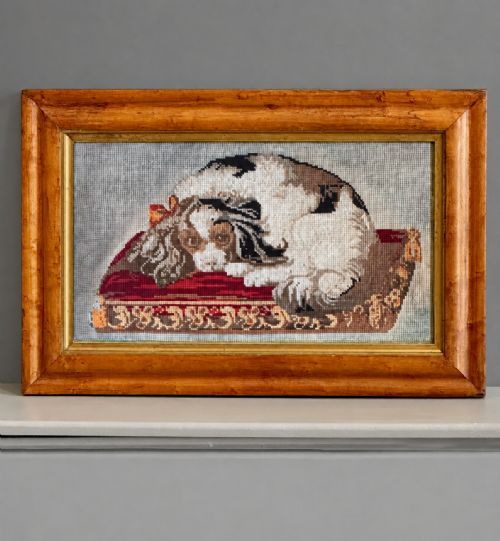
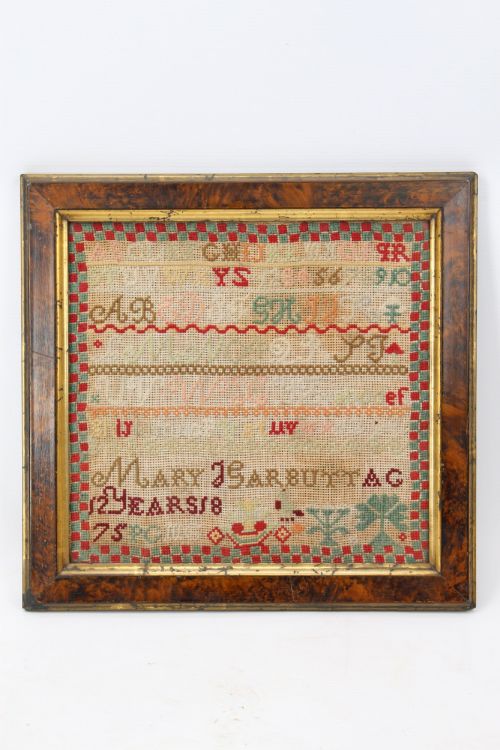
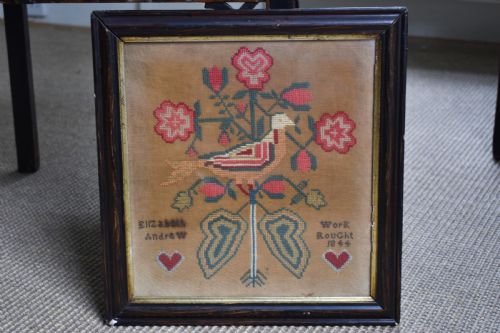
Makers recorded in these listings are frequently young girls who stitched alphabets, biblical verses, and family records, leaving their names, ages, and dates for posterity. Alongside traditional schoolroom samplers, the selection includes pictorial needlework depicting animals, maritime flags, and specialised Berlin work.
Most items survive in period frames, ranging from burr maple to simple wood mouldings, preserving the textile art as wall hanging panels. Formats vary from miniature pocket samplers to large wall art pieces created by school pupils across England, Scotland, and Wales.
Materials and methods
Makers worked primarily on linen grounds, utilising wool, silk thread, and standard thread to execute counted-thread embroidery and cross stitch patterns. The choice of fibre determines the texture and durability of the panel, with silk yielding finer pictorial details and wool providing heavier, raised stitches.
Frames utilise wood and glass to protect the delicate textiles from dust and handling while allowing clear visibility of the stitching. Burr maple and other period timber mouldings are common surrounds that complement the domestic character of the needlework.
Antique Cross Stitch Retail Price Guide 2026
Typical asking prices for cross stitch among the pieces listed under this phrase on Sellingantiques today, from the lower quarter to the upper quarter. They describe what is for sale here now, not the wider market.
Listings feature linen, wool, silk thread, and glass, spanning periods from the eighteenth century through to the mid-twentieth century.
Assessing quality
Quality rests in the precision of the stitching, the complexity of the design, and the legibility of alphabets or verses. Finer examples display meticulous stitch control and harmonious colour palettes that remain vibrant despite age.
The historical documentation adds value, particularly when a sampler retains a fully legible signature, age, date, and school name. Survival in an original period frame further distinguishes the most desirable pieces from those re-framed later.
The Antique Cross Stitch Glossary
- Sampler
- A piece of needlework produced as a demonstration or test of skill in various stitches. These historic exercises frequently record the alphabet, numbers, and religious verses.
- Berlin work
- A popular style of nineteenth-century canvas embroidery worked from hand-coloured charted designs. It typically employs bright wool threads to create vivid pictorial subjects.
- Linen
- A strong, durable fabric woven from flax fibres that serves as the traditional foundation ground for antique needlework. Its even weave facilitates precise counted-thread stitches.
- Needlepoint
- Embroidery stitched onto a stiff open-weave canvas ground where the thread covers the entire foundation fabric. It differs from linen samplers by completely obscuring the backing material.
Antique Cross Stitch: Frequently Asked Questions
How do I date an antique sampler?
Many samplers include embroidered dates, along with the maker's name and age, providing a direct record of their creation. Style, framing materials, and lettering formats also help narrow down the period when explicit dates are absent.
Examinations of the backing linen and thread types offer further clues to confirm whether a piece originates from the Georgian or Victorian eras.
What is the difference between a sampler and needlework?
A sampler is a specific type of needlework traditionally used to practice alphabets, numbers, and decorative stitches. General needlework encompasses a broader category of textile art, including pictorial scenes, coats of arms, and maritime flags.
While all samplers are needlework, not all needlework pieces serve as instructional skill demonstrations.
How should I hang antique textiles?
Antique cross stitch pieces should be hung away from direct sunlight and damp environments to prevent fading and fibre degradation. Glass-fronted frames protect the delicate silk and wool threads from airborne dust and physical contact.
Ensure the wall fixings are secure, as many older frames are heavy and require stable support.
Why do some samplers include stitch errors?
Stitch errors reflect the learning process of the young makers, often schoolgirls who were mastering complex counting techniques. These irregularities add genuine historical character and confirm the handmade nature of the piece.
Collectors often appreciate these minor mistakes as evidence of authentic domestic education.