


Georgian Alphabet Sampler
A georgian alphabet sampler is a stitched textile record of letters and numbers, treasured for its intimate glimpse into early domestic education and needlework skill.
Georgian Alphabet Sampler
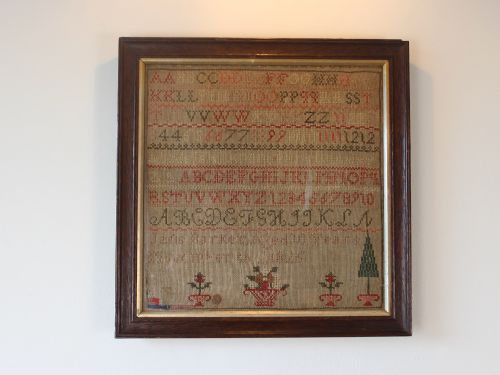
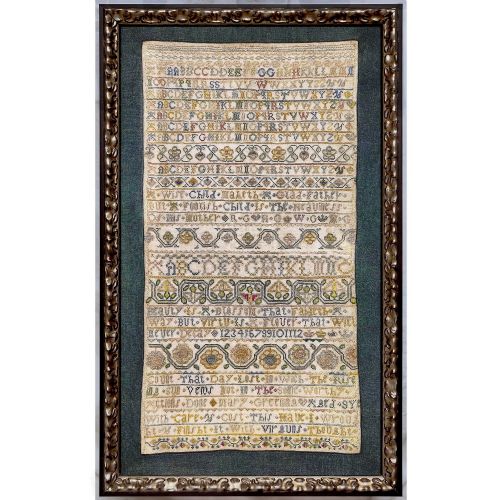
A georgian alphabet sampler takes the form of framed wall art and textile panels worked in thread upon a linen ground. These works document letters, numbers, and pious texts stitched by hands ranging from young learners to accomplished needlewomen.
The pieces on this page span the georgian and 19th century periods, alongside Victorian and late 17th or early 18th century examples. Forms include band samplers, Lord's Prayer panels, and school exercises bearing names and dates.
Makers recorded in the stitching include Mary Greening, Elizabeth Horn, Sarah Baker, Ann B Gilies, Martha Hall, Rachel, Sarah Reading, Jane Pattinson, Eleanor Grady, and Louiss Elkins.
How they were made
Makers worked primarily with thread, silk, silk thread, and wool stitched directly onto a linen foundation fabric. These textile materials were selected for their fine weave and durability.
Finished panels were commonly secured behind glass and set within wood frames to protect the delicate embroidery from dust and handling.
One young maker carefully recorded her exact age as twelve yeas, preserving a charming spelling slip in permanent thread.
What varies in quality
Quality rests in the precision and regularity of the stitches, alongside the complexity of the motifs chosen by the maker. Alphabets accompanied by verses, school names, or elaborate pictorial bands demonstrate greater ambition than simple letter rows.
The survival of the original linen ground and the crispness of the remaining thread colours define the visual impact of the piece. Samplers that retain clear signatures and dates offer deeper historical documentation.
Mary Greening·Elizabeth Horn·Sarah Baker·Sarah Reading·Jane Pattinson·Eleanor Grady
The Georgian Alphabet Sampler Glossary
- Band sampler
- A long, narrow textile panel displaying horizontal rows of different embroidery patterns and stitches. These pieces served as reference collections for a needlewoman's repertoire.
- Linen
- A strong textile woven from flax fibres, used as the foundational canvas for needlework samplers. Its even grid structure aided the formation of regular stitches.
- Needlepoint
- A form of embroidery where yarn or thread is stitched through a stiff open-weave canvas or linen ground. It creates a dense, durable surface pattern.
- Stuart
- A stylistic period spanning the 17th century, occasionally referenced in early needlework designs and motifs. Pieces from this era often feature distinctive band arrangements.
Georgian Alphabet Sampler: Frequently Asked Questions
What is a georgian alphabet sampler?
A georgian alphabet sampler is a framed textile piece embroidered with letters, numbers, and often verses by individuals learning or demonstrating needlework skills.
These works frequently include the maker's name, age, and a date, providing a direct record of domestic education during the period.
How were samplers displayed?
Historic samplers were typically mounted behind glass and housed in simple wood frames to preserve the delicate silk and wool threads from environmental damage.
Today, they are hung as wall art in studies, living rooms, and hallways where direct sunlight can be controlled.
How do I date a sampler?
Many samplers include an embroidered year alongside the maker's name, which offers a precise point of origin for the piece.
When a date is absent, dating relies on the style of the lettering, the types of motifs used, and the characteristics of the linen and thread materials.
Did children make these?
Numerous samplers were stitched by young learners, such as the example worked by twelve-year-old Louiss Elkins or pupils at institutions like Oswestry National School.
These schoolgirl exercises served as proof of a proper domestic upbringing and proficiency in needlecraft.