




Antique Schoolgirl Sampler
These antique schoolgirl sampler pieces are needlework exercises worked by young hands, offering a direct window into nineteenth-century domestic education.
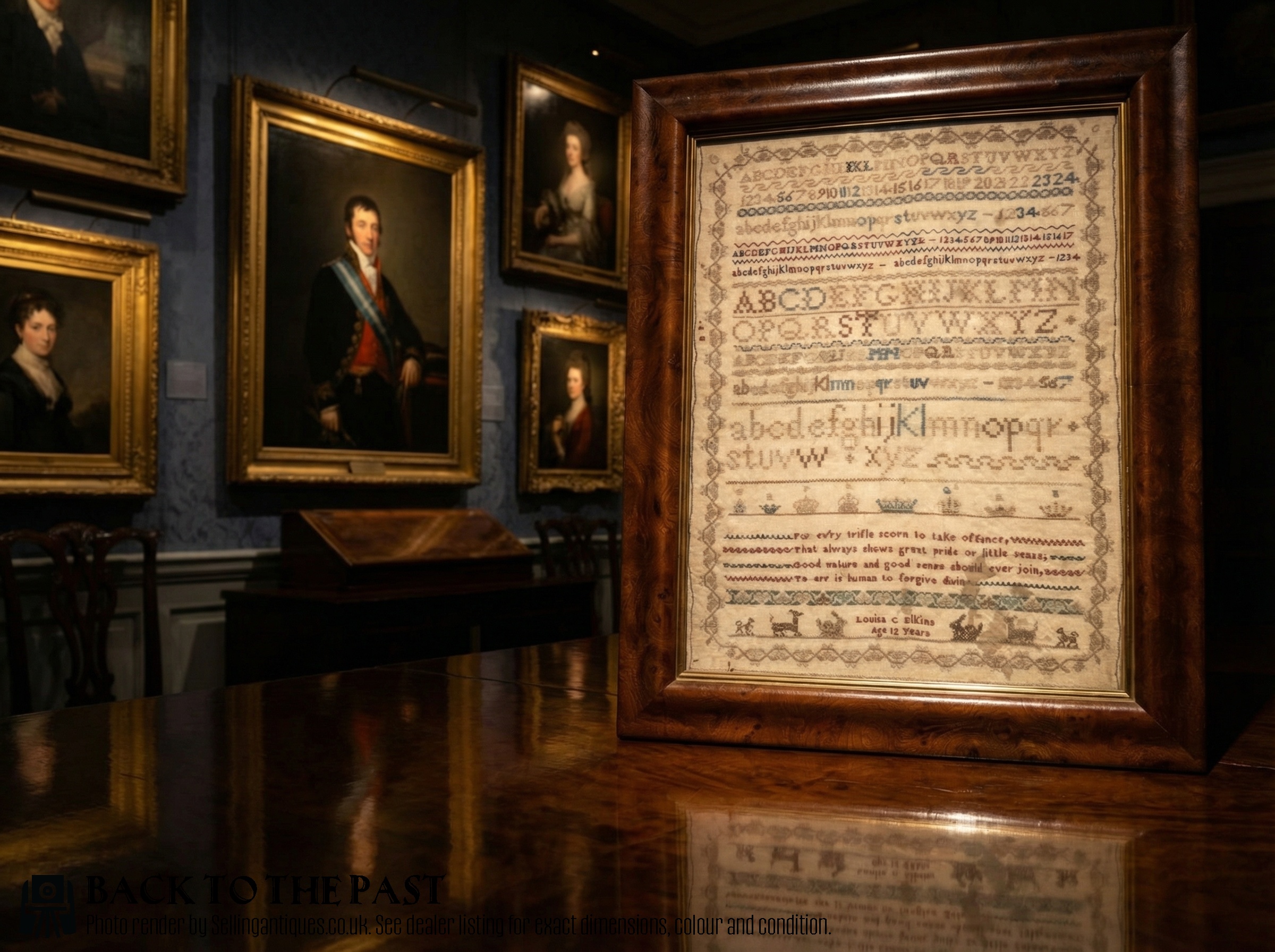
Antique Schoolgirl Sampler
An antique schoolgirl sampler represents a domestic stitching exercise executed by a young girl, often recording her age, the date, and the name of her school or establishment. These textiles appear across the eighteenth century, the Georgian period, and the Victorian era, spanning several decades of needlework tradition.
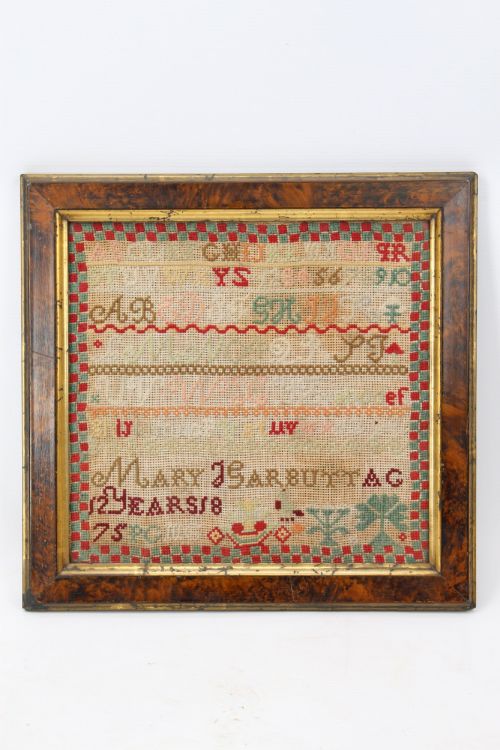
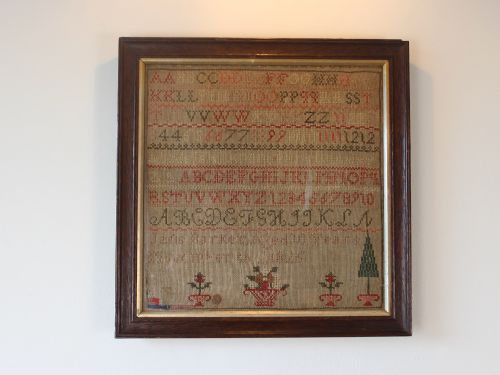
The most common examples on this page take the form of framed textile wall art, incorporating alphabets, numerals, and sometimes pictorial maps or moral verses. Many pieces highlight the young maker's age, frequently twelve years old, alongside names such as Mary J Garbutt or Maggie Muir.
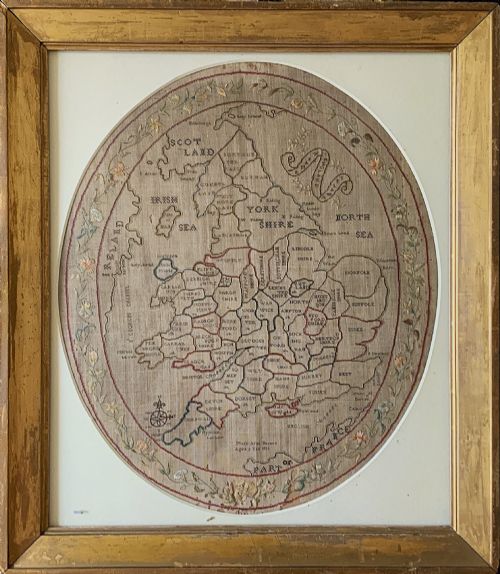
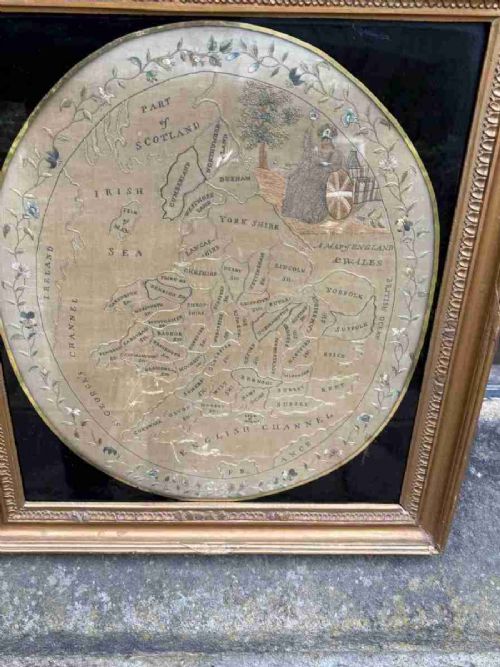
Makers utilised various formats, from straightforward alphabet grids to detailed cartographic works like the map of England and Wales by Mary Banion. These works often survive behind glass in wooden frames, preserving the delicate stitching from environmental damage.
Materials and construction
The foundation of these works is typically a woven linen ground, chosen for its even thread count which aided the execution of regular stitches. Upon this surface, makers applied silk thread, wool, and standard thread to build up alphabets, borders, and pictorial motifs.
Needlepoint and embroidery techniques dominated the construction, requiring steady hands to maintain uniform tension across the textile panel. Stitch errors, such as those noted in the Scottish sampler by Maggie Muir, reveal the human hand behind these historic classroom exercises.
Antique Schoolgirl Sampler Retail Price Guide 2026
Typical asking prices for schoolgirl sampler among the pieces listed under this phrase on Sellingantiques today, from the lower quarter to the upper quarter. They describe what is for sale here now, not the wider market.
Common formats on this page include framed textile wall art, alphabet grids, and educational map needlepoint panels.
Factors of distinction
The distinction between standard examples and superior pieces rests upon the complexity of the design and the regularity of the stitching. Alphabet grids represent the basic tier of instruction, whereas pictorial compositions, school names, and cartographic subjects demonstrate higher ambition and skill.
Condition and legibility heavily influence the character of a piece. Original wooden frames and protective glass preserve the silk and wool threads from fading or fraying, keeping the names and dates clear for the modern viewer.
The Antique Schoolgirl Sampler Glossary
- Sampler
- A piece of needlework produced as a demonstration or test of skill in various stitches. Young girls worked these to practice alphabets, numbers, and decorative motifs.
- Needlepoint
- A type of canvas work embroidery where yarn is stitched through a stiff open-weave canvas. This technique allowed makers to create firm, flat surfaces for maps and pictorial scenes.
- Cartographic sampler
- A specialised textile design featuring a map, such as England and Wales, embroidered with geographical details. These combined geography lessons with advanced needlework skills.
- Alphabet sampler
- A textile focused primarily on rows of capital and lowercase letters and numerals. They served as the foundational exercise for young learners before moving to pictorial designs.
Antique Schoolgirl Sampler: Frequently Asked Questions
What is an antique schoolgirl sampler?
An antique schoolgirl sampler is a historic textile piece stitched by a young girl as part of her education. These works typically display alphabets, numbers, and decorative motifs, often recording the maker's name and age.
They offer a tangible record of domestic life and schooling across the eighteenth and nineteenth centuries, preserved as framed wall art.
How can I tell the period of a sampler?
Dating relies heavily on the style of the lettering, the framing materials, and any inscribed dates or names. Georgian and Victorian examples often feature distinct border patterns and colour palettes typical of their respective decades.
Needlework styles shifted over the nineteenth century, moving from simple alphabet grids toward more elaborate pictorial and cartographic compositions.
Where were these samplers made?
Many samplers originated in domestic settings or formal educational establishments, including boarding schools and national schools like the Oswestry National School. Girls learned needlework as a fundamental part of a proper upbringing.
Establishments often encouraged pupils to stitch their school name alongside their own, providing a provenance that links the textile to a specific institution.
How should I display a framed sampler?
These textiles require protection from direct sunlight to prevent the silk and wool threads from fading. Keeping them behind glass in stable indoor environments helps preserve the fragile linen ground.
Wall placement should avoid areas prone to dampness or extreme temperature fluctuations, ensuring the historic fibres remain stable over time.