
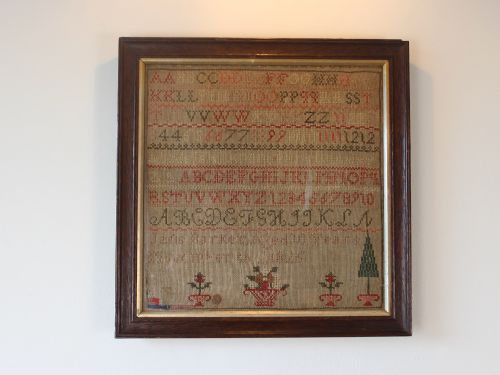
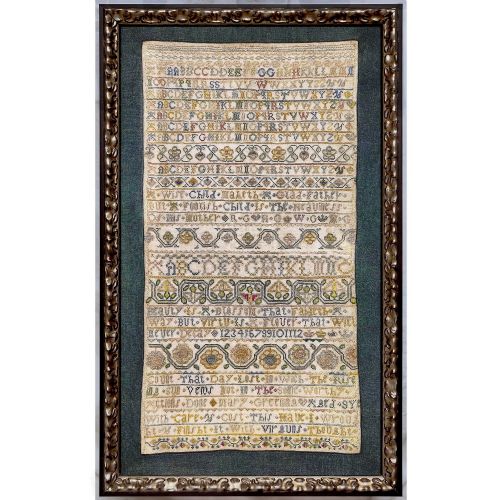


Embroidered Alphabet Panel
An embroidered alphabet panel is a needlework sampler recording letters and numbers, offering a direct tangible link to childhood education centuries ago.
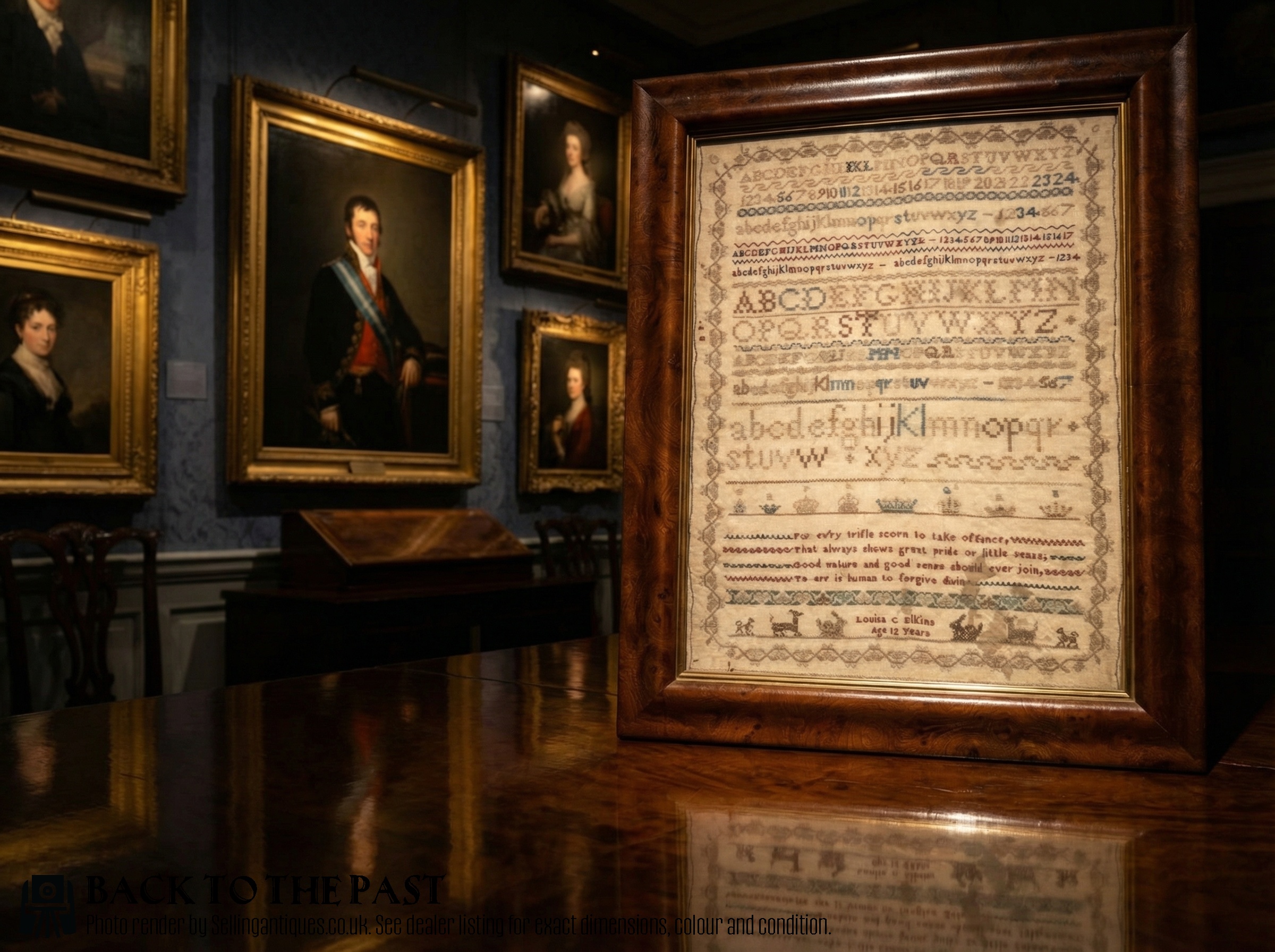
Embroidered Alphabet Panel
When you search for an embroidered alphabet panel, you are looking at historical needlework samplers produced across the 18th, 19th, and late 17th centuries. These textile works typically feature rows of alphabets, numerals, and occasionally pious verses or family names stitched by young makers.
The pieces you are most likely to meet on this page span the Georgian and Victorian eras, often framed behind glass within wooden surrounds. They represent domestic textile art created as practice pieces or educational exercises by girls and young women.
Originating predominantly from English traditions, these needlework samplers vary from simple band samplers of the late 1600s to structured mid-Victorian compositions. Each panel captures the distinct hand of its maker, sometimes recording her age and the date of completion.
How they were made
These works were constructed using silk thread, wool, and metallic threads stitched onto woven linen grounds. The execution relied on counted-thread techniques, ensuring uniform letters and geometric motifs across the fabric surface.
Makers utilised various stitches such as cross stitch, satin stitch, and eyelet hole stitch to form alphabets and pictorial borders. Once completed, the linen grounds were frequently mounted into wood frames, often protected behind glass to preserve the fragile threads.
Listings feature linen grounds worked with silk thread and wool across the Georgian, Victorian, and 19th-century periods.
What varies in quality
Quality in an embroidered alphabet panel rests upon the regularity of the stitching and the complexity of the design layout. Superior examples display dense, even tension and precise letterforms without distortion across the linen ground.
The inclusion of specific maker details, such as a legible name, age, and date, elevates the historical interest of the textile. Additionally, the preservation of original vibrant colours in the silk or wool threads distinguishes exceptional survivals from faded pieces.
The Embroidered Alphabet Panel Glossary
- Band sampler
- A narrow, horizontal format featuring rows of distinct embroidery patterns and alphabets stacked vertically. This layout represents an earlier tradition before the square or rectangular compositions of later periods became standard.
- Counted thread
- An embroidery technique where stitches are formed over a specific number of warp and weft threads in the linen ground. This method ensures the geometric precision seen in historical alphabet panels.
- Ground
- The foundational fabric, typically linen, upon which the embroidery threads are applied. Its tight or loose weave dictates the scale and fineness of the finished needlework.
- Needlework sampler
- A piece of textile art created to demonstrate and practice stitching skills, usually incorporating alphabets, numbers, and motifs. They served as both educational exercises and decorative household items.
Embroidered Alphabet Panel: Frequently Asked Questions
What is an embroidered alphabet panel?
An embroidered alphabet panel is a historical needlework sampler created to practice and demonstrate stitching proficiency. These textile works typically display rows of letters, numbers, and decorative motifs.
Created predominantly by young makers, these panels often record the name, age, and date of completion. They survive today as framed wall art documenting domestic education and textile traditions.
How were these samplers originally used?
These samplers served as educational exercises for girls learning domestic needlework skills in the 18th and 19th centuries. They proved a young maker's dexterity with various stitches and letterforms.
Once finished, the panels were frequently framed and hung in domestic interiors as decorative items. They also served as a lasting record of a child's early accomplishments.
How do I date an alphabet sampler?
Many samplers include embroidered dates, ages, or maker names that provide a direct point of reference. Stylistic shifts in lettering, border designs, and framing also help narrow down the period.
Earlier examples from the 17th and early 18th centuries often take a long band format, whilst 19th-century pieces favour structured rectangular compositions. Materials like linen and silk thread remained consistent, but colour palettes shifted across decades.
How should I display a textile sampler?
Textile samplers require careful placement away from direct sunlight to prevent the silk and wool threads from fading. Maintaining stable indoor humidity levels protects the fragile linen ground from deterioration.
When hanging, ensure the piece is securely framed behind glass with adequate spacing between the textile and the glazing. This prevents moisture accumulation and safeguards the historical embroidery against physical damage.