


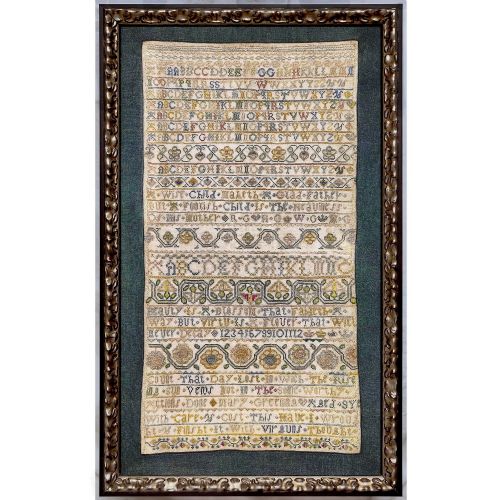

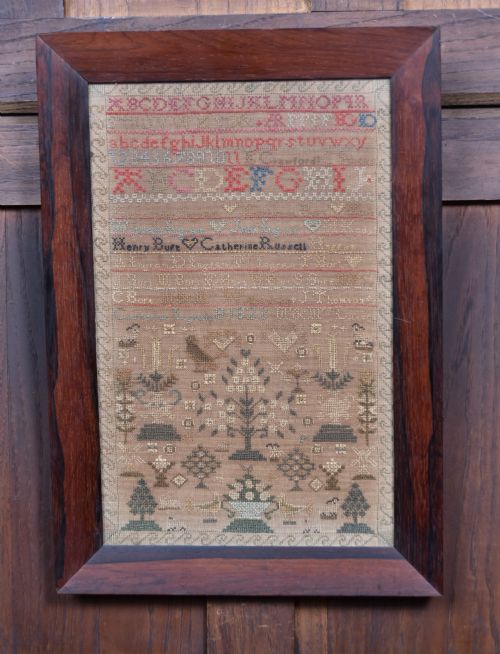


Framed Needlework Sampler
A framed needlework sampler preserves centuries of domestic needlecraft behind glass, offering a direct window into the hand of a young maker.
Framed Needlework Sampler
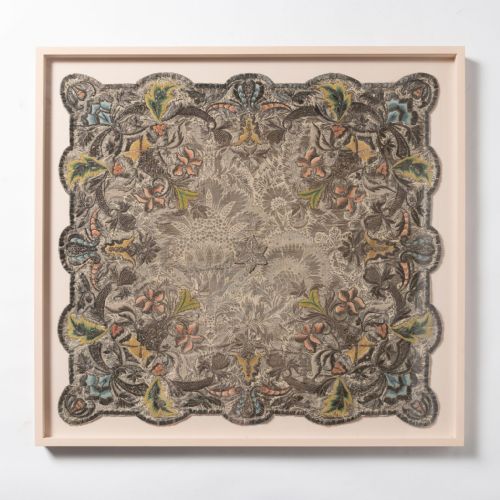
A framed needlework sampler is a historic textile piece created to demonstrate stitching proficiency, alphabets, or pictorial scenes. These works range from early examples dating to the seventeenth century through to Victorian schoolroom exercises.
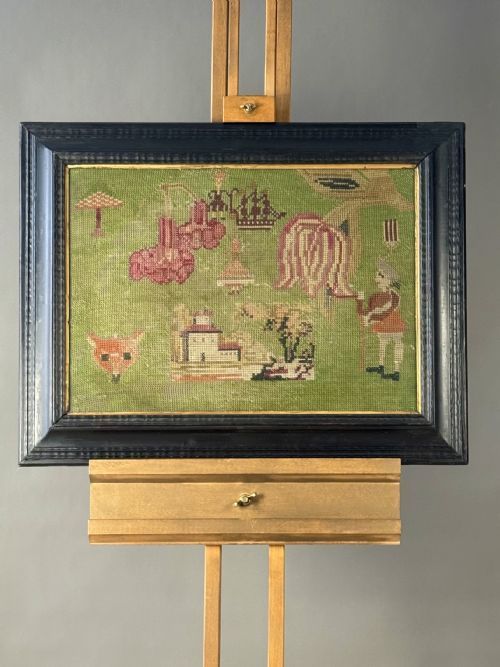
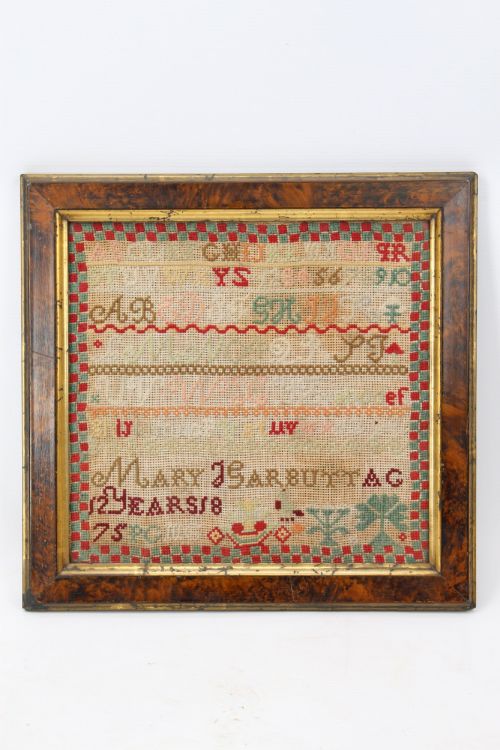
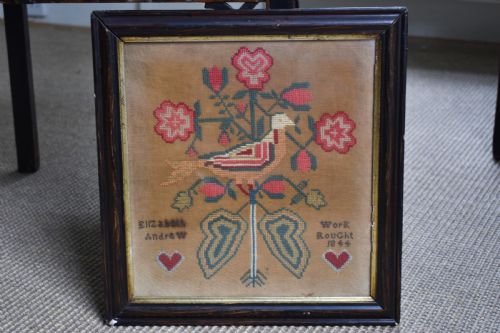
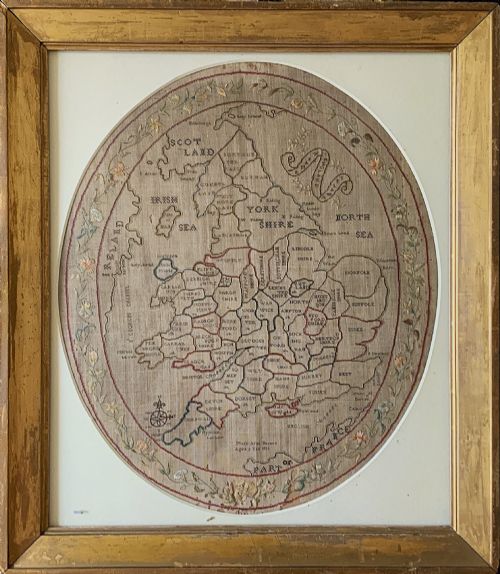
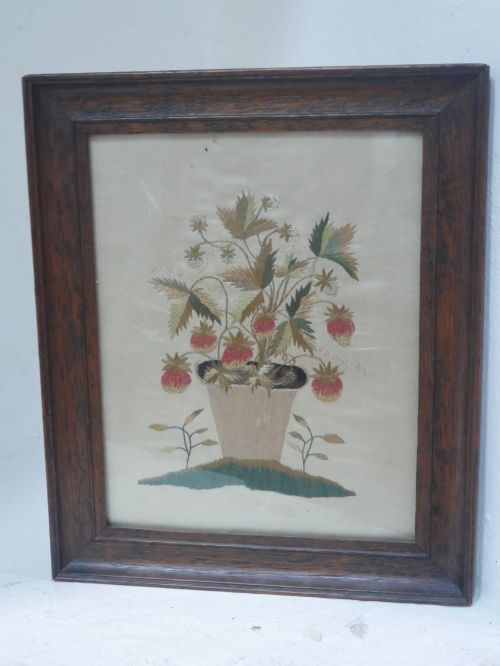
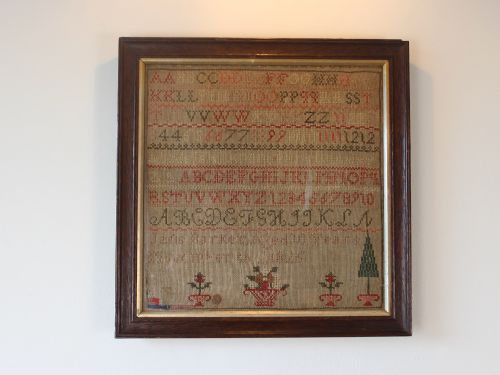
Buyers will encounter various formats on this page, including traditional alphabet bands, cartographic maps of England and Wales, and pictorial scenes such as pots of strawberries or biblical figures. Most examples originate from the Georgian and Victorian periods, often bearing the name and age of the young maker.
The survival of these textiles depends heavily upon their original mounting and subsequent protection behind glass within period wood frames. They serve as social history documents that record juvenile education and domestic accomplishment in thread.
Materials and construction
Makers stitched their designs primarily onto plain woven linen grounds using silk, wool, and cotton threads. Silk floss and wool work feature prominently in seventeenth, eighteenth, and nineteenth-century pieces, creating varied textures across the canvas.
Execution relied on counted thread techniques, gros point, and various embroidery stitches to form alphabets, numbers, motifs, and pictorial narratives. Finished panels were then secured into timber frames, frequently protected beneath old window glass.
Current listings feature materials such as silk thread, wool, and linen housed within wood and glass frames across the eighteenth and nineteenth centuries.
Assessing quality and preservation
Quality rests in the precision of the stitching, the complexity of the design, and the survival of the original materials. Works incorporating map designs or pictorial figure subjects often demonstrate higher technical ambition than basic alphabet exercises.
Condition plays a major role, distinguishing pieces with stable, unfaded threads and intact early frames from those suffering from extensive fibre degradation or later glass replacement.
The Framed Needlework Sampler Glossary
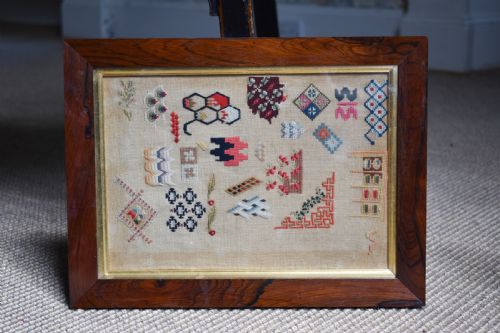
- Band sampler
- A long, narrow cloth displaying horizontal rows of different embroidery stitches and patterns, popular in earlier centuries.
- Cartographic sampler
- An embroidered map, frequently depicting England and Wales, combining geography lessons with needlework skill.
- Gros point
- A counted thread needlepoint stitch that creates a firm, textured surface, often used for pictorial panels.
- Silk floss
- Unspun or lightly twisted silk thread that provides a glossy, reflective finish to stitched motifs.
- Alphabet sampler
- A textile练习 featuring rows of letters and numerals used to teach literacy alongside sewing competence.
Framed Needlework Sampler: Frequently Asked Questions
How old is my sampler?
Many framed needlework samplers include inscribed dates and the age or name of the maker, such as a young girl working in the Georgian or Victorian era. Stylistic clues like alphabet fonts, framing methods, and linen types help narrow down undated examples.
Evidence from this category spans from the late seventeenth century through the nineteenth century, showing distinct shifts in educational subject matter over those periods.
Were samplers made by children?
Historical records and inscriptions show that these textiles were largely stitched by young girls in schoolrooms or at home as proof of their needle skills. Signatures often record the maker's age, frequently around ten to twelve years old.
These pieces capture a structured domestic education where mastering complex stitches and lettering was a standard part of upbringing.
Why are maps found on samplers?
Geographical pieces combined needlework instruction with geography, teaching young makers the counties and borders of England and Wales through thread. Such works required meticulous planning of scale and lettering to fit the linen ground.
Cartographic examples represent a more ambitious educational project than standard alphabet or verse bands.
How should I hang a framed textile?
Framed needlework requires protection from direct sunlight to prevent the silk and wool threads from fading against the linen ground. Stable indoor humidity and secure wooden framing ensure the historic fabric remains supported behind its glass.
Original frames should be preserved where possible, as they form part of the object's historic integrity.