


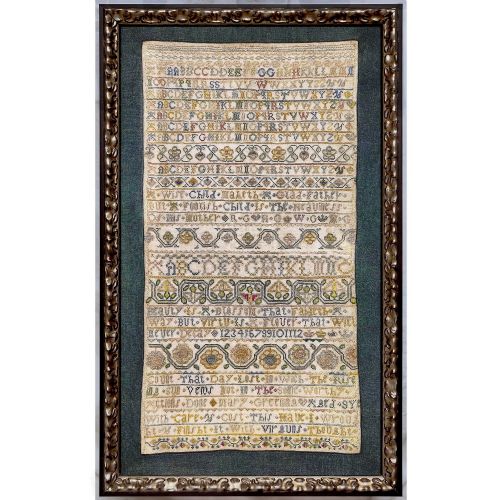

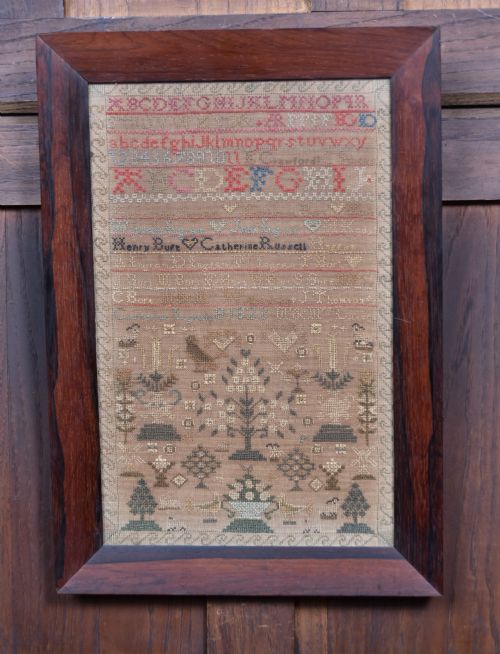


Georgian Embroidery Sampler
A georgian embroidery sampler brings centuries of needlework into a room, recording names, dates and stitches through silk and linen.
Georgian Embroidery Sampler
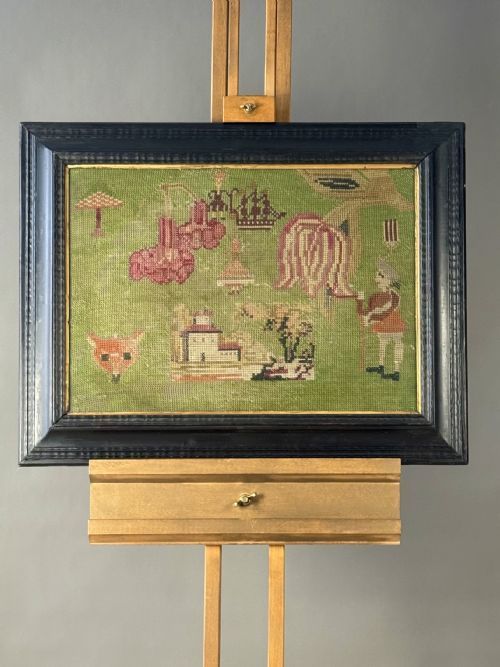
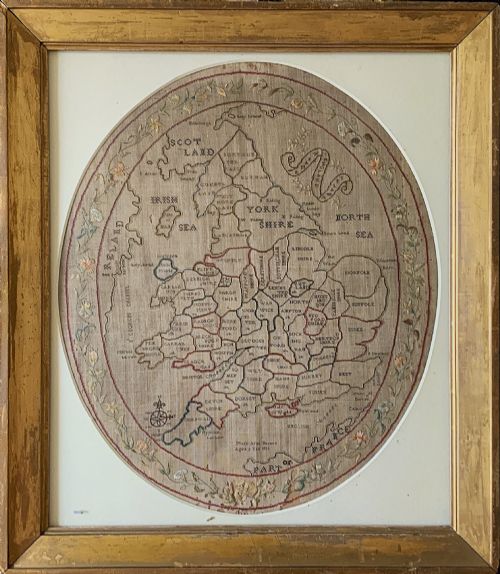
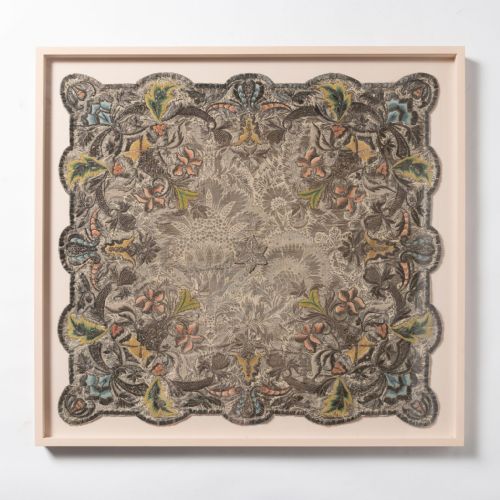
A georgian embroidery sampler takes many forms on this page, ranging from educational alphabets and religious texts to detailed maps of England and Wales. These pieces are textile art meant for display, often framed behind glass in wood surrounds or mounted into fire screens.
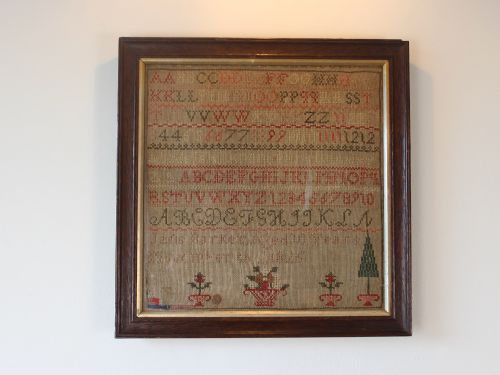
The version most commonly met here originates in the eighteenth or nineteenth century, bearing the signature and age of young makers such as Mary Banion at nine years old or Louiss Elkins at twelve. Alongside names, makers recorded dates, school origins like the Oswestry National School, and historical narratives.
Makers utilised various formats, from traditional band samplers and pictorial needlework panels to cartographic studies. These needlework pieces reflect the domestic education of girls during the Georgian and Regency periods, preserving schoolroom exercises through careful threadwork.
Materials and construction
Makers stitched onto a linen ground using silk, wool, and silk thread or silk floss. The natural fibre of the linen provided a sturdy foundation for intricate needlepoint and embroidery.
Finished works were typically preserved behind glass within wooden frames, protecting the delicate threads from dust and environmental wear over the centuries. Some specialised pieces were integrated directly into functional furnishings like needlework sampler firescreens.
Object forms on this page include framed textile art, map samplers, alphabet panels, and needlework firescreens.
Factors that distinguish quality
Quality rests on the precision of the needlework and the complexity of the design, such as a detailed map with legible lettering rather than a basic alphabet. The condition of the silk thread and linen ground also dictates desirability, alongside the clarity of the maker's name and date.
Pictorial depth and narrative ambition elevate certain panels, particularly those depicting complex scenes from stories or detailed cartography. Surviving original wood frames and glass further enhance the integrity of the piece.
Mary Banion·Mary Greening·Elizabeth Horn·Sarah Baker·Mary Street·Susan Mary Williams·Mary Pinfold
The Georgian Embroidery Sampler Glossary
- Sampler
- A piece of needlework produced as a demonstration or test of skill in various stitches. These typically feature alphabets, numbers, motifs, and maker details.
- Band sampler
- An early format of embroidery featuring horizontal rows of distinct patterns and stitches arranged in bands. These developed into more pictorial compositions by the Georgian era.
- Map sampler
- A specialised geographical embroidery depicting regions such as England and Wales. These served as both needlework exercises and geography lessons.
- Needlepoint
- A type of canvas work embroidery where yarn or thread is stitched through a stiff open-weave mesh. It forms a dense, durable surface covering the ground entirely.
- Silk floss
- Unspun or loosely twisted silk fibres used for embroidery. It provides a distinct glossy sheen to specific elements within a needlework picture.
Georgian Embroidery Sampler: Frequently Asked Questions
What is a georgian embroidery sampler?
A georgian embroidery sampler is a historical piece of textile art worked in silk, wool, or thread on a linen ground. These works recorded alphabets, maps, prayers, and names of young makers.
Created during the eighteenth and nineteenth centuries, they served as educational exercises and domestic decoration, surviving today behind glass in wood frames.
How were these samplers used?
Makers originally produced them to demonstrate proficiency in various needlework stitches and literacy skills. They recorded dates, ages, and school affiliations.
Once completed, families mounted them as framed wall art or incorporated them into functional items like firescreens to display household refinement.
How do I date a sampler?
Many samplers include embroidered dates, maker names, and ages which provide a precise point of origin. Stylistic shifts in lettering, motifs, and framing also help identify the period.
Eighteenth-century examples often lean toward band layouts or simple pictorials, while Regency pieces frequently feature cartography and narrative scenes.
How should I care for a sampler?
Protect antique textiles by keeping them away from direct sunlight to prevent the silk and wool threads from fading. Maintaining stable humidity levels prevents degradation of the linen ground.
Ensure the piece remains sealed behind glass in its frame to guard against dust, moisture, and handling damage.