






18th Century Sampler
An 18th century sampler brings domestic needlework into the home as framed wall art that records family names, alphabets, and geography.
18th Century Sampler
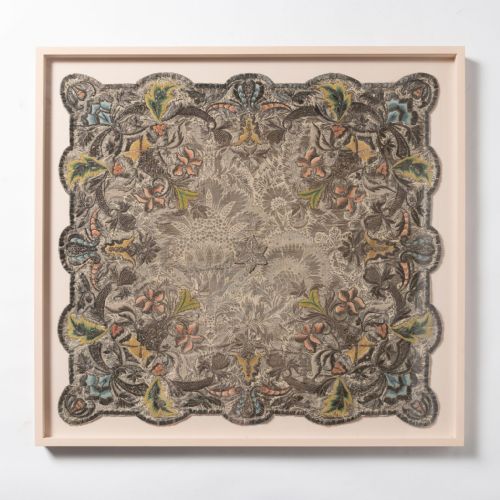
When you search for an 18th century sampler, you encounter textile art spanning the Georgian period and the years around 1700 to 1800. These works take the form of needlework samplers, embroidered maps, and pictorial panels that often hang in glazed wooden frames.
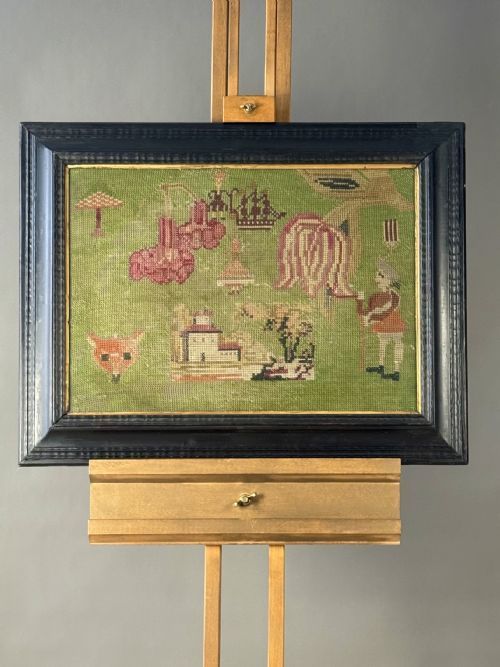
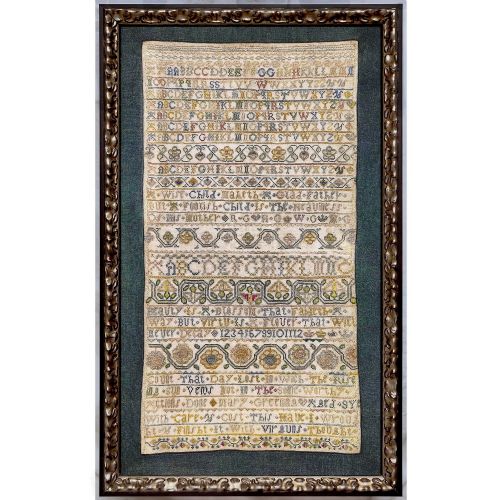
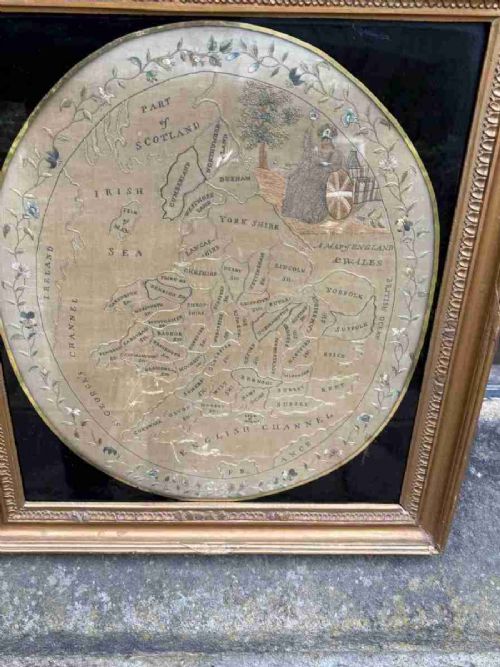
The subjects on this page range from alphabet band samplers and the Lord's Prayer to floral compositions and cartographic embroidery of England and Wales. Surviving examples connect directly to the domestic education and needle skills of women and girls in the Georgian era.
How they were made
These textiles rely on a ground of woven linen stitched with silk thread, wool, or standard thread. Makers worked counted-thread and surface embroidery techniques to build lettering, figures, and borders.
Framing typically involves wood, oak, or giltwood mouldings set with glass to protect the delicate threads and fabrics from atmospheric dirt and handling.
18th Century Sampler Retail Price Guide 2026
Typical asking prices for 18th century sampler among the pieces listed under this phrase on Sellingantiques today, from the lower quarter to the upper quarter. They describe what is for sale here now, not the wider market.
Listings feature linen, silk thread, wool, oak, and giltwood across pieces dated from 1700 through the Georgian era.
What varies in quality
Quality rests in the precision of the stitching and the ambition of the composition, moving from simple band exercises to complex pictorial scenes or detailed county maps. Samplers that retain clear maker signatures, legible dates, and strong silk thread colours stand apart.
The condition of the linen ground and the integrity of the original wood frames also influence the standing of a piece. Fading and textile loss alter the visual balance, whereas crisp execution and stable mounting preserve the narrative intent of the maker.
Mary Greening·Sarah Reading·Susan Mary Williams·Hannah Harwood
The 18th Century Sampler Glossary
- Band sampler
- An early form of needlework featuring horizontal rows of distinct patterns, alphabets, and motifs. These pieces served as permanent reference guides for stitches.
- Map sampler
- An embroidered geographical study, frequently depicting England and Wales with county boundaries and place names. Girls stitched these to demonstrate proficiency in both needlework and geography.
- Silk floss
- Unspun silk fibres used to achieve high lustre and smooth coverage in detailed embroidery. It provides the fine shading seen in pictorial needlework pictures.
- Giltwood
- Wood carved and covered with a thin layer of gold leaf or gold-coloured pigment. It appears on finer frames housing period textile art.
18th Century Sampler: Frequently Asked Questions
How do I date an 18th century sampler?
Many pieces carry direct evidence through embroidered dates, maker names, or specific historical references like the Lord's Prayer. Stylistic cues in the lettering and border designs help narrow down works that lack a stitched year.
Needlework styles shifted from linear band layouts toward pictorial compositions and cartographic maps as the century progressed. Comparing the stitching materials and framing style against dated examples provides further confirmation.
Were samplers made by children?
Most surviving pieces were worked by young girls and teenagers as part of their domestic education in households or schools. These exercises proved their mastery of alphabets, numbers, and decorative stitches.
Signed works often include the maker's age or the name of the establishment where she studied. The precision of the work varied according to the skill and patience of the individual pupil.
How should I hang and light a needlework sampler?
Textiles require protection from direct sunlight to prevent the silk threads and linen grounds from fading. Hang pieces away from strong heat sources and bright windows to preserve the fibre integrity.
Glazing with UV-filtering glass helps shield the antique threads from environmental damage. Regular gentle checks ensure the frame and backing remain secure.
What is the difference between a sampler and a needlework picture?
A sampler traditionally focuses on alphabets, numbers, and isolated motif rows that demonstrate stitch variations. A needlework picture presents a complete pictorial scene, landscape, or subject without the standard alphabet bands.
Both forms utilise the same linen grounds and thread techniques. Pictorial works often function purely as decorative wall art rather than stitch references.