





Georgian Glass Picture
A georgian glass picture brings a rich tactile depth to a wall, showing through the panel itself rather than on a surface.
Georgian Glass Picture
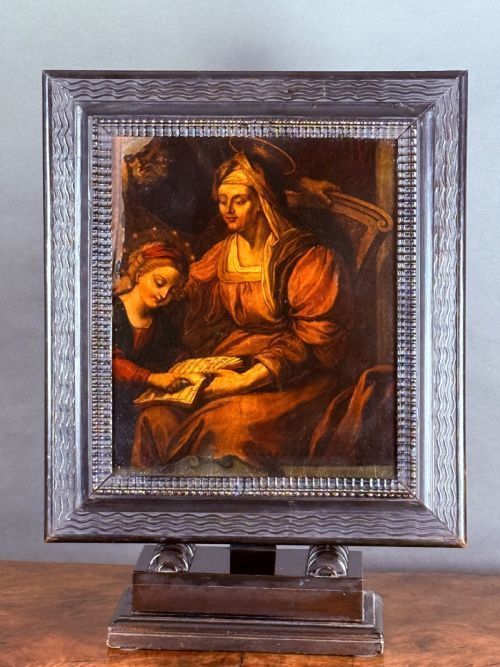
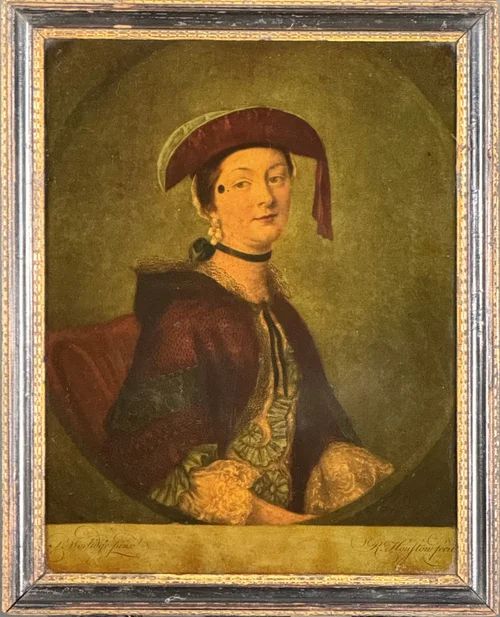
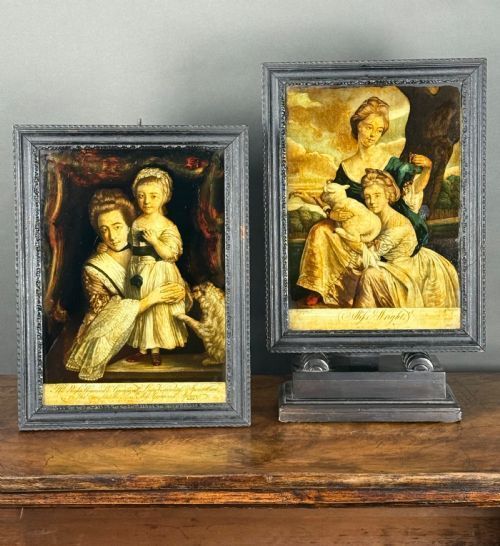
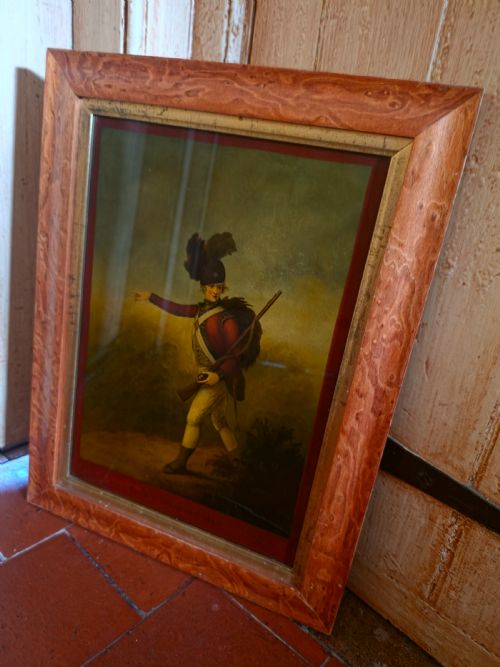
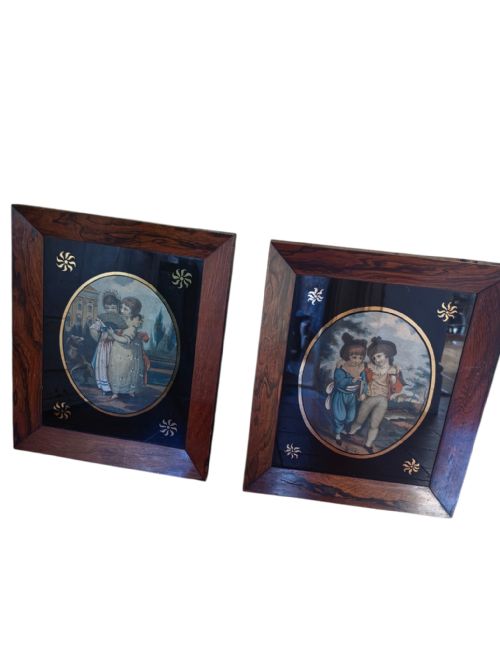
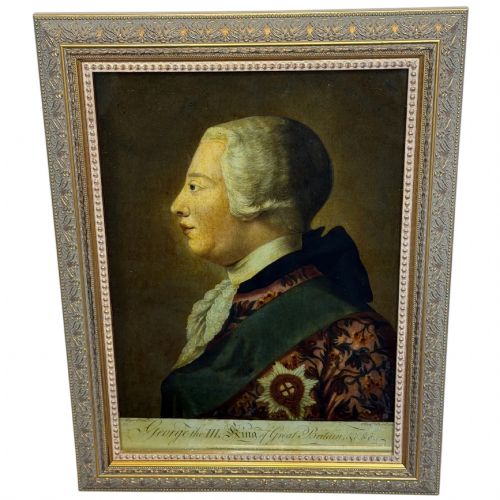
A georgian glass picture is a specialised decorative art form where an engraving, mezzotint or print is transferred onto glass and hand-coloured from behind. On this page, the most common versions are reverse glass mezzotints, engravings and paintings depicting portraits, classical scenes and allegorical figures.
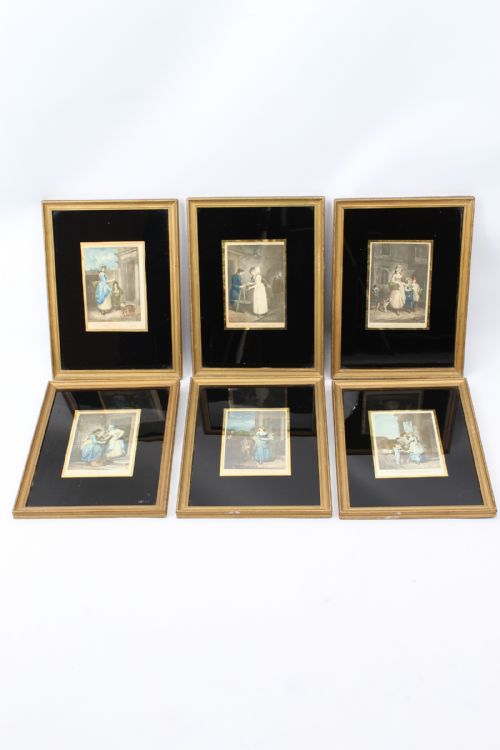
These pieces bridge the gap between fine printmaking and decorative painting, originating largely in the eighteenth and nineteenth centuries. Examples range from single portrait subjects to matched pairs representing the seasons or domestic scenes, housed in period wood frames.
Materials and construction
Makers applied prints face-down onto glass using specialised adhesives before rubbing away the paper backing, leaving only the fine ink lines visible. Pigments, oil paint and gold leaf were then meticulously applied by hand to the reverse side, protecting the colour from dust and damage.
The resulting panels sat within timber surrounds such as rosewood, maple, or original giltwood frames, sometimes accompanied by silk embroidery details or secondary mirror sections.
Georgian Glass Picture Retail Price Guide 2026
Typical asking prices for georgian glass picture among the pieces listed under this phrase on Sellingantiques today, from the lower quarter to the upper quarter. They describe what is for sale here now, not the wider market.
Listings feature works spanning the Georgian, Regency, and Victorian periods, utilising paper, oil paint, gold leaf, and rosewood frames.
Assessing quality
Quality rests primarily in the precision of the initial mezzotint transfer and the delicacy of the subsequent hand-colouring. Finer examples display subtle gradations of pigment and secure adhesion of the print layer, whereas lesser pieces show muddied tones or heavy-handed overpainting.
The integrity of the original frame and the clarity of the glass panel heavily influence the overall character of the piece, as original wood mouldings and unblemished glass preserve the intended visual impact.
Fletcher·Sebastiaan Vrancx·Charles Spooner·Richard Purcell·Robert Sayer·Wheatley·Abraham Cooper·W Bishop·Henry Corbould·Richard Phillips
The Georgian Glass Picture Glossary
- Mezzotint
- A printmaking process using a roughened metal plate that holds ink to produce rich tonal gradations. It provides the detailed tonal foundation for many reverse glass works.
- Reverse glass painting
- An artwork created by applying paint and pigment to the back of a glass panel so the image is viewed through the front. This technique gives the colours a luminous, glassy depth.
- Eglomise
- A decorative technique where cold gilding or metallic leaf is applied to the rear face of glass. It creates a reflective, mirror-like border or background.
- Silkwork picture
- An embroidered textile panel worked in silk threads, often combined with painted paper or glass elements. These provide a textured alternative to pure prints.
- Giltwood
- Timber carved and coated with gold leaf or metallic paint. It frames many of the finer period panels on this page.
Georgian Glass Picture: Frequently Asked Questions
How do I hang a georgian glass picture?
These pieces require secure picture hooks fixed directly into solid wall studs or masonry rather than standard plaster fixings. Because the heavy glass panels and timber frames carry significant weight, stability is essential.
Keep them away from direct sunlight and damp environments to protect the fragile pigments and paper layers sealed behind the glass from fading or moisture damage.
How do I spot a reproduction?
Examine the glass itself for signs of age, including microscopic bubbles, minor surface waviness, and slight irregularities common in historic manufacturing. Modern machine-made float glass appears perfectly flat and uniform.
Check the reverse sealing and framing methods, as older panels use traditional glues, old backing boards, and hand-cut timber mouldings rather than modern staples or contemporary tapes.
Why are some subjects paired?
Makers frequently produced decorative sets representing balanced themes such as the four seasons, contrasting virtues, or complementary male and female portraits. These pairings were designed to hang symmetrically as matching interior ornaments.
Keeping pairs together maintains their historical decorative purpose and provides a balanced display across a wall space.