


Green Reverse Glass Painting
These green reverse glass painting works combine delicate pigment work with the sheen of glass, offering a clear window into historical portraiture and decorative art.
Green Reverse Glass Painting
A green reverse glass painting brings together fine portraiture and decorative wall art created directly on the rear surface of the glass pane. When you search for this phrase, you encounter pieces spanning from the seventeenth century through the twentieth century.
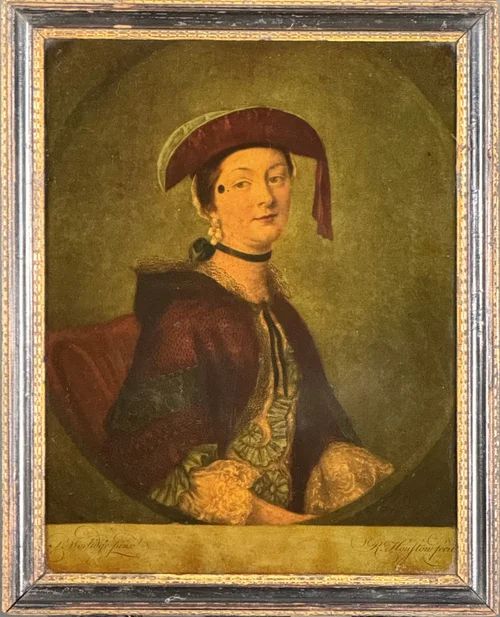
Subjects range from named sitters such as Mrs Brooks and Queen Anne to allegorical figures and narrative scenes like The Match Boy and courtships. These pictures utilise wood frames and brass fittings to house the delicate painted glass panels.
Materials and construction methods
The creation of these works relies on applying oil paint, pigment, and ink directly onto the reverse side of a glass sheet. Artists often laid down printed mezzotints or engravings before applying hand-applied pigments and gilt highlights.
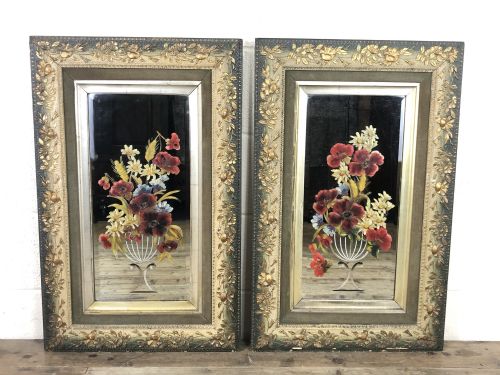
Wood serves as the primary material for the supporting frames that protect the fragile glass and paper components. Brass fixtures frequently provide structural hanging support and decorative detailing for the wall art.
Listings feature items incorporating glass, wood, paper, oil paint, brass, pigment, and gilt across Georgian, Victorian, and Regency periods.
Distinctions in craftsmanship and condition
Quality rests in the precision of the reverse brushwork and the stability of the pigment against the glass substrate. Finer examples maintain the integrity of the delicate painted details without extensive flaking or moisture damage.
The sophistication of the original print or hand-painted portrait dictates the visual impact of the piece. Superior items exhibit careful tonal graduation and well-preserved gilding within the surrounding wooden frame.
Charles Spooner·W. Bishop
The Green Reverse Glass Painting Glossary
- Reverse glass painting
- An artwork created by applying pigment and oil paint to the back of a glass sheet so the finished image displays through the front. This technique requires the artist to paint foreground elements before background details.
- Mezzotint
- A printmaking process of the intaglio family where tones are developed by roughening the metal plate with a rocker. Artists often used these prints as the base for reverse glass colouring.
- Chrystoleum
- A method of applying hand-colouring to a photograph or print mounted on glass, popular in the nineteenth century. The paper base was often thinned and made transparent with oil before painting.
- Chinoiserie
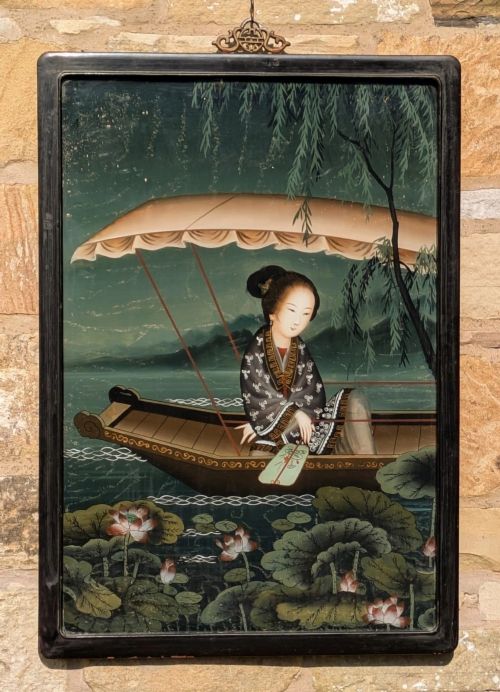
- A European artistic style reflecting Chinese motifs and decorative patterns. This style appears frequently in export pieces from the Qing Dynasty and later adaptations.
- Gilt
- A thin layer of gold leaf applied to surfaces such as wooden frames or picture borders. It enhances the decorative presentation of the wall art.
Green Reverse Glass Painting: Frequently Asked Questions
Where were reverse glass paintings displayed?
These pictures hung primarily in formal parlours and domestic interiors as decorative wall art. Their reflective surfaces helped brighten smaller rooms by catching natural daylight.
Owners mounted them securely on walls using sturdy wooden and brass fixtures. They served as conversation pieces displaying famous portraits or classical scenes.
How do I identify a Georgian piece?
Georgian examples often feature portraits of named sitters or classical allegories rendered in subdued pigment palettes. The framing typically relies on traditional timber mouldings characteristic of the eighteenth century.
Examining the reverse side reveals the aged paper backing and hand-applied ink or paint. Stylistic cues in the clothing and hair of the subjects help confirm the period.
What is the difference between a print and a painting on glass?
A reverse glass painting involves direct hand application of oil paint and pigment onto the glass panel. The artist builds the entire image through freehand brushwork without a printed base.
An engraved or printed version starts with a transferred mezzotint or engraving adhered to the glass. Artisans then apply colour by hand over the lines of the existing print.