

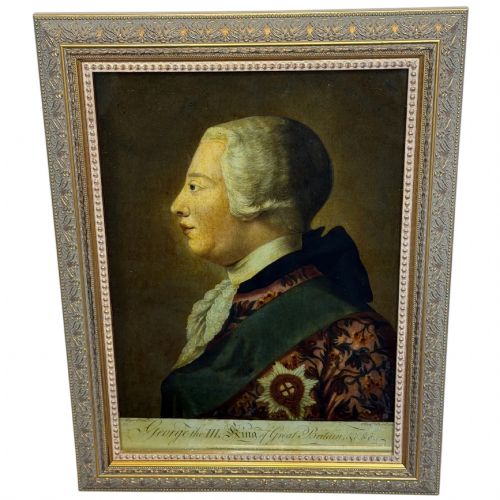


Reverse Printed Glass Picture
A reverse printed glass picture brings together pigment and glass to create a luminous wall art piece that commands attention in any room.
Reverse Printed Glass Picture
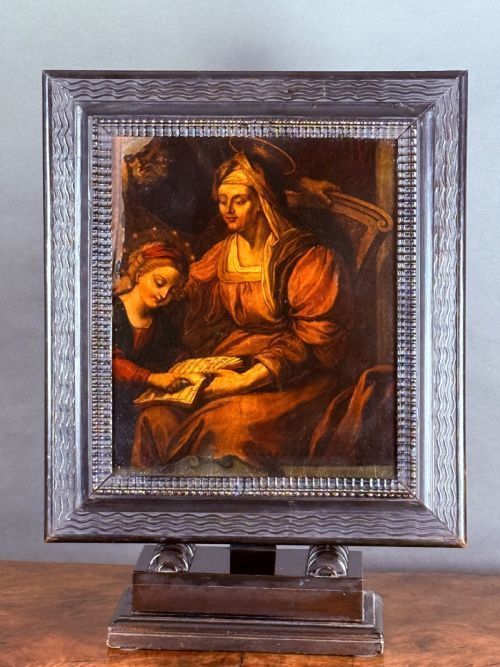
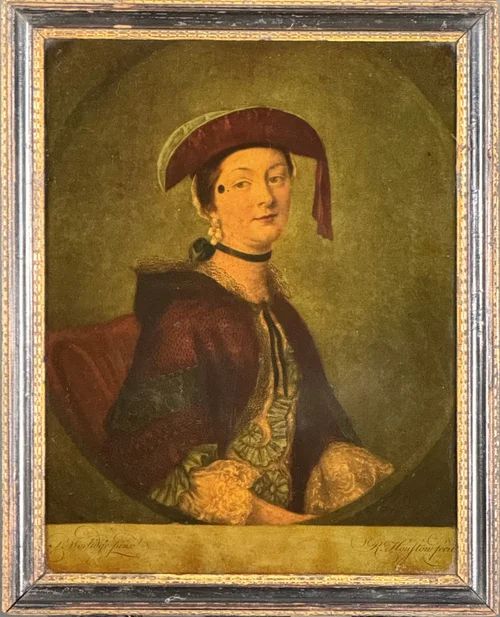
A reverse printed glass picture is a form of wall art where the image is applied directly to the rear surface of the glass pane so that it is viewed through the transparent front. The versions most commonly encountered on this page date from the Georgian and Victorian periods, often taking the form of portraits, sporting scenes, or allegorical subjects.
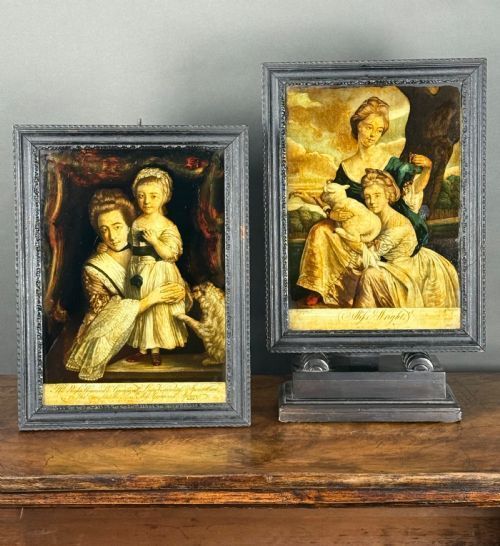
Makers produced these works using mezzotint engravings or paintings transferred to glass, framed in wood, and sometimes combined with mirrors or arranged in pairs and sets. The physical construction places the delicate pigment layer behind a protective pane, which contributes to the survival of these objects across centuries.
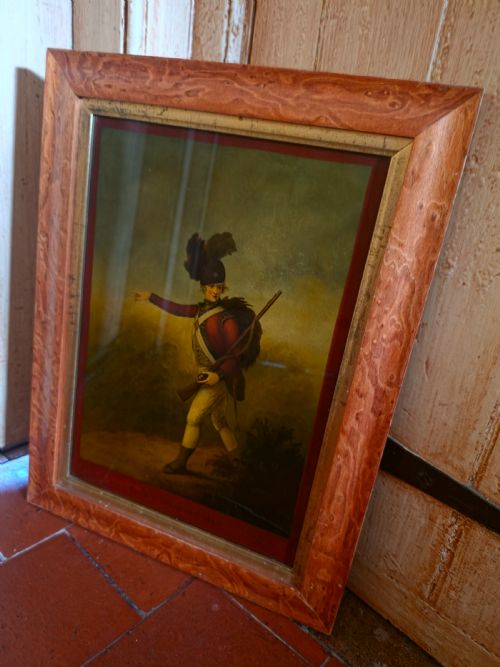
Collectors search for this phrase to acquire works ranging from 17th century royal portraits to 19th century military depictions and later crystoleoms. The selection spans diverse stylistic traditions, including Baroque compositions, Regency engravings, and Victorian Rococo revival pieces.
Materials and technique
Craftsmen built a reverse printed glass picture by applying oil paint, pigment, or gold leaf onto the back of a glass sheet, often utilising a printed mezzotint as the base layer. This inverted method required the artist to paint fine details and highlights first, finishing with the background layers so the final image appeared correctly oriented from the front.
Wooden frames, including maple variants, housed the finished glass plates, occasionally pairing the artwork with a mirror section or securing the fragile composition for wall hanging.
Listings span from the 17th century to the 20th century, incorporating wood, gilt, oil paint, and paper behind glass.
Assessing quality
The distinction between tiers of a reverse printed glass picture lies in the crispness of the mezzotint transfer and the precision of the hand-applied pigment or gilt. Finer examples retain vibrant colouration and meticulous detail in facial expressions or military uniforms, whereas lesser items suffer from pigment flaking or muddy colour application.
The integrity of the original wood frame and the clarity of the glass pane influence the overall standing of the piece, as original mountings preserve the historical context of the artwork.
Charles Spooner·Richard Purcell·Schweninger
The Reverse Printed Glass Picture Glossary
- Mezzotint
- A printmaking process of the intaglio family where tones are created by roughening the plate with thousands of tiny dots. This technique allowed tonal gradation that translated well when transferred to glass.
- Crystoleum
- A Victorian method of applying a coloured photograph or print to the inside of a convex glass and hand-painting details behind it. These pieces often depict sentimental scenes or courtly love.
- Eglomise
- A technique involving cold painting or gilding on the reverse of glass. It produces a reflective, mirror-like finish often used for decorative borders or panels.
- Pigment
- Finely ground colour matter mixed with a liquid medium to form paint. In these works, pigments provide the hues visible through the glass pane.
Reverse Printed Glass Picture: Frequently Asked Questions
How do I hang a reverse printed glass picture safely?
These pieces require secure wall fixings that distribute the weight evenly across the wooden frame rather than relying solely on old brass rings. Ensuring the wall anchor hits a stud prevents accidental drops.
Keep the artwork away from direct sunlight and damp walls to protect the fragile pigment layers sealed behind the glass pane.
What is the difference between a mezzotint on glass and a crystoleum?
Mezzotints on glass involve ink or paint applied to flat panes during the 18th and early 19th centuries, often depicting notable historical figures or sporting events. They rely on engraved plates transferred to the glass surface.
Crystoleoms emerged later in the Victorian era, typically utilising convex glass and photographic bases layered with oil paints to create a three-dimensional effect.
How can I tell an 18th-century piece from a 19th-century one?
Eighteenth-century examples frequently feature mezzotint engravings of Georgian nobility or classical subjects, paired with simple wood mouldings. The paper and pigment show age-appropriate toning when inspected closely from the rear.
Nineteenth-century items often include military engagements, sporting prints, or convex crystoleoms marked by distinct Victorian framing styles and brighter colour palettes.