
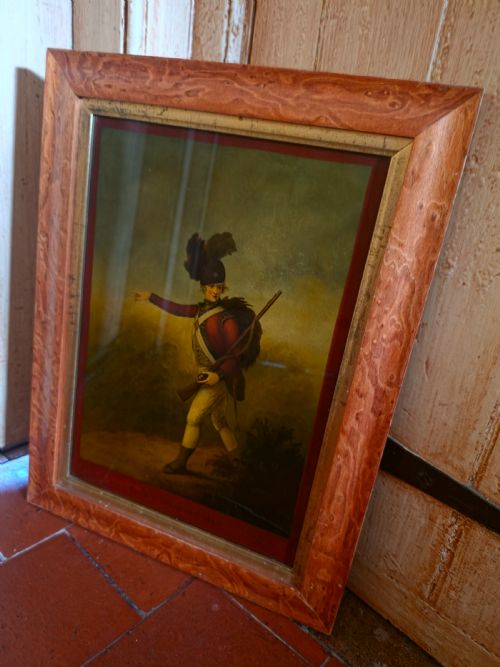
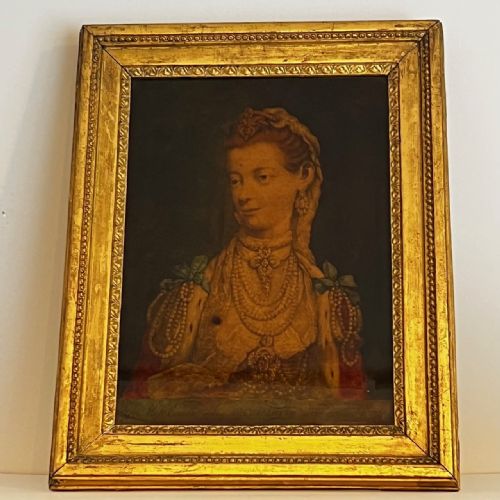


Glass Transfer Portrait Print
Glass transfer portrait prints apply delicate printed images directly behind crystal panels, capturing aristocratic likenesses and solemn saints with luminous depth.
Glass Transfer Portrait Print
A glass transfer portrait print presents a historical likeness mounted directly beneath a clear pane, bringing together portraiture and unusual glazing techniques. The listings on this page span the Georgian period, the Regency era, and the nineteenth century, uniting various forms of wall art.
Most examples take the form of reverse glass mezzotints, engravings, or chrystoleum portraits mounted in wood frames, often with giltwood touches. Subjects range from royal figures such as Queen Charlotte and King George III to nobility like Countess Spencer and Lady Georgiana, alongside religious figures including St Peter.
Buyers encounter subjects transferred or painted onto glass during the eighteenth and nineteenth centuries, often following well-known artists. These works offer a distinctive alternative to standard paper engravings by placing the image behind a protective and lustrous surface.
Materials and methods
Makers produced these works by transferring a printed paper image face down onto a glass sheet, then carefully removing the paper backing to leave the ink behind. Craftsmen subsequently applied oil paint, pigment, and occasionally delicate tints directly to the reverse side to illuminate the composition.
Finished plates found themselves secured inside wood and gilt wood frames to protect the fragile glass carrier and the pigments applied behind it. This layered assembly kept the delicate transfer work safe from atmospheric dirt while adding depth to the portrait.
St Peter shares wall space here with Regency royals and anonymous beauties.
Assessing quality
The sophistication of the hand-applied pigment behind the glass determines much of the visual success in these portraits. Finer examples retain crisp ink lines from the original mezzotint or engraving beneath layers of carefully blended oil paint.
The framing contributes heavily to the character of the piece, with period giltwood surrounds offering a more suitable complement than later replacements. Preservation of the fragile glass panel without excessive flaking of the underlying pigment marks the division between standard and superior pieces.
The Glass Transfer Portrait Print Glossary
- Reverse glass print
- An image transferred or painted onto the back of a glass panel so that the viewer sees it correctly through the front. This technique protects the delicate medium from dust.
- Mezzotint
- A printmaking process of the tonal engraving variety that allows smooth graduations of light and shade. Makers frequently utilised this method before transferring the print to glass.
- Chrystoleum
- A nineteenth-century technique where a paper print is made translucent, stuck to glass, hand-painted, and finished with a backing layer. This process creates a rich, three-dimensional coloured portrait.
- Gilt wood
- Wood coated with a thin layer of gold leaf or gilt powder. Frames utilising this finish frequently accompany Georgian and Regency wall art.
Glass Transfer Portrait Print: Frequently Asked Questions
What is a reverse glass print?
A reverse glass print is an artwork where a paper image is transferred face-down onto glass, allowing the viewer to see the corrected composition through the transparent pane. Artisans often reinforced these prints with oil paint or pigment applied directly to the back.
This method creates a glossy, reflective surface that distinguishes the portrait from standard paper works. The glass itself acts as both the protective glazing and the canvas support.
How do I hang and display them?
These framed pictures require secure wall placement away from direct sunlight, which can fade the delicate pigments and oils trapped behind the glass. Stable indoor humidity prevents the wooden frames and backing materials from warping.
Because the image sits on the reverse of the glass, the panel remains vulnerable to heavy knocks or vibrations. Sturdy picture hooks suited to the weight of the wood and giltwood frames ensure safe exhibition.
How do I date these portraits?
Dating relies on the costume of the sitter, the framing style, and the specific printing technique recorded in the title or physical evidence. Georgian and Regency examples often feature mezzotints of nobility, while nineteenth-century pieces may include chrystoleums.
Examining the construction of the wood frame and the type of glass panel offers further clues regarding the period of manufacture. Earlier works from the eighteenth century typically display hand-beaten glass characteristics and simple mouldings.