
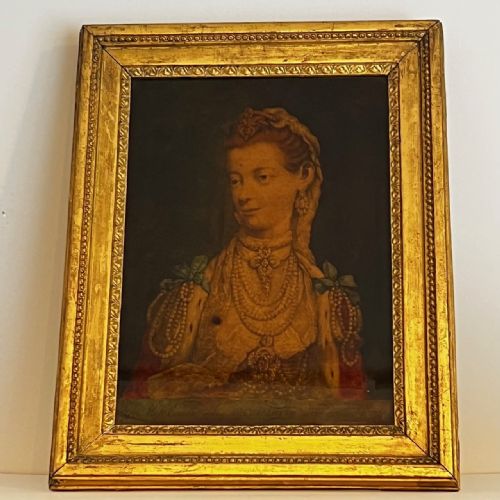


Georgian Reverse Glass Artwork
Georgian reverse glass artwork consists of hand-finished prints and paintings set behind glass, prized for their rich monochrome tones and delicate historical subjects.
Georgian Reverse Glass Artwork
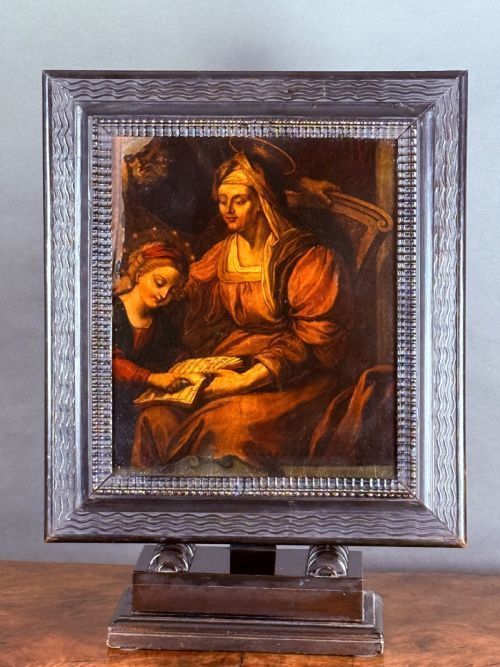
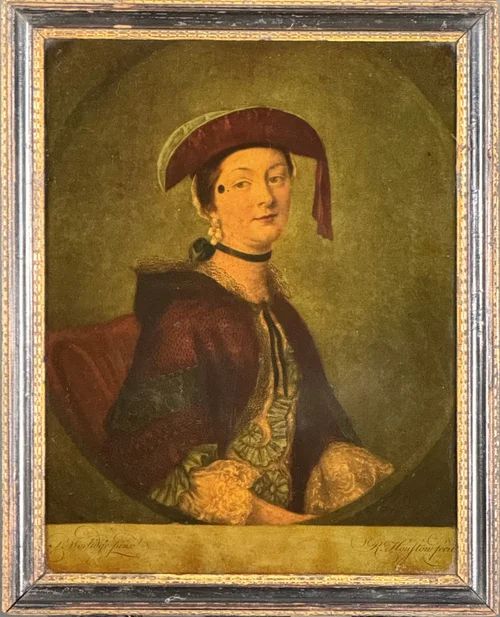
Georgian reverse glass artwork spans wall art, framed prints, and mirrors incorporating decorative panels. These pieces date across the eighteenth and nineteenth centuries, taking the form of reverse glass paintings, mezzotints, and prints.
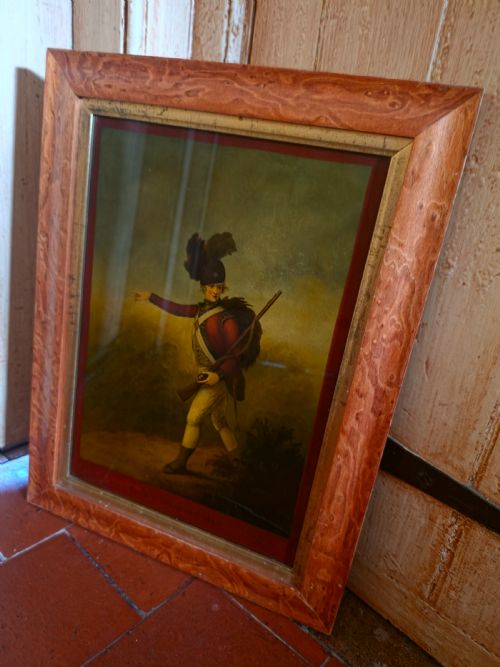
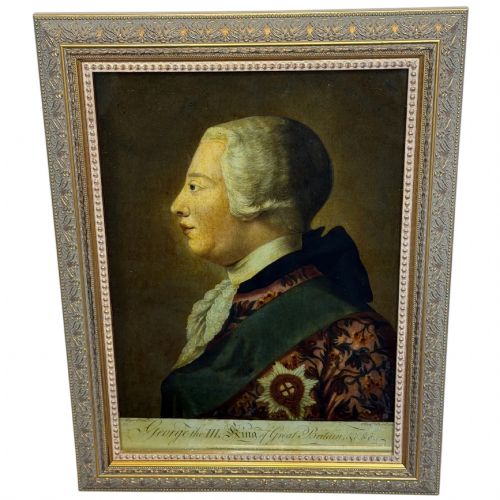
Subjects range from religious scenes and domestic employment to royal portraits, military figures, and naval engagements. The most common survivals on this page are framed prints and paintings produced during the Georgian and Regency periods.
Makers and engravers such as Charles Spooner and Richard Purcell appear alongside anonymous works depicting figures like Queen Charlotte, King George III, and Lady Georgiana. Frames frequently utilise maple or simple wood surrounds to house the glazed panel.
Assessing quality and preservation
Quality rests upon the clarity of the underlying mezzotint transfer and the precision of the hand-applied pigment. Finer examples retain crisp linework and vibrant hand-colouring without extensive flaking to the painted surface.
The condition of the glass itself and the integrity of the original wood frame influence the overall character of the piece. Intact nineteenth-century maple frames and stable pigment layers distinguish superior survivals from heavily restored examples.
Charles Spooner·Richard Purcell·W Bishop
The Georgian Reverse Glass Artwork Glossary
- Reverse glass painting
- An image painted directly onto the back of a glass panel so that it is viewed through the front. This technique protects the pigment from dust and atmospheric damage.
- Mezzotint
- A printmaking process of the intaglio family where the plate is roughened to produce dark tones and scraped to create light areas. It produces rich gradations well suited to portraits.
- Regency
- A period of British history spanning the early nineteenth century defined by distinctive neoclassical aesthetics. Pieces from this era often display lighter furniture woods and refined classical motifs.
- Maple
- A dense hardwood utilised for framing historical wall art and mirrors. It provides a stable border with a distinctive striped grain pattern.
Georgian Reverse Glass Artwork: Frequently Asked Questions
What is a reverse glass mezzotint?
A reverse glass mezzotint is a print transferred onto the back of a glass sheet and hand-coloured with oil pigments. The printmaker works in reverse, applying details so the composition reads correctly from the front.
This method gives the portrait or scene a luminous quality distinct from standard paper prints framed behind glass.
How are Regency pieces dated?
Regency pieces are dated through stylistic indicators such as costume details, framing materials, and the specific engraving techniques employed. Subject matter depicting figures like Queen Caroline or naval engagements provides further chronological context.
Comparisons with dated portraits and documented print publishers help narrow the production window to the early nineteenth century.
Where were these artworks hung?
These artworks were typically hung in domestic parlours, hallways, and drawing rooms as fashionable wall decoration. Smaller framed prints and painted panels provided accessible portraiture and narrative scenes for middle and upper-class homes.
Some examples were incorporated into larger furnishings, such as divided mirror frames combining a looking glass with a decorative top panel.