






Reverse Mezzotint on Glass
A reverse mezzotint on glass brings rich portraiture and allegory to your wall through an intricate technique executed directly behind the pane.
Reverse Mezzotint on Glass
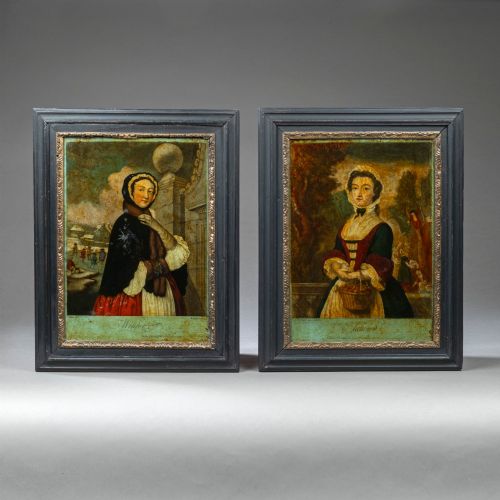
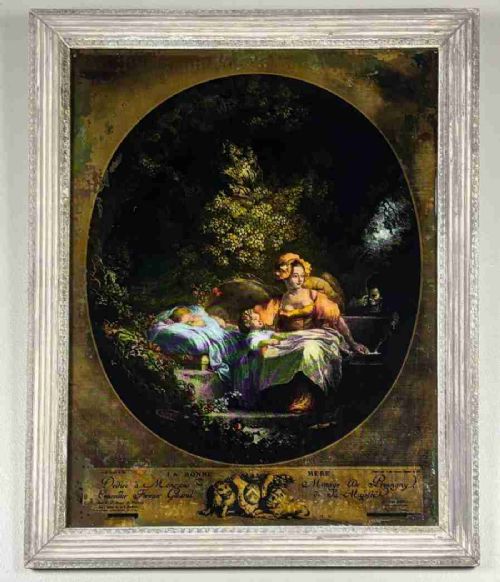
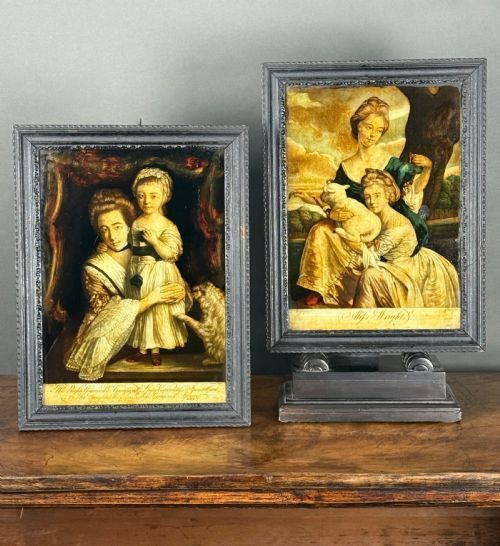
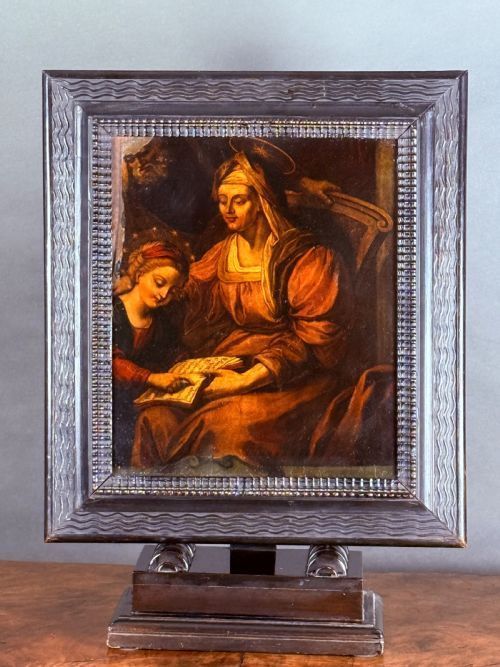
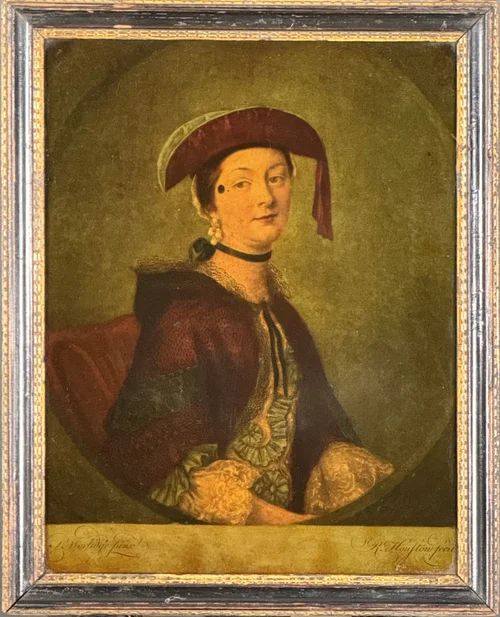
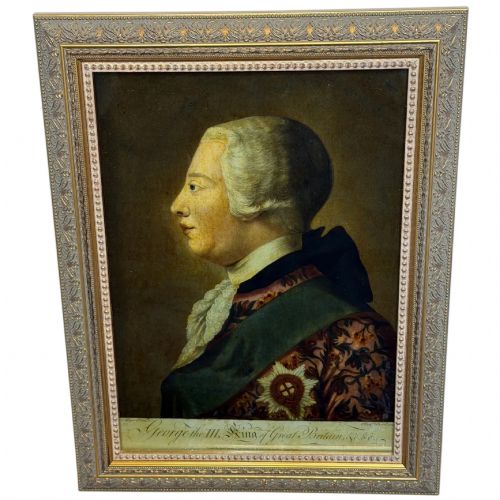
A reverse mezzotint on glass is a specialised form of wall art that merges printmaking with meticulous hand-finishing behind glass. These works appear most frequently from the eighteenth century, including Georgian and Regency periods, portraying royalty, literary subjects, and allegorical figures like the seasons.
Collectors encounter individual portraits alongside striking pairs and sets depicting seasonal allegories or virtues. The imagery sits protected beneath the pane, often framed in wood, presenting a glossy and deep visual finish that standard paper prints lack.
Materials and technique
Makers utilised glass as the primary support, applying paper transfers, oil paint, pigment, and oil pigment directly onto the reverse side. Many examples incorporate delicate touches of gold leaf to accentuate garments and borders.
The process requires applying the image face down so that viewing occurs through the clear glass panel. Artisans then sealed and framed these fragile compositions in wood to protect the layered pigments.
Reverse Mezzotint on Glass Retail Price Guide 2026
Typical asking prices for reverse mezzotint on glass among the pieces listed under this phrase on Sellingantiques today, from the lower quarter to the upper quarter. They describe what is for sale here now, not the wider market.
Listings feature works spanning the seventeenth to the nineteenth centuries, incorporating Georgian and Regency styles.
Factors determining quality
The preservation of the underlying paper, oil paint, and gold leaf significantly influences desirability. Intact original wood frames and clear legibility through the glass separate exceptional pieces from standard items.
Fletcher·Sebastiaan Vrancx·Charles Spooner·Richard Purcell·W. Bishop·Richard Phillips·John Collett·W.B. Walker·Thomas Hudson
The Reverse Mezzotint on Glass Glossary
- Mezzotint
- A printmaking process of the intaglio family where tones are created by roughening the copper plate with a rocker. This method allows smooth gradations of light and shade.
- Reverse painting on glass
- A technique where the artist paints or applies prints to the back of a glass pane to be viewed from the front. The finished work gains a characteristic glossy sheen.
- Allegory
- A symbolic representation appearing frequently in seasonal sets such as spring, summer, autumn, and winter. These works convey moral or natural meanings through human figures.
- Intaglio
- A printmaking category where the ink sits below the surface of the plate. Mezzotints are printed using this foundational method before transfer to glass.
Reverse Mezzotint on Glass: Frequently Asked Questions
What is a reverse mezzotint on glass?
It is an artwork where a print is transferred and painted behind a glass panel rather than on paper. The finished piece is viewed through the glass, which gives it a distinct depth and sheen.
These pieces span the seventeenth, eighteenth, and nineteenth centuries, capturing portraits, allegories, and domestic scenes within wood frames.
How do I care for reverse glass prints?
Keep them away from direct sunlight to prevent the pigments and gold leaf from fading behind the glass. Hang them securely on stable interior walls.
Clean the glass gently with a dry or barely damp cloth, avoiding moisture near the edges where the sealant and wood meet.
How can I date these pieces?
Dating relies on the costume of the subjects, the style of the wood frame, and the materials visible behind the glass. Eighteenth-century examples often depict prominent historical figures and classical allegories.
Inscriptions naming publishers or artists, such as those from the Georgian era, provide further chronological markers.
Why are some listed as pairs or sets?
Makers frequently produced complementary themes such as the four seasons or pairs of virtues to be displayed together in matching frames. These multi-part works balanced interior decoration schemes in period homes.
Finding surviving sets intact is a notable aspect of collecting this genre.