


19th Century Glass Picture
A 19th century glass picture brings depth and brilliant reflectivity to a wall through reverse painting, crystoleum or print transfer.
19th Century Glass Picture
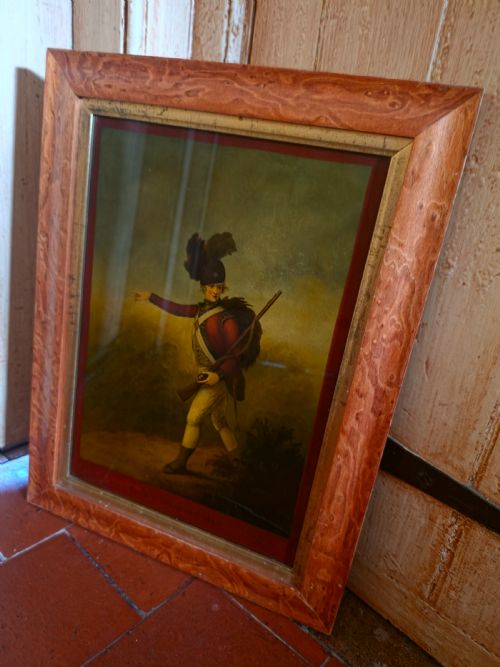
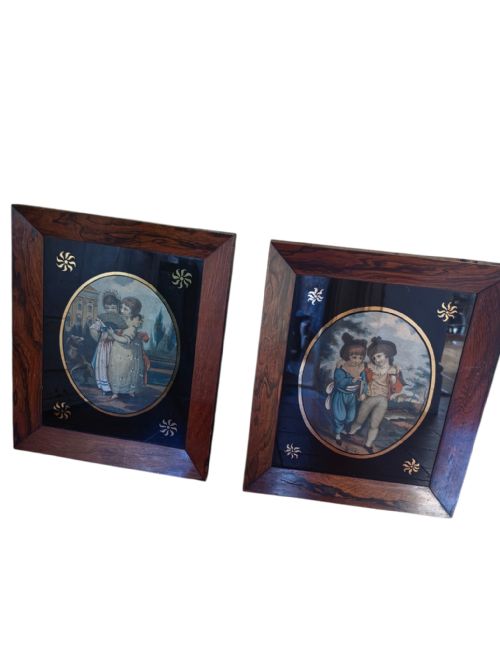
A 19th century glass picture comprises wall art created by applying pigment, prints, or photographs directly onto glass or mounting them beneath it. The forms on this page span reverse glass paintings, crystoleums, silhouette paintings, and armorial crests.
The dominant examples encountered here are reverse glass prints and Victorian crystoleums housed in period frames. These pieces originate from British, French, Chinese Export, and Italian workshops, reflecting diverse decorative tastes of the century.
Materials and technique
Makers utilised glass as the primary support, applying pigment, ink, and oil directly to the reverse side so the image resolved correctly when viewed through the front. Crystoleums involved hand-colouring albumen prints affixed to glass, thinning the paper, and adding further layers of paint.
Frames constructed from giltwood, ebonised wood, rosewood, or ormolu complete these objects, often enhanced with gesso mouldings. The physical combination of fragile glass panels and heavy timber or metal surrounds required precise rebate fitting to secure the artwork.
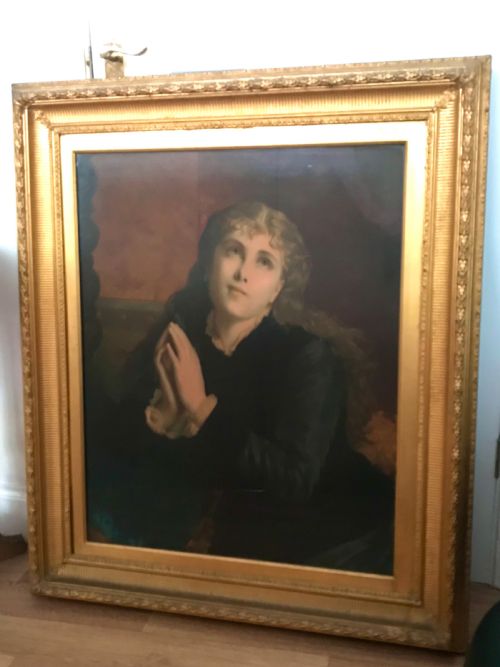
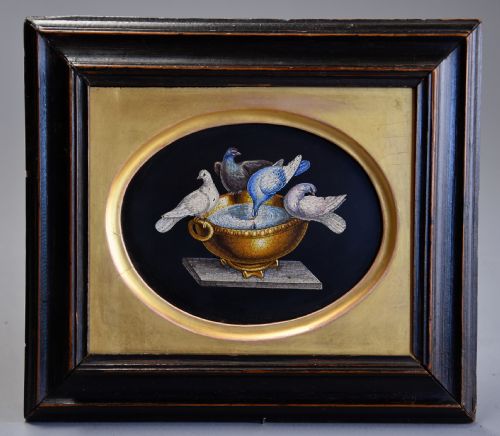
Light infantrymen, penitant saints, and delicate butterflies share wall space with optical illusions and microscopic Doves of Pliny.
Quality and execution
The distinction between standard commercial output and superior craftsmanship rests on the delicacy of the hand-colouring and the preservation of the pigment beneath the glass. Fine reverse glass paintings exhibit precise line work and rich tonal gradation without flaking or pigment separation.
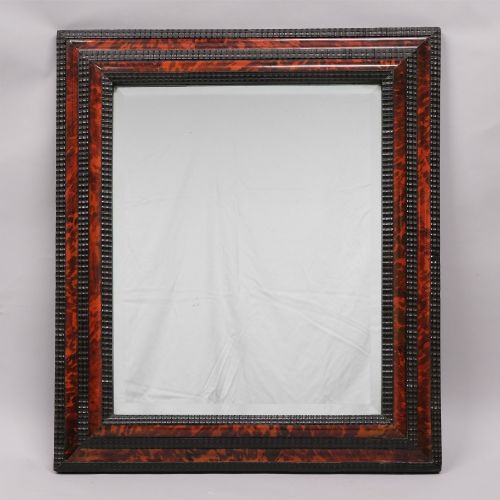
Original framing elevates an object, particularly where rosewood, tortoiseshell ripple moulding, or ormolu mounts remain intact and matched to the period. The clarity of the glass itself and the absence of heavy clouding or disruptive scratching determine the visual integrity of the surface.
Schweninger
The 19th Century Glass Picture Glossary
- Reverse glass painting
- A technique where the artist paints directly onto the back of a glass sheet, viewing the final composition from the unpainted front. This method protects the pigment from atmospheric dirt.
- Crystoleum
- A Victorian method of applying a coloured print to the inside of a convex glass, rendering the paper translucent with oil and adding hand-painted details. They often possess a distinct three-dimensional depth.
- Ebonised wood
- Timber treated with a chemical stain or black finish to imitate ebony. It provides a dark, matte contrast against gilt frames or bright glass panels.
- Ormolu
- Gilded bronze decorative mounts popular on French frames and photo brackets of the period. The technique involves applying a mercury-gold amalgam to cast brass.
- Autochrome
- An early colour photography process using dyed potato starch grains on glass plates. These items yield a luminous, pointillist colour palette.
19th Century Glass Picture: Frequently Asked Questions
Are these pictures painted by hand?
Many examples combine mechanical print transfers with meticulous hand-colouring applied directly to the reverse of the glass panel.
Others, such as armorial crests and silhouette scenes, consist entirely of freehand pigment applied by the artist.
What is a crystoleum?
A crystoleum is a layered Victorian picture created by sticking a paper photograph face down on glass, thinning it, and painting the back.
This process produces a soft, luminous image viewed through a convex glass dome.
How do I hang a heavy glass picture?
Support the weight using sturdy picture wire attached to original brass rings fixed securely into the timber frame backing.
Avoid hanging glass items on walls subject to vibrations or direct sunlight, which can fade pigments and degrade paper components.