
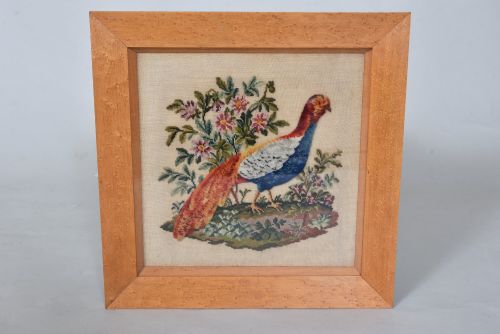
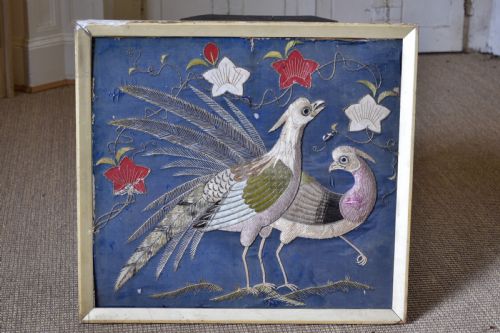
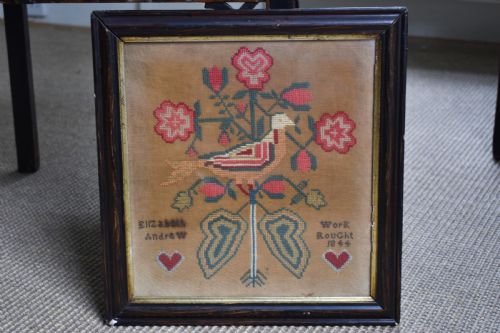
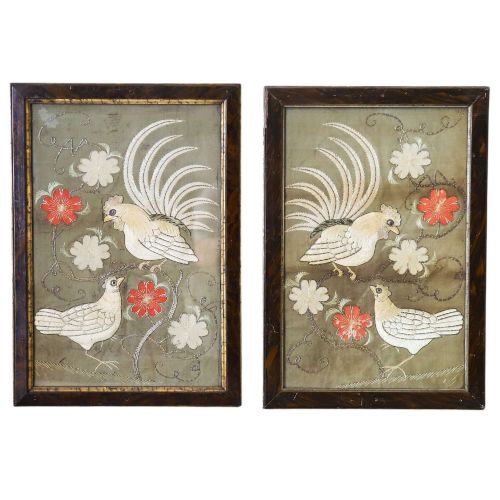




Antique Bird Embroidery
These antique bird embroidery pieces bring the colour and texture of past centuries into a room through needlework panels of fowl, pheasants, and songbirds.
Antique Bird Embroidery
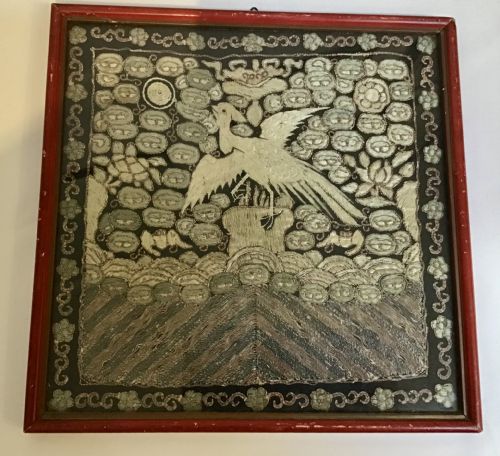
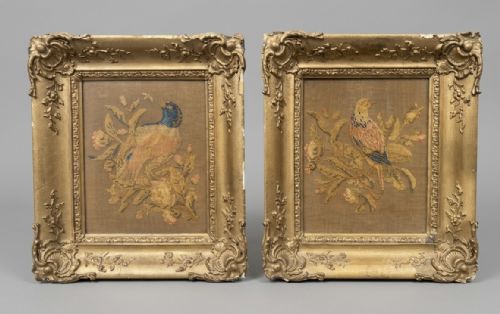
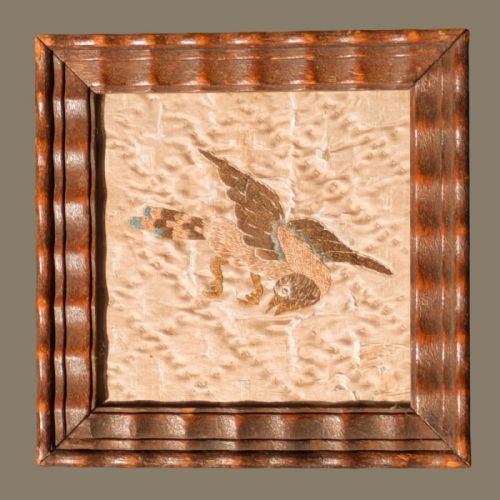
When you search for antique bird embroidery, you are looking at framed textile art, textile panels, and wall art produced across the nineteenth and eighteenth centuries. These works range from Victorian plushwork pheasants and wool work samplers to Chinese silk rank badges and French silk embroideries.
The version you are most likely to meet on this page is a nineteenth-century or Victorian framed textile, often depicting domestic poultry, game birds, or exotic waterfowl. Pieces stretch from Georgian needlework and William IV firescreens to Greek Island work from Skyros and Japanese silk textiles.
Makers utilised various formats, from solitary framed wall art to pairs of cockerels and hens housed in faux tortoiseshell or gilt frames. Each object preserves historical stitchwork, offering a direct window into domestic craft and international trade routes of the past.
Materials and construction
Presentation was integral to survival, leading makers to mount textiles beneath glass inside wooden frames, ranging from simple mouldings to elaborate gilt and faux tortoiseshell surrounds.
Antique Bird Embroidery Retail Price Guide 2026
Typical asking prices for bird embroidery among the pieces listed under this phrase on Sellingantiques today, from the lower quarter to the upper quarter. They describe what is for sale here now, not the wider market.
The listings span the eighteenth, nineteenth, and twentieth centuries, incorporating materials like glass, silk, wood, wool, linen, metallic thread, gold leaf, and canvas.
Judging quality in antique bird embroidery
Quality rests in the precision of the needlework and the anatomical proportion of the bird rendered by the hand. Finer pieces demonstrate careful shading with silk or wool threads, creating depth in feathers that lesser examples miss through flat, uniform stitching.
Condition of the textiles and the original framing also divide the range, as intact glass protection preserves fragile threads from dust and fading over centuries. Original frames, such as period gilt or faux tortoiseshell housings, add considerable integrity compared to modern replacements.
The Antique Bird Embroidery Glossary
- Plushwork
- A needlework technique using looped or cut pile stitches to create a raised, velvety texture. This method is frequently seen on Victorian pheasant and animal depictions to mimic real feathers.
- Rank badge
- A square insignia worn on the robes of officials in imperial China to denote civil or military status. These often feature detailed embroidery of birds and symbols using silk and metallic thread.
- Sampler
- A piece of cloth embroidered to demonstrate a maker's proficiency in various stitches and alphabets. Victorian examples sometimes incorporated motifs of birds alongside text and geometric patterns.
- Woolie
- A colloquial term for embroideries worked primarily in wool yarn, commonly produced by nineteenth-century sailors. They typically depict naval themes, ships, or wildlife.
Antique Bird Embroidery: Frequently Asked Questions
How do I date an antique bird embroidery?
Dating relies on examining the framing materials, the type of canvas or linen ground, and the style of the needlework stitches. Victorian pieces often use bright synthetic colours and plushwork techniques, while eighteenth-century examples display subtler palettes.
Backings, nails, and glass types also provide clues to age. Machine-spun threads indicate dates past the industrial transition, whereas hand-spun materials point earlier.
Where were these embroideries made?
Origin locations span British workshops, French studios, Greek islands such as Skyros, and East Asian centres including China and Japan. Trade and global influence shaped the variety of styles available.
European makers focused on domestic birds and game, while Asian pieces utilised silk to render exotic ducks, geese, and imperial insignia.
Are these pieces framed originally?
Many retain their period frames, such as nineteenth-century gilt mouldings or faux tortoiseshell surrounds, which complement the needlework. Some pieces have undergone reframing over the decades to ensure better preservation under glass.
Checking the backboards and fixings helps determine whether the frame dates to the same era as the textile panel inside.