




Antique Silkwork Picture
These antique silkwork picture examples bring needle-painted pastoral scenes, birds, and gardens straight from Georgian and Victorian parlours onto your wall.
Antique Silkwork Picture
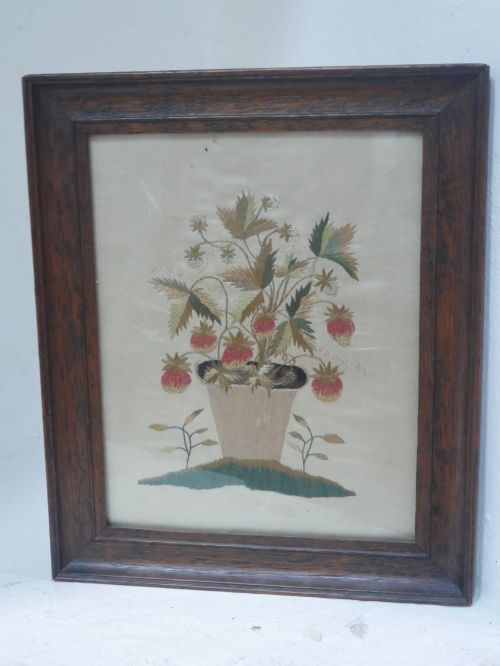
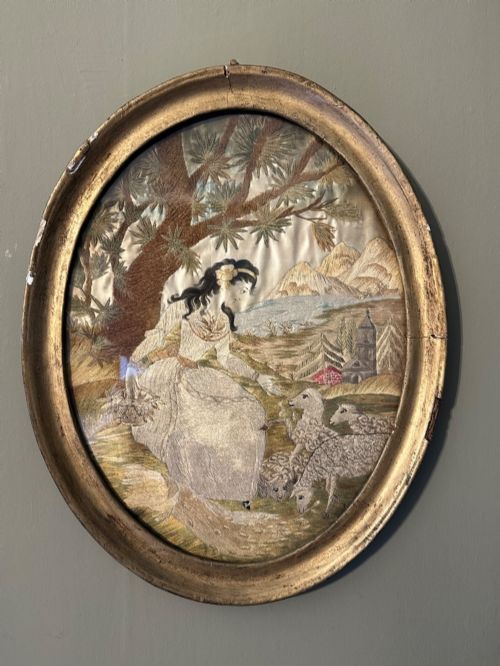
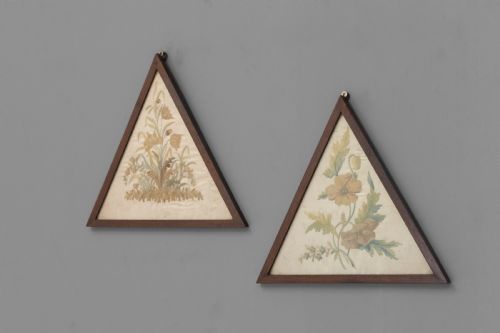
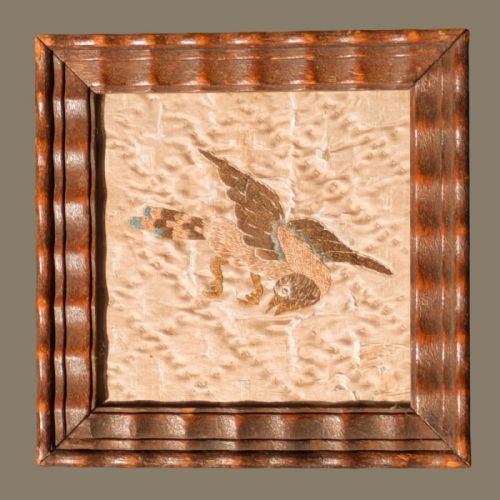
An antique silkwork picture combines fine needlework with textile art, capturing subjects ranging from pastoral farming scenes and girls in gardens to potted strawberries and birds. You will most frequently meet pieces originating from the 18th century, the Regency era, and the Victorian period, reflecting Georgian and Victorian tastes.
The format of these wall art pieces varies from oval woolwork pictures and embroidered panels to octagonal formats. Many arrive framed in glass, wood, giltwood, or water-gilded oval frames, sometimes featuring Verre Églomisé decoration.
Makers often fashioned these works as framed embroidery or framed artwork, utilising textile materials that survived centuries of domestic display in English country houses.
How they were made
Artisans constructed an antique silkwork picture using a combination of silk, wool, and cotton threads stitched onto a textile backing. These needlework components were then secured inside protective wooden or giltwood frames beneath glass.
Specialist framing techniques such as water gilding and Verre Églomisé enriched the presentation of the stitched imagery. The integration of gold leaf into frames provided a polished contrast to the soft texture of the silk and wool embroidery.
Current listings feature pieces spanning the 18th century, the Regency era, and the Victorian period, utilising silk, wool, cotton, and giltwood.
What varies in quality
The distinction between standard and exceptional examples rests upon the intricacy of the needlework and the preservation of the textile materials. Superior pieces display meticulous detail in pictorial subjects like pastoral scenes or botanical studies, executed with controlled tension across the silk and wool threads.
The quality of the surrounding frame heavily influences the overall character of the piece. Water-gilded frames, original glass, and specialised treatments like Verre Églomisé elevate the visual impact compared to plain wooden surrounds.
The Antique Silkwork Picture Glossary
- Silkwork
- Embroidery executed primarily in silk thread on a fabric ground. It forms the central imagery of these historic textile pictures.
- Verre Églomisé
- A process of applying gold or silver leaf to glass combined with engraving and painting. It appears on frames surrounding period needlework.
- Woolwork
- Embroidery or picture creation utilising wool yarn rather than silk. These pieces often depict figurative or garden subjects.
- Water Gilding
- A traditional framing technique applying gold leaf over wet gesso. It creates a brilliant finish seen on finer period frames.
- Pastoral
- A style of art depicting rural life and shepherd scenes. Many 18th-century pieces adopt this specific thematic focus.
Antique Silkwork Picture: Frequently Asked Questions
How old are these pictures?
The pieces span from the 18th century through the Regency era and into the Victorian period. Dating relies upon stylistic elements of the needlework and the associated framing.
Most examples reflect the prevailing aesthetic of their specific decade, ranging from Georgian pastoral compositions to Victorian botanical tastes.
What subjects do they show?
Common subjects include pastoral farming scenes, girls in gardens, potted strawberries, and detailed bird studies. These themes mirror the decorative interests of English country houses.
Makers also produced theatrical scenes and abstract embroidered panels during the 19th century.
How should I hang them?
Protect the silk and wool threads from direct sunlight to prevent the textile colours from fading over time. Hang them on interior walls away from excessive moisture.
The original glass and wooden frames require careful handling during placement.
Are the frames original?
Many pieces retain period frames such as water-gilded ovals, giltwood surrounds, or Verre Églomisé glass panels. These housings correspond to the 18th-century or 19th-century origin of the embroidery.
Examining the joinery and gilding helps determine whether the frame has accompanied the textile since its creation.
What materials are used?
The primary components include silk, wool, and cotton stitched onto a textile backing. Gold leaf and glass frequently appear in the surrounding framing.
Wooden structures provide the foundation for the giltwood and water-gilded display cases.