





Framed Georgian Needlework Art
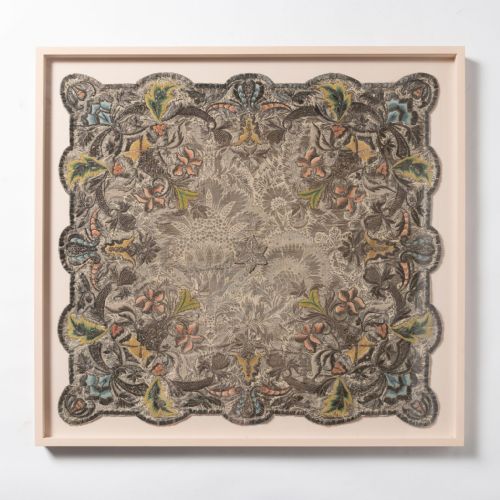
Framed georgian needlework art brings historical domestic skill into interior spaces through preserved silk, wool and linen panels.
Framed Georgian Needlework Art
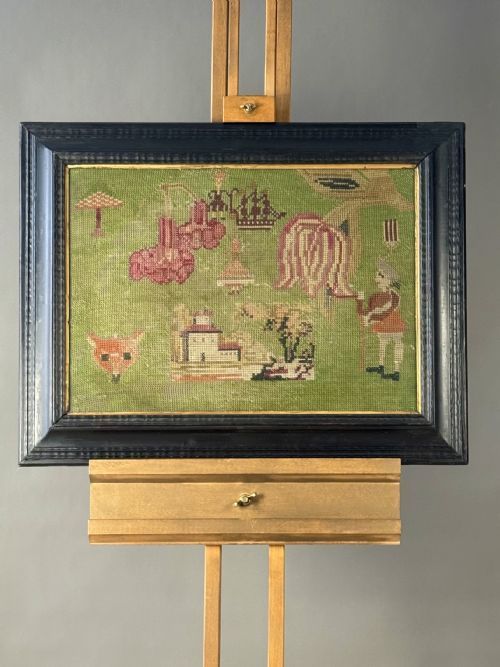
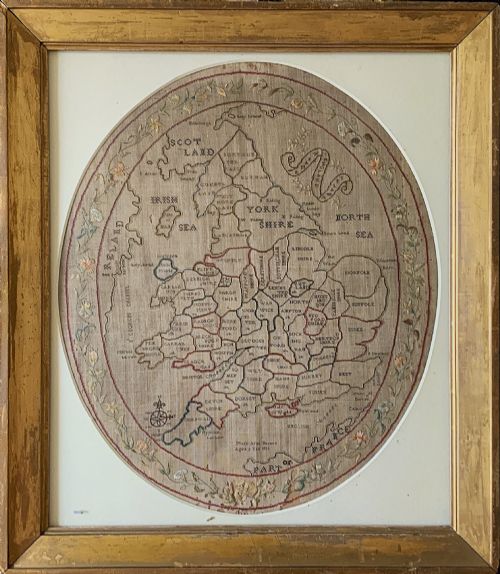
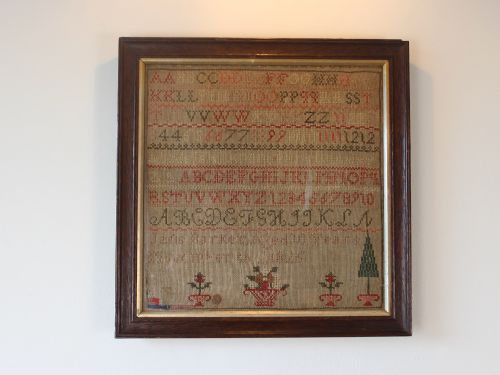
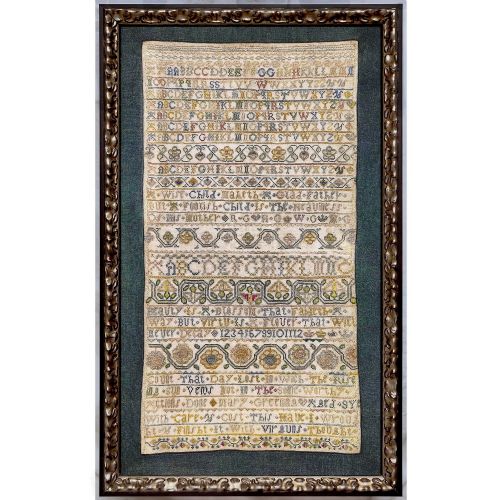
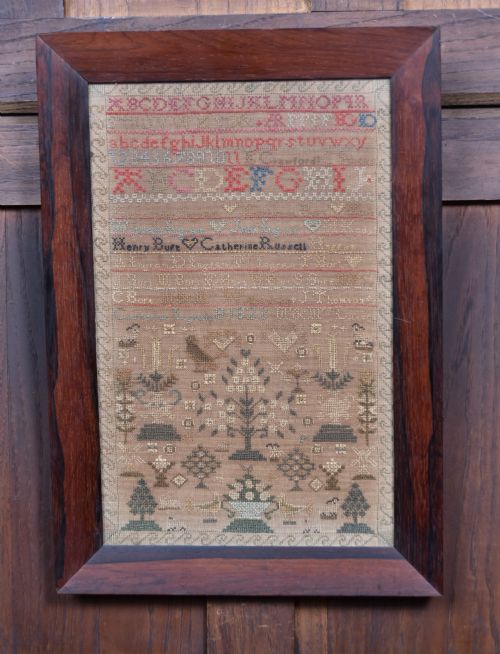
When buyers search for framed georgian needlework art, they encounter textile pieces spanning the eighteenth century, the regency period and the nineteenth century. These items include needlework samplers, map samplers showing England and Wales, embroidered panels, and pastoral farming pictures.
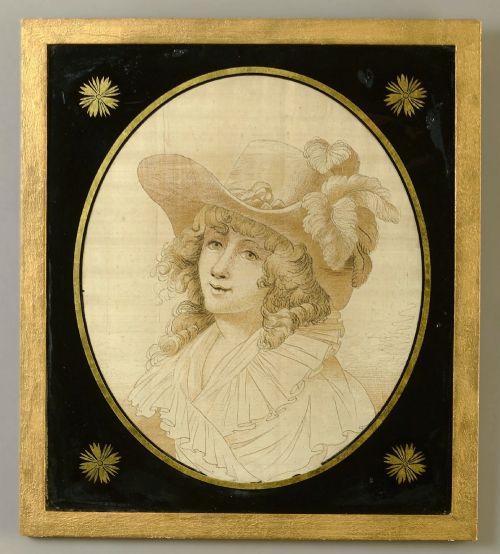
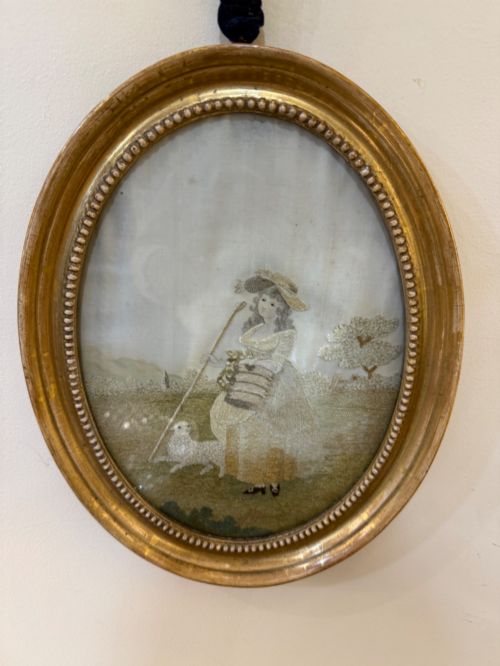
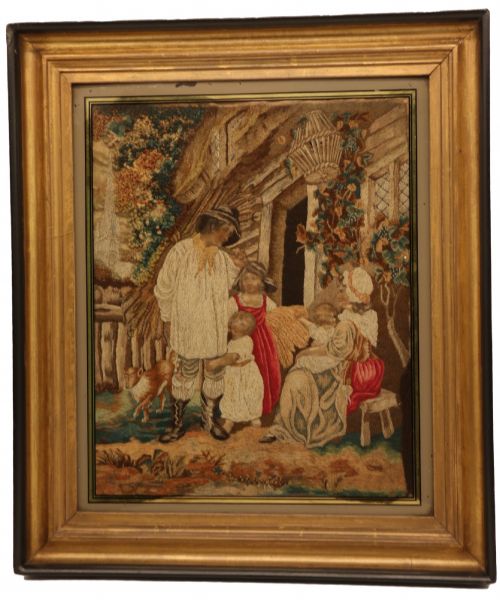
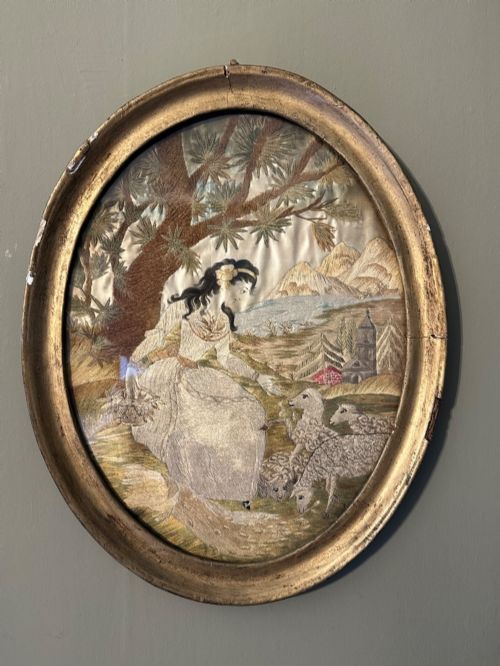
The most common forms on this page are framed samplers worked by young girls, alongside silkwork and woolwork pictures depicting figures in gardens, portraits of fashionable young ladies, and narrative scenes.
Origins span English and Scottish workshops, combining textile art with period frames such as verre églomisé and giltwood designs.
Materials and construction
Pieces rely on base fabrics such as linen and wool, worked with silk thread, silk floss, and crewel work embroidery. Hand painted silk details often combine directly with needlework to create pictorial depth in portraits and landscapes.
Surviving examples sit behind glass within wooden, giltwood, or verre églomisé frames, protecting fragile threads and painted elements from atmospheric damage over centuries.
Young makers proudly stitched their ages alongside alphabets, leaving permanent records of nine-year-olds mastering complex geography.
Distinctions in execution
Quality rests on the intricacy of the stitchwork, the complexity of the design, and the preservation of the materials. Finely executed long stitch silk pictures and detailed map samplers demonstrate superior technical skill from the maker.
The condition of the silk thread and the survival of original hand-painted components separate standard pieces from exceptional historical examples.
Mary Banion·Mary Greening·Elizabeth Horn·Sarah Baker·Mary Street·Mary Mason·Martha Hall·Ann B Gilies·Louiss Elkins
The Framed Georgian Needlework Art Glossary
- Sampler
- A piece of cloth showing rows of different stitches, alphabets, or motifs, often worked by young makers to demonstrate needlework proficiency.
- Verre églomisé
- A process of applying gold leaf and painting on the reverse side of glass, frequently used for decorative picture frames in the regency period.
- Crewel work
- Embroidery executed with wool yarn on a heavy linen twill fabric, creating textured surface designs in pastoral or floral scenes.
- Silk floss
- Unspun or loosely twisted silk fibres utilised for smooth, lustrous stitching in detailed eighteenth and nineteenth century pictorial panels.
- Band sampler
- An early format of sampler featuring horizontal bands of distinct pattern motifs stacked vertically down the linen ground.
Framed Georgian Needlework Art: Frequently Asked Questions
What subjects appear on these samplers?
Makers stitched alphabets, religious texts, genealogical records, and cartographic designs such as maps of England and Wales. These educational exercises served to record both domestic competence and geographical knowledge.
Pictorial works expanded into pastoral farming scenes, portraits, and literary narratives like Jack and the Beanstalk, worked in silk and wool.
How are these textile pieces framed?
Surviving examples frequently retain period timber frames, giltwood mouldings, or specialised verre églomisé glass surrounds with painted borders. These housings protect the delicate linen and silk threads from dust and handling.
Original framing helps maintain the historical integrity of the piece, though timber and glass require stable indoor environments.
How do I date a piece?
Many samplers include embroidered dates alongside the maker's name and age, providing direct chronological markers. Style shifts, costume details in portraits, and framing techniques assist in dating unlabelled panels.
Eighteenth-century examples often feature formal band designs or pastoral motifs, while regency and nineteenth-century pieces lean towards pictorial realism and cartography.
Where were these textiles made?
Origins trace primarily to English and Scottish domestic workshops, where girls completed embroidery as part of their education. Schoolroom samplers reflect regional teaching styles across Britain.
Materials like imported silk threads and specialised glass indicate access to broader trade networks during the georgian and regency eras.