


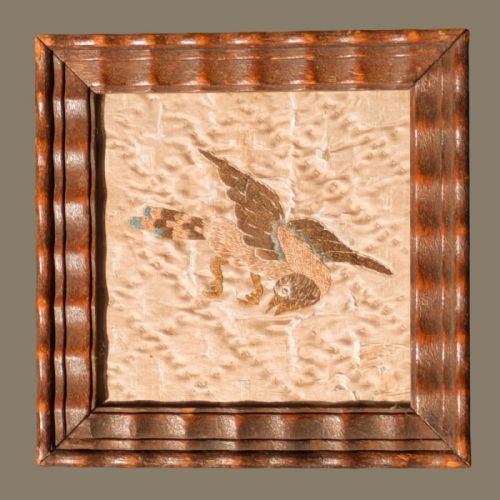


Beige Silk Needlework Panel
A beige silk needlework panel brings centuries of hand stitch and textile history directly to your wall.
Beige Silk Needlework Panel
A beige silk needlework panel encompasses framed wall art, embroidered samplers, and large textile panels worked across various periods including the Georgian and Victorian eras. These pieces often feature traditional motifs, pictorial scenes, or regional needlecraft traditions.
The selections available range from 18th-century Greek island embroidery and English samplers signed by young makers to large Central Asian suzanis and Japanese silk textiles. Framed textiles and textile wall art dominate the forms you will encounter here.
Materials and construction
Makers utilised silk thread and silk grounds, often supported by linen, cotton, or wood framing to preserve fragile textile surfaces. Needlework techniques rely on careful hand stitching to build up complex pictorial and geometric designs.
Many works incorporate framed glass to protect delicate historic fibres from environmental damage while displaying the intricate embroidery techniques used by makers across different centuries.
Regional styles represented include Greek folk art, Japanese Meiji period work, Central Asian designs, and English Baroque taste.
Assessing quality and execution
Quality rests in the precision of the needlework, the complexity of the design, and the survival of the original silk threads and backing materials. Finer examples display meticulous stitch control and harmonious colour retention across the composition.
The provenance and documentation provided by makers, such as named samplers with dates or specific regional attributions, elevate the historical interest of a textile panel.
The Beige Silk Needlework Panel Glossary
- Sampler
- A piece of needlework produced by a maker to demonstrate skill in various stitches and patterns. These often include alphabets, numbers, and the name of the maker alongside a date.
- Suzani
- A type of embroidered tribal textile originating from Central Asia, typically worked with silk thread on a cotton or linen ground. They feature bold floral and geometric motifs.
- Embroidery
- The art or craft of decorating fabric or other materials using a needle to apply thread or yarn. It can incorporate various stitches to create textured pictorial surfaces.
- Framed textile
- A historic fabric panel, sampler, or embroidery mounted behind glass within a wood or decorative frame for wall display and preservation.
Beige Silk Needlework Panel: Frequently Asked Questions
How do I hang a textile panel safely?
Protect antique silk and linen from direct sunlight to prevent fading and fibre degradation. Hang the framed textile on a stable interior wall away from excessive moisture.
Ensure the hanging wire and wall fixings adequately support the weight of the wood frame and glass without placing tension on the fabric inside.
What periods do these embroideries come from?
The listings include works from the Georgian and Victorian eras, alongside 18th-century and late 19th-century examples. Specific dates appear on many samplers alongside the maker's name.
Other pieces reflect regional traditions such as Greek folk art, Japanese Meiji period textiles, and Central Asian needlecraft from the late 19th century.
What is the difference between a sampler and a textile panel?
A sampler specifically documents a maker's practice of various stitches, alphabets, and numerical sequences, frequently recording a name, age, and date. They serve as educational records of needle skills.
A textile panel or framed embroidery focuses on a pictorial scene, botanical motif, or decorative pattern designed specifically for wall art rather than technical practice.