




Framed Bird Textile Art
These framed bird textile art pieces bring feathered creatures into interiors through silk, wool, and metallic thread.
Framed Bird Textile Art
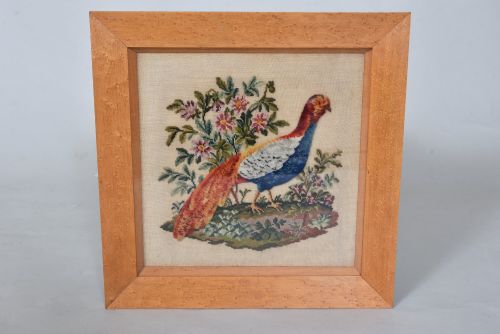
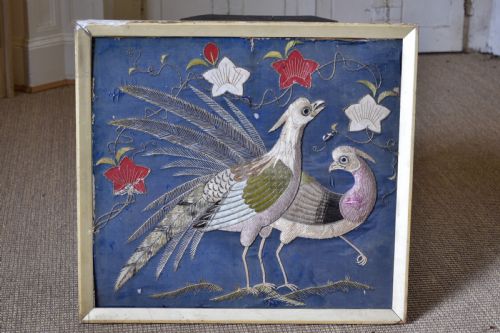
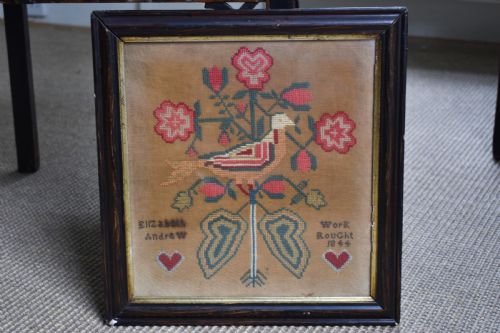
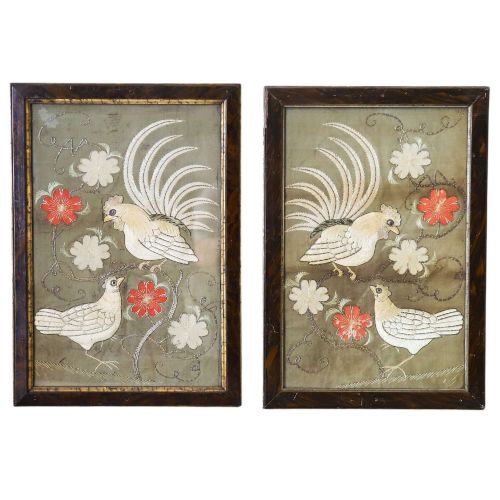
Framed bird textile art comprises needlework panels, samplers, and rank badges created across the Georgian, Victorian, and later periods. These works capture avian subjects through hand embroidery, wool work, and plushwork techniques housed behind protective glass.
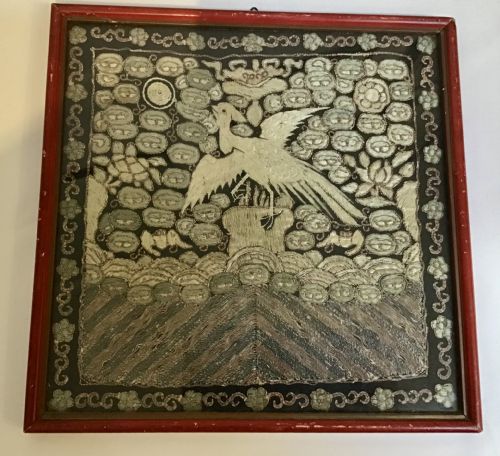
The selections available here range from British sailor woolies and plushwork pheasants to French silk cockerels, Chinese rank badges, and Greek island panels. Most examples originate from the nineteenth century, though eighteenth-century pieces also appear.
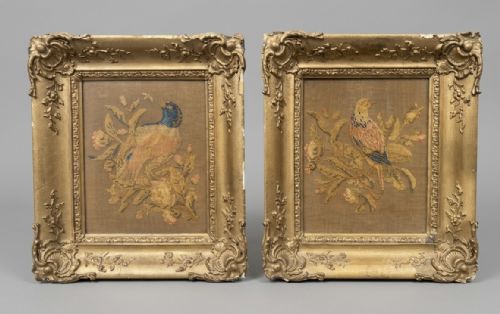
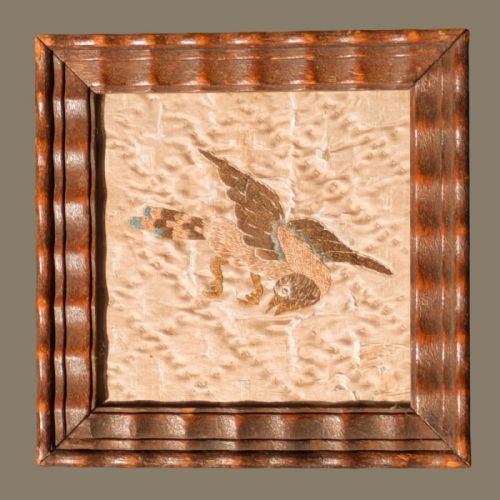
Buyers encounter subjects varying from solitary domestic fowl and garden birds to mandarin ducks and geese in flight. Each textile retains its historical mounting, often framed in maple wood, gilt, or faux tortoiseshell.
Materials and construction
Maker execution relies on textile foundations such as silk, linen, and wool worked with hand-stitched threads. Metallic thread and gold leaf accents frequently enhance the primary fabrics to create luminous plumage details.
Textiles are stretched over panels and secured within wooden frames behind glass to prevent atmospheric damage. Maple wood and gilt mouldings provide the structural housing for these fragile fibre compositions.
Distinctions in quality
The hierarchy of quality rests on the precision of needlework and the complexity of the avian depiction. Masterly shading in silk and wool separates lifelike renderings from rigid or formulaic stitching.
Original framing and preservation state elevate individual pieces above standard examples. Intact glass, stable backing materials, and minimal fading of coloured threads preserve the visual impact intended by the maker.
The Framed Bird Textile Art Glossary
- Plushwork
- A raised embroidery technique using cut pile loops to create a three-dimensional, tactile texture that resembles real bird plumage.
- Rank badge
- A square or circular embroidered textile panel indicating official status in Qing dynasty China, frequently depicting specific birds.
- Woolie
- A colloquial term for embroideries executed primarily in wool yarn by nineteenth-century sailors, often showing maritime or avian scenes.
- Needlepoint
- A form of canvas work embroidery stitched over a grid mesh to produce a dense, durable surface pattern.
- Sampler
- A piece of needlework demonstrating a maker's proficiency in various stitches, alphabets, or pictorial motifs.
Framed Bird Textile Art: Frequently Asked Questions
How should I hang these textiles?
Keep framed bird textile art away from direct sunlight and damp environments to protect the fragile silk and wool fibres.
Use secure picture hooks suited to the weight of the wooden frame and glass.
Are these pieces handmade?
The selections shown are hand-stitched creations produced before mass industrial embroidery machines became widespread.
Individual variations in the needlework stitches confirm human execution.
How do I date an embroidery?
Dating relies on the framing materials, the style of the textile composition, and the type of canvas or backing fabric used.
Nineteenth-century works often utilise maple or gilt frames with specific joining techniques.