





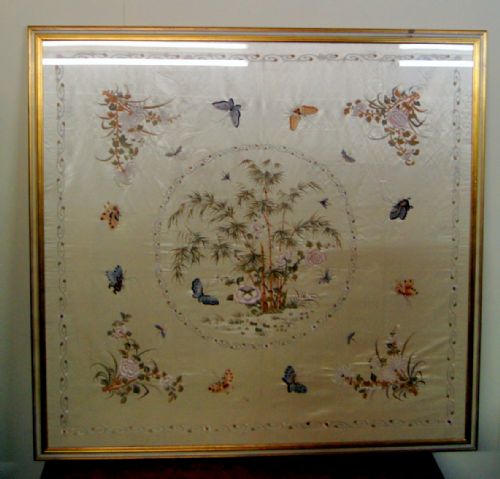
Chinese Silk Embroidery
Chinese silk embroidery pieces are hand-stitched works capturing birds, figures, and dragons, prized for their fine needlework and historical depth.
Chinese Silk Embroidery
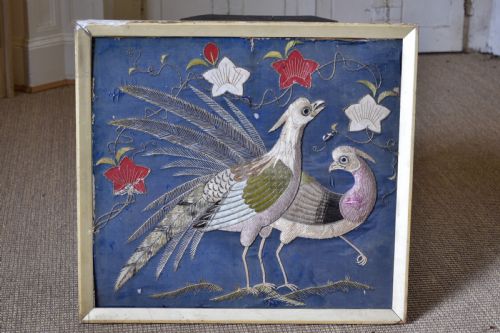
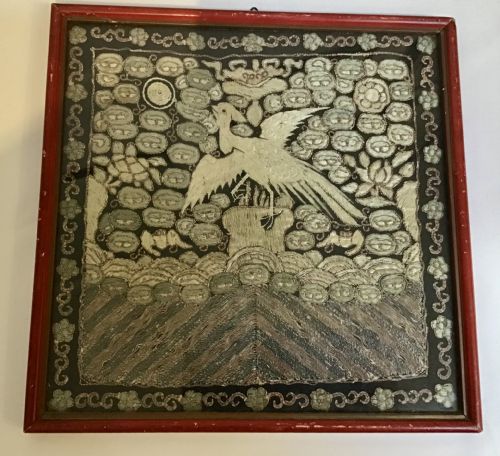
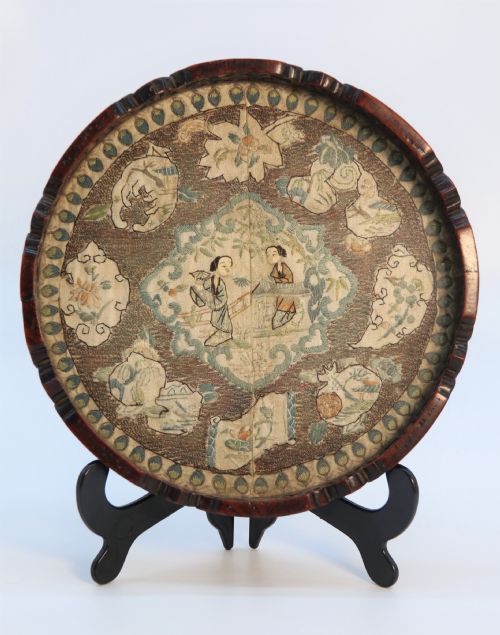
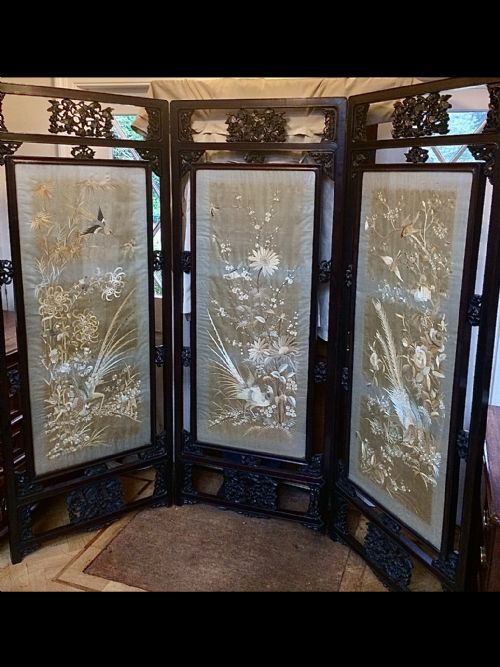
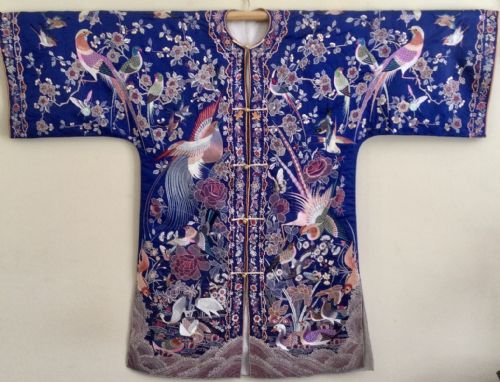
When you search for Chinese silk embroidery, you encounter hand-sewn panels, framed rank badges, and rotating table screens originating from the 18th to the early 20th century. These textiles record traditional subjects including garden birds, mandarin ducks, and blossoming trees.
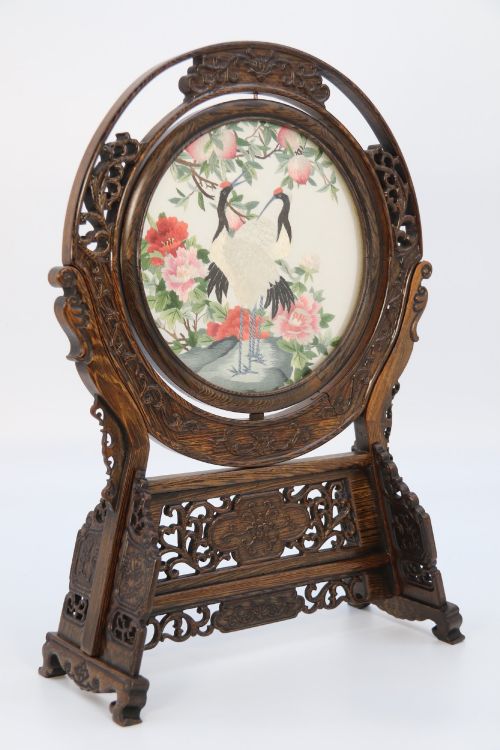
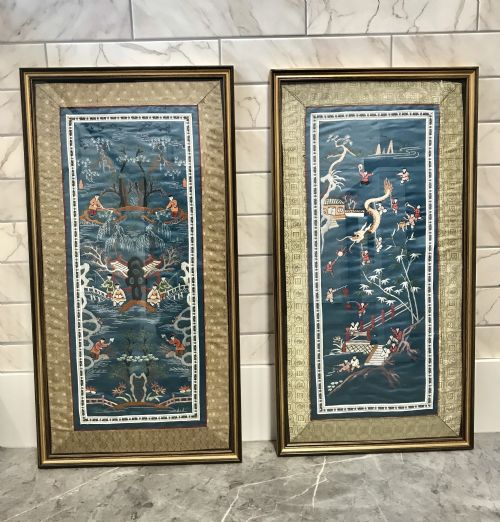
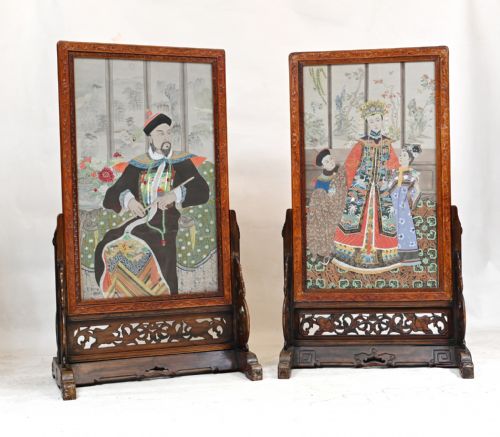
The most common formats on this page are framed wall art and freestanding hardwood table screens or firescreens. Many examples incorporate intricate wooden stands or frames, merging textile art with carved carpentry.
The aesthetic spans Qing Dynasty productions, Chinese Republic Period works, and Chinoiserie interpretations. Each piece demonstrates meticulous needlework executed on a fine silk ground.
How they were made
The foundation rests on a woven silk ground, stitched using fine silk filaments and occasionally metallic thread to add luminance to motifs like dragons and foliage. Artisans employed hand-sewing techniques to build complex pictorial layers.
Many of these embroideries are mounted within carved hardwood, gilt wood, or glass-fronted frames and rotating table screens. The construction often pairs the textile directly with bespoke woodwork designed to display both sides or protect the delicate threads.
Mandarin ducks appear frequently in these embroideries, serving as traditional symbols of lifelong marital fidelity.
What varies in quality
The distinction lies in the density of the stitching and the precision of the pictorial detail in subjects like birds, flowers, and figures. Superior examples display subtle tonal shading and secure, tight threadwork.
The quality of the accompanying physical mount, such as intricately carved hardwood stands or glazed frames, elevates the overall piece. The integration between the textile art and its original housing dictates the standing of the object.
The Chinese Silk Embroidery Glossary
- Qing Dynasty
- The final imperial dynasty of China, spanning from the mid-17th to the early 20th century. Pieces from this era often feature traditional motifs and formal court designs.
- Rank badge
- A square embroidered patch worn on official robes to denote the wearer's status in the imperial hierarchy. These survive as standalone framed textile art.
- Table screen
- A decorative panel set into a carved wooden stand designed for placement on a desk or table. Many examples feature silk embroidery protected under glass.
- Chinoiserie
- European artistic style reflecting Chinese motifs and techniques. This aesthetic influenced various decorative arts.
- Metallic thread
- Thread wound or wrapped with a thin strip of metal, such as gilt or silver, used in embroidery to create reflective highlights.
Chinese Silk Embroidery: Frequently Asked Questions
How should I display a silk screen?
Position your screen away from direct sunlight to prevent the silk threads and natural dyes from fading over time. Glass-fronted frames and table screens offer natural protection against dust and atmospheric moisture.
Place them on stable surfaces where temperature fluctuations remain minimal. This preserves both the delicate textile and the accompanying carved hardwood structure.
How are double-sided embroideries mounted?
Double-sided pieces are typically set into rotating hardwood display stands that allow viewers to observe the stitching from both angles. The mounting leaves the reverse side fully exposed without traditional backing fabric.
This technique requires absolute precision because every knot and loose end must remain concealed within the body of the work.
What subjects appear on these embroideries?
Common subjects include garden birds, mandarin ducks, flowering trees, and figurative scenes populated by traditional characters. Imperial symbols such as dragons also appear on specific items like rank badges.
These motifs carried specific cultural meanings denoting longevity, status, or natural harmony within traditional Chinese society.
How do I identify the period?
Dating relies on stylistic markers within the embroidery design, the framing materials, and documented construction methods. Pieces linked to the Qing Dynasty display formal composition styles.
Later works from the Chinese Republic Period often introduce modified pictorial perspectives while maintaining traditional hand-sewing techniques.