

Antique Embroidered Silk
When you handle antique embroidered silk, you hold centuries of patient needlework spanning English samplers, Chinese panels and Central Asian suzanis.
Antique Embroidered Silk
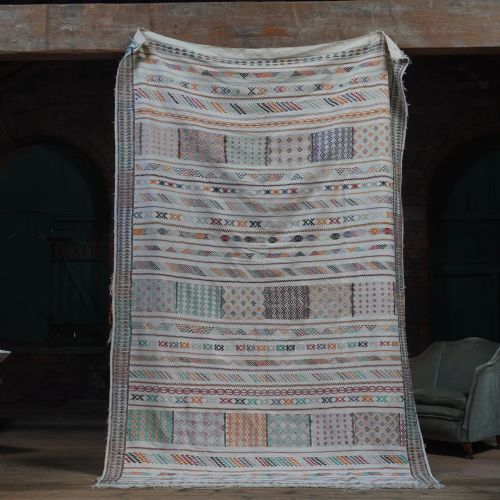
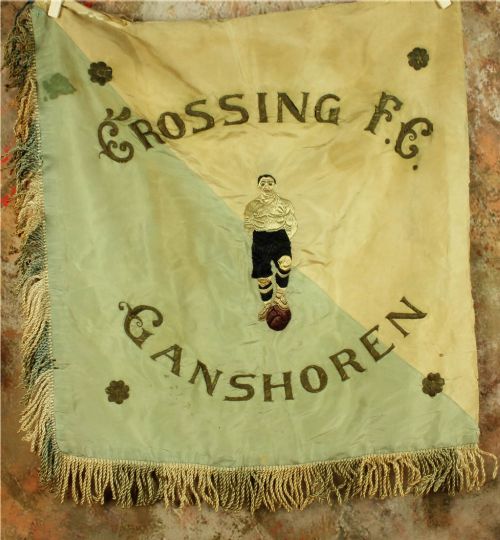
Antique embroidered silk encompasses a wide range of textile art, from framed domestic needlework and maps to large wall hangings and ceremonial covers. Pieces on this page cross multiple centuries, ranging from seventeenth-century panels to twentieth-century flags and shawls.
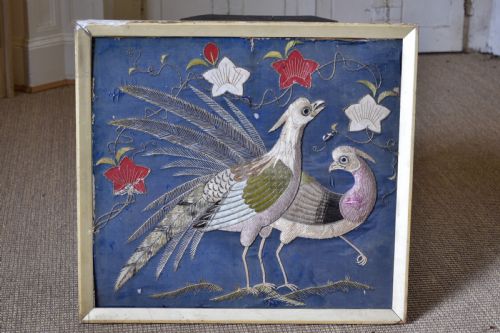
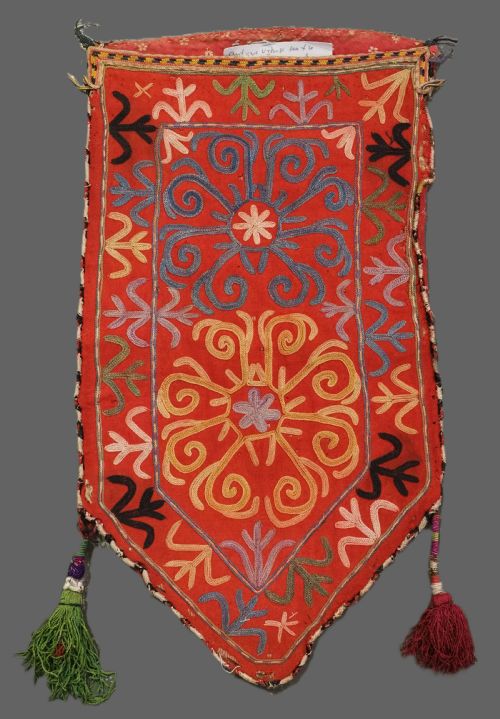
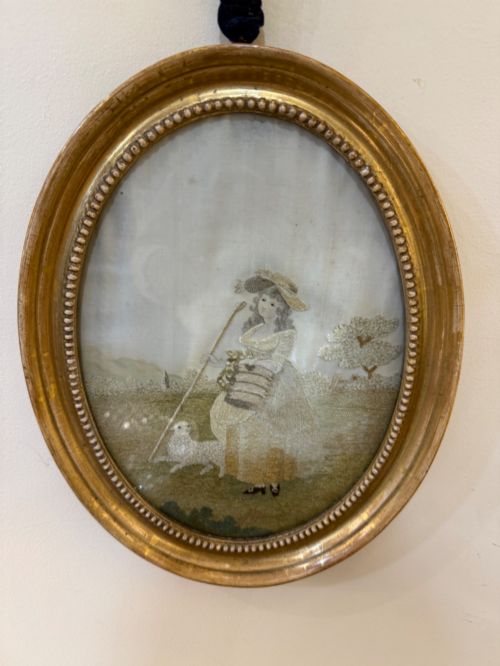
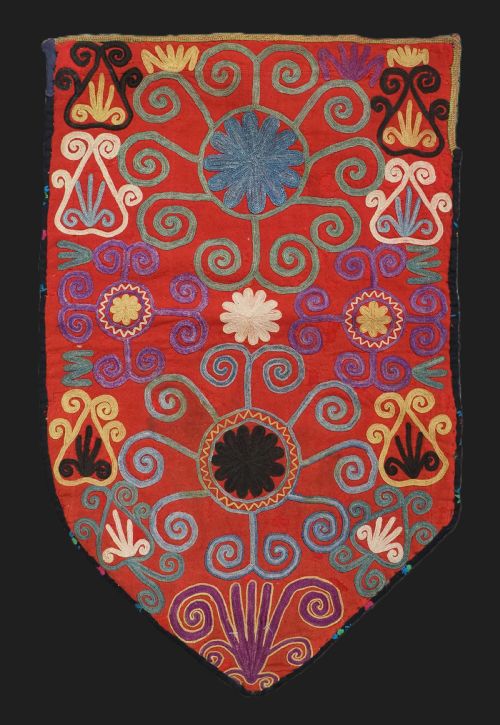
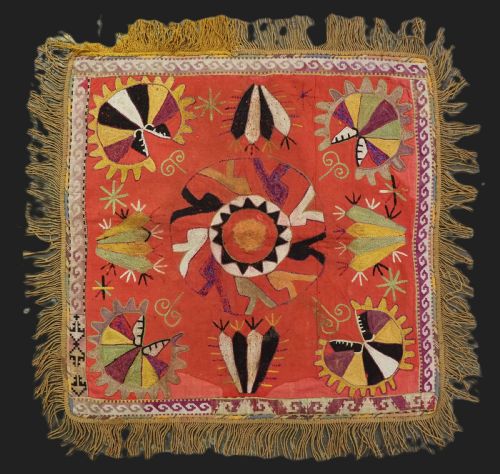
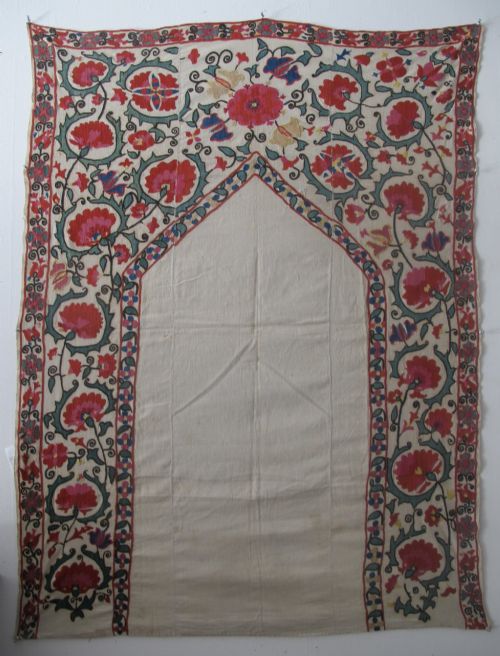
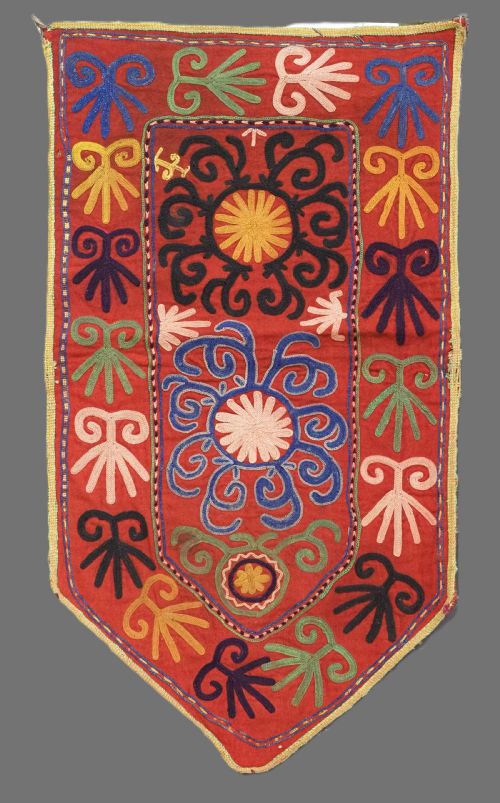
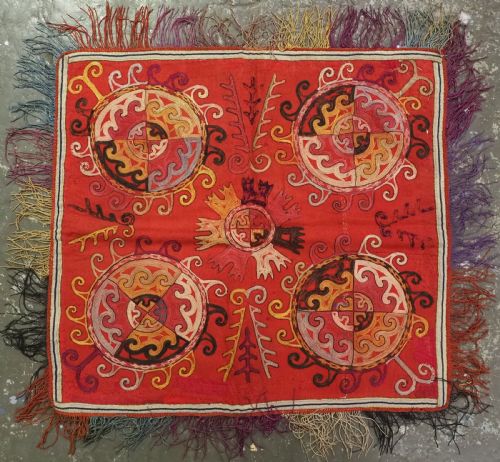
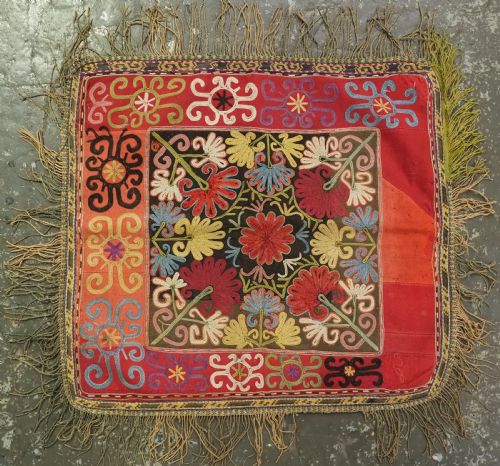
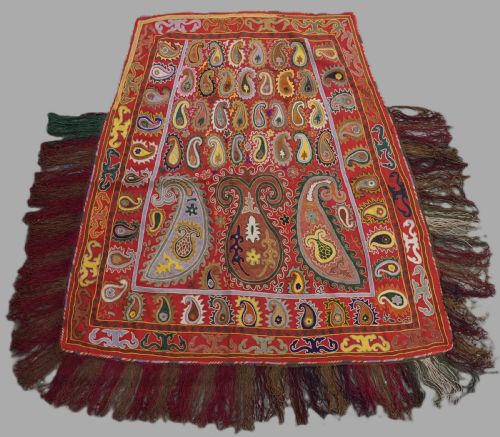
Central Asian tribal pieces feature prominently, particularly Uzbek suzanis, dowry embroideries and horse covers worked in silk thread. Alongside these, buyers encounter European samplers, Chinoiserie panels, and framed Chinese rank badges.
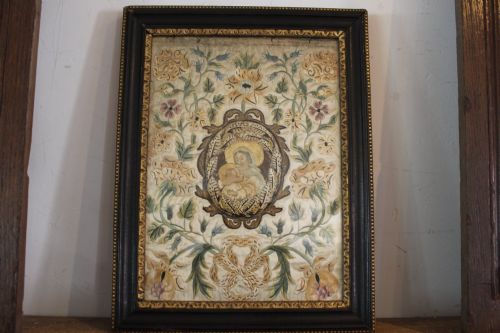
Forms vary from small mirror covers and fragments to substantial wall hangings and bed covers. Many examples retain original framing, glazing or display stands.
What varies in quality
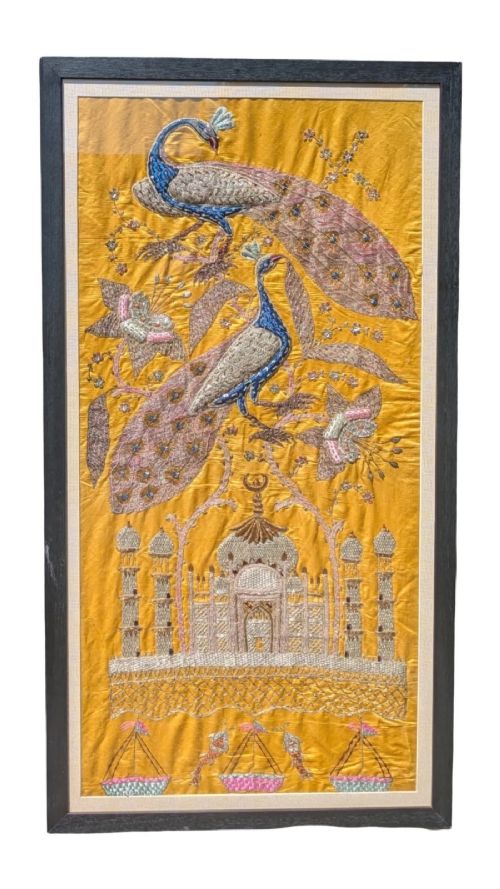
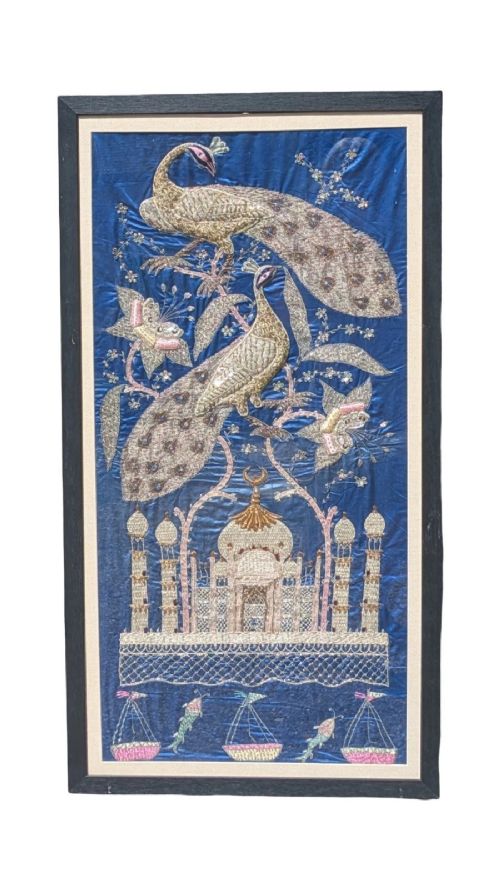
The division between standard items and superior examples lies in the density and precision of the stitching. Finer pieces demonstrate meticulous control of silk floss, creating depth and architectural clarity in complex motifs like suzanis or pictorial scenes.
The integrity of the supporting textile and the preservation of the original colours determine the standing of a piece. Original mounts, frames and double-sided execution elevate the status of textile panels within any collection.
Listings feature textiles spanning from the seventeenth century through the 1930s, incorporating cotton, wool, linen, and metallic threads.
The Antique Embroidered Silk Glossary
- Suzani
- A traditional embroidered tribal textile from Central Asia, often worked in silk on a cotton or linen ground for wall hanging or domestic use.
- Sampler
- A piece of needlework produced to demonstrate proficiency in various stitches, frequently incorporating alphabets, maps or pictorial scenes.
- Rank badge
- A square embroidered patch worn on official robes in imperial China to indicate the status of a civil or military official.
- Ilgich
- A specific type of dowry embroidery produced by the Lakai tribe in Uzbekistan, commonly used as a wall hanging.
- Crewel work
- Embroidery executed using wool or silk yarn on a sturdy fabric foundation, often seen on historical cushions and panels.
Antique Embroidered Silk: Frequently Asked Questions
How do I care for antique embroidered silk?
Keep textile pieces away from direct sunlight to prevent the silk threads from fading and weakening over time. Display them in stable environments away from excessive moisture and handle them minimally.
Framed pieces under glass require little maintenance beyond dusting the exterior frame. Unframed wall hangings benefit from professional textile mounting to distribute weight evenly.
What is the difference between a suzani and an ilgich?
A suzani is a large embroidered Central Asian hanging used for various domestic purposes, featuring expansive floral or architectural layouts. They serve as major decorative wall art.
An ilgich is a specific smaller dowry embroidery produced by the Lakai tribe, traditionally created for wall hanging during marriage celebrations. They often display distinct geometric tribal patterns.
How can I tell the period of an embroidered panel?
Dating relies on examining the materials, the ground fabric, and the stylistic motifs inherent to specific regions and centuries. Seventeenth and eighteenth-century works typically display different stitch structures and dye palettes compared to nineteenth-century examples.
Contextual clues such as original frames, backing materials, and known workshop traditions help narrow down the date of execution. Comparative analysis with dated samplers or documented tribal pieces provides further clarity.
Were these embroideries made for export or domestic use?
Many items, such as Central Asian suzanis and ilgiches, were created for local domestic and ceremonial traditions within tribal communities. They formed vital parts of dowries and daily household life.
Other categories, including Chinese shawls and panels or European samplers, were produced both for local display and for international trade. Each piece carries markers of its original cultural context.