




Oriental Silk Panels
Oriental silk panels bring intricate texture and colour into a room, drawing the eye with detailed needlework and painting.
Oriental Silk Panels
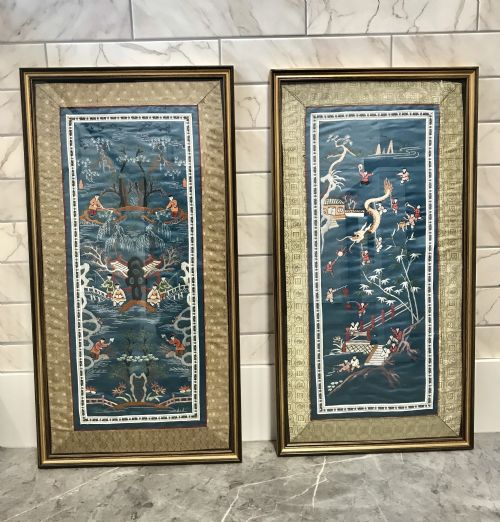
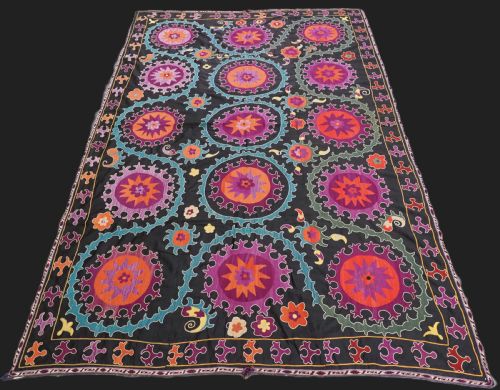
Oriental silk panels encompass a broad range of decorative textiles, wall hangings, and framed works originating from diverse Asian traditions. Buyers searching for oriental silk panels often encounter nineteenth-century embroideries, Uzbek suzanis, and painted silk works framed for display.
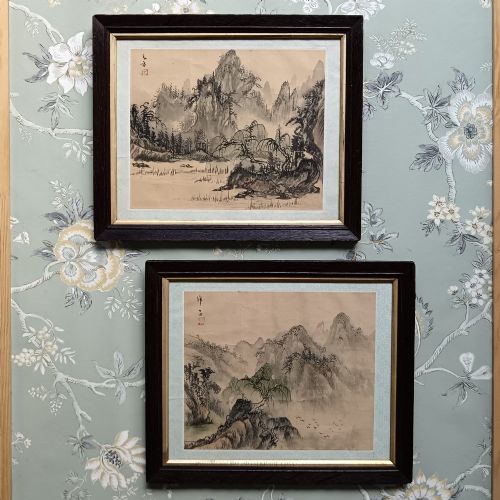
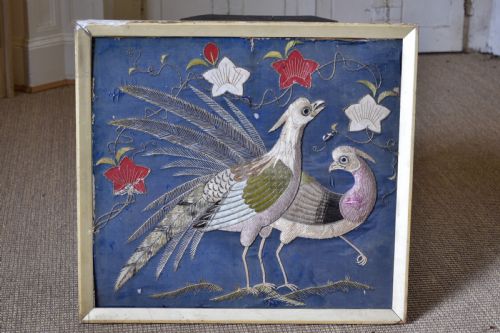
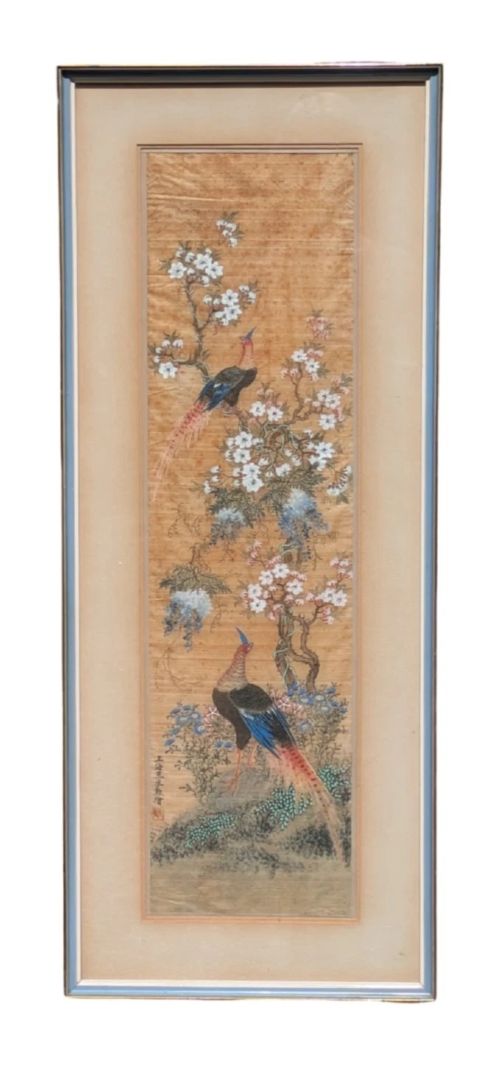
The selection ranges from large wall hangings depicting dragons and flowers to smaller framed watercolours and embroidered fragments. Many pieces trace their origins to Chinese workshops, Japanese screens, and Central Asian textile traditions dating across the nineteenth and early twentieth centuries.
How they were made
Maker utilisation of silk thread relies heavily on fine hand sewing, often paired with cotton or wool grounds depending on the regional tradition. Metallic thread frequently accents the primary embroidery, adding reflective detail to figures, trees, and birds.
Framed works and screens incorporate carved hardwood frames, glass protection, and ink or watercolour painting directly onto the silk ground. Applique work using felt also appears in specific regional traditions such as Persian Rasht embroidery.
Materials recorded across the inventory include silk, cotton, wool, hardwood, glass, and metallic thread.
What varies in quality
Quality rests upon the intricacy of the hand stitching and the precision of the initial drawing or painting on the silk. Finer pieces demonstrate dense needlework, complex pictorial composition, and careful integration of varied threads.
The survival of original framing, carved stands, or associated hardwood surrounds influences the character of the piece. Material integrity, such as the stability of the cotton ground and the preservation of metallic thread, distinguishes superior examples.
Iida Takashimaya Company
The Oriental Silk Panels Glossary
- Suzani
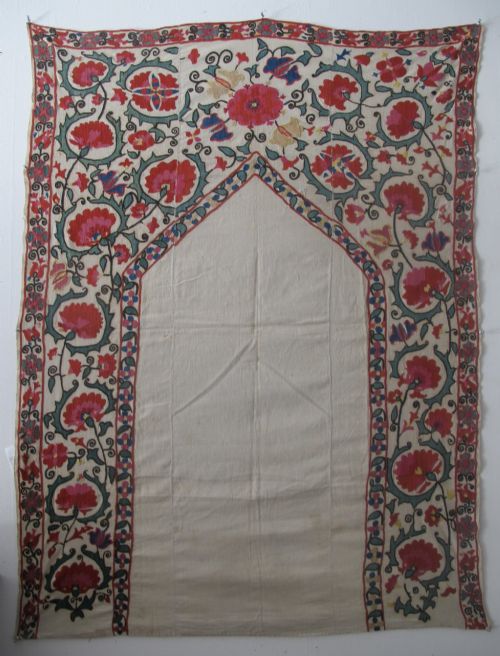
- An embroidered tribal textile from Uzbekistan, typically featuring bold floral motifs worked in silk thread on a cotton ground. These large hangings were traditionally made as part of a bride's dowry.
- Guo Hua
- Traditional Chinese painting executed on silk or paper using brushes, ink, and coloured pigments. These works often depict landscapes, birds, or figures.
- Rasht embroidery
- A traditional Persian textile technique involving inlaid coloured felt pieces assembled with fine chain stitch embroidery. This style creates dense, tactile geometric and floral designs.
- Jajim
- A flatwoven textile produced in strips and joined together, often utilised for coverlets or decorative furnishings. Wool, cotton, and silk appear in various combinations.
- Shan Shui
- A style of traditional Chinese painting that portrays natural landscapes using ink and brushwork. The term translates directly to mountain water.
Oriental Silk Panels: Frequently Asked Questions
How were oriental silk panels originally used?
Many textile panels served as wall hangings, decorative screens, or architectural elements within homes and palaces. Suzanis functioned primarily as dowry items and decorative covers in Central Asian households.
Smaller embroidered panels and paintings were often framed or mounted into furniture such as table screens and firescreens. Their portability allowed them to be displayed flexibly across different rooms.
How do I care for antique silk panels?
Keep textile panels away from direct sunlight to prevent the fading of natural dyes in the silk and cotton threads. Gentle dusting with a soft brush helps maintain the surface without disturbing fragile stitching.
Display pieces behind glass where appropriate to protect the fibres from atmospheric dust and handling. Avoid hanging heavy textiles in areas with high humidity to preserve the underlying organic materials.
How do I identify a suzani?
Suzanis are identifiable by their characteristic hand-embroidered silk designs on a woven cotton or linen ground, usually originating from Uzbekistan. Common motifs include large floral medallions, vines, and sunbursts.
Unlike standard embroidered pictures, these large textiles were created in panels and joined together. Their format ranges from wall hangings to prayer designs.
What is the difference between Chinese and Japanese silk panels?
Chinese silk panels frequently feature symbolic motifs such as dragons, mandarin ducks, and detailed floral arrangements executed in dense embroidery or watercolour. These often appear within carved hardwood frames or table screens.
Japanese examples often lean towards naturalistic depictions of birds, flora, or narrative scenes on silk textiles and folding screens. The needlework techniques and compositional styles reflect distinct regional aesthetic traditions.