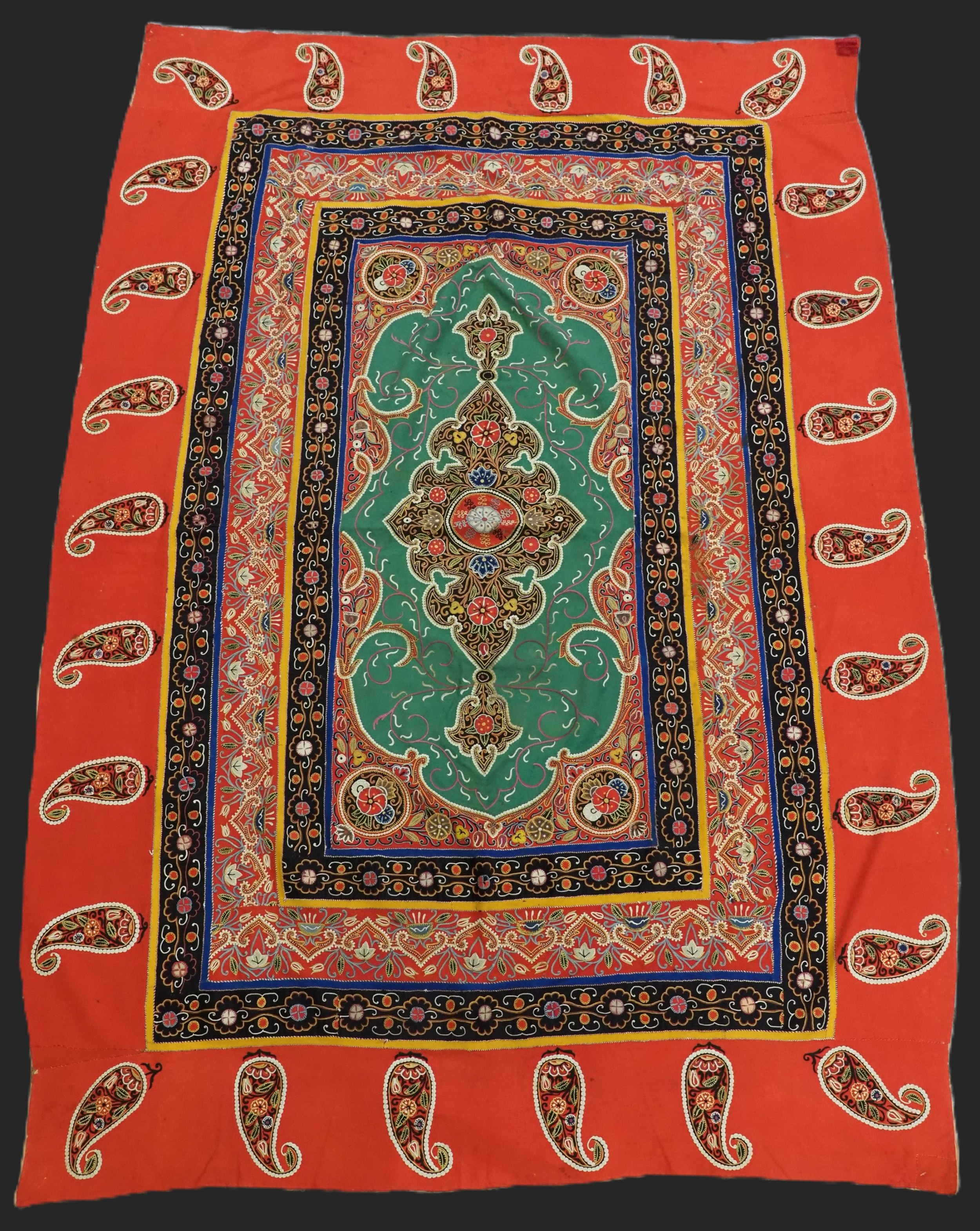
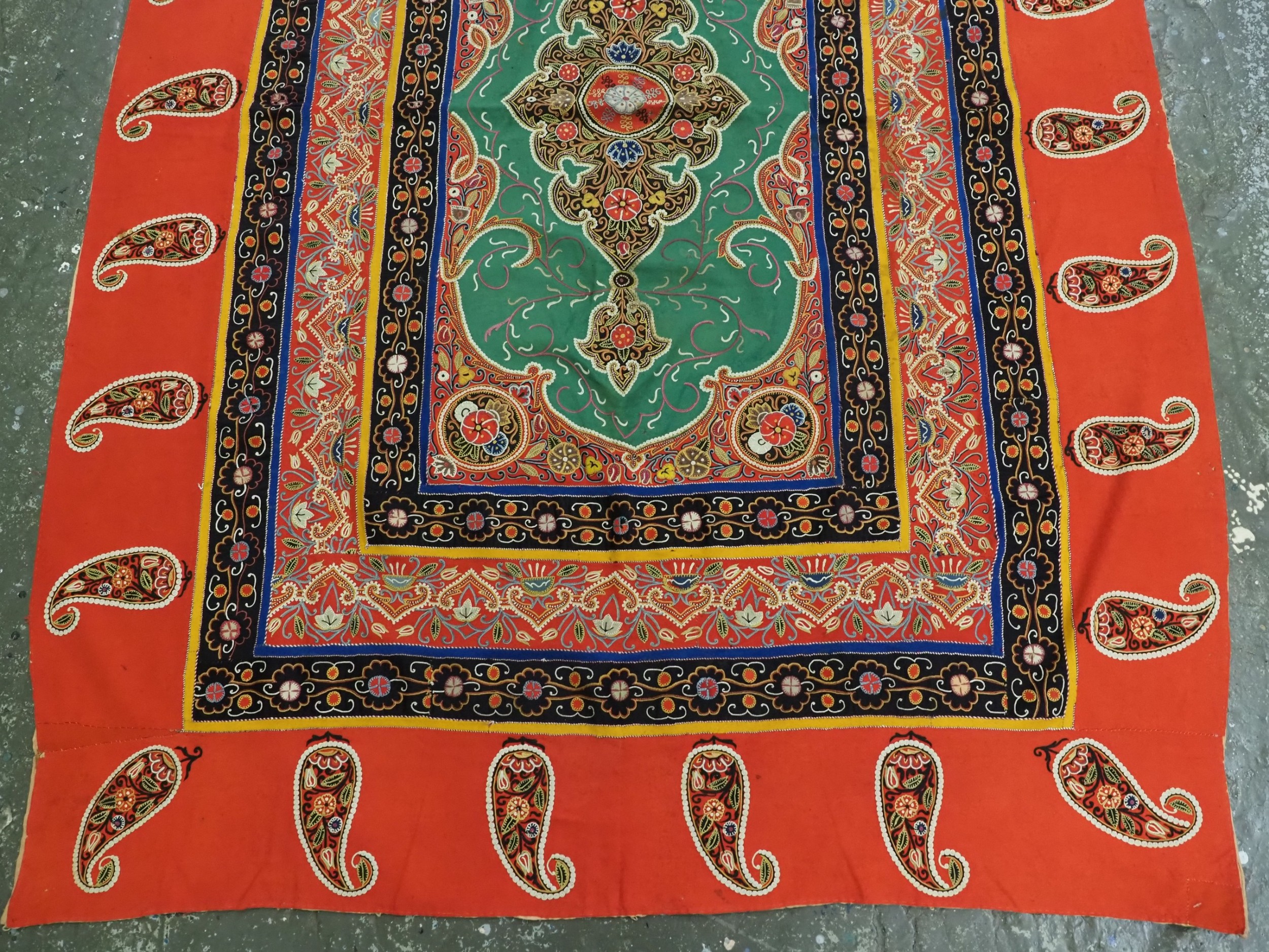
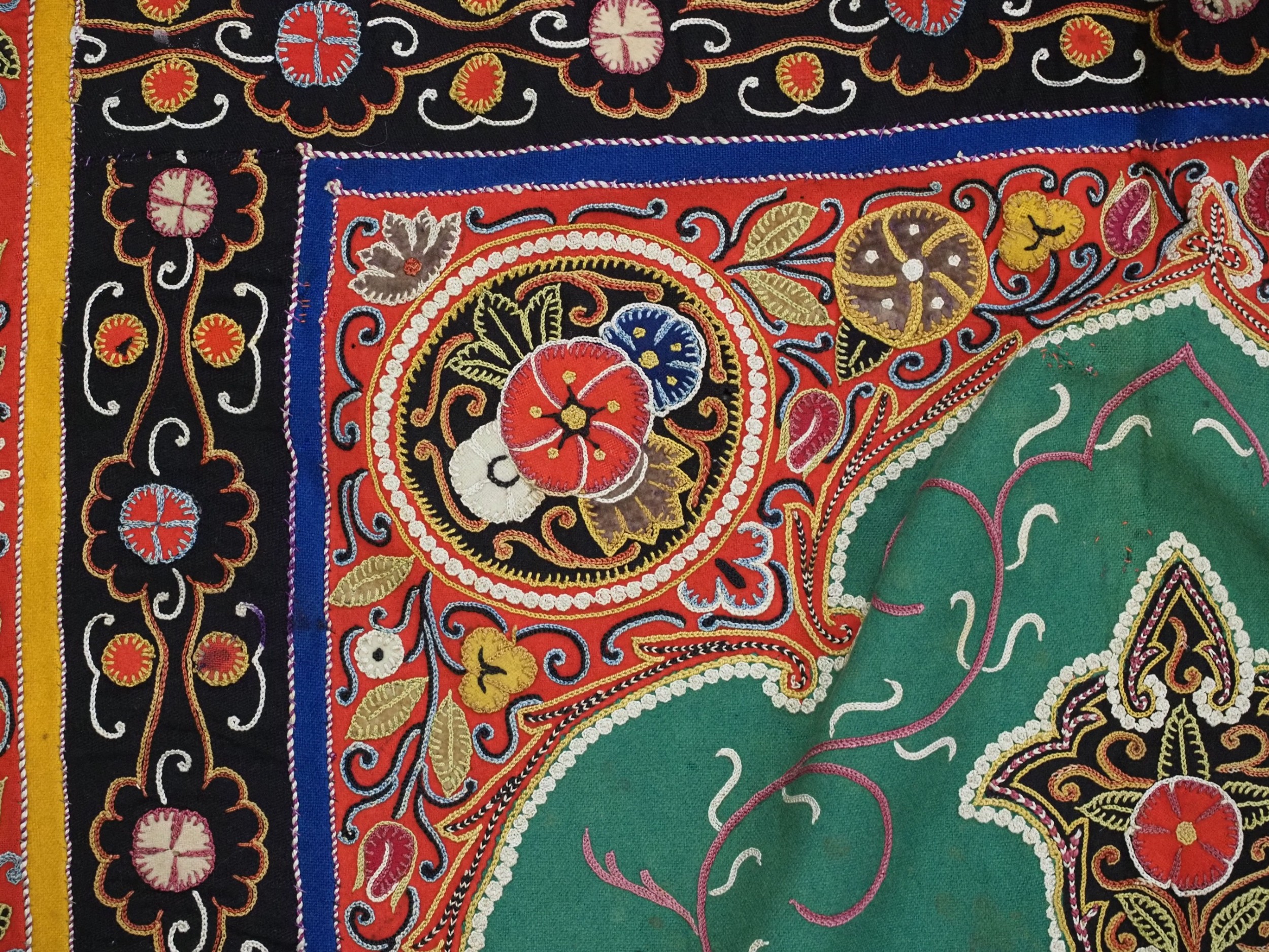
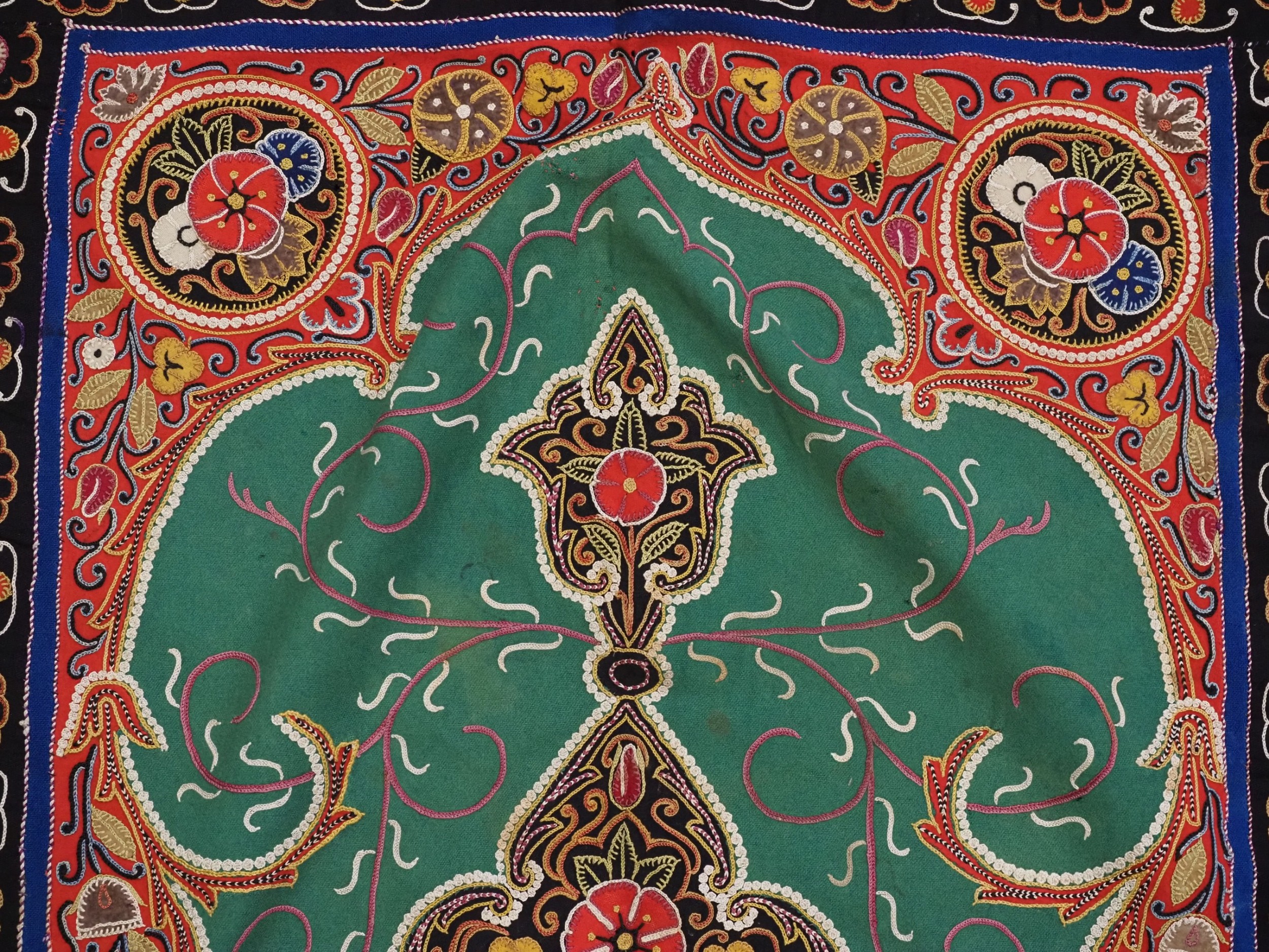
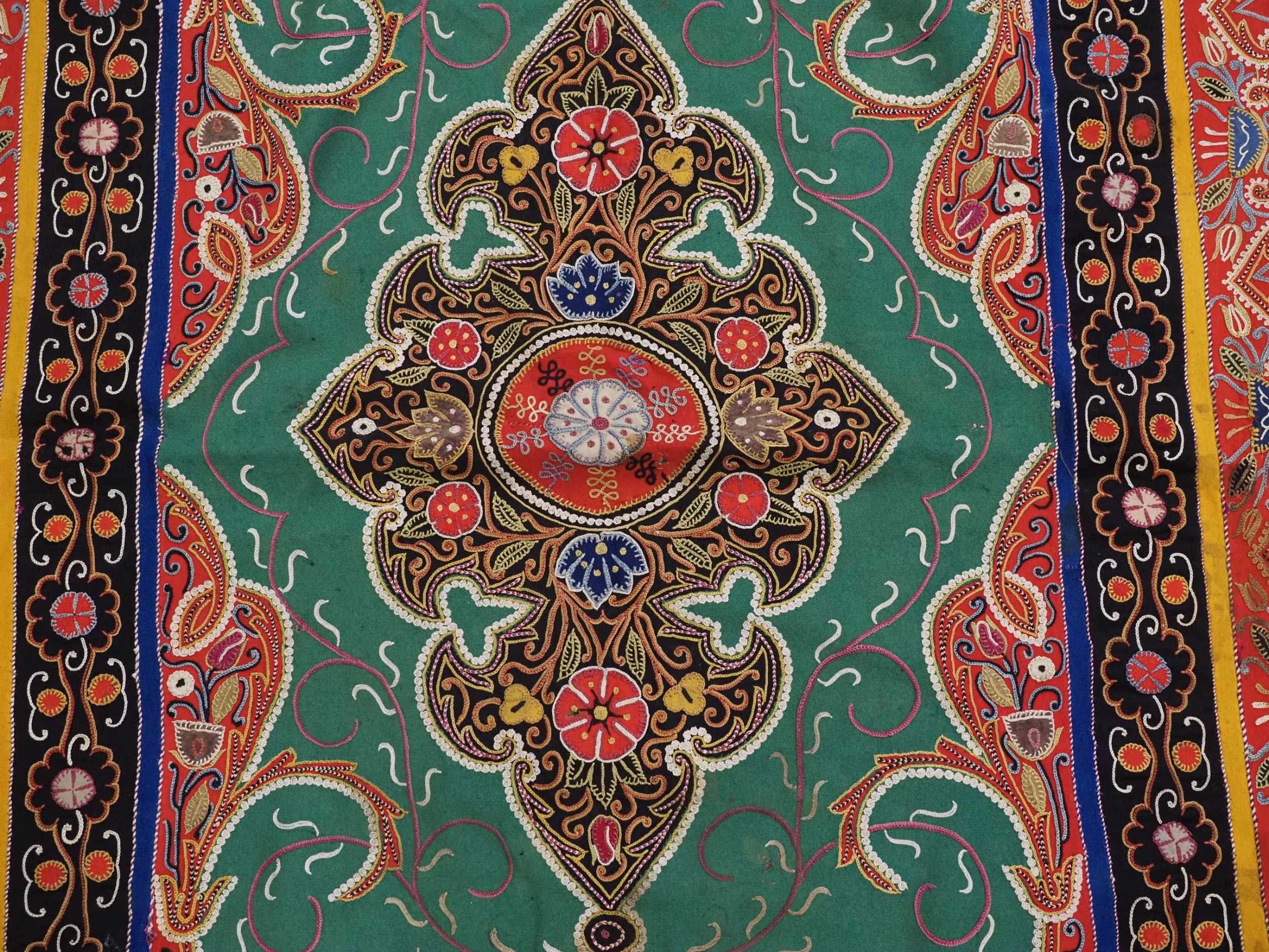
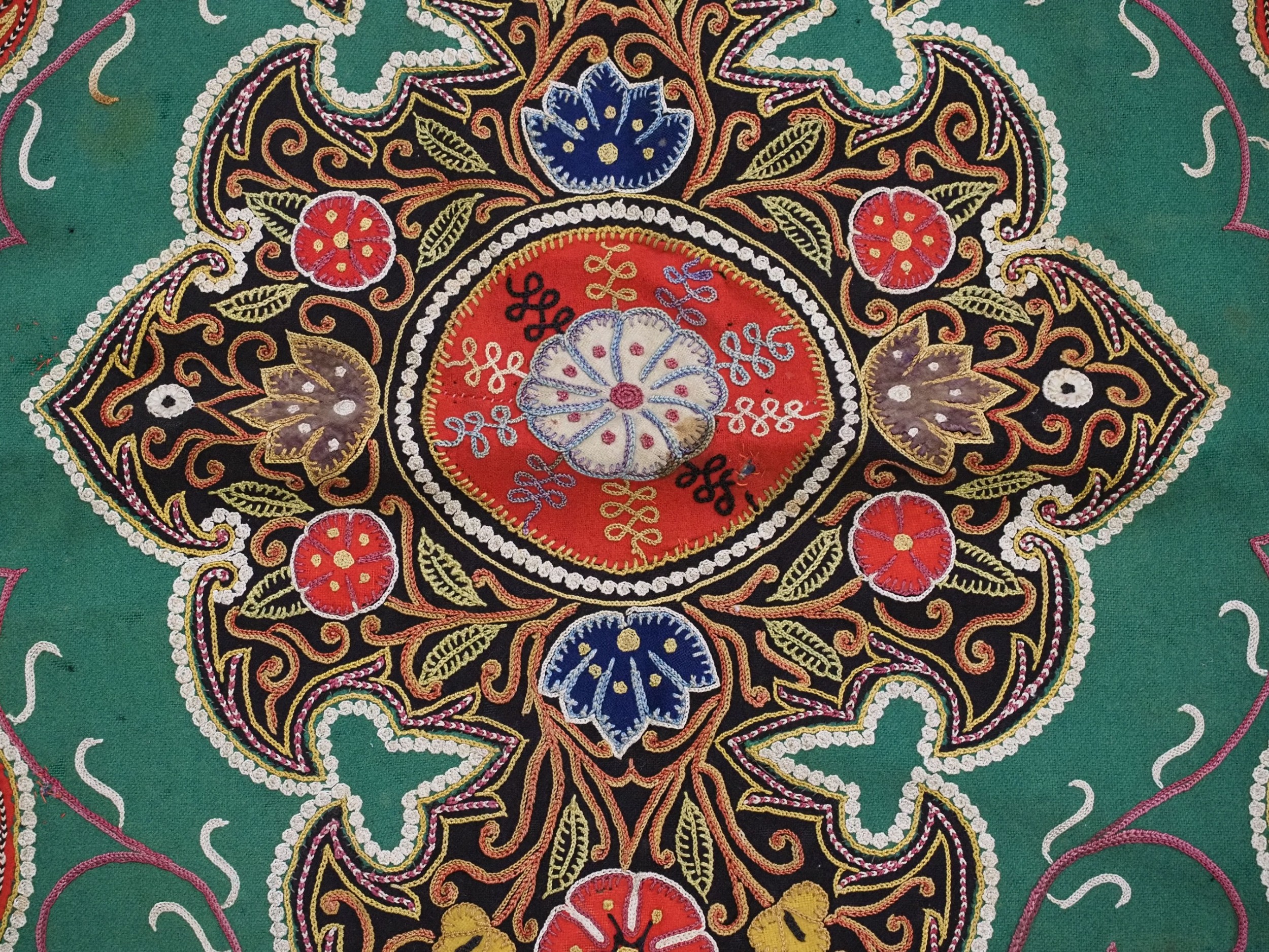
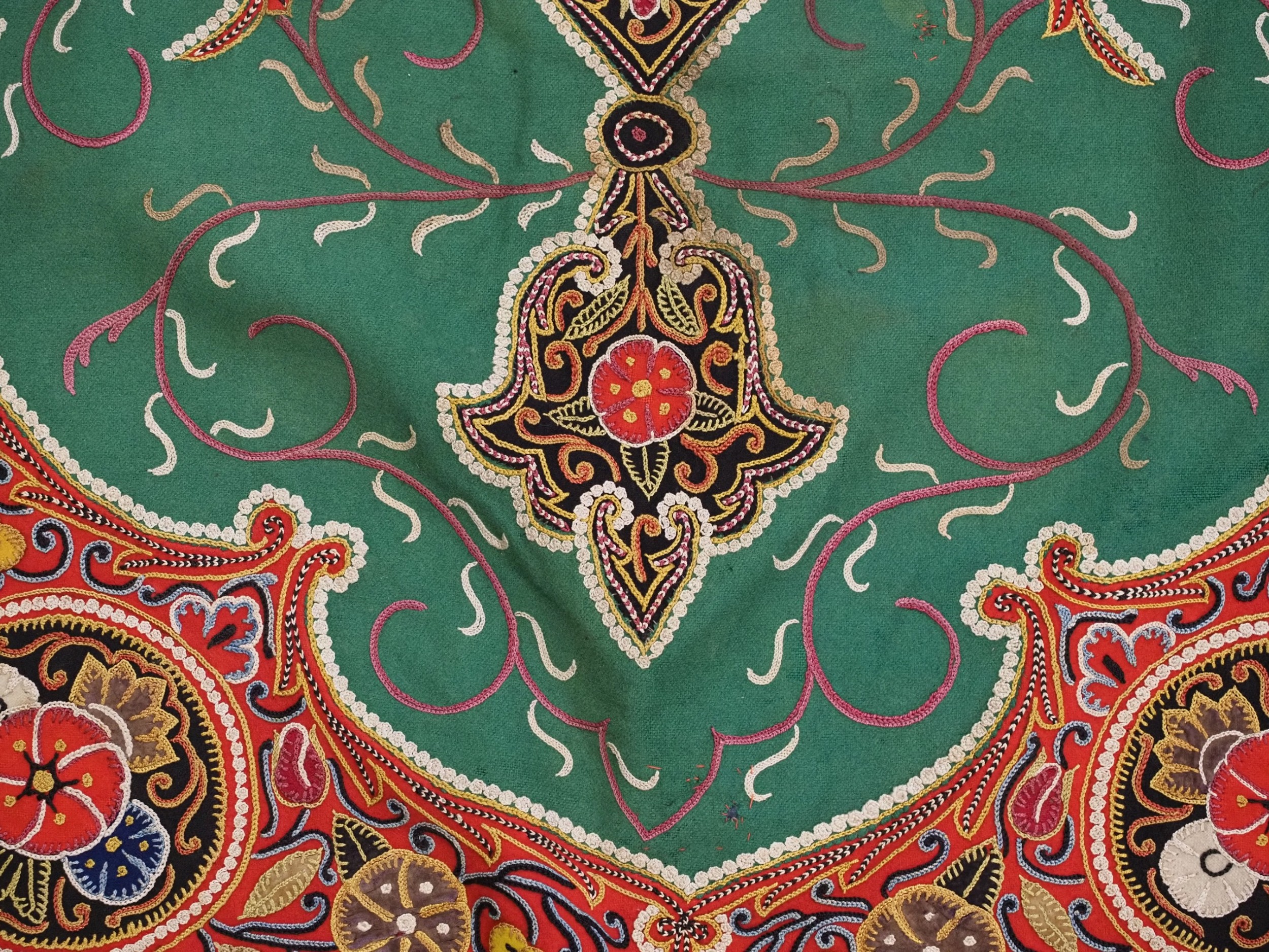
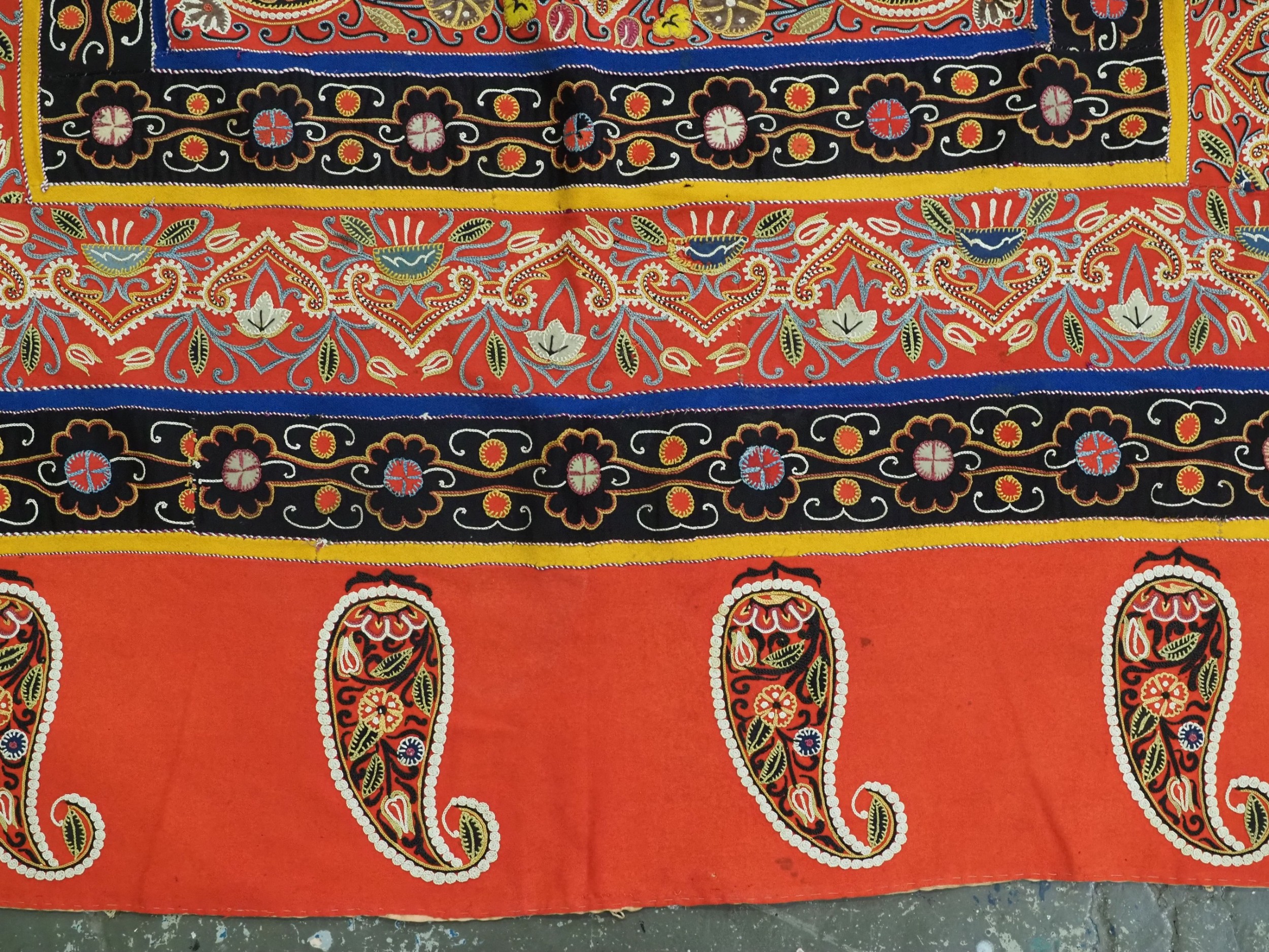
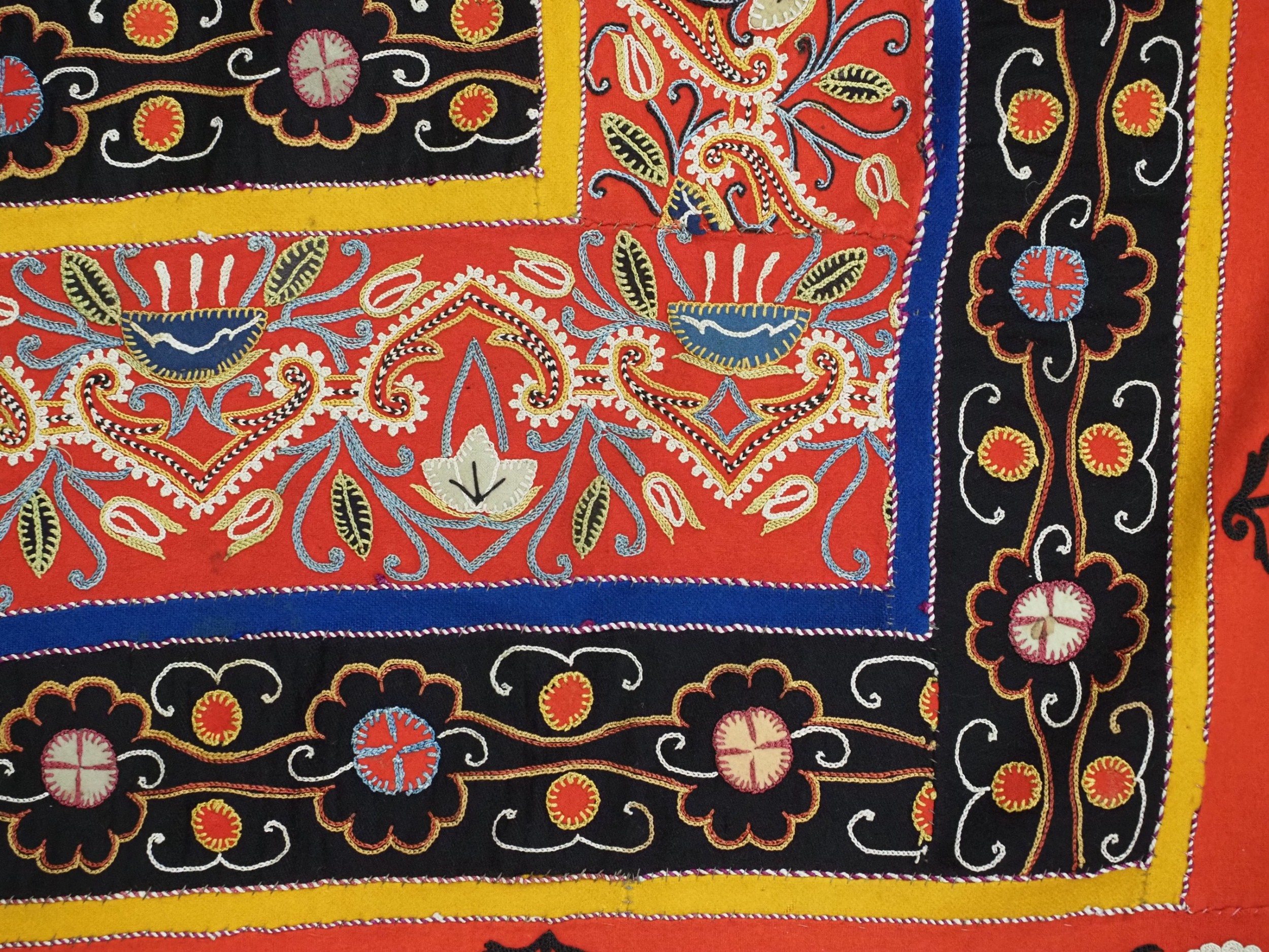
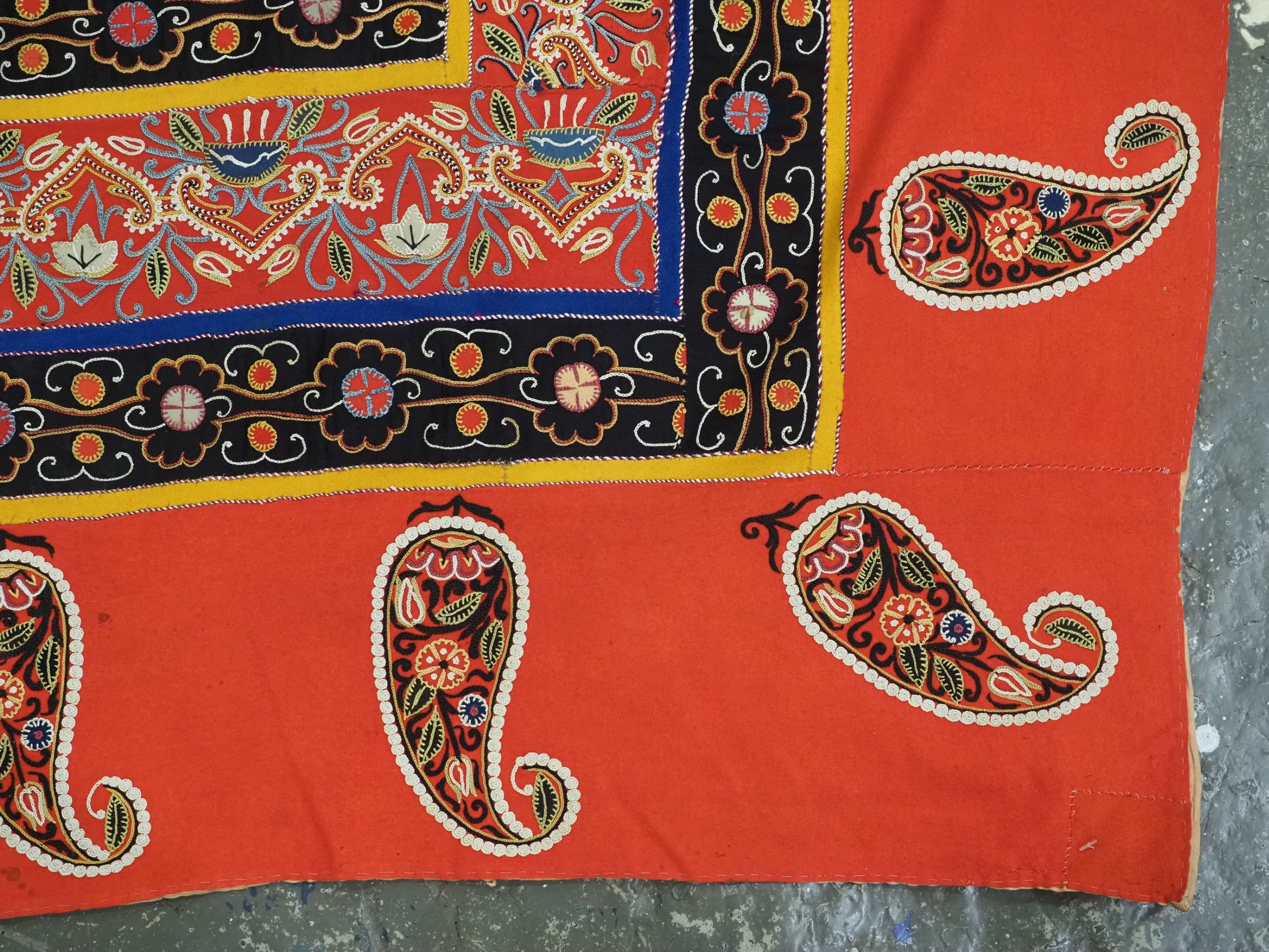
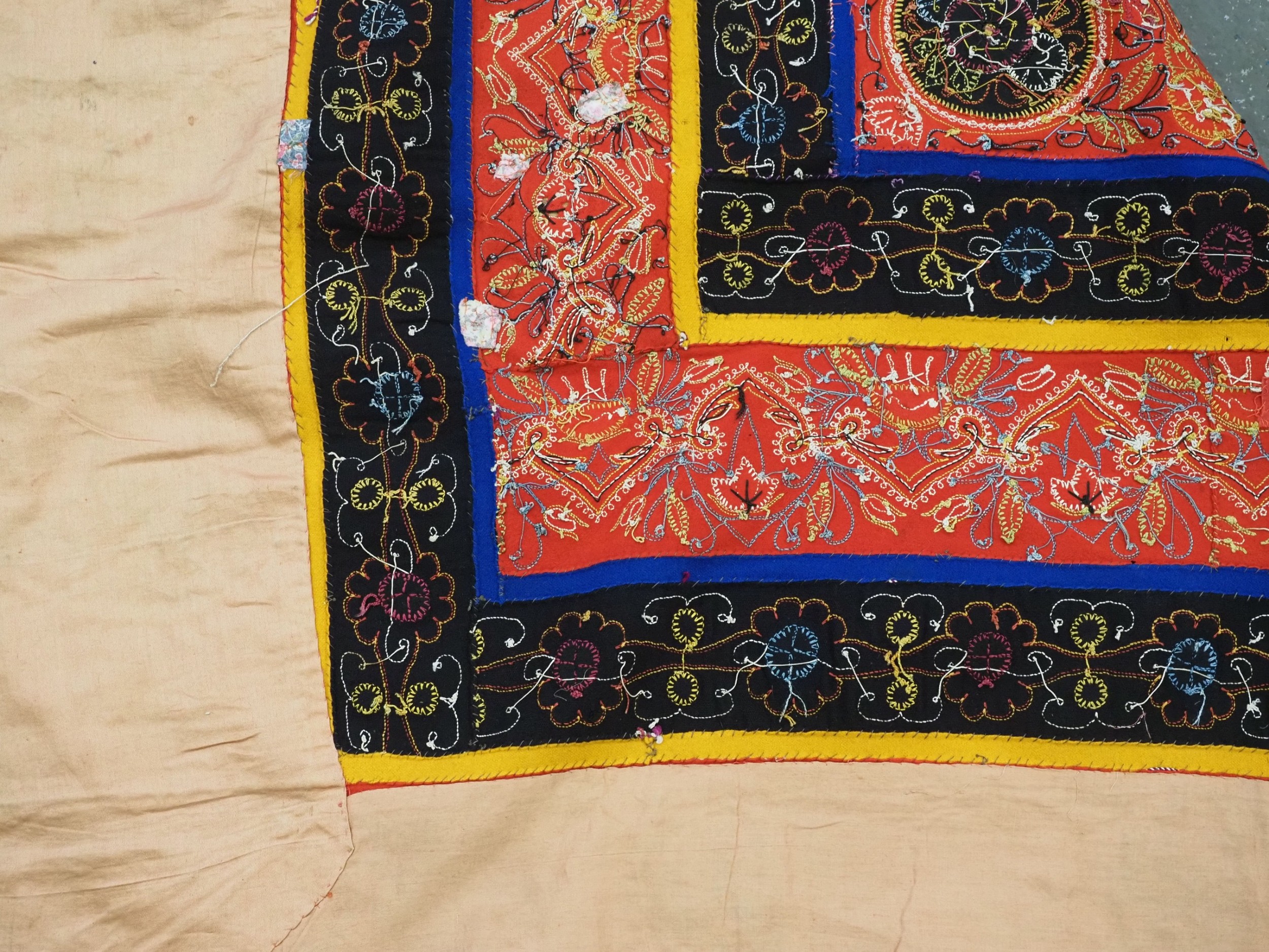
Cotswold Oriental Rugs has dated this Persian Rasht Embroidery Textile to the 1900s.
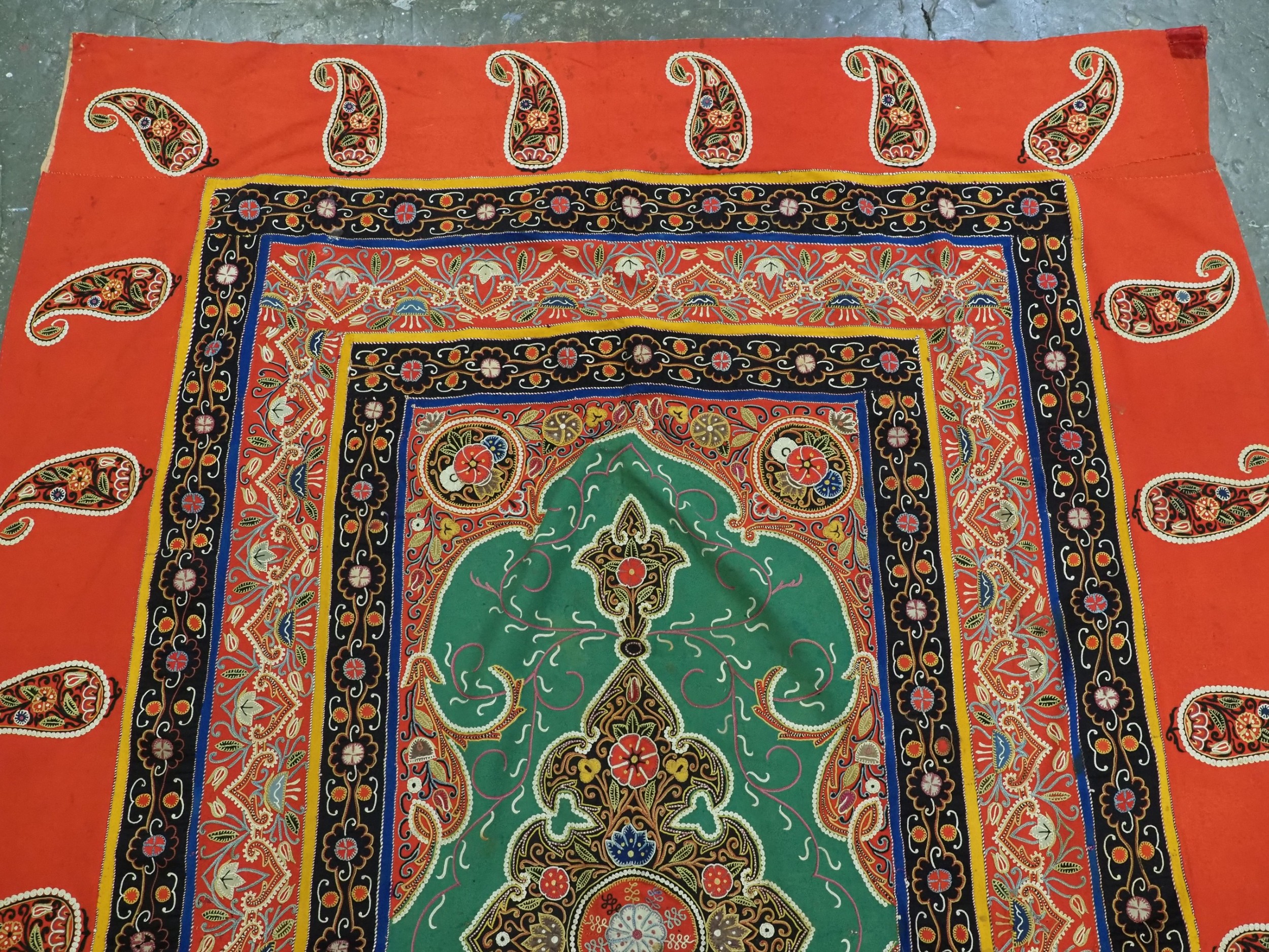
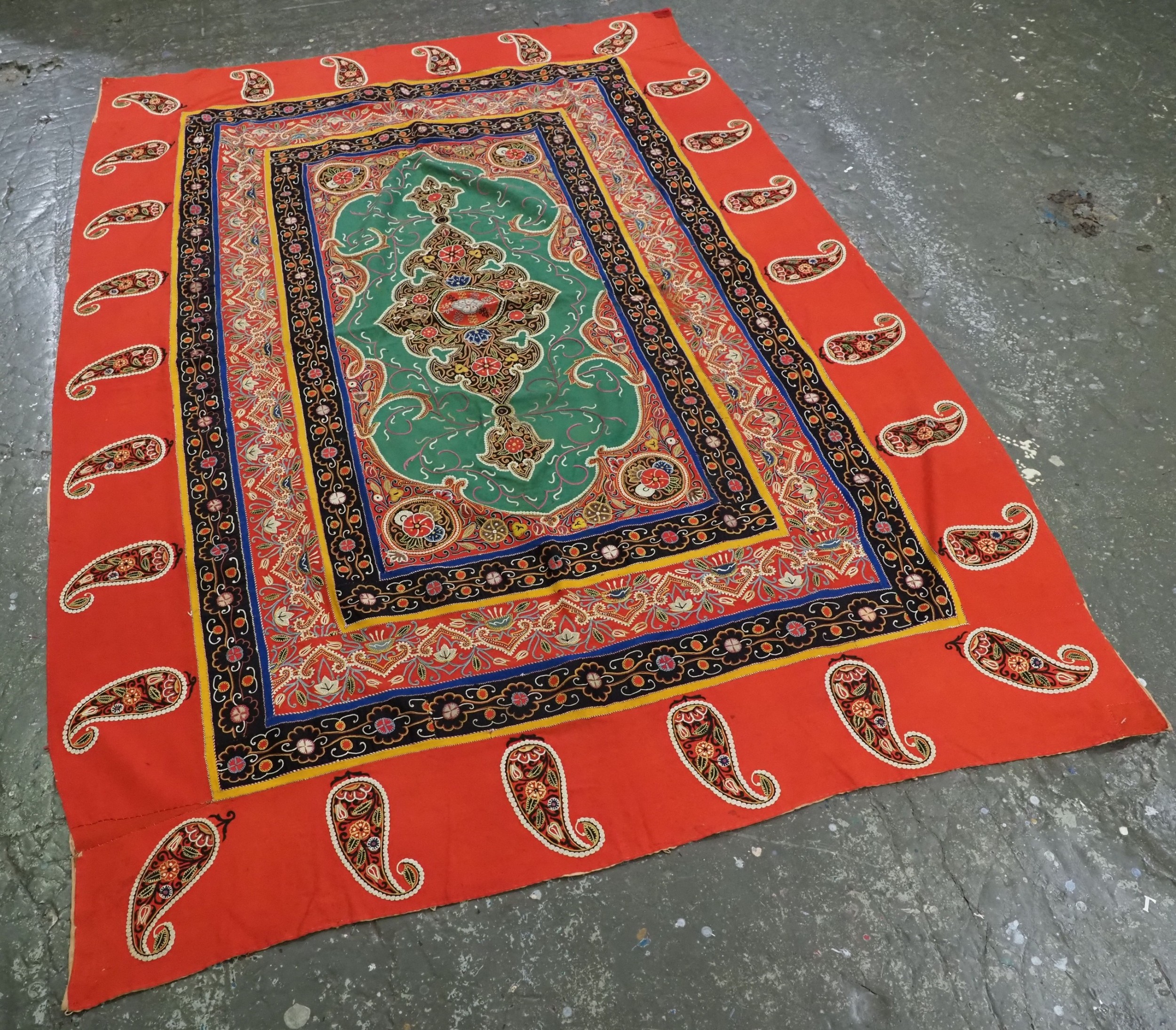
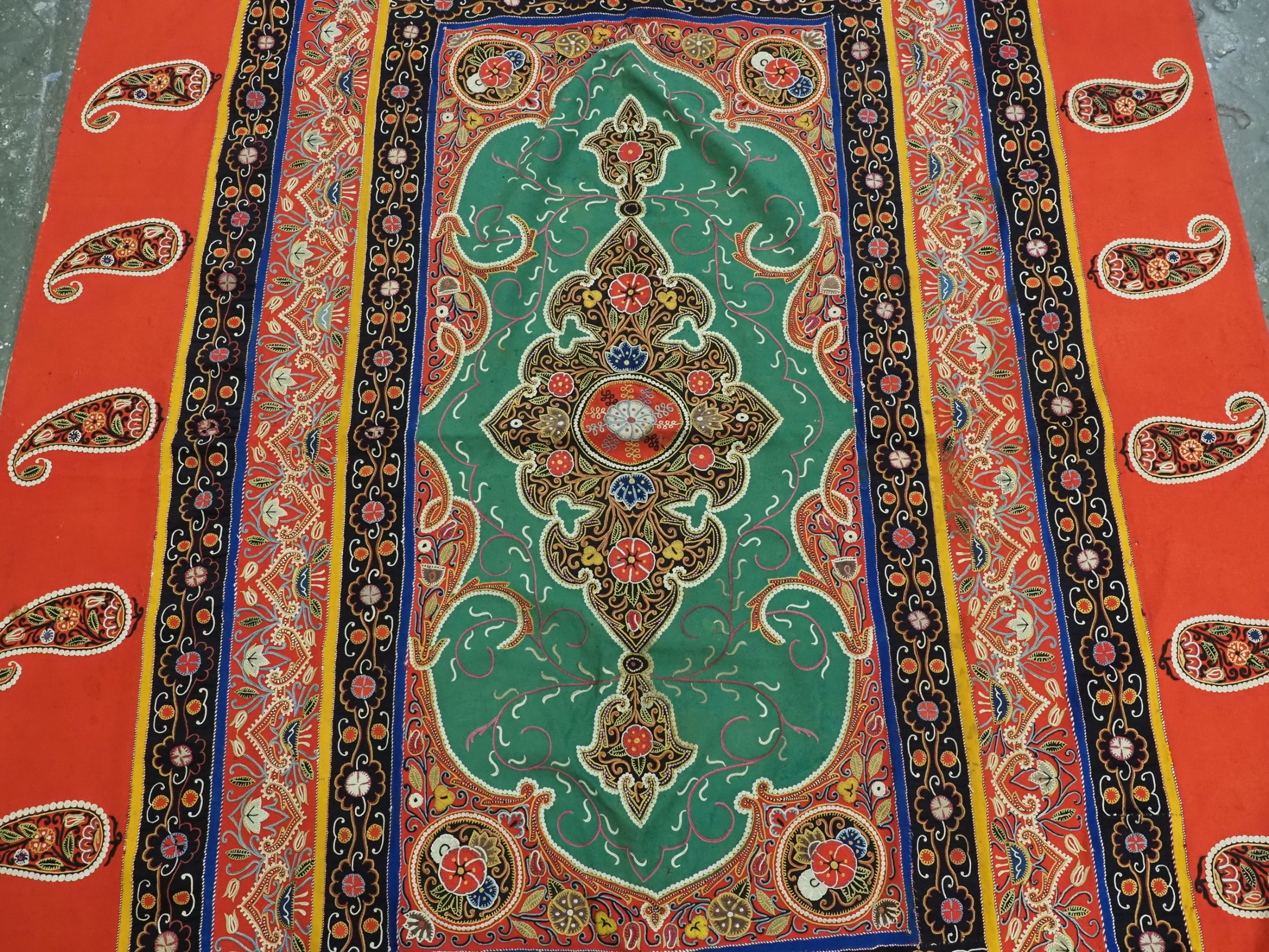
Antique Persian Rasht embroidery in silk with felt applique work.
Circa 1900.
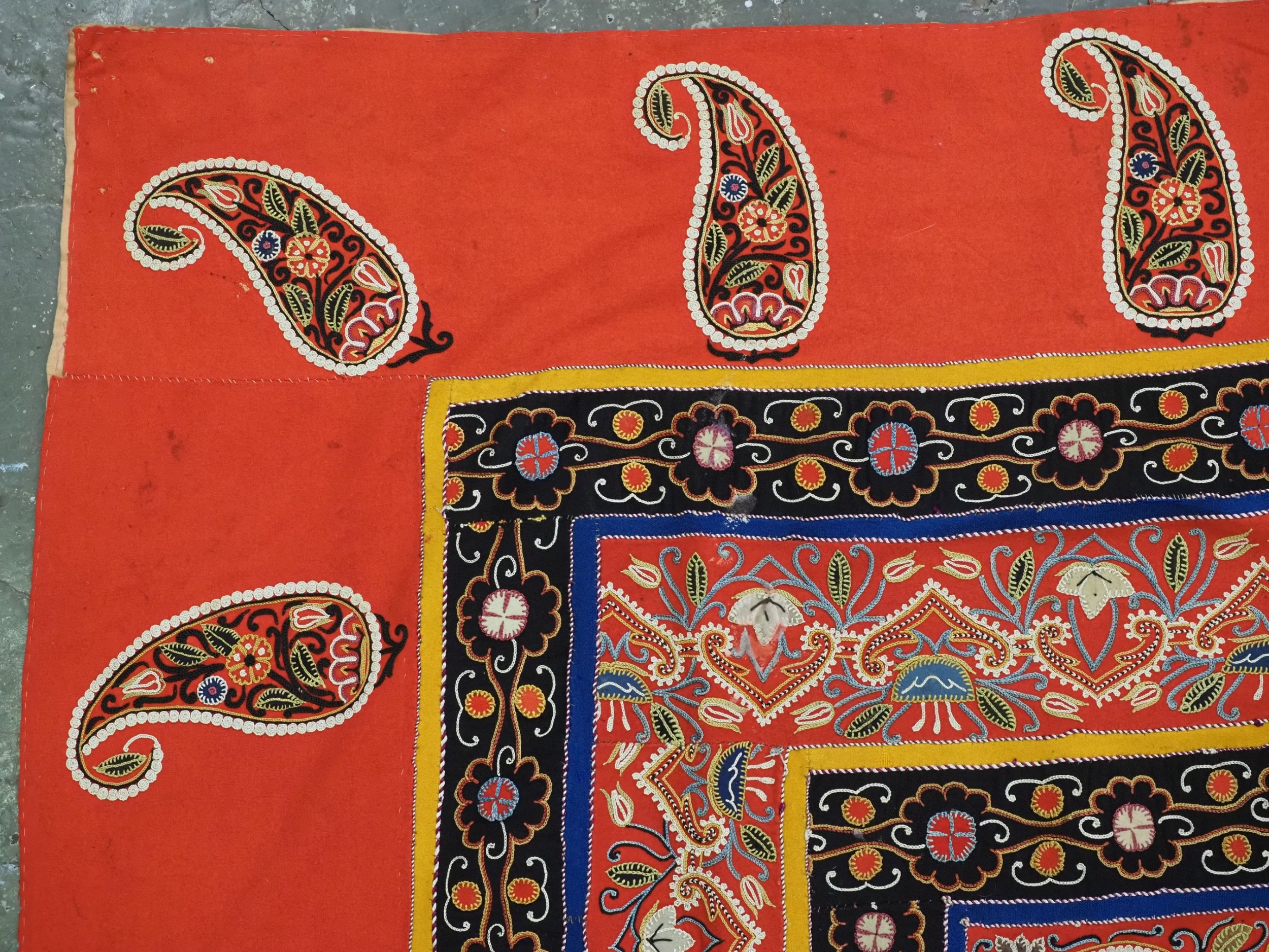
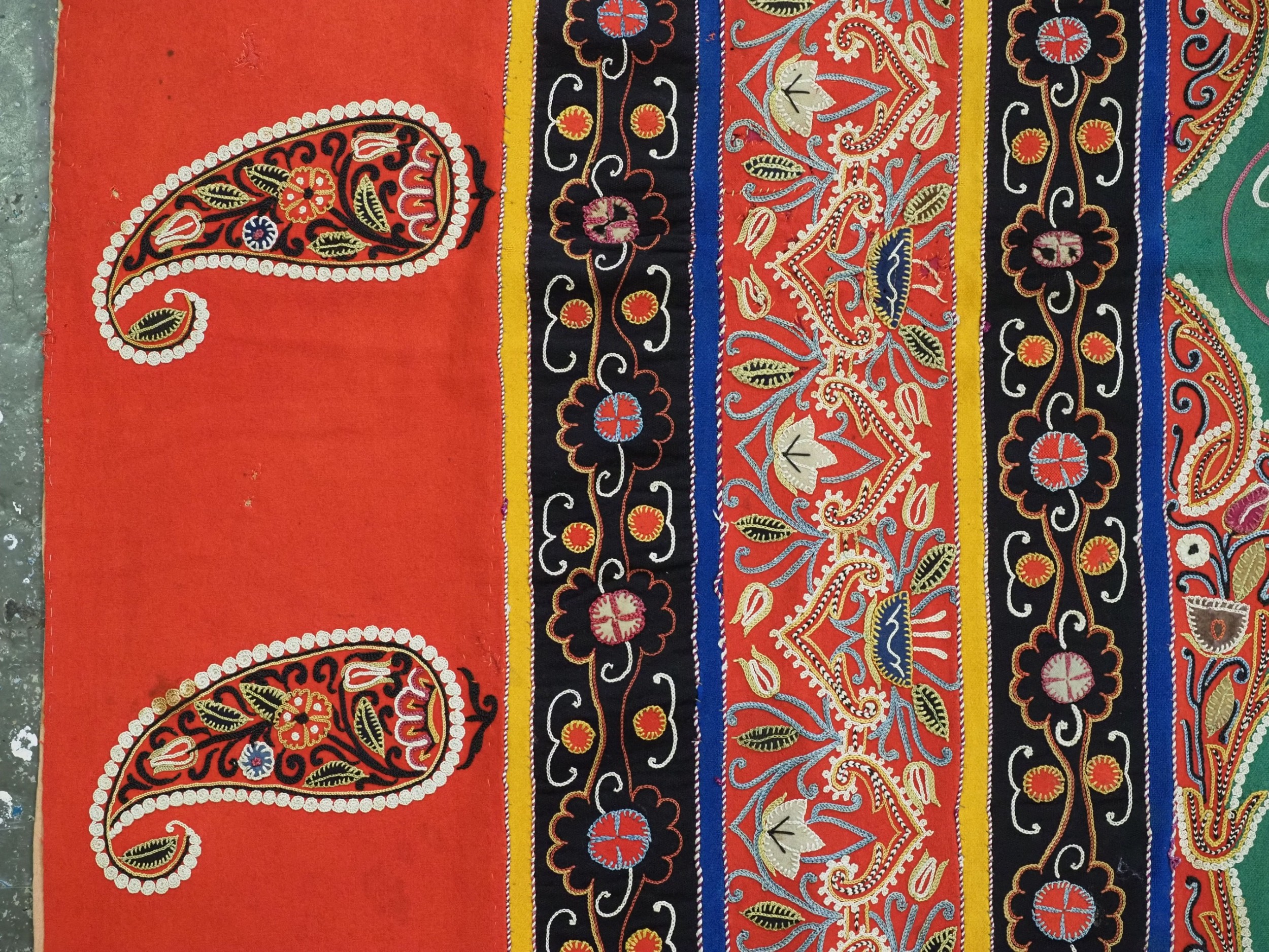
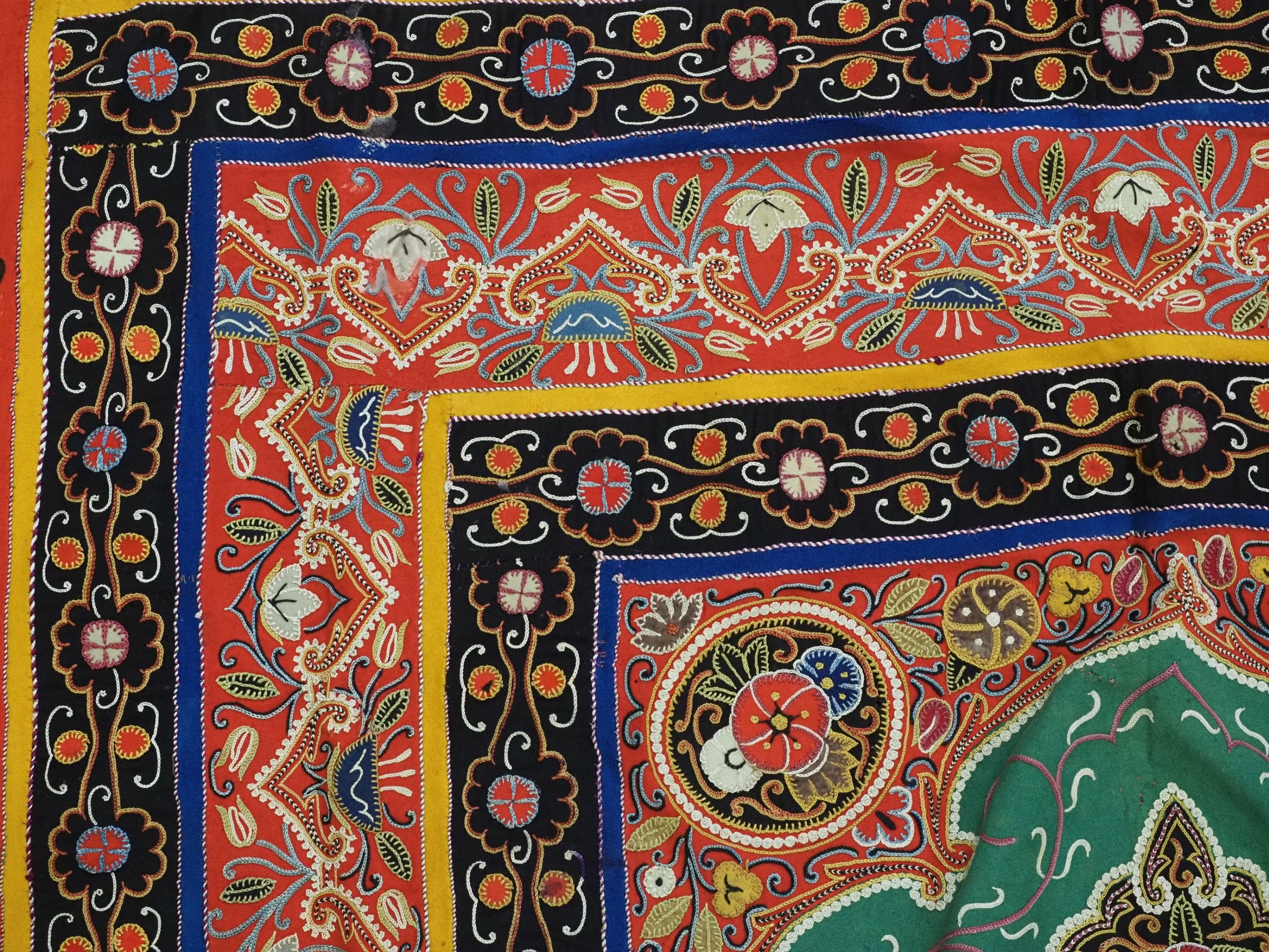
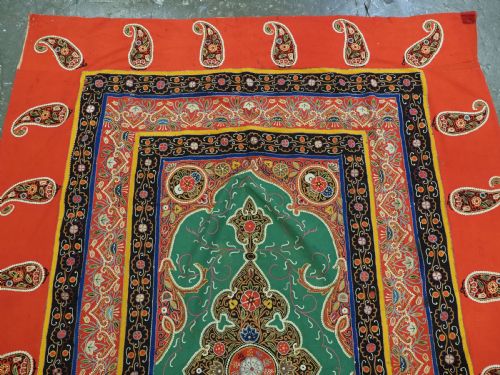
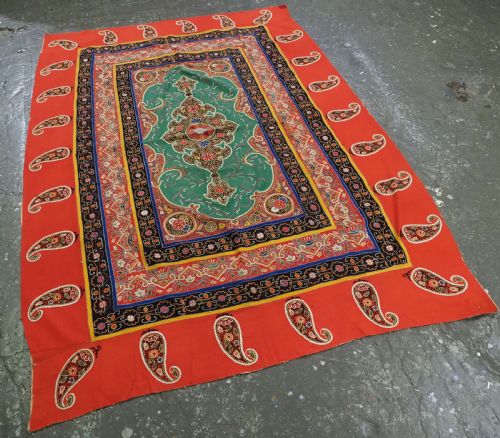
The borders are of classical form, with the outer red ground border being an outstanding feature with the large ornate boteh design.
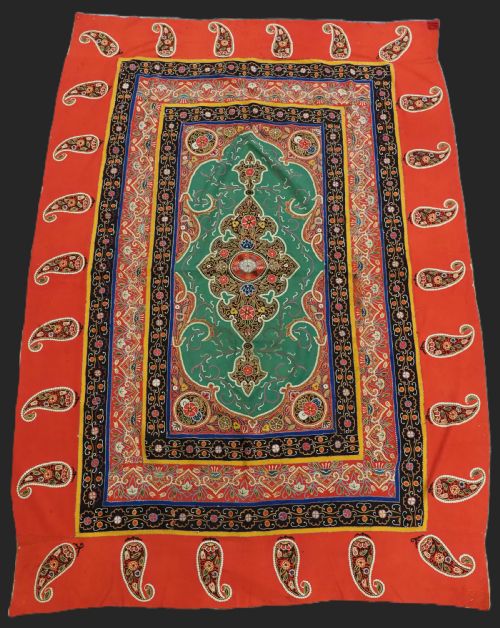
The embroidery is in excellent original condition with a few historic signs of use.
Woven in the city of Rasht in Northern Persia on the Black Sea coast, known as Rashti-Duzis they are famed for their intricately embroidered details and borders.
Christies auction house writes as follows: 'From the Safavid period onwards, the city of Rasht in Persia supplied the Safavid courts at Ardebil and Tabriz with highly sophisticated embroideries, known as rasht-duzi textiles. They were executed primarily by professional male embroiderers in well-established workshops, and in the Qajar period served as saddle covers, floor covers and hangings within impressive courtly tents (Wearden, 1991, p.122).
The gul-duzi-i-rasht (stitched inlay) technique was complex and entailed cutting a shape out of the ground fabric and replacing it with a carefully cut fabric of the same shape in a contrasting colour. In order to establish the necessary precision of each piece, Wearden suggests that a sharp instrument was used, much like a biscuit cutter, before the joins were disguised by fine embroidery which also served to refine the details of the design (Wearden, 1991, p.121).
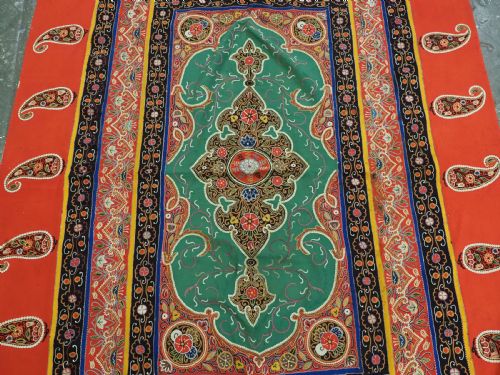
The designs are clearly inspired by Persian medallion carpets. Further Rasht textiles of a medallion design include one housed in the Museum der Kulturen Basel, published in HALI, no.143, 2005, p.114, and one sold at Christie’s, New York, 14-15 December 2015, lot 643'.
Ref: S-07.
Cotswold Oriental Rugs has dated this Persian Rasht Embroidery Textile to the 1900s.
Specialists in antique carpets, rugs & runners. Professional cleaning, repairs & restoration.
You can view the stock and full dealer information on the Cotswold Oriental Rugs Profile Page
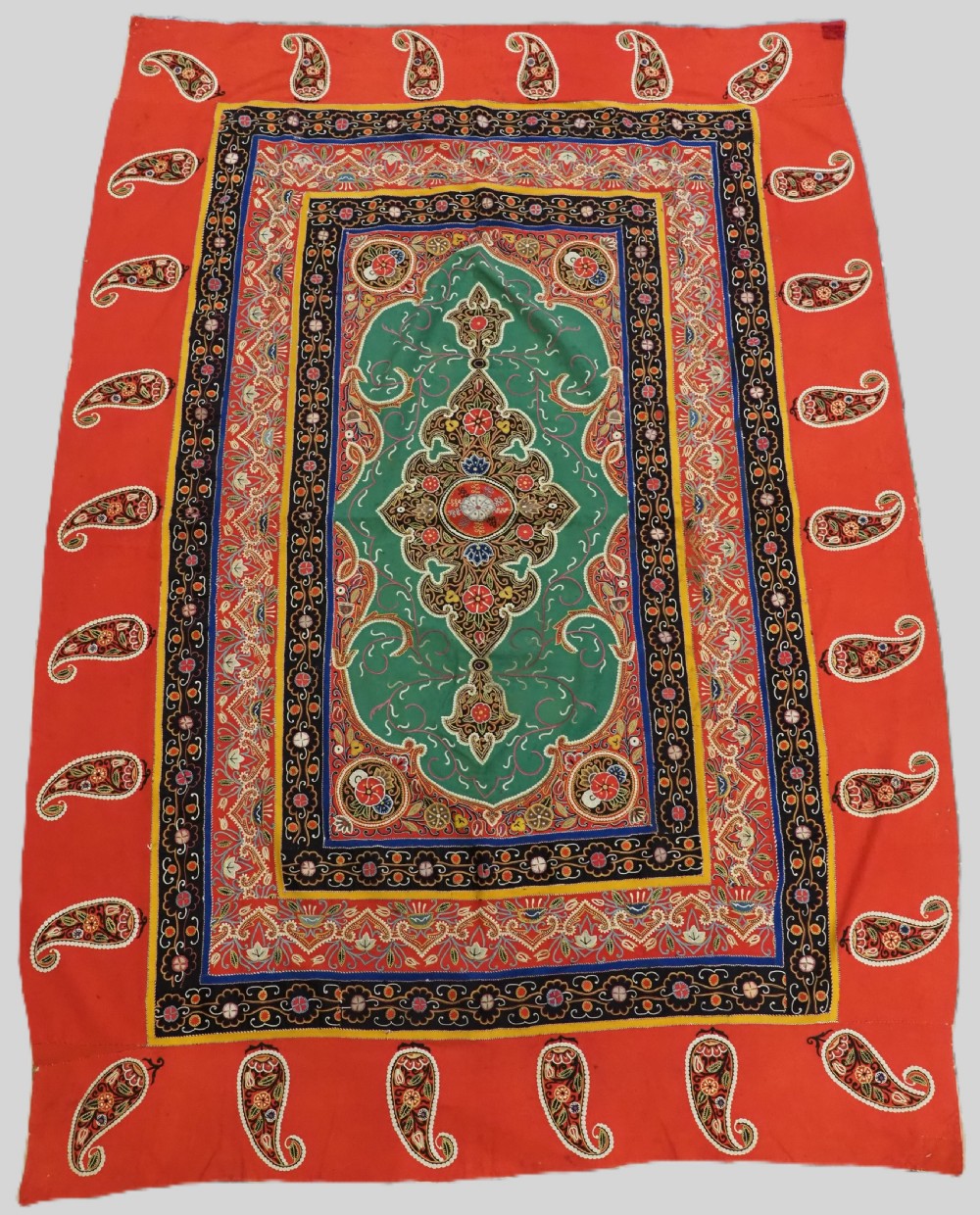
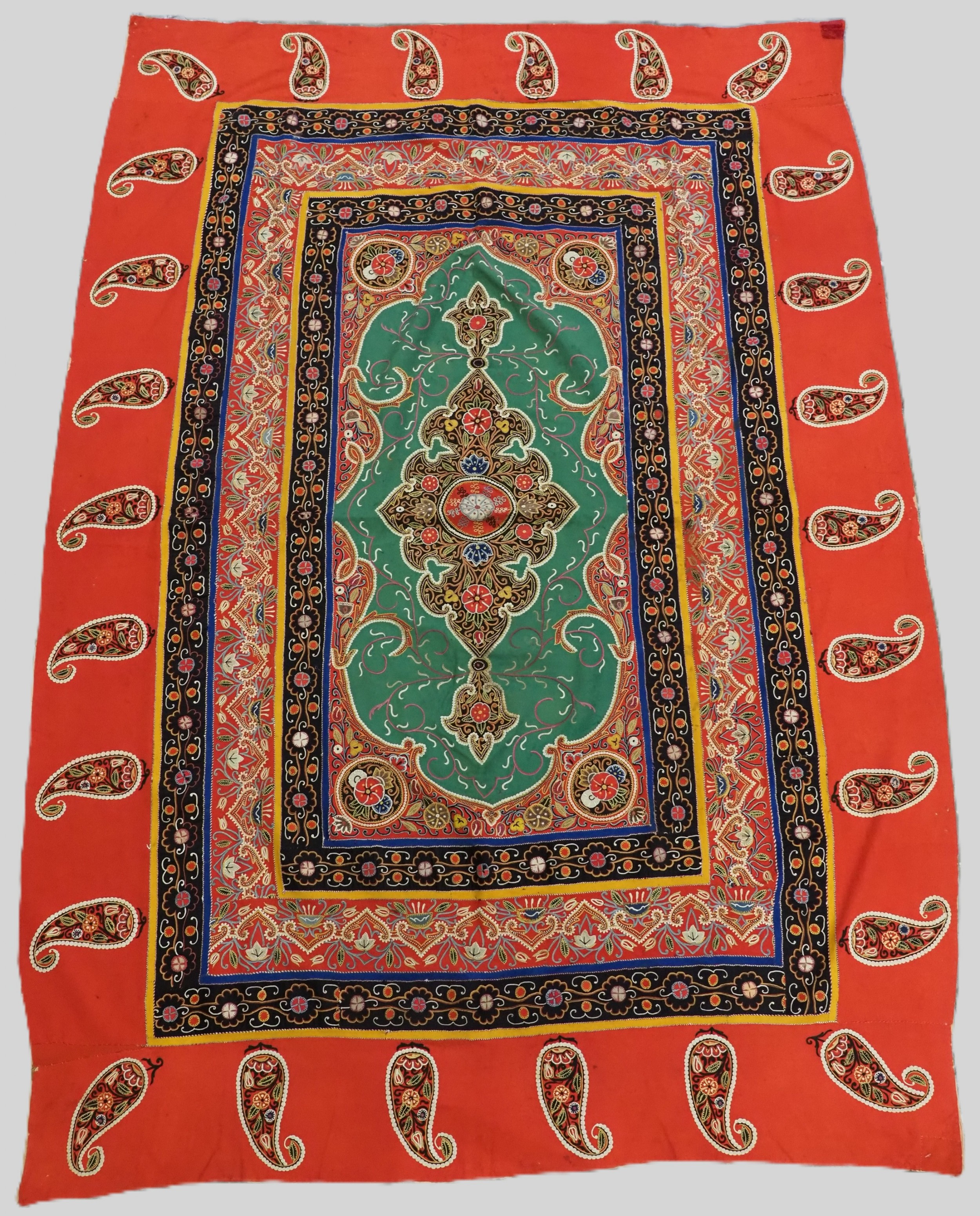
Antique Persian Rasht Embroidery, Silk & Felt Applique Work, Circa 1900.