

Antique Kilim Rugs
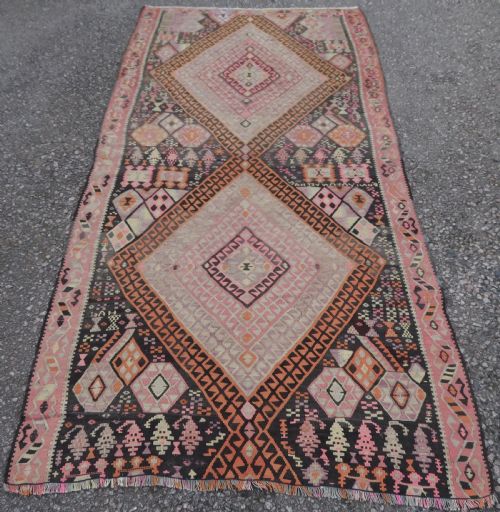
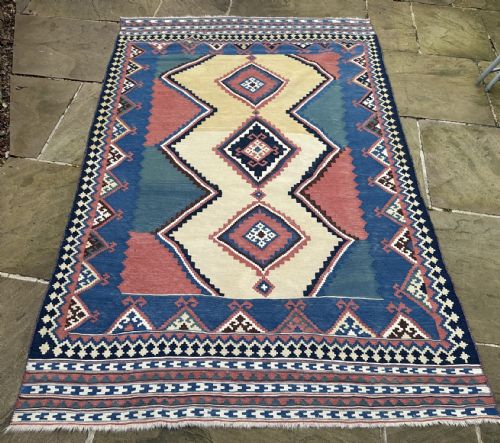
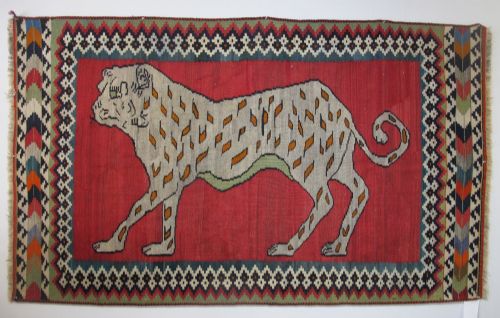
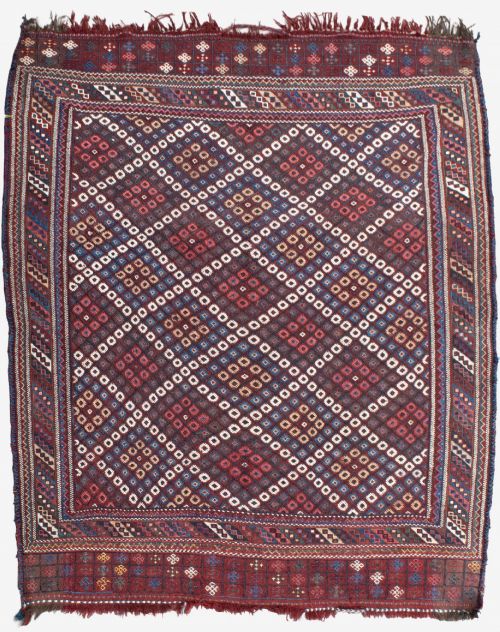
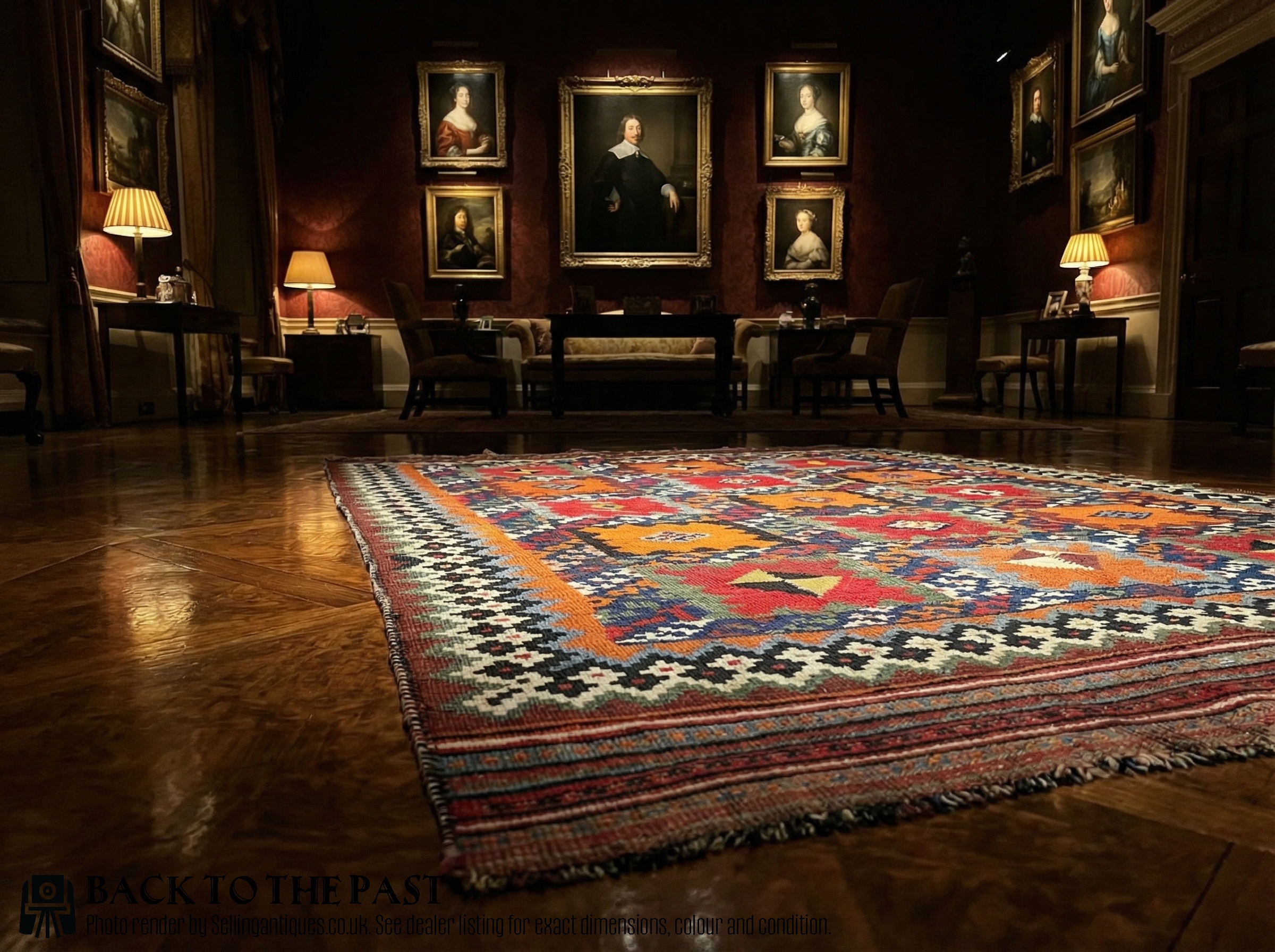
A kilim is a pileless rug, panel or bag woven in wool by interlacing weft through warp, made at home for floors, bedding, storage and prayer.
Antique Kilim Rugs
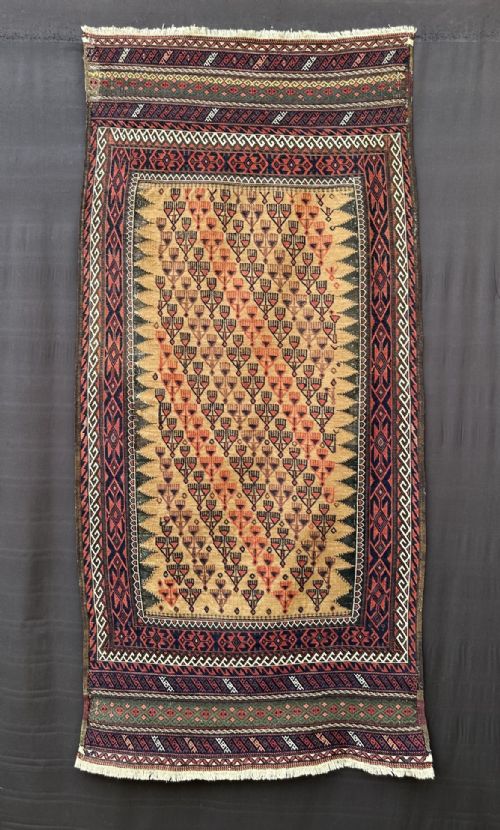
They're sold by region and tribe rather than by maker. Nothing in this category carries a workshop or firm name, so a listing title does the work instead: Anatolian and Turkish village pieces, Balkan Sarkoy and Pirot weavings, Persian tribal work from the Qashqa'i, Senneh, Bijar, Afshar, Luri and Baluch, Caucasian and Shahsavan panels, Central Asian Uzbek and Turkmen covers, and floral Bessarabian and Ukrainian kilims.
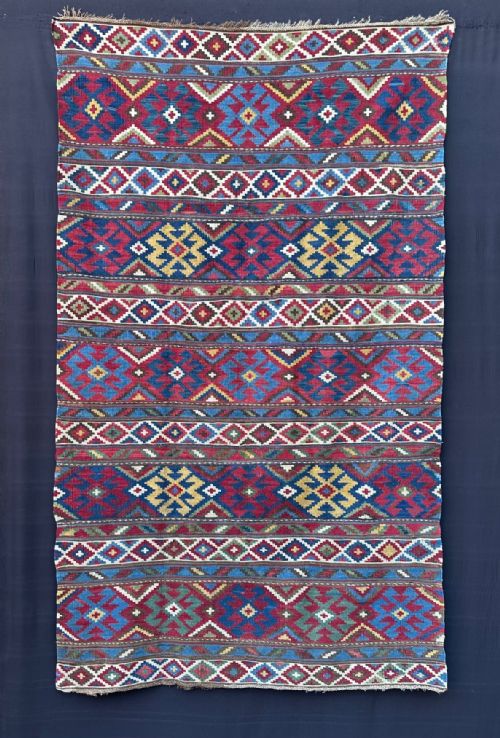
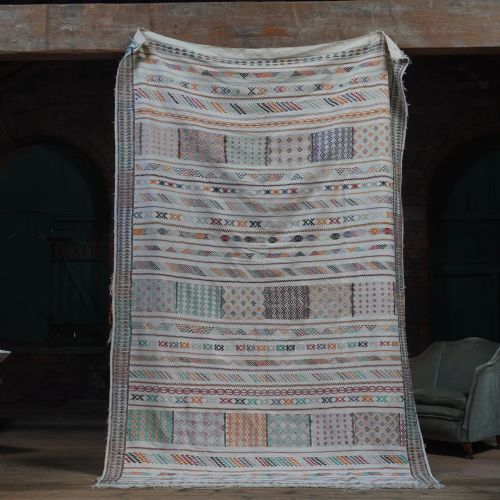
The form you'll meet most often is a wool flat-weave rug titled by origin and design. Turkish origins lead the titles, followed by Persian and Caucasian. The most recognisable single sub-type is the Sarkoy-Pirot banded kilim, a field of horizontal bands rather than a medallion, commonly dated around 1920 and described with soft or pastel colour.
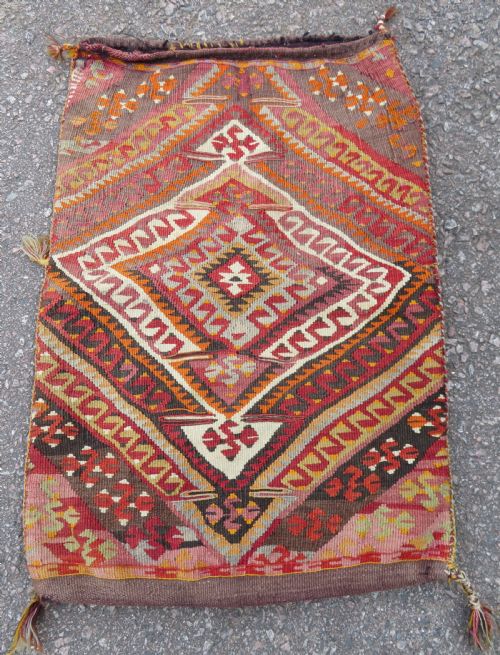
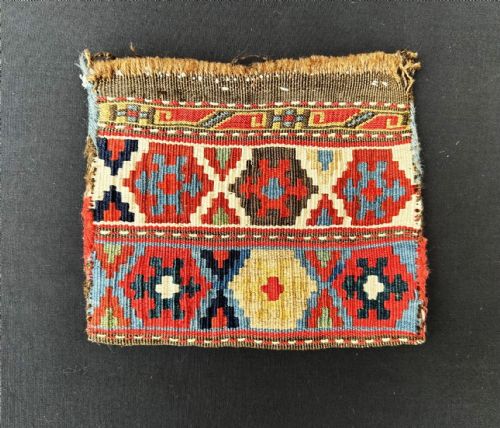
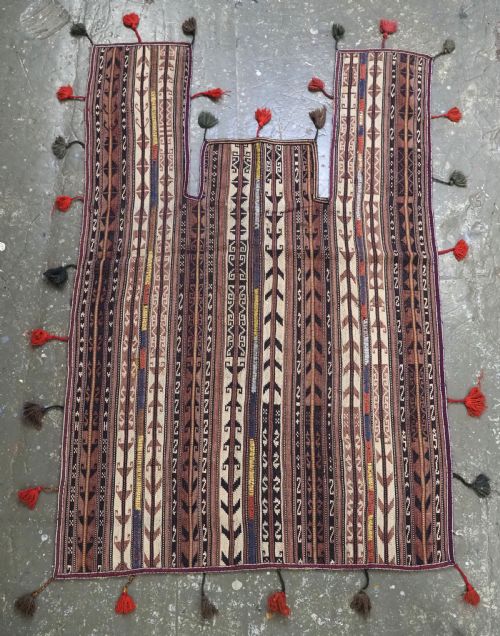
A good part of the category isn't a floor rug at all. Sofreh eating cloths, mafrash and chuval storage bags, saddlebags, salt bags, wheat sacks and tent bands all turn up, and the woven face of a bag is frequently offered without its back. Sizes in titles run from bag faces of 45 to 65cm to carpets over five metres long.
Dating is unusually complete for a textile category: 399 of 423 listings on Sellingantiques carry a year, spanning 1860 to 1960. The bunching is heavy either side of 1900, with the 1920s and 1900s alone accounting for more than half. Titles often hedge with 'circa 1900/20' or 'late 19th century', so read a decade as the dealer's estimate.
What Sets Them Apart
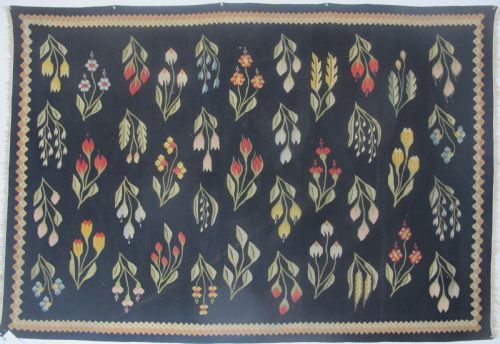
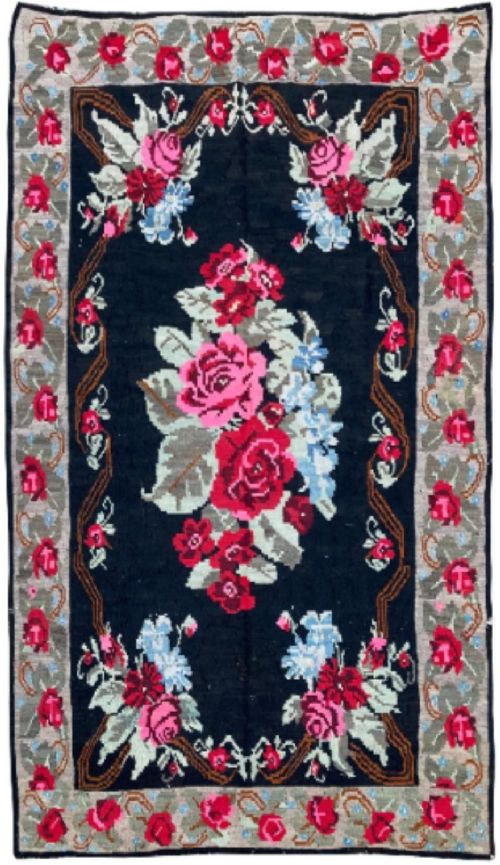
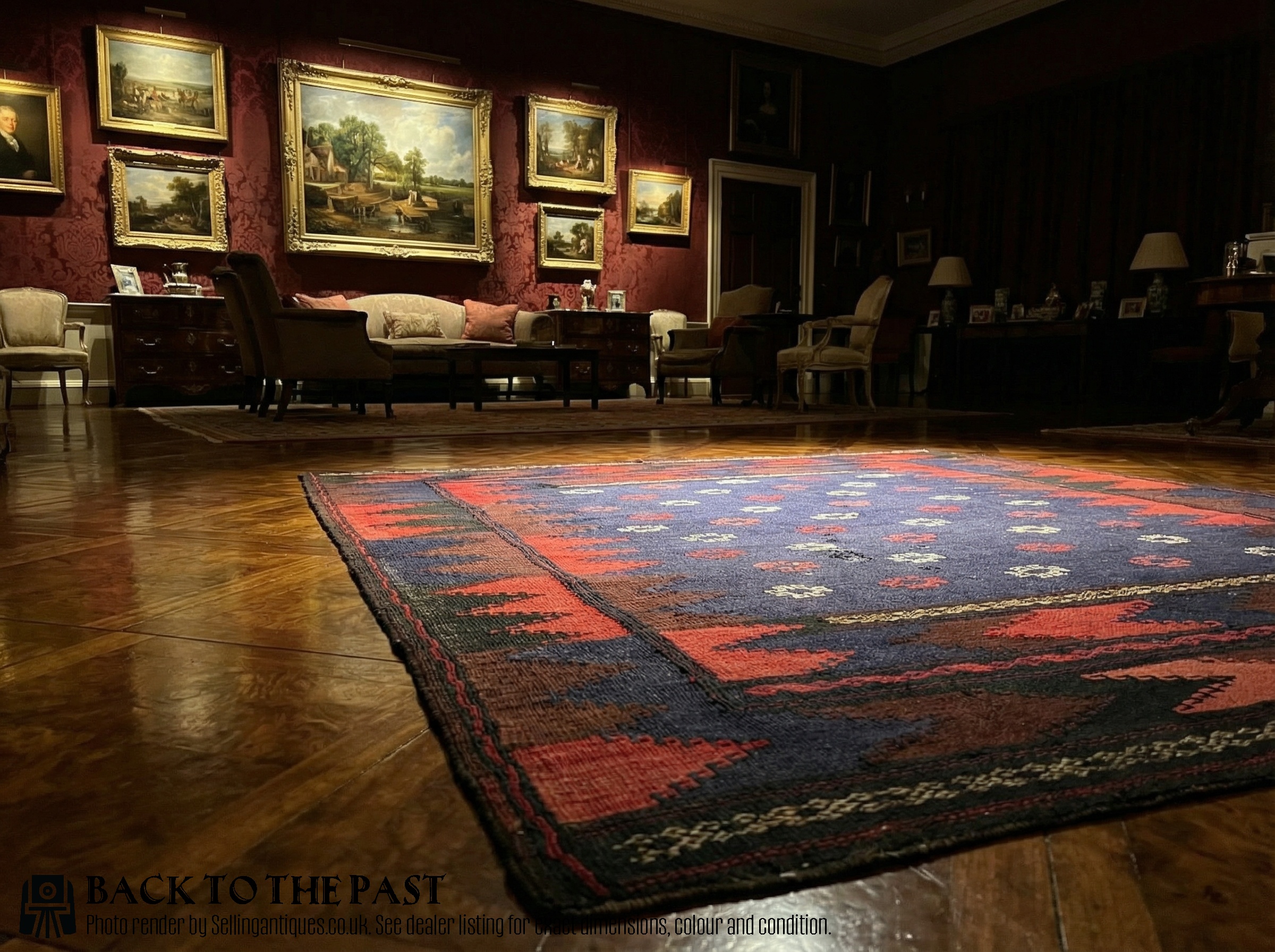
Origin group sets the ceiling. The floral European kilims, Bessarabian, Ukrainian, Moldovan, Thracian and Bulgarian Kotel, are small in number but occupy almost the whole top of the range. Bag faces, small Baluch pieces and Moroccan flat weaves sit at the other end, and the North African weavings appear only a couple of times in the whole archive.
Age counts, but the window is narrow. Only 18 listings predate 1880, and titles reading '2nd half 19th century' or 'circa 1860/70' sit well above otherwise similar pieces dated to the 1920s or 1930s. Size and completeness pull the same way: room-size rugs and two-part weavings over three metres sit high, while single mafrash panels and fragments sit low.
Within a type, colour does the separating. 'Soft colours', 'soft faded' and 'pastel' recur on the higher-placed Sarkoy and Anatolian pieces. So does design: titles claiming a scarce or unusual design cluster above the plain 'traditional design' examples of the same origin and date.
Antique Kilim Rugs Retail Price Guide 2026
Typical UK retail prices for kilim rugs, calculated from the Sellingantiques database of over a million retail prices indexed since 2003. This retail price guide relies exclusively on Sellingantiques data; no external sources or auction records are used, so the figures do not describe the wider market.
The most expensive kilim ever sold on Sellingantiques was an antique Bessarabian kilim carpet, in February 2024.

The Antique Kilim Rugs Glossary
- Kilim
- Also spelled kelim or kilm. A pileless rug made by interlacing weft through warp, so the pattern reads the same on both sides.
- Banded design
- A field of horizontal stripes or bands instead of a central medallion. It's the signature of the Sarkoy and Pirot group and appears in 23 titles.
- Sarkoy, Sharkoy, Pirot
- Balkan weaving centres, and one tradition spelled three ways across 68 titles between them.
- Woven in two parts
- Made as two narrow loom widths and joined down the centre. It recurs constantly, and Uzbek pieces run to four, nine or thirteen strips.
- Sofreh
- A tribal eating or bread cloth, laid on the ground rather than used as a rug. Nineteen titles use the word.
- Soumak
- Also sumak or soumakh. A wrapped-weft flat weave with a raised, embroidered look, listed under this heading alongside plain kilim weave.
Antique Kilim Rugs: Frequently Asked Questions
Why do pile rugs appear under kilims?
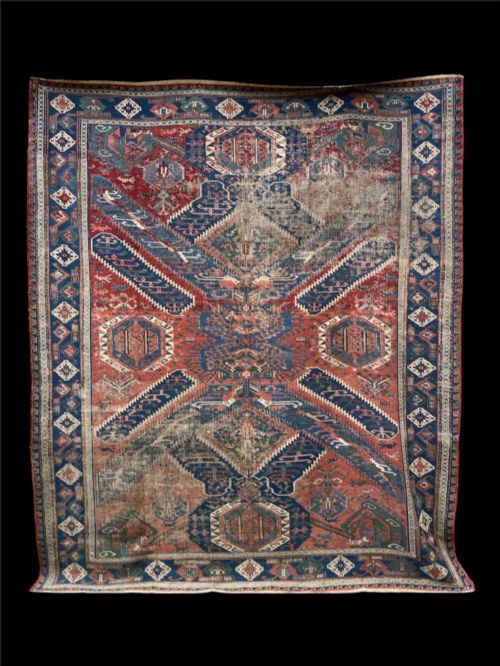
Kilim ends are the flat-woven skirts at either end of a knotted pile rug, and a description mentioning them can bring the piece into this category.
Flat-weave techniques also sit side by side with plain kilim weave. Cicim, jajim, zili, verneh and soumak all show up in titles here.
How old are most of these rugs?
The dated field spans exactly a century, 1860 to 1960, and two decades account for more than half the archive on their own: the 1920s and the 1900s.
Earlier material is scarce, with only a handful dated to the 1860s. Post-1930 dating is rare too, and the latest recorded entry is a single Turkish Konya kilim dated 1960.
What are mafrash and chuval?
Both are tribal storage bags. A mafrash is the large kind, and its side panels and base are often sold on their own or made up into a small kilim.
Chuval, juval and torba are bag names as well. The woven face usually comes to market without its back, which is why so many small panels appear in this category.
Which sizes turn up?
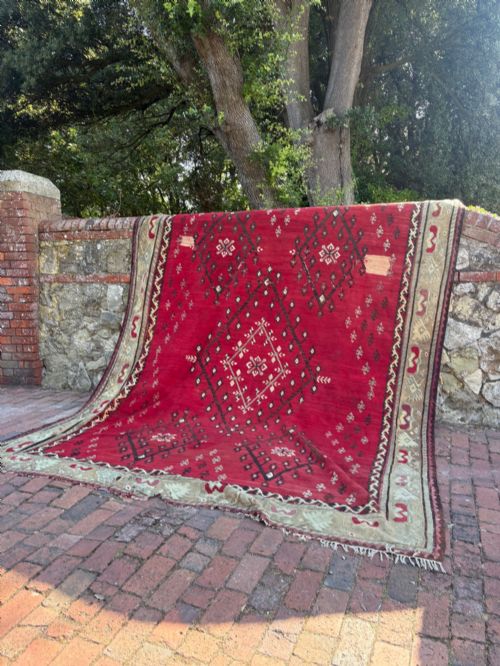
The extremes are wide apart. Room-size pieces include a Bessarabian kilim at 5.10m by 4.05m and a Turkish Konya rug at 475cm by 166cm.
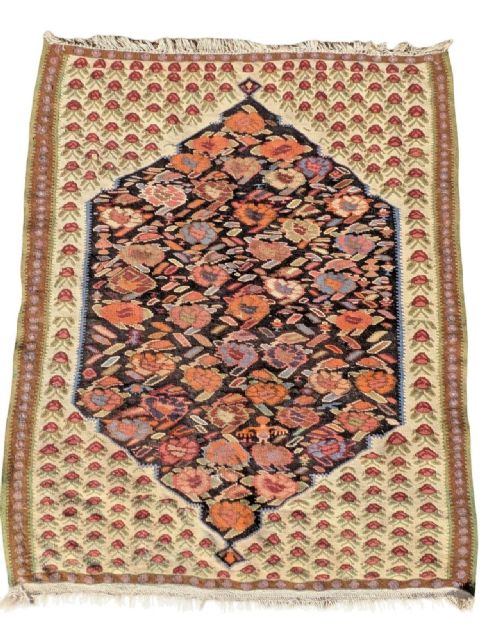
At the other end are silk-warped Senneh fragments around 42 by 65cm. Long narrow runners are an oddity of proportion, with two Kurdish examples close to five metres long and under a metre wide.
Are any kilims signed or stamped by a maker?
No. These were domestic and tribal weavings, and the category carries no workshop, weaver or retail names at all.
Regional and tribal attribution does the identifying instead: Konya, Malatya, Kayseri, Fars province, Senneh, Qashqa'i, Baluch, Shahsavan, Uzbek Kungrad.
How many come up for sale each year?
About 42 kilims come to market on Sellingantiques in a year.
Twenty-four different dealers have listed them, so no single dealer shapes what the category looks like.