



Antique Tabriz Rugs
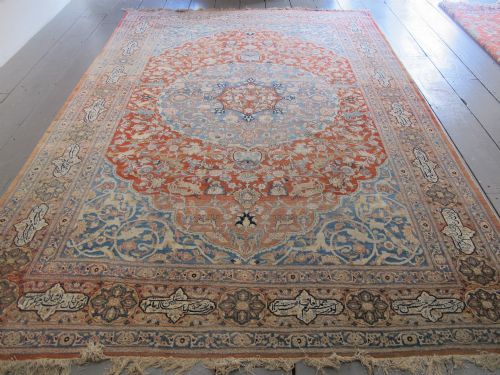
Hand-knotted wool pile carpets from Tabriz in north-west Persia, woven in commercial workshops from the later nineteenth century onwards, largely in furnishing sizes made for European and North American rooms.
Antique Tabriz Rugs
Tabriz is a weaving city in north-west Persia, now Iran. Its workshops turned out hand-knotted pile rugs and carpets in quantity from the later nineteenth century, much of it in furnishing sizes for export. That export trade is what the listings on Sellingantiques are made of.
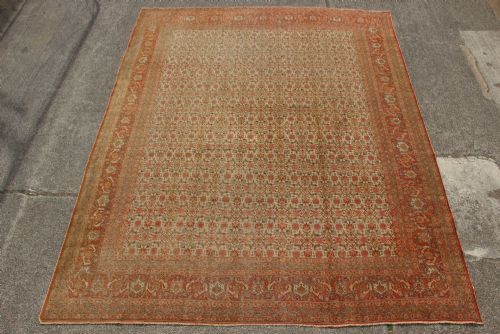
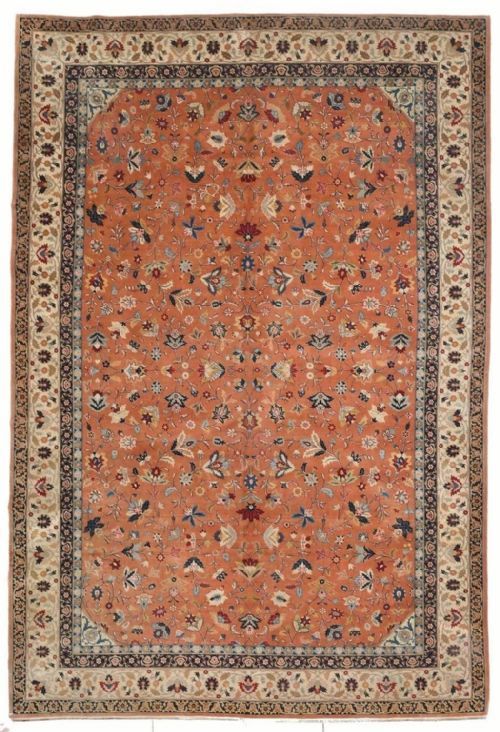
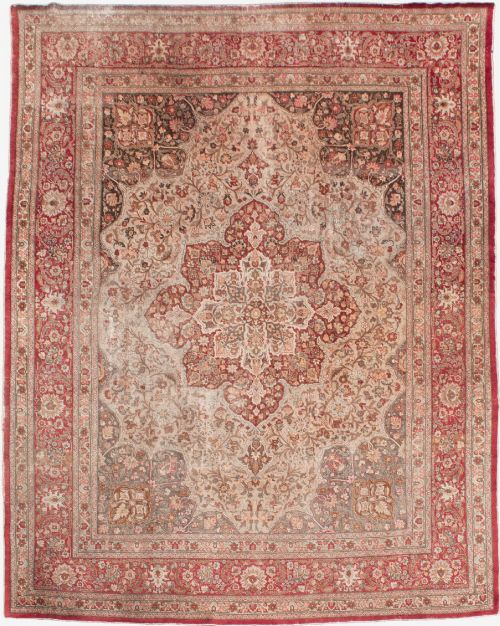
The dominant form is a single wool room-size carpet with a floral or medallion design. The word carpet appears in 113 of the 163 titles, and sampled dimensions cluster tightly around 3.4 to 4 metres by 2.1 to 3 metres. Country-house and grand room-size pieces sit in this group, along with two much larger carpets at 500 x 350cm and 6.43m x 3.78m.
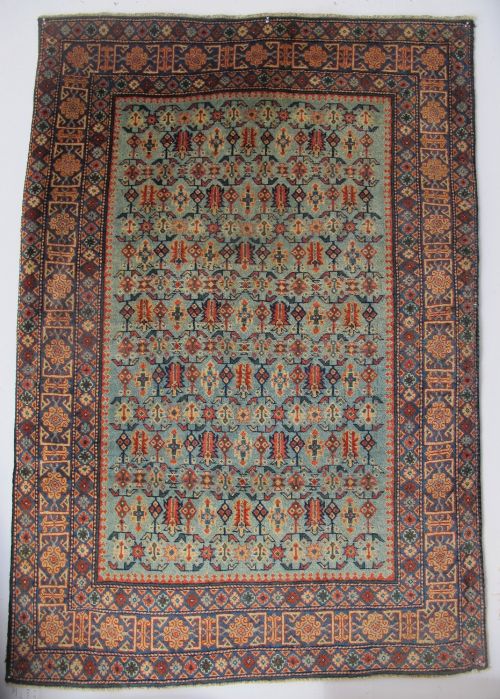
Below that sits a substantial minority of scatter rugs, roughly 1.5 to 2.1 metres by 1 to 1.5 metres, and these use the word rug rather than carpet. Silk and part-silk pieces are about one title in twenty. Runners and matched pairs turn up throughout, including a pair of part-silk runners at 608 x 129cm each.
Dates are unusually tight for a rug category. The dealer-entered field runs 1870 to 1930, with 145 of 163 listings carrying a clean year, and the 1920s alone account for 57 of them. A handful hedge with circa 1900/20 or simply 19th Century, and one sampled listing claims an eighteenth-century Safavid or Zand date well outside everything else recorded.
What Separates Them
Scale does most of the work. Room-size, country-house and the two oversize carpets sit in the upper half of the range, while rugs under two metres cluster at the bottom. A large Tabriz was a bigger commission and stayed a bigger object, and the market has never stopped reading it that way.
Attribution and material lift a piece above its size. Titles carrying Haji Jalili or Benlian, spelled several ways and sometimes hedged, sit well above the median, as do the pieces simply described as signed from a woven cartouche. Silk and part-silk work does the same: one silk rug of only 1.85 x 1.45m sits near the top of the range on scale alone that would place it nowhere.
Then there is what the weaver attempted. Hunting scenes, Safavid vase fields, garden designs, Tree of Life, birds and lions, and two carpets depicting Ahmad Shah all ask more than a plain medallion or an all-over field. Colour description follows the same line, with soft pastel shades, ivory grounds and subtle palettes consistently in the upper part of the range.
Antique Tabriz Rugs Retail Price Guide 2026
Typical UK retail prices for tabriz rugs, calculated from the Sellingantiques database of over a million retail prices indexed since 2003. This retail price guide relies exclusively on Sellingantiques data; no external sources or auction records are used, so the figures do not describe the wider market.
The 1920s is the decade used most for Tabriz rugs on Sellingantiques, with the 1900s next and the 1930s third.

The Antique Tabriz Rugs Glossary
- Room size
- Dealer shorthand for a carpet big enough to furnish a room, here typically 3.4 to 4 metres by 2.1 to 3 metres. Written roomsize as often as not.
- Carpet or rug
- Used loosely in titles, but carpet generally signals the larger furnishing sizes and rug the smaller scatter pieces at the lower end.
- Medallion design
- A central lobed motif with matching corner spandrels. One of the two commonest layouts in this category.
- All-over design
- A repeating pattern covering the whole field with no central medallion. Herati, a rosette-and-leaf repeat, is named in one title as an all-over pattern.
- Ground
- The background colour of the field. Ivory and green grounds are both named in titles, and soft or subtle colour is a recurring selling point.
- Signed
- A woven cartouche naming the workshop or maker, noted in several titles without further identification of whose name it carries.
Antique Tabriz Rugs: Frequently Asked Questions
How old are most antique Tabriz rugs for sale?
The dealer-entered date field runs from 1870 to 1930, and 145 of the 163 listings carry a clean year. That is one of the tighter date ranges you will meet in a rug category.
The 1920s dominate at 57 listings, with the 1900s next at 37. The 1870s, 1880s and 1910s are all thin by comparison.
What size are Tabriz carpets usually?
Sampled dimensions cluster around 3.4 to 4 metres by 2.1 to 3 metres, sizes like 353 x 284cm and 382 x 285cm recurring throughout the archive.
Smaller scatter rugs run around 1.5 to 2.1 metres by 1 to 1.5 metres. At the far end, the largest recorded is a palace-size carpet at 6.43m x 3.78m, and the smallest sampled is about 1.50m x 1.02m.
Are silk Tabriz rugs common on the market?
No. Silk or part-silk accounts for 8 of the 163 titles, roughly one in twenty.
They range from modest part-silk rugs to a silk prayer rug of about 1890 and a pair of part-silk runners. Silk pieces sit high in the range regardless of size.
What do names like Haji Jalili mean in a title?
They are workshop attributions, and they appear with varied spelling: Haji Jalili, Hadja Jalili, Hajji Jalili. Benlian and Benylian turn up in a similar number of titles.
Some are stated flatly, some hedged, and one sampled title reads maybe Benlian. Several other pieces are described only as signed, meaning a woven cartouche is present without the name being identified.
Attributed pieces sit well above the median across the archive.
Which designs turn up in this category?
Floral and medallion layouts dominate, with all-over fields the main alternative. Herati and vase designs are both named in titles, the latter often called Safavid-inspired.
Pictorial and figural work is scattered, perhaps one listing in ten: hunting scenes, Tree of Life, garden designs, birds and lions, and two separate carpets depicting Ahmad Shah. Prayer-format pieces are a small group, including a double-column silk example.
How many Tabriz carpets come up for sale each year?
Around fifteen pieces a year come to market across Sellingantiques, listed by about fifteen dealers.
Matched pairs appear more often than you might expect: pairs of rugs, pairs of carpets, and a pair of part-silk runners measuring 608 x 129cm each.