
Antique Textiles
Tribal weavings and embroideries made for use rather than for sale: bags, tent trappings, animal covers and dowry hangings from Central Asia, Persia and the Caucasus.
Antique Textiles
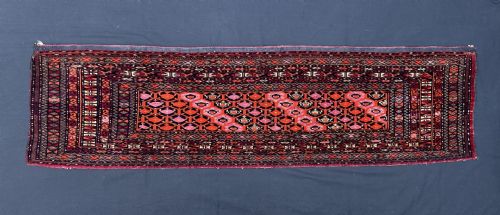
Under the textiles heading, what dominates is tribal weaving rather than floor carpets. Turkmen pile work leads the naming, appearing in a third of titles, and the single commonest listing shape is a Tekke or Yomut torba or chuval face carrying a named gul, usually placed around 1880 to 1900.
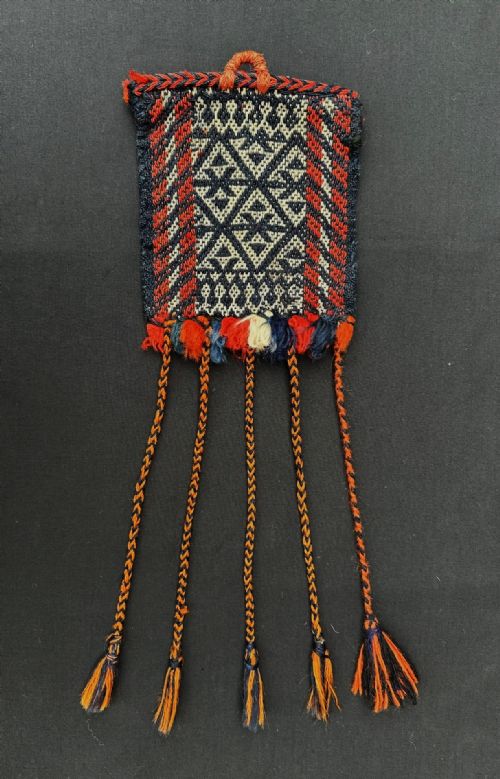
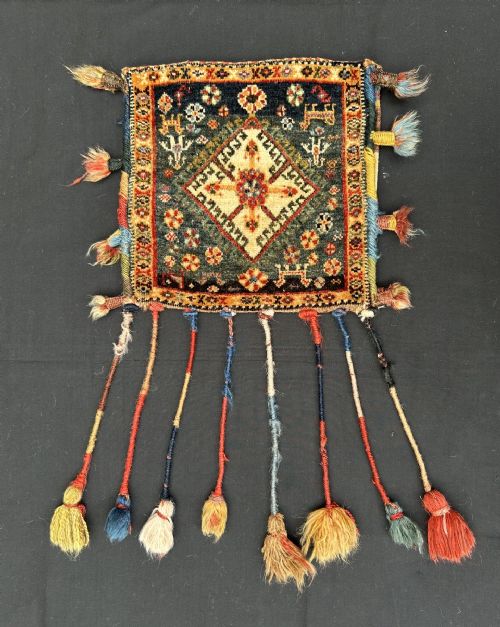
The word 'face' turns up in a sixth of titles, and it matters. A storage or saddle bag was woven with a decorated pile front and a plain flatwoven back; the front often survives on its own, separated from the rest. Some listings say 'complete with back', a smaller group than the faces.
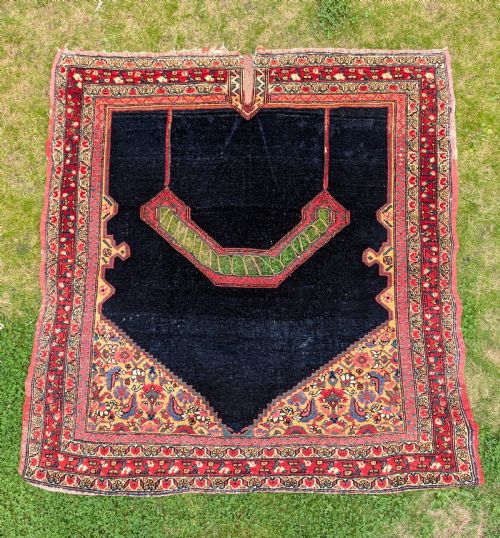
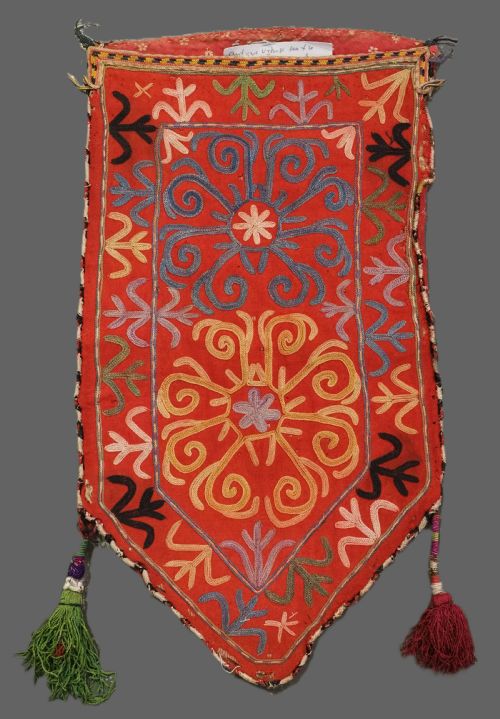
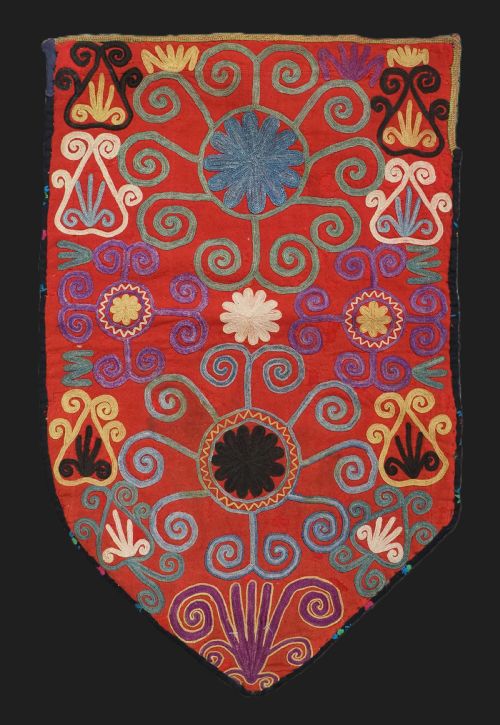
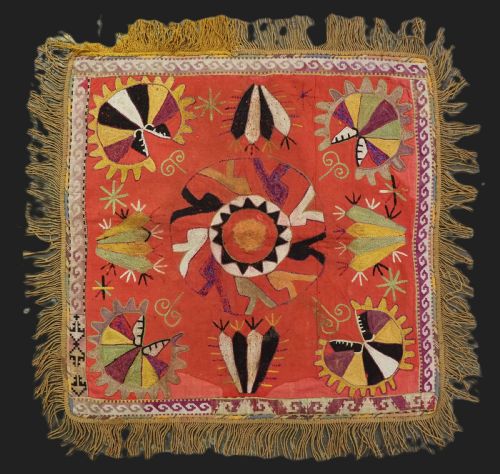
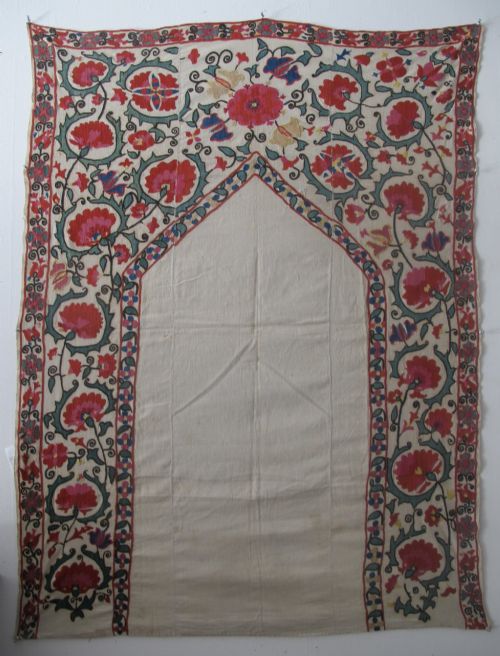
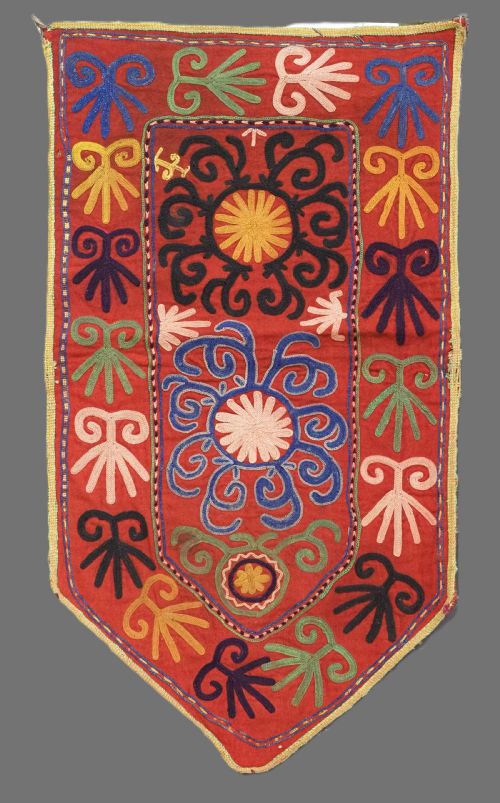
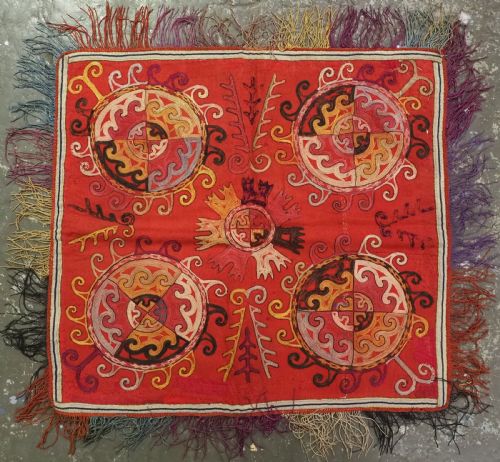
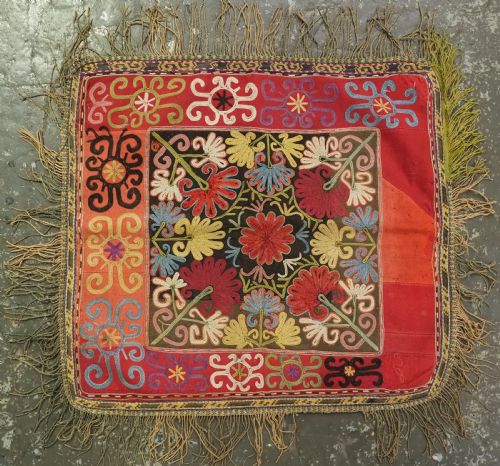
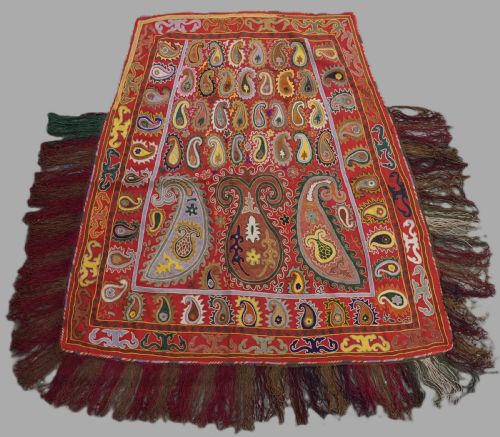
The second strand is Central Asian embroidery: silk-worked suzanis from Bokhara, Tashkent, Samarkand, Shahrisabz and Ura Tube, Lakai ilgich hangings and adras ikat panels, with Uzbek in around a sixth of titles. Alongside that sit South and West Persian tribal bags, Qashqa'i and Afshar work from Fars province, salt bags, tacheh wheat sacks and bread sofreh.
Dates run from 1750 to 1930, with the 1900s the fullest decade and the 1880s close behind. Many are dealer estimates rather than documented years, and a handful of titles fall back on a bare '19th Century'. Scale runs from purses of a few centimetres to a Turkoman yurt band quoted at fifty feet.
Where The Range Sits
Completeness does more work here than anything else. A bag still joined to its plain-weave back, with its original tassels, sits above the same design surviving as a detached face, and both sit above outright fragments, of which a few appear: a Khotan rug fragment, a Mughal carpet fragment, a Salor chuval fragment.
Within one tribe and one form, weave carries the spread. Tekke chuval and torba titles reach for 'very fine weave', 'finely woven', 'extremely fine', and the same object in the same size can turn up at either end of the range depending on it. Age pulls the same way: 'mid 19th century' and '1st half 19th century' pieces sit high, while a generic antique saddle bag with no tribe named sits low. Salor, Saryk and Karadashli attributions cluster at the upper end.
Among the embroideries, the divide is silk and coverage. Silk on silk grounds and pieces described as fully embroidered stand above sparser work on cotton, and sheer scale counts: the largest Bokhara, Samarkand and Ura Tube suzanis run over two metres across and crowd the top, while small bag faces and purses sit at the bottom.
Antique Textiles Retail Price Guide 2026
Typical UK retail prices for textiles, calculated from the Sellingantiques database of over a million retail prices indexed since 2003. This retail price guide relies exclusively on Sellingantiques data; no external sources or auction records are used, so the figures do not describe the wider market.
Antique textiles have been listed on Sellingantiques since 2018.

The Antique Textiles Glossary
- Bag face
- The decorated front of a storage or saddle bag, separated from its plain back. It appears in a sixth of titles in the category.
- Torba
- A shallow Turkmen tent bag hung inside the yurt, one of the commonest forms named on Sellingantiques.
- Chuval
- A larger Turkmen storage bag, frequently offered as the face alone.
- Gul
- The repeated medallion of Turkmen weaving, named by type: Salor, Kepse, Aina, Chuval, Ertmen.
- Suzani
- A Central Asian silk-embroidered dowry cover or hanging, worked on cotton or silk ground.
- Asmalyk
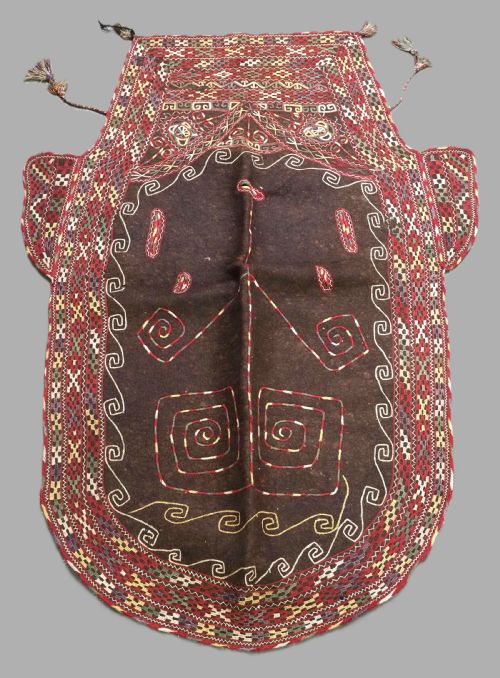
- A five-sided Turkmen trapping hung on the flank of a wedding camel.
Antique Textiles: Frequently Asked Questions
What is a khorjin?
A double saddle bag, two pouches joined by a woven bridge, made to hang across an animal's back.
Many have been split into halves over the years, so listings often describe one side rather than the pair. Shahsavan soumak and Jaf Kurd examples both appear.
Why do so many listings say 'face'?
Because the decorated pile front and the plain flatwoven back were separate surfaces, and the front is what people kept. The word turns up in a sixth of titles.
A smaller group is described as complete with its back, sometimes with original tassels still attached.
Which weaving groups are named most often?
Turkmen naming dominates, in roughly a third of titles. Tekke leads, then Ersari and Yomut, with Salor appearing less often.
On the Persian side, Qashqa'i and Afshar recur, along with Luri and Bakhtiari pieces. Caucasian listings bring Shahsavan, Kazak and Shirvan.
How old are these textiles?
The dated range runs from 1750 to 1930. The 1900s are the fullest decade, with the 1880s close behind, and together they account for close to half the dated record.
Much of the dating is dealer estimate, hedged as 'circa 1900/20' or 'late 19th century'. A couple of pieces reach into the 18th century, and only four sit in the 1930s.
What is a mafrash?
A bedding or storage container, built as a box from flatwoven panels and carried on animals when a camp moved.
It commonly survives as the flat panels alone rather than the assembled container. Shahsavan soumak examples are the ones that recur.
Does anything come from outside Central Asia and Persia?
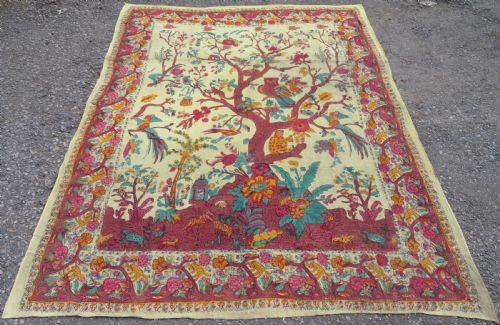
Yes, though singly. Pieces from India and Kashmir, Tibet, northern China, Morocco, Spain, Romania, Scandinavia and Indonesia each turn up on their own.
An American hooked rug appears too. These are occasional arrivals rather than a strand of the category.