


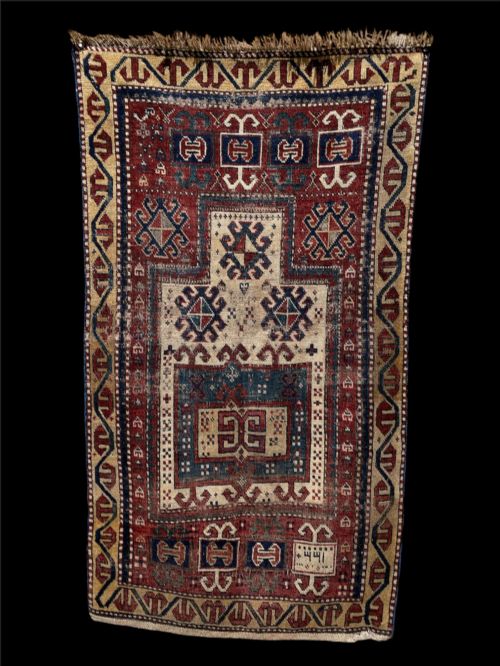
Antique Prayer Rugs
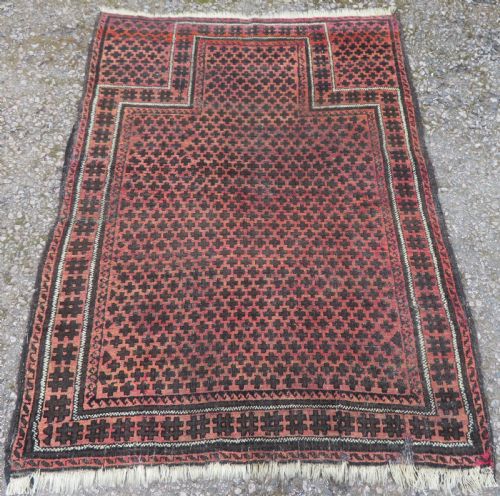
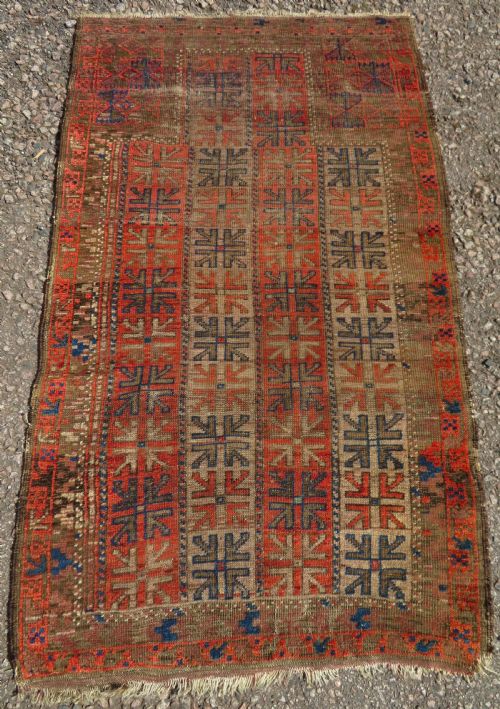
A prayer rug is a small hand-knotted or flatwoven rug with a pointed niche at one end of the field, laid down and turned toward Mecca for the daily prayers.
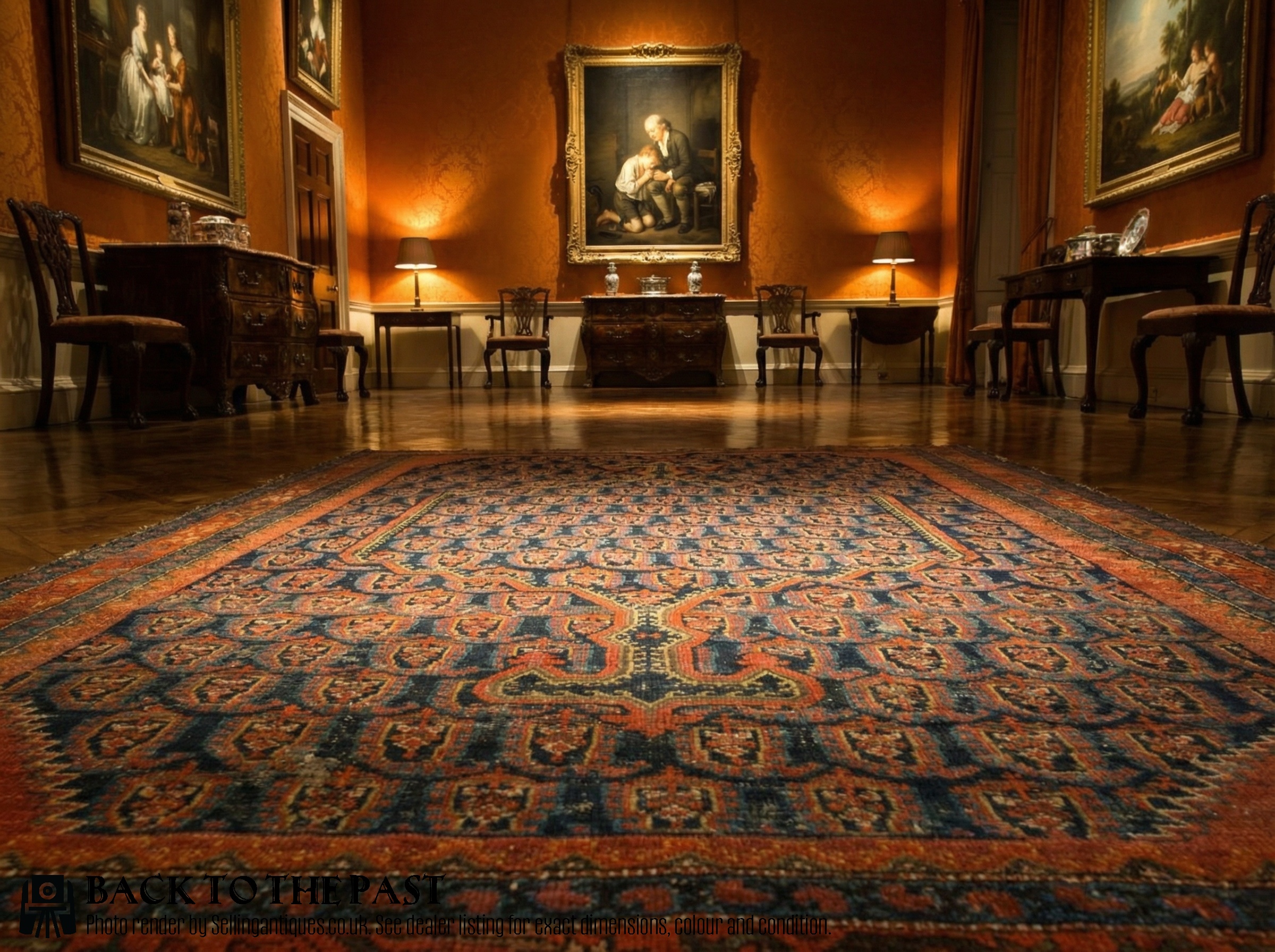
Antique Prayer Rugs
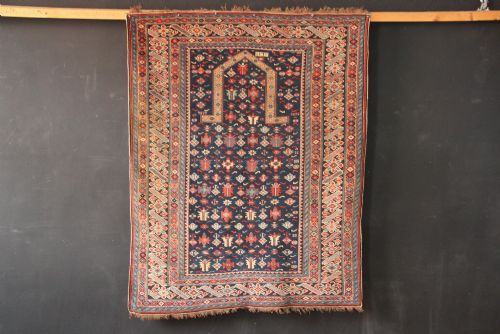
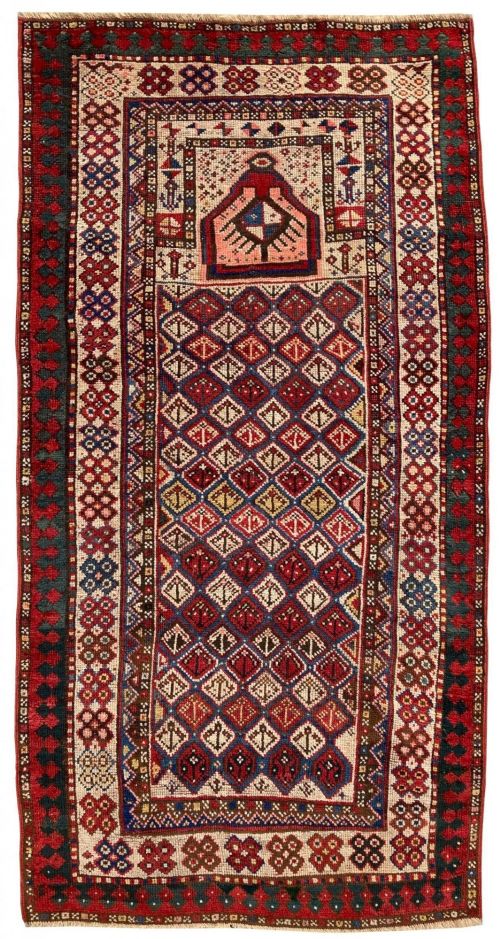
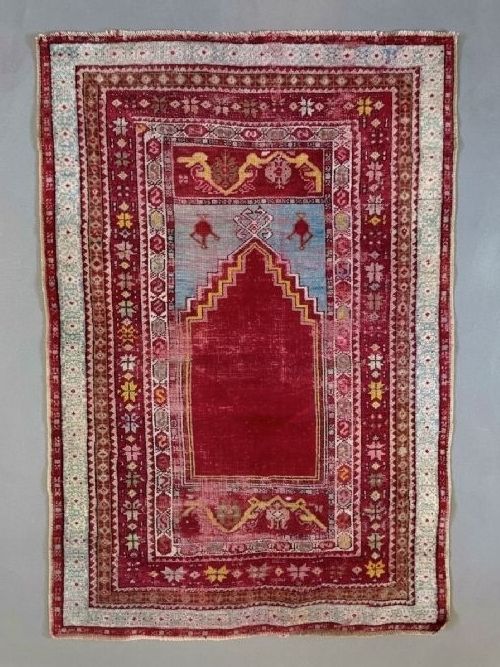
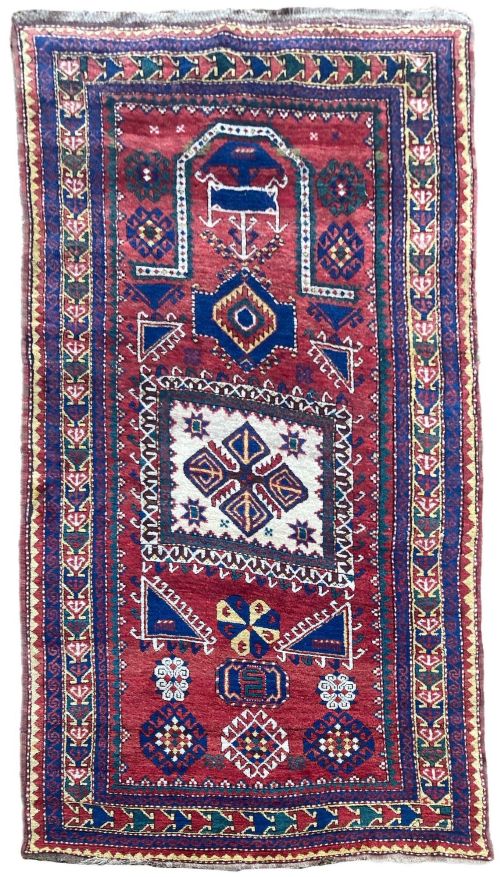
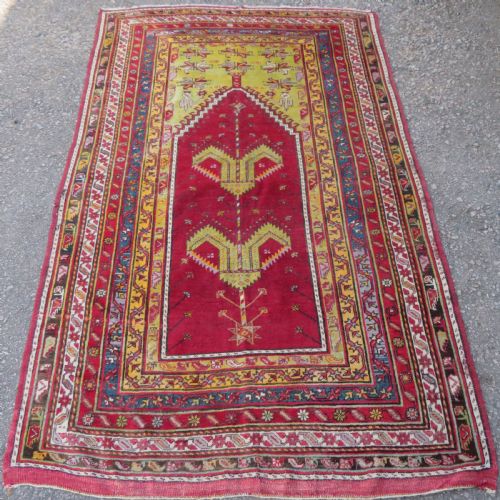
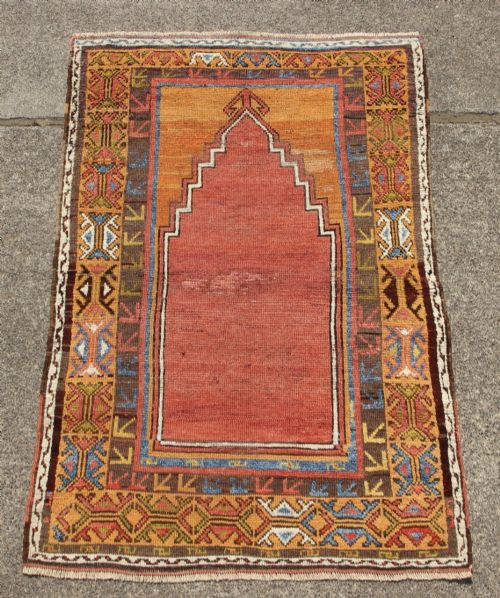
The niche, or mihrab, is the whole point of the design. It sits asymmetrically at one end and gives the rug a direction, which is why prayer rugs read differently from every other small rug you will see. They were woven in villages, towns and tribal camps across Turkey, the Persian and Afghan borderlands, the Caucasus and Central Asia, and are named by region or tribe rather than by any workshop.
Small is normal. Sizes quoted in titles cluster between roughly 75cm and 130cm wide, with lengths well under two metres, and several listings describe rugs made for a child. The exceptions are the multi-niche saf rugs, which run to runner length, and one green Ghiordes at 153 x 343cm catalogued as a carpet.
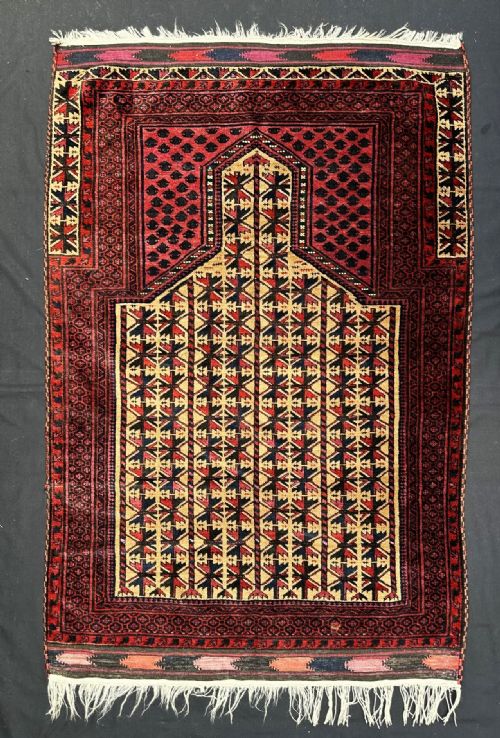
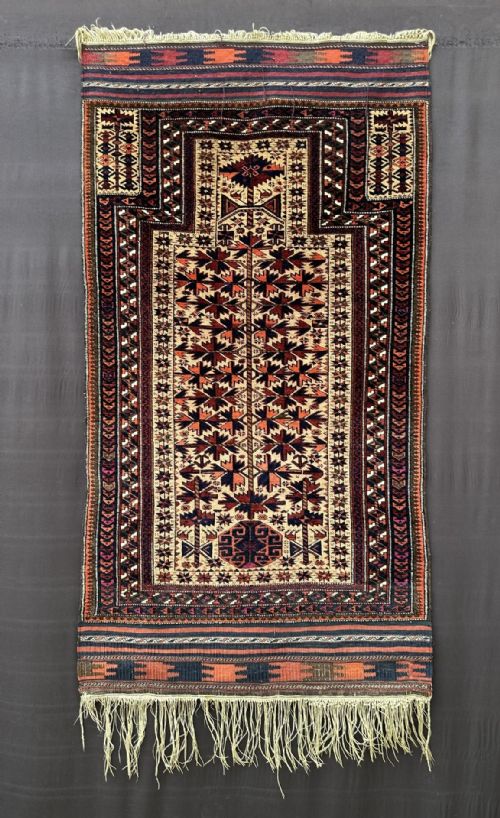
Two groups dominate on Sellingantiques. Turkish and Anatolian pile rugs are the largest, with Ghiordes, Konya, Kirsehir and Kayseri behind the generic 'Turkish' label, plus Milas, Ladik, Bergama, Mudjur and Obruk. Close behind come the Baluch and Timuri rugs of the Persian-Afghan borderlands, often with a camel-coloured ground and a tree of life filling the niche.
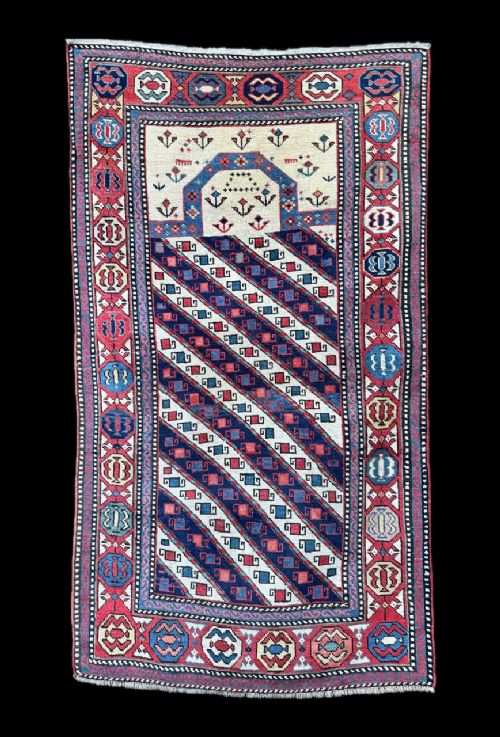
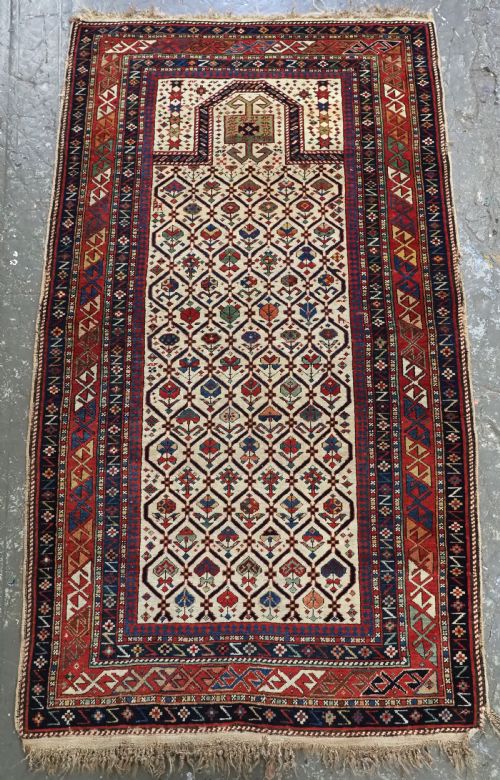
Caucasian examples make up about a tenth, from Shirvan, Marasali, Daghestan, Kuba and the Kazak districts. Smaller slices go to Turkmen prayer rugs and ensis, prayer kilims from Obruk, Erzurum, Sivas and Aleppo, and silk rugs from Kashan, Kashmir, Tabriz and Kayseri. Dealer dating spans 1750 to 1950, but the mass sits in the 1880s to 1920s.
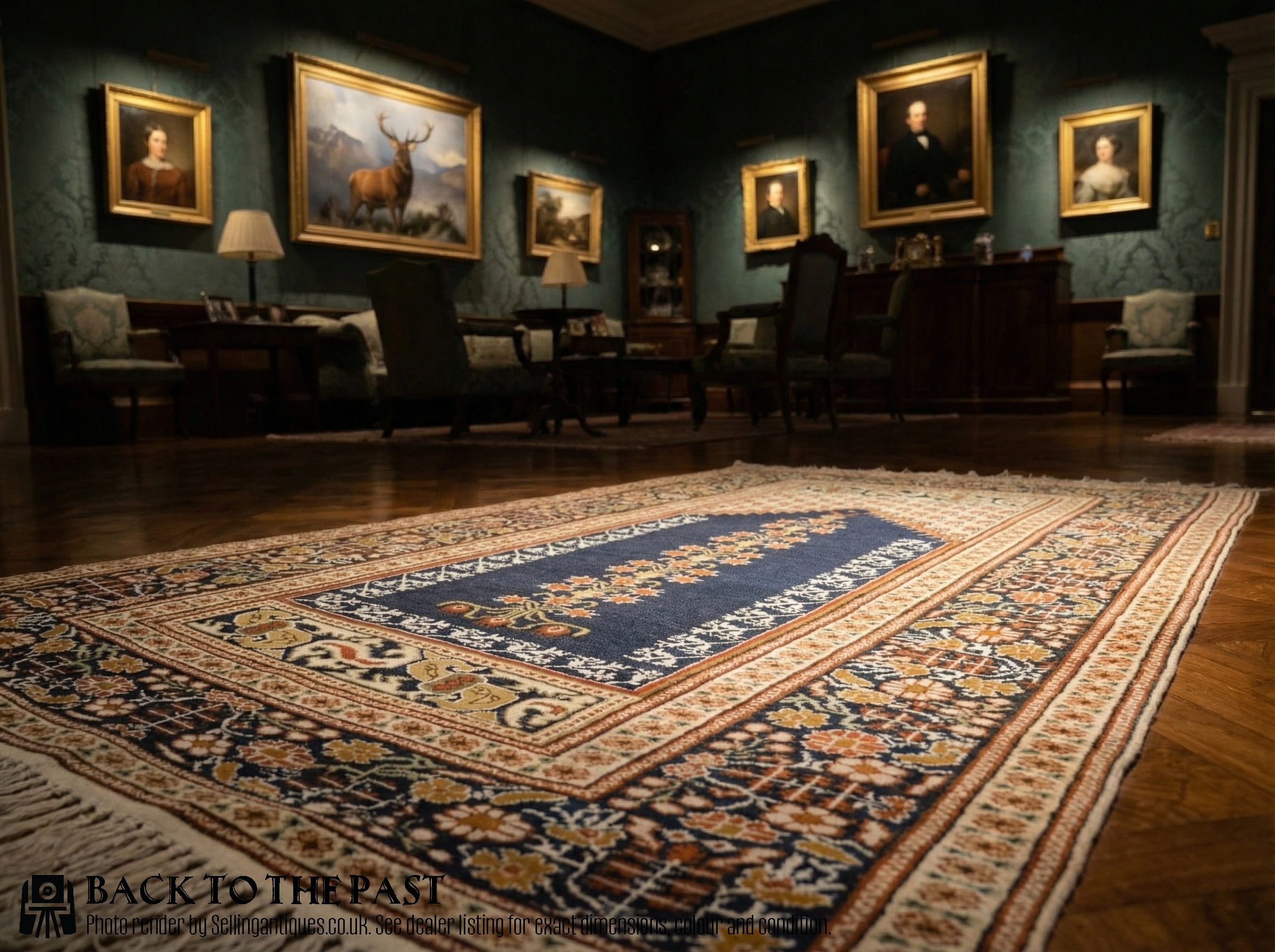
Where The Range Sits
Age claimed in the title does most of the work. The 18th-century and circa 1750 Turkish pieces, Ghiordes and Ladik above all, sit at the very top of the range, while 1920s and 1930s Afghan and Baluch rugs cluster at the bottom. Those early dates are outliers, though: the dated field concentrates two generations later.
Precision of attribution separates one band from another. A bare 'A prayer rug' or 'Antique Baluch Rug' occupies the lowest reaches, while a Marasali, a Fachralo Kazak, a Milas, a Megri or a Timuri Yaqoub Khani of the Khaf valley sits at the top. The tighter the place or tribe named, the higher the piece tends to sit.
Ground colour and inscription lift things too. Yellow, ivory, green, sky blue and aubergine fields draw the word scarce, which appears in nineteen titles, and rugs carrying a woven date in both calendars, such as 1285 for 1868 or 1326 for 1908, sit in the higher reaches. Unusual content does the same: a human figure, a pictorial field, an Ottoman inscription.
Antique Prayer Rugs Retail Price Guide 2026
Typical UK retail prices for prayer rugs, calculated from the Sellingantiques database of over a million retail prices indexed since 2003. This retail price guide relies exclusively on Sellingantiques data; no external sources or auction records are used, so the figures do not describe the wider market.
Most prayer rugs on Sellingantiques are small, roughly 75 to 130cm wide. The smallest was an Afghan Baluch of 107 by 74cm.
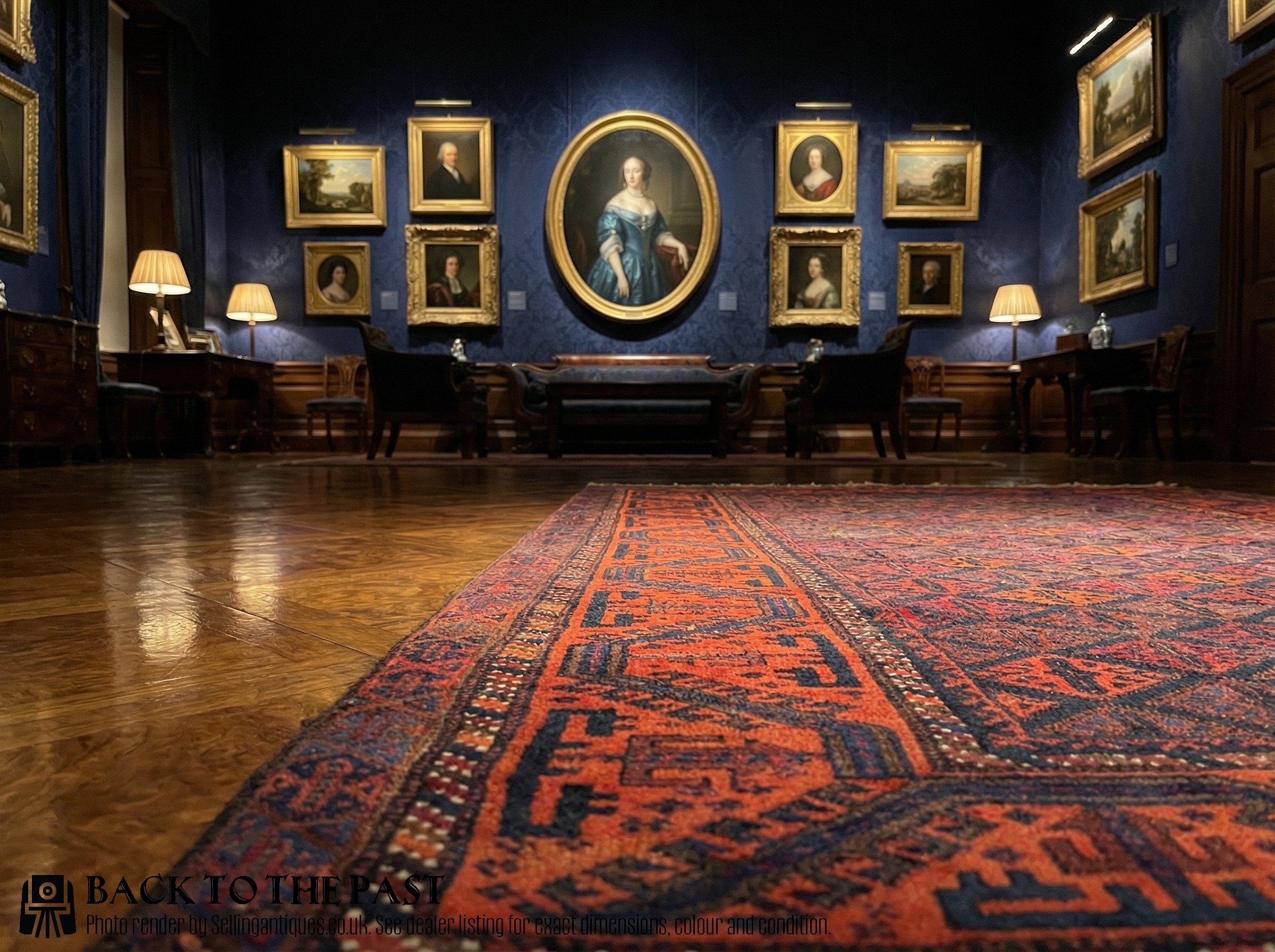
The Antique Prayer Rugs Glossary
- Mihrab
- The pointed prayer niche at one end of the field. It is the feature that makes a rug a prayer rug rather than a small rug, and it names the direction of prayer.
- Camel ground
- An undyed camel-coloured field. In this archive it is a Baluch and Timuri hallmark, appearing in around twenty titles, often paired with a tree of life in the niche.
- Kilim
- Flatwoven rather than knotted pile. Prayer kilims turn up throughout, from Obruk, Erzurum, Kayseri, Sivas, Adana, Denizli and Aleppo.
- Seh mihrab
- A triple-niche layout, three arches in one field. It shows up mostly on Baluch and Kizil Ayak rugs.
- Saf
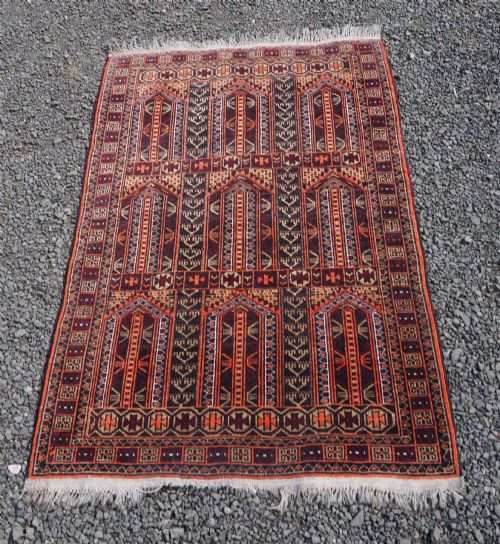
- A multi-niche prayer rug, several arches side by side for more than one worshipper. These run long, to runner length.
- Dokhtar-e-Qazi
- A named Timuri and Baluch prayer design, also used as a sub-tribe attribution. It recurs across several dealers.
Antique Prayer Rugs: Frequently Asked Questions
How big is an antique prayer rug?
Small. Titles quote sizes such as 107 x 74cm, 133 x 85cm, 150 x 90cm and 176 x 104cm, with widths clustering between roughly 75cm and 130cm.
Some are smaller still, made for a child. The long exceptions are multi-niche saf rugs and one green Ghiordes at 153 x 343cm, catalogued as a carpet.
Which regions made prayer rugs?
Turkey and Anatolia account for the largest group on Sellingantiques, with Ghiordes, Konya, Kirsehir, Kayseri, Milas, Ladik, Bergama and Mudjur all named in titles.
The Persian-Afghan borderlands come close behind through the Baluch and Timuri weavings. The Caucasus supplies about a tenth, and Turkmen, silk and kilim examples fill out the rest.
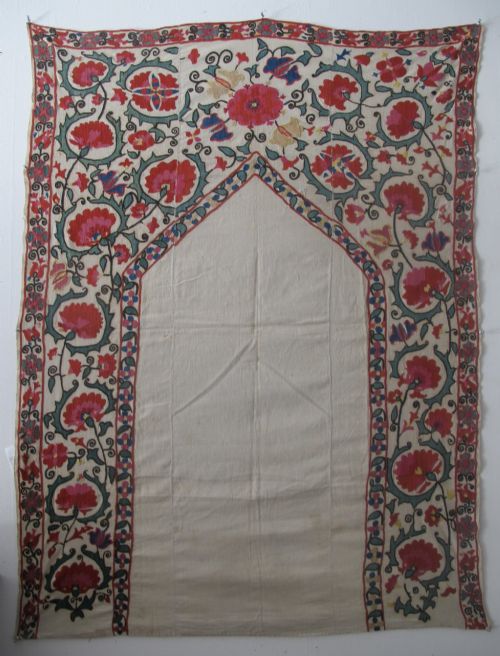
Single outliers include a Syrian Aleppo kilim, a pictorial silk from East Turkestan, an Agra rug from India and Uzbek suzani embroideries in prayer format.
What does the niche in the design mean?
The niche, or mihrab, points. It gives the rug an orientation so a worshipper laying it down faces Mecca, and it is the one design element common to the whole category.
How the niche is drawn varies by region. Afghan village and Turkmen weavers often build it from hooked rams horn motifs, while Baluch and Kizil Ayak rugs sometimes carry three niches side by side.
Are prayer rugs usually wool pile?
Wool pile is the usual thing. Flatwoven kilims account for twenty-one titles and silk for thirty-one, so both are a minority within the archive.
The silks come from Kashan, Kashmir, Tabriz and Kayseri, the last often described as art silk. Camel wool, cotton and metal thread get named occasionally too.
When were most of these woven?
Dealer dating across the archive runs from 1750 to 1950, and 401 of 442 listings carry a clean year.
The two fullest decades are the 1920s and the 1900s, followed by the 1880s and 1890s. Much of that dating is approximate by the dealers' own wording, with entries filed simply as 19th century, circa 1900/20, or second half 19th century.
Woven dates are the firm evidence, and they surface only occasionally: 1285 for 1868 on a Ladik, 1320 for 1902 on a Shirvan, 1883 on a black Marasali.
Do prayer rugs carry maker names?
No. They are named by region or tribe, not by workshop, and no signature or manufactory shows up across the listings.
What stands in for a maker name is the attribution: Marasali, Fachralo Kazak, Timuri Yaqoub Khani of the Khaf valley, Dokhtar-e-Qazi. Precise naming of that kind sits at the top of the range.