


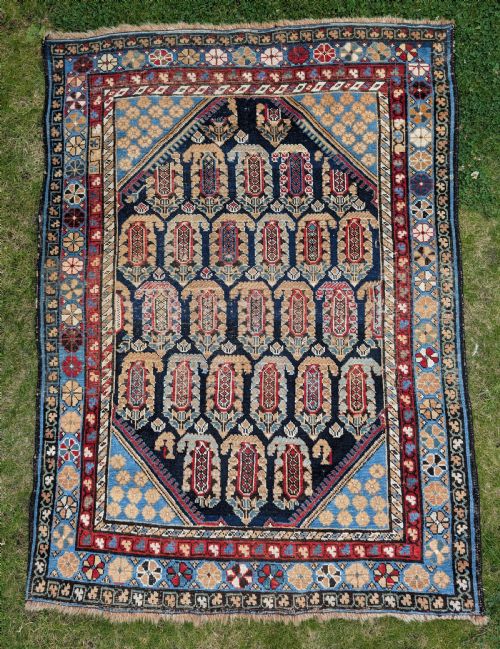
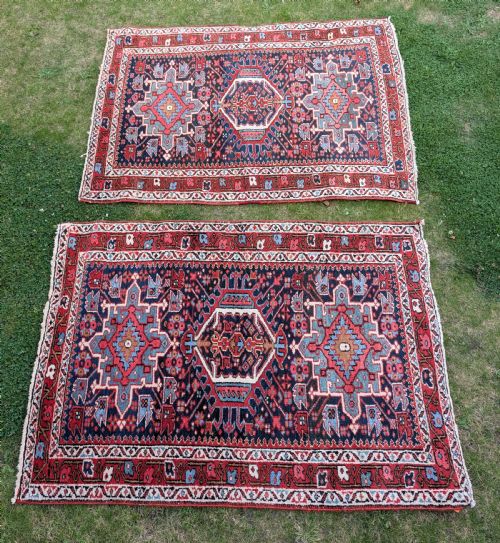
Antique Caucasian Rugs
Wool pile rugs and flatweaves from the villages and nomad camps of the Caucasus, woven for the floor, the dowry chest and the pack animal, and named after the district they came from rather than any maker.
Antique Caucasian Rugs
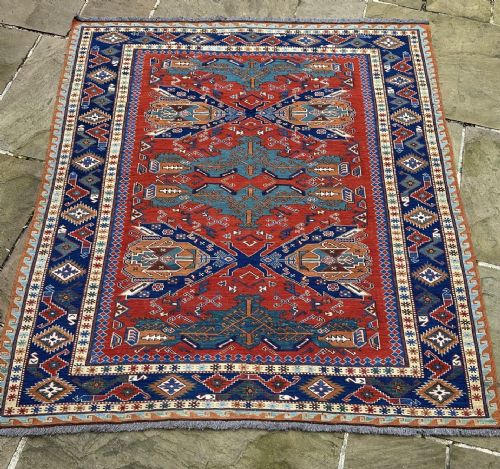
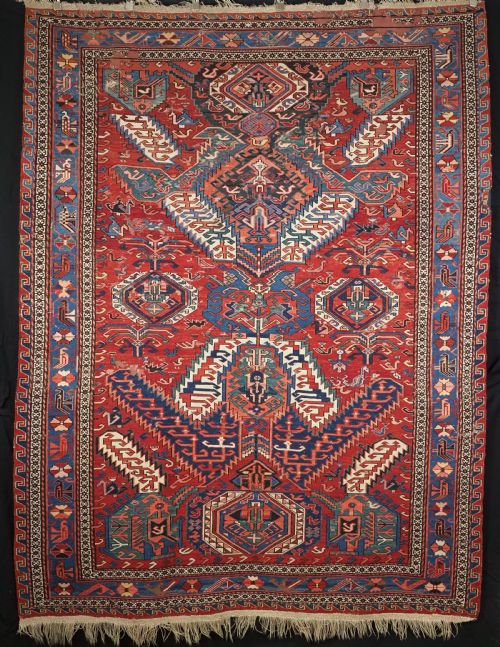
These are hand-knotted pile rugs and flat-woven pieces from the Caucasus and its borderlands, listed by weaving group instead of by a name. Titles carry the region, a design and often the exact centimetre size, so a listing reads something like Shirvan prayer rug, floral lattice design, with the measurements after it.
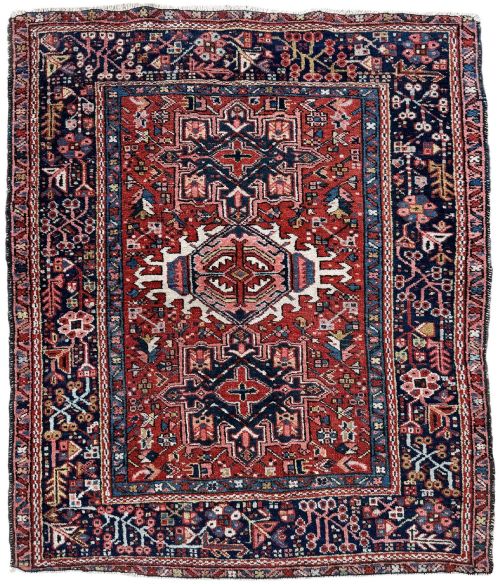
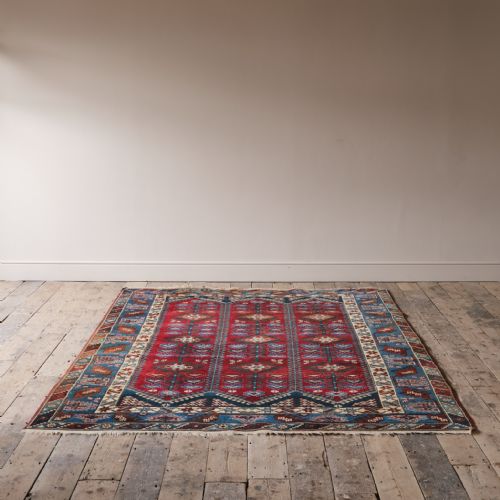
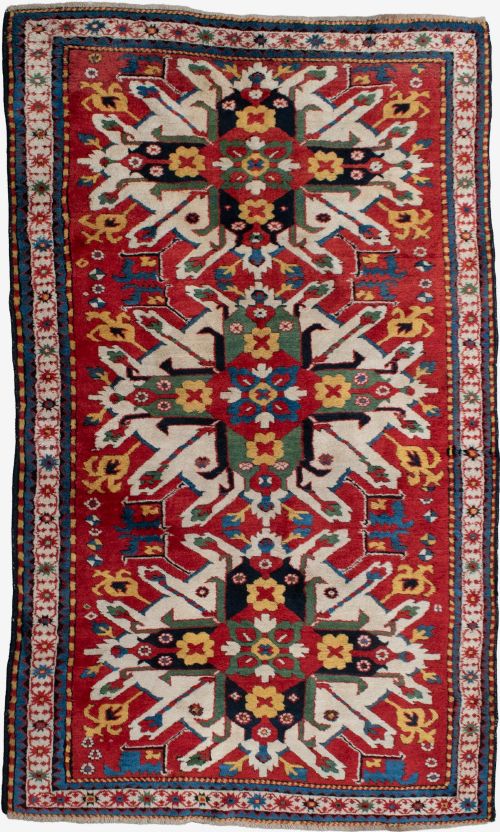
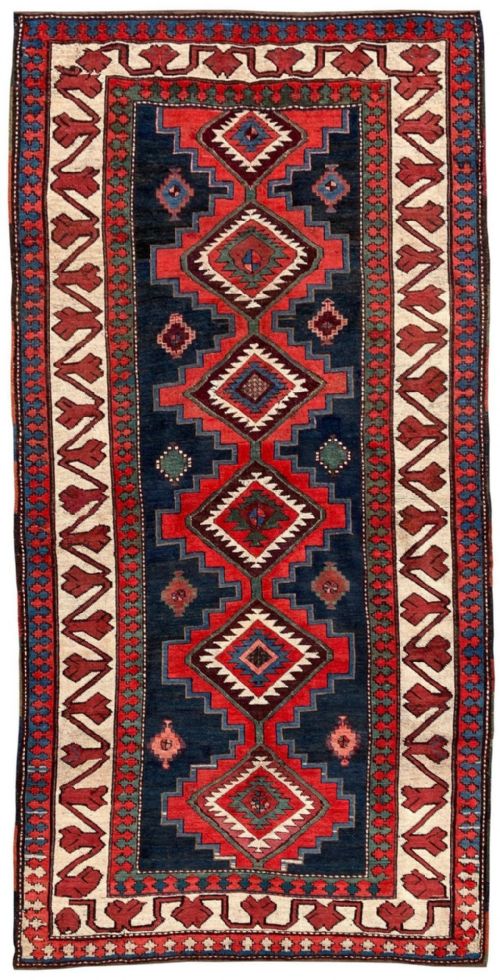
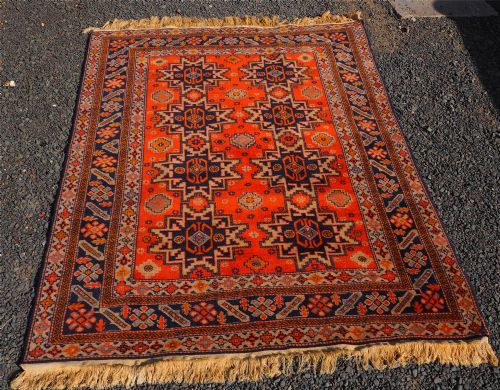
The form you meet most often is a small-to-medium village or tribal pile rug, roughly a metre to a metre and a half wide and one and a half to two and a half long. Kazak leads the regional names on Sellingantiques, followed by Shirvan, then Kuba, Karabagh, Gendje, Talish, Moghan and Daghestan. Under those sit the sub-names collectors use: Bordjalou, Karachov, Fachralo, Sewan, Lori Pambak, Chelaberd, Akstafa, Perepedil, Seichur, Konagkend, Karagashli, Marasali.
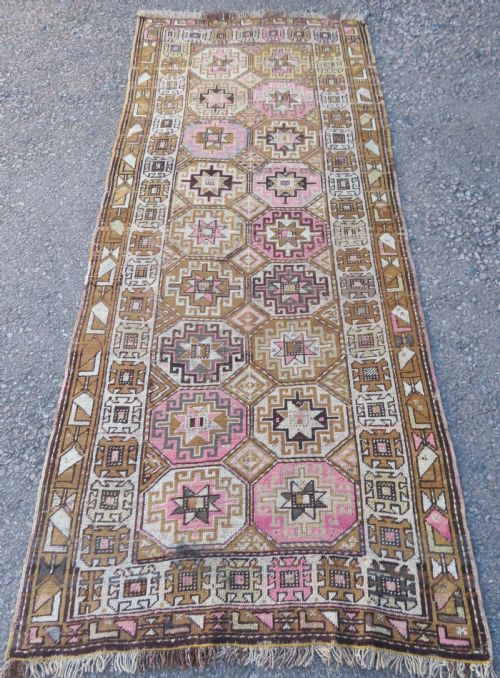
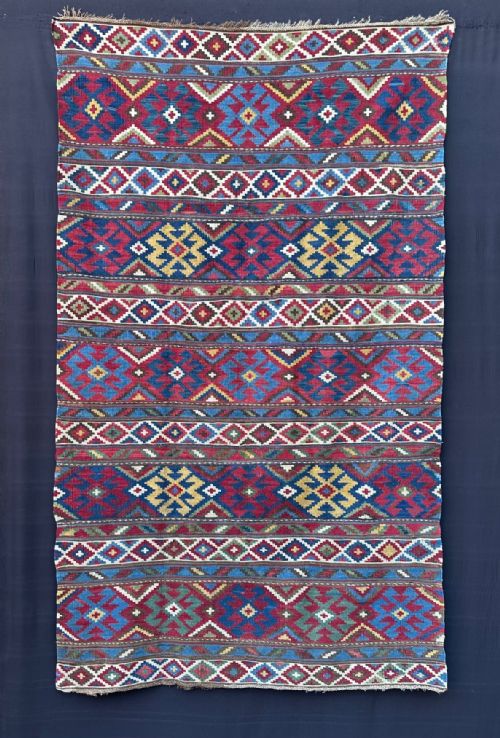
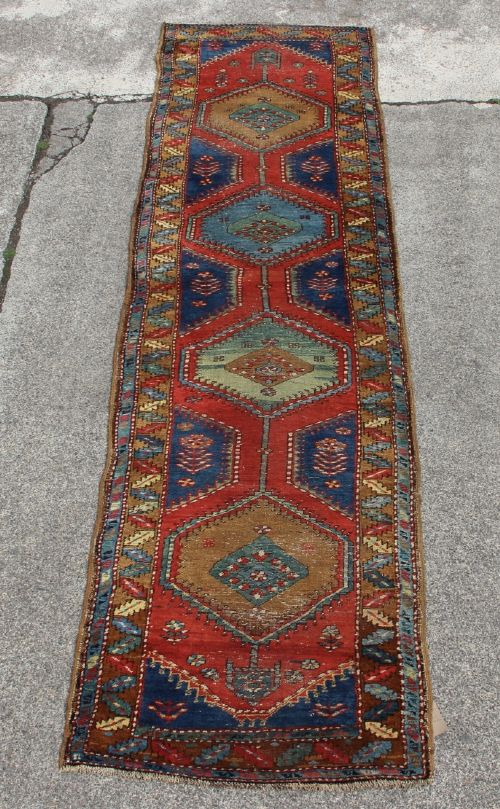
Long rugs and runners make up roughly a fifth to a quarter of what is offered, with recorded lengths from about 2.3m up to 5.85m. Flatweaves are a smaller band: kilim, soumak, verneh and jajim. Woven bags form a steady trickle of their own, mafrash panels and complete storage bags, khorjin, donkey bags, saddlebags and bag faces, several sold as pairs or as one of a pair.
Dates entered by dealers run from 1750 to 1940, and the weight sits firmly in the 1880s, 1890s and 1900s, which is when export demand drew Caucasian weaving westward in quantity. Where a listing says only 19th century, the dealer has chosen not to narrow it to a decade. A handful of rugs carry a year woven into them, the earliest quoted being 1855 and 1856 and the latest 1936. Alongside the Caucasian pieces sit weavings from neighbouring areas in the same idiom, Kurdish and Karaja rugs, Heriz, Sarab, Afshar, Yuruk, and Turkish and Afghan rugs titled as carrying a Caucasian design.

Where The Range Splits
Colour does most of the work. Roughly seventy titles mention it at all, and the praise clusters at the upper end, soft colours, superb colour, outstanding colour. Yellow and green grounds are called scarce whenever they turn up, and abrash, the banding where one dye lot ends and the next begins, is named as a feature rather than a fault.
Precision of naming tracks the range closely. A rug titled simply as an antique Caucasian rug sits at the bottom; the pieces at the top are the ones a dealer can place in a village, a Karachov, a Chelaberd, a Lori Pambak, a Marasali, an Akstafa, a Kasim-Usag. Fineness of weave pulls the same direction, and fine weave is a phrase that attaches repeatedly to Kuba, Shirvan and Karagashli examples.
Size cuts both ways. Small size is used as a selling point in its own right, and scarce small size more so; at the far end are kelleh and room-size carpets past five metres, while bag panels and fragments occupy the lower band. A woven date is its own mark of interest, and the rugs that give the year twice over, Islamic and Gregorian at once, sit well up the range.
Antique Caucasian Rugs Retail Price Guide 2026
Typical UK retail prices for caucasian rugs, calculated from the Sellingantiques database of over a million retail prices indexed since 2003. This retail price guide relies exclusively on Sellingantiques data; no external sources or auction records are used, so the figures do not describe the wider market.
The most expensive Caucasian rug ever sold on Sellingantiques was an Akstafa long rug of about 1850-70, sold in June 2023.

The Antique Caucasian Rugs Glossary
- Long rug and runner
- A narrow rug several times longer than it is wide. Runner appears in around a hundred titles, long in about seventy-five, and the two overlap in use.
- Prayer rug
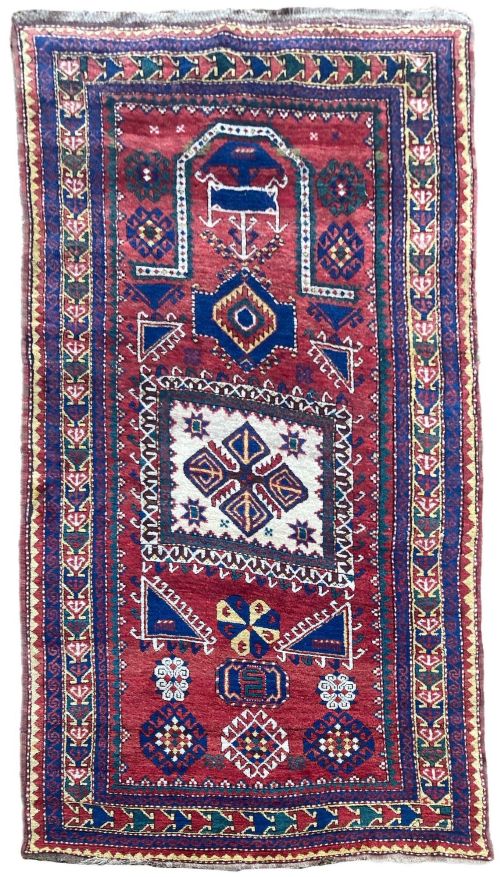
- A rug with a directional niche at one end. It turns up in some forty-four titles, and the ivory-ground floral lattice prayer rug recurs often enough to read as a type of its own.
- Kilim
- A pileless flatweave, woven rather than knotted. Thirty-seven titles name one, including a Karabagh described as a bee kilim.
- Soumak
- A wrapped-weft flatweave technique, spelled sumac or soumac as often as not, used for carpets and for bag faces. A dragon soumak appears once.
- Mafrash
- A woven storage bag, sold either as separate panels or as a made-up bag. Khorjin, the double saddlebag, sits in the same family.
- Boteh
- The teardrop or paisley motif, always titled as boteh design. Other design words that recur are medallion, lattice, star and the stepped octagonal Memling gul.
Antique Caucasian Rugs: Frequently Asked Questions
What does Kazak mean on a rug listing?
It is a weaving group name from the Caucasus, not a maker. Kazak appears in around a hundred and twenty titles on Sellingantiques, more than any other regional name in the category.
Under the Kazak heading sit narrower village names, Bordjalou, Karachov, Fachralo, Sewan, Lori Pambak and Chelaberd among them. Those are the pieces dealers name most precisely.
How old are most of these rugs?
The dealer-entered dates run from 1750 to 1940, with the great bulk falling in the 1880s, 1890s and 1900s. The 1920s and 1870s follow, then the 1910s and 1930s.
Earlier decades are thin, and the single 18th-century entry stands alone, a Kuba blossom carpet of 220 by 566cm.
Where a listing gives only 19th century rather than a decade, that is the dealer declining to be more precise.
Which sizes and shapes turn up?
Small-to-medium pile rugs dominate, roughly a metre to a metre and a half by one and a half to two and a half metres. Titles usually record the exact centimetres.
Beyond that, runners and long rugs are common, several of them between four and a half and five and a half metres. At the extremes sit bag faces of about 60 by 60cm and kelleh carpets over five and a half metres long, plus one narrow rug of 433 by 68cm titled as of unusual proportions.
Do any of these rugs carry a woven date?
Nineteen titles say the rug is dated. The years quoted include 1855, 1856, 1871, 1883, 1888, 1892, 1902, 1908, 1909, 1910 and 1936.
Several give the year twice, in Islamic and Gregorian reckoning together, so a title may read 1306 (1888) or 1328 (1910).
Are there Caucasian rugs made outside the Caucasus?
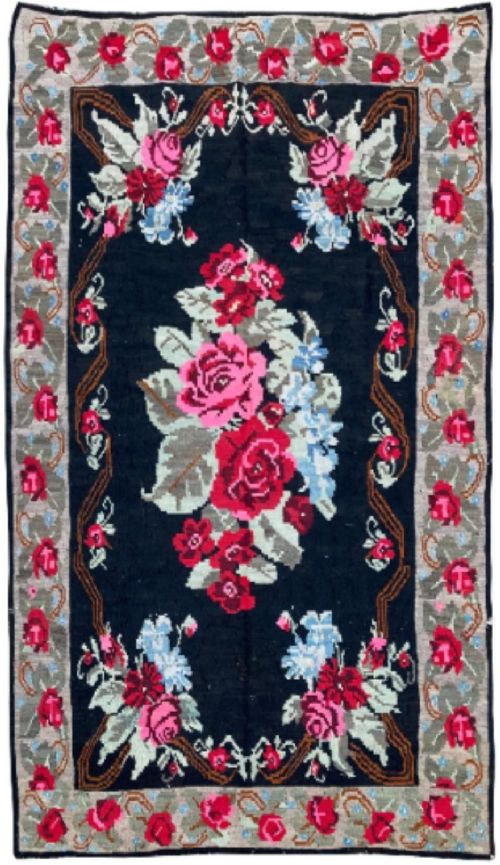
Yes, and they are a recurring note in the category. Turkish Kayseri, Oushak, Yagcebedir and Terekeme pieces appear, along with an Afghan rug and an Ardabil village rug, all titled as carrying a Caucasian design.
Alongside them sit weavings from neighbouring areas listed in the same category: Kurdish rugs, Karaja, Heriz, Sarab, Bakshaish, Afshar and Jaf Kurd. This group is a noticeable minority and growing in live stock.
Who made antique Caucasian rugs?
No makers are recorded. These were woven in villages and by nomadic groups for domestic use, dowry and trade, and they are listed by regional name instead.
Only one title in the whole category mentions a signature by the weaver. Otherwise the closest thing to an attribution is the village or district name, such as Perepedil, Seichur or Konagkend.