

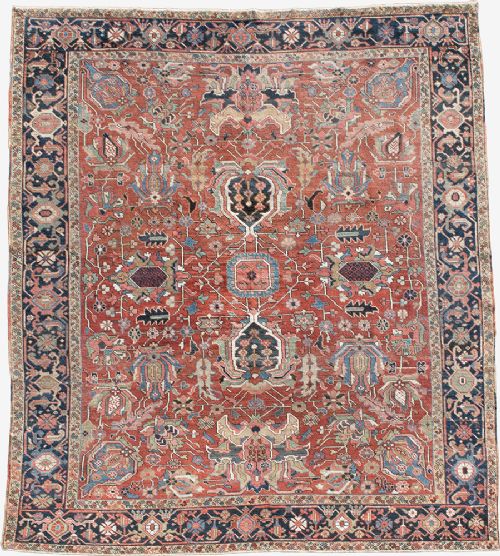
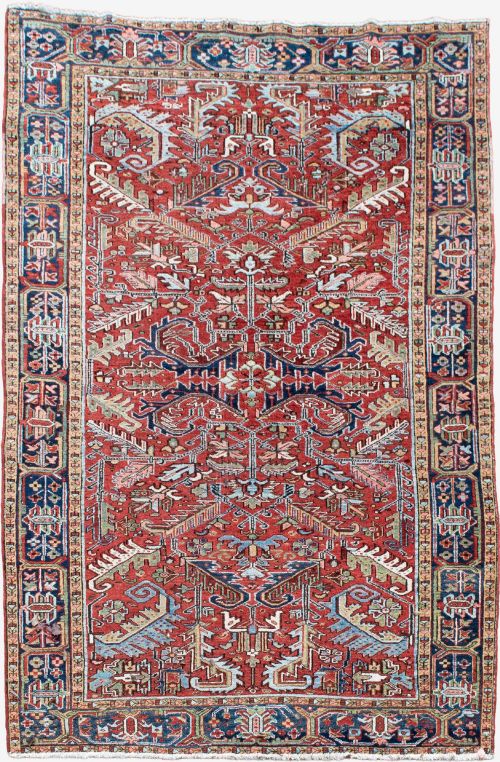
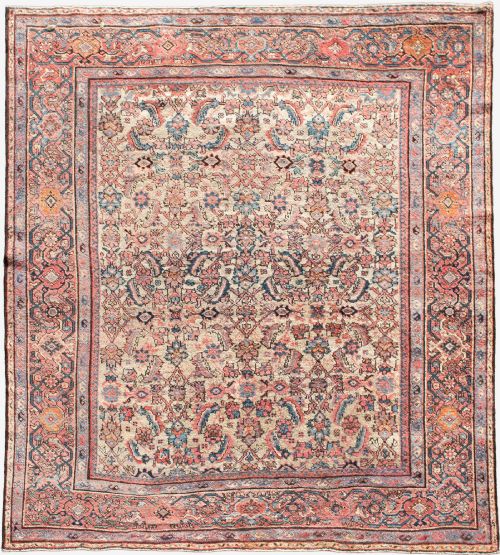
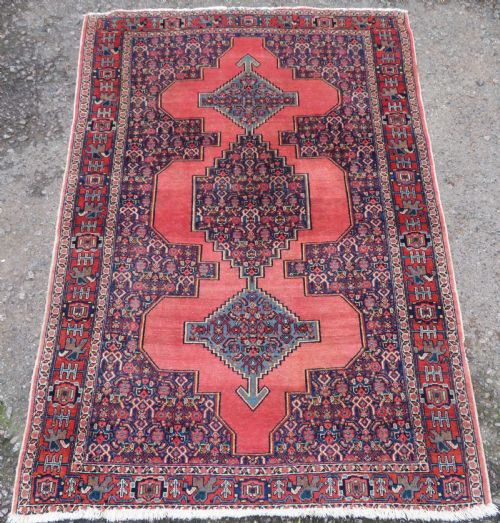
Antique Carpets
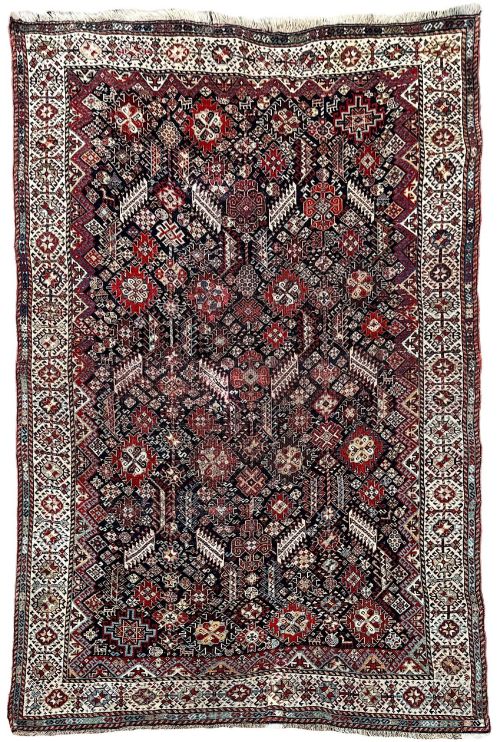
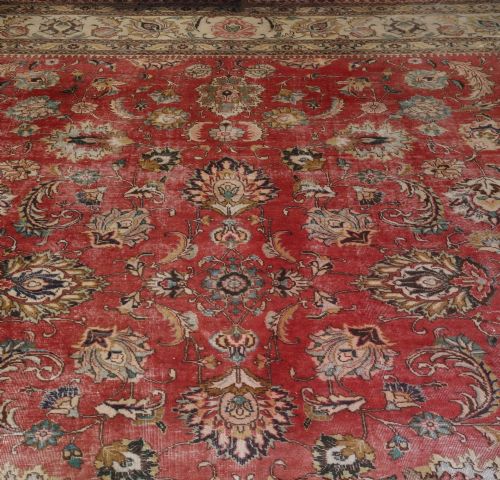
Hand-knotted and flat-woven floor pieces from Persia, Anatolia, the Caucasus, Central Asia, Afghanistan, China and India, made to cover floors, furnish tents and carry belongings.
Antique Carpets
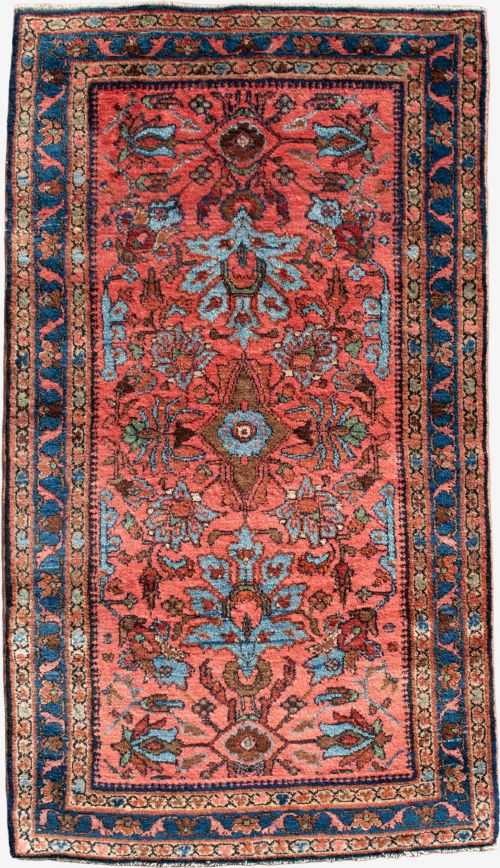
The heading covers wool pile rugs and carpets, listed as one or the other by size rather than by any firm rule. Titles lead with region or tribe: Heriz, Mahal, Baluch, Tekke and Yomut Turkmen, Kazak, Qashqai, Khamseh, Ushak. Dimensions in centimetres or feet usually follow.
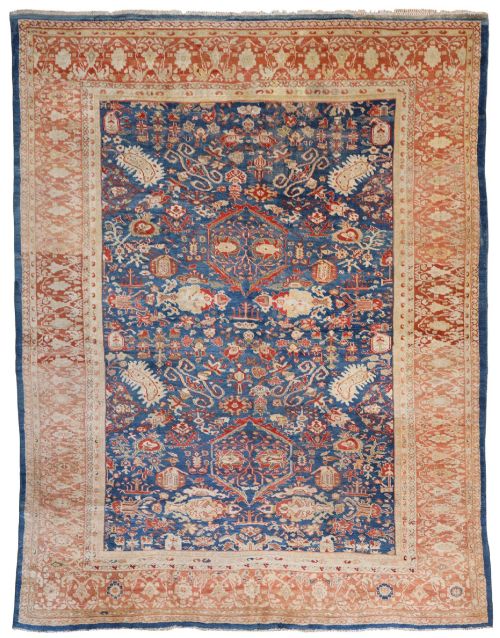
The everyday piece is a wool pile rug of roughly 150-220cm by 100-150cm, dated somewhere between 1880 and 1930. Above that sits the room-size carpet around 3m by 2m, most often north-west Persian. Heriz is the most-named weave in the whole archive, and it turns up at every level of the range.
Four other blocks run alongside. Turkmen and Central Asian weaving accounts for roughly a sixth of titles, tribal south and east Persian work another sixth, Anatolian and Caucasian rugs another, many of them prayer format. Flatweaves are a smaller steady seam, and are growing in live stock.
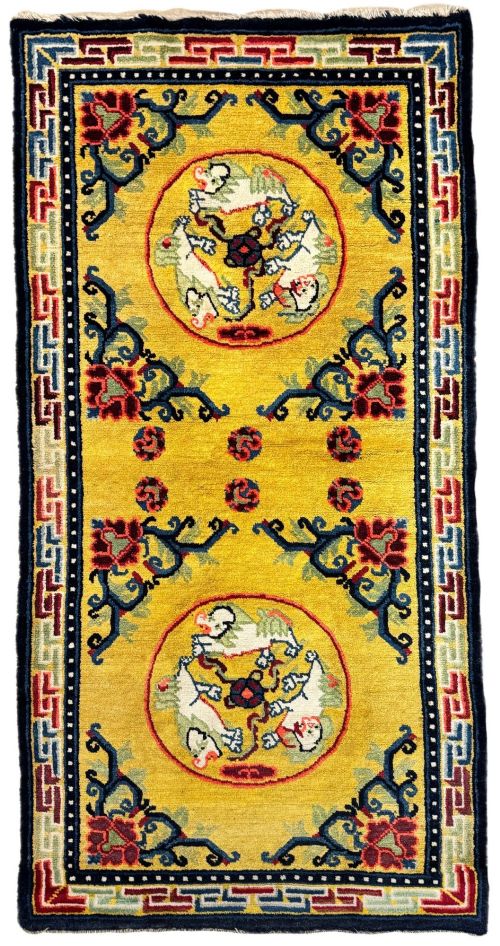
Not everything is a floor piece. The same weaving traditions made chuval and torba faces, ensi, asmalyk, saddle-bags and salt-bags, and those are commonly sold as the woven face alone. European and further-flung weaving is the rarity: Aubusson, Bessarabian, Spanish, Scandinavian, Tibetan, Khotan and Agra surface once or twice apiece.
What Sets Them Apart
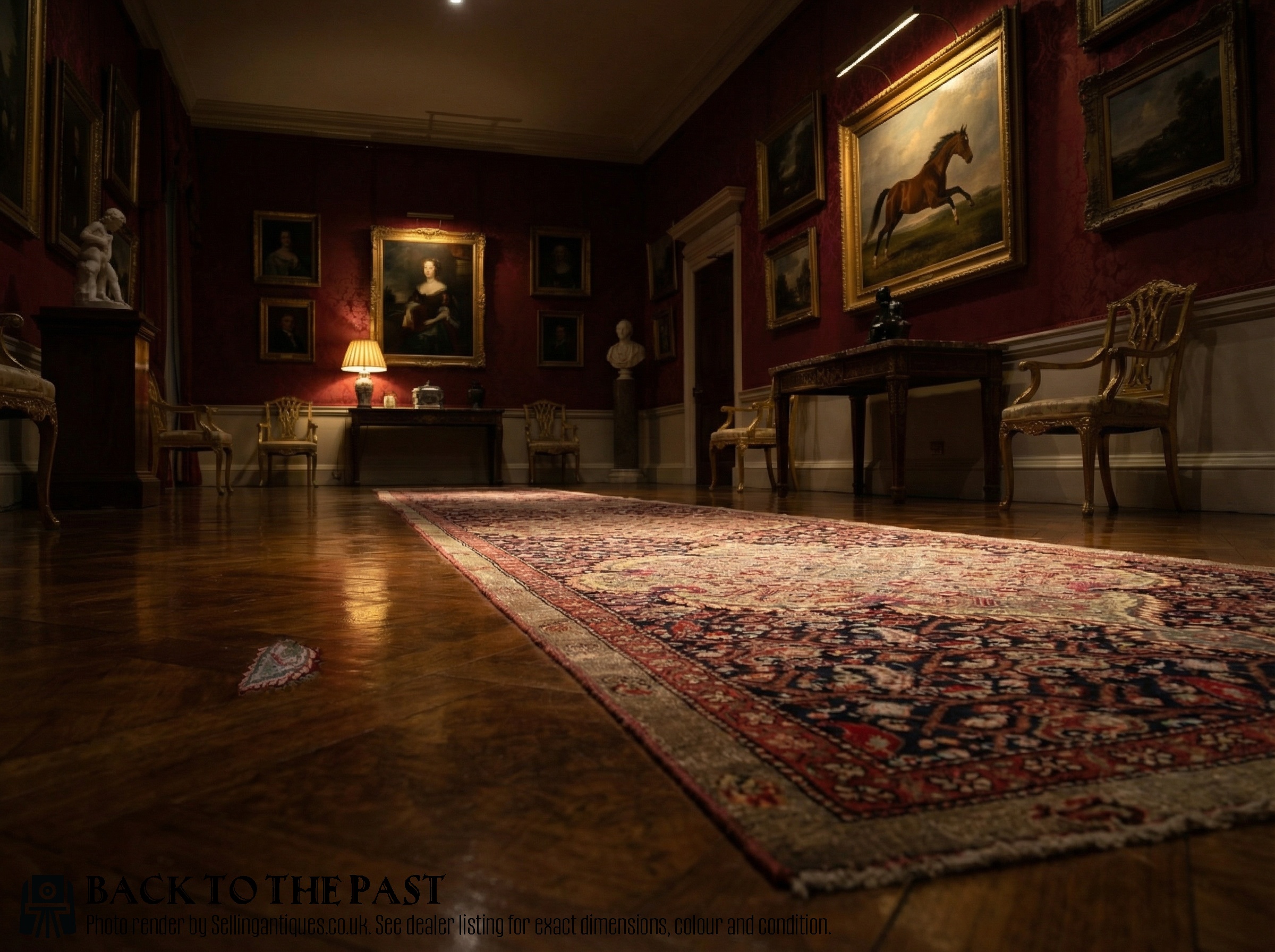
Size does most of the work. Large room-size and oversize carpets sit at the top, and the biggest sampled pieces run past six metres, with one hall runner simply given as 32 feet. Small rugs, bag faces and fragments sit at the bottom. Over two hundred titles say 'large'.
Age matters, but only within the nineteenth century. The mass of listings falls between 1880 and 1930, so pieces put at 1850-1880 or 'mid 19th century' stand well clear of it. Anything earlier is scarce, and a nineteenth-century attribution in a title is often a decade-level guess rather than a firm date.
Then attribution, colour and weave. A named weaving centre carries a piece above a generic 'Antique Wool Carpet' or 'Persian rug', which is where the plainest titles cluster. Scarce grounds push upward, with yellow, green and pink fields flagged repeatedly in titles, as does fine weave, silk, kork wool and a silk foundation.
Antique Carpets Retail Price Guide 2026
Typical UK retail prices for carpets, calculated from the Sellingantiques database of over a million retail prices indexed since 2003. This retail price guide relies exclusively on Sellingantiques data; no external sources or auction records are used, so the figures do not describe the wider market.
The highest price of the last year on Sellingantiques went to an antique Bakshaish carpet, sold in February 2026.
The Antique Carpets Glossary
- Rug vs carpet
- A loose size distinction used in listings: smaller pieces are rugs, room-covering ones carpets. The same object is sometimes called both.
- Runner
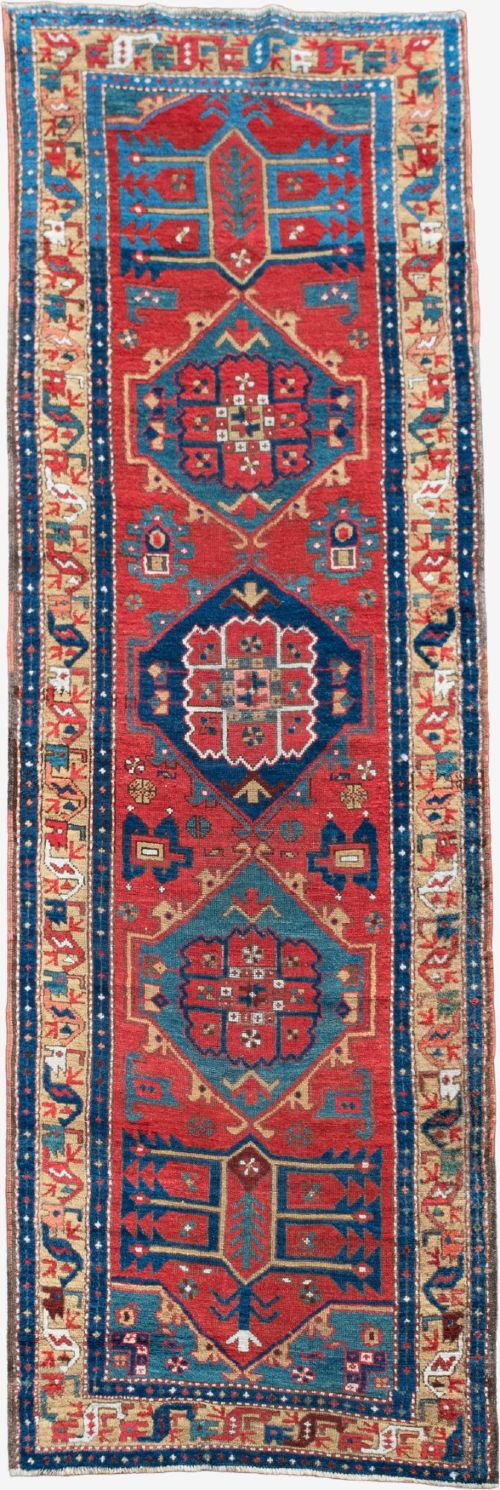
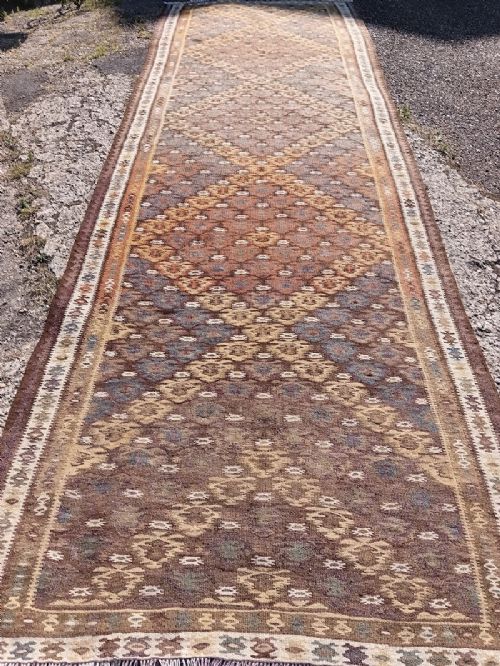
- A long narrow rug for a hall, corridor or stairs. It appears in 253 titles, with sampled lengths reaching 32 feet.
- Ground
- The field colour behind the design. Ivory, camel, yellow and green grounds get singled out in titles, and 72 use the word.
- Prayer rug
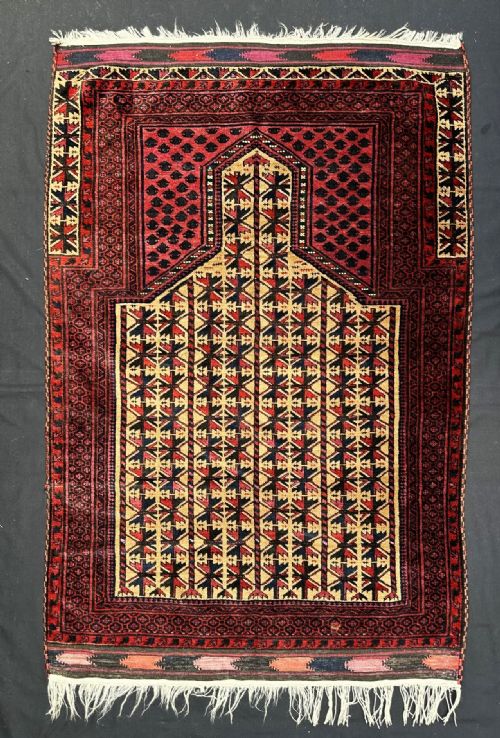
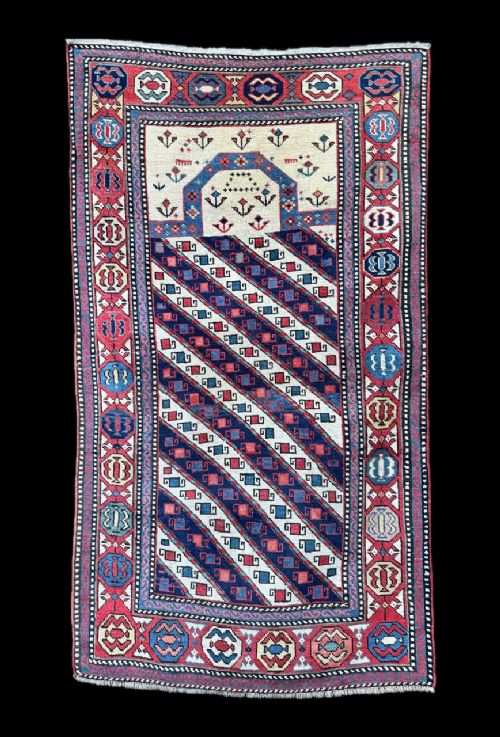
- A rug with a directional niche, or mihrab, at one end. Some are seh mihrab, with three niches; 131 titles carry the word, from Anatolia, the Caucasus, Afghanistan and the Turkmen tribes alike.
- Gul
- The repeating octagonal tribal medallion of Turkmen weaving. Tekke, Salor, Kepse, Dyrnak, Tauk Nuska and Memling guls all appear by name.
- Kelleh
- An elongated gallery carpet, much longer than it is wide, sitting between a runner and a room carpet.
Antique Carpets: Frequently Asked Questions
What is the difference between a rug and a carpet?
Size, loosely. Smaller pieces get called rugs in titles, room-covering ones carpets, and the same object is sometimes described both ways.
The single most common title word on Sellingantiques is 'rug', used in around a third of them. 'Room size' appears in 110 titles, usually for something around 3m by 2m and up.
How old are most antique carpets?
The dated field runs from 1700 to 1960, and nearly two-thirds of the listings that carry a clean year fall between 1880 and 1930.
Earlier work thins out fast. The 1870s, 1860s and 1850s together account for a couple of hundred listings, and eighteenth-century pieces are down to a handful, among them a Ghiordes prayer rug.
Which weaves come up most often?
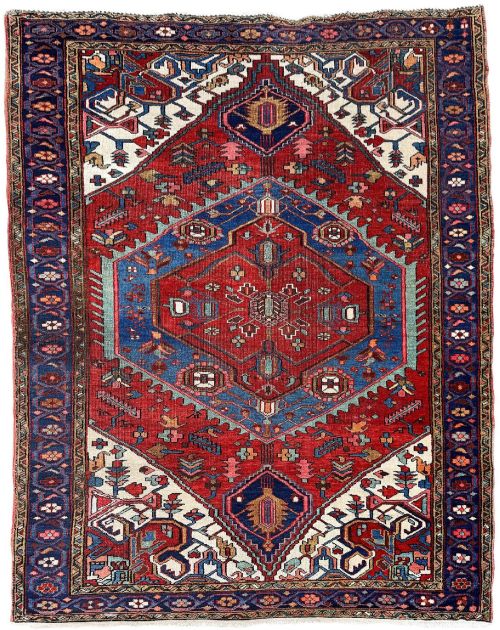
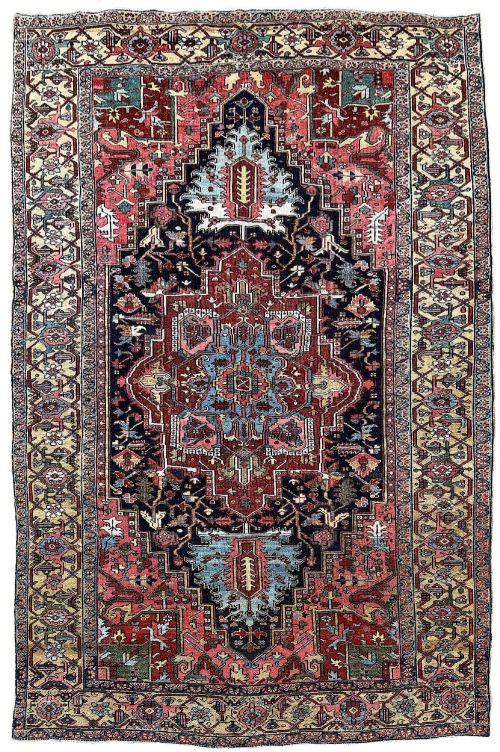
Heriz leads the archive at 437 titles, typically a north-west Persian room-size or small room-size carpet with a medallion or all-over design.
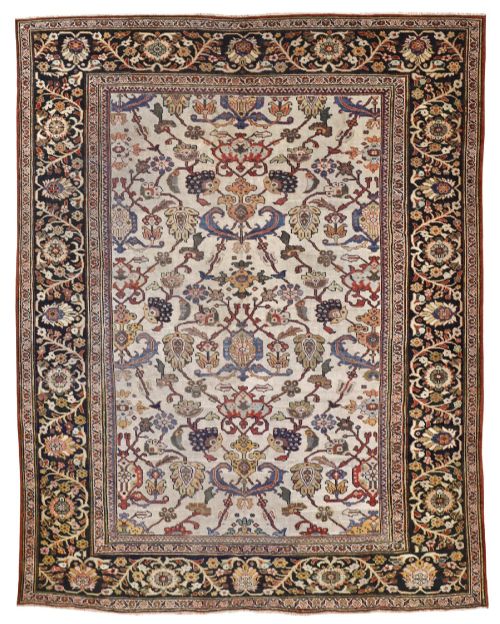
Around it sit Mahal, Tabriz and Ziegler, along with Serapi, Bakshaish, Karaja, Sultanabad and Fereghan. Persian attributions overall outnumber Turkmen, Caucasian, Afghan and Turkish ones.
Are woven dates or signatures found on these?
Rarely. Almost every date in the field is an estimate made from the weave and design rather than read off the rug.
Two pieces in the sample are exceptions: a Kazak dated 1856 in the weave, and a Karabagh village rug signed by the weaver.
What are chuval, torba and asmalyk?
Turkmen woven bags, storage faces and camel trappings, made by the same households that wove the floor rugs. They were tent furniture rather than floor covering.
They commonly reach the market as the decorative face alone, separated from the back. Ensi, mafrash and salt-bags turn up on the same footing.
Are flatweaves part of this category?
Yes. Kilim appears in 128 titles, and soumak, palas and sofreh alongside it.
The seam takes in Pirot and Sarkoy kilims and Bessarabian work as well as Persian and Anatolian pieces. It is small against the pile rugs, but growing in live stock.