

Antique Afghan Rugs
Hand-knotted wool rugs, carpets, bags and tent hangings woven by the tribes and villages of Afghanistan and the neighbouring Persian border districts, made for floors, doorways and storage.
What They Are
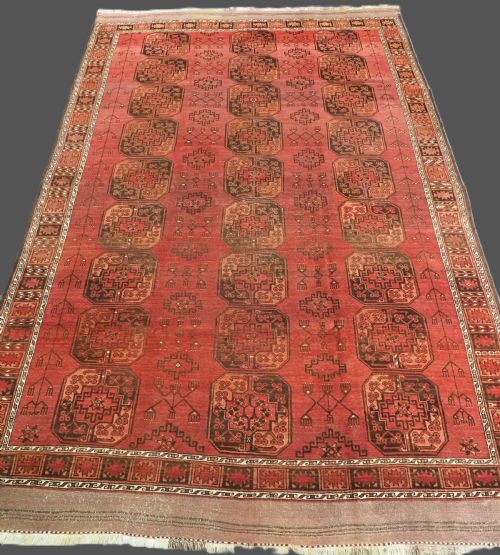
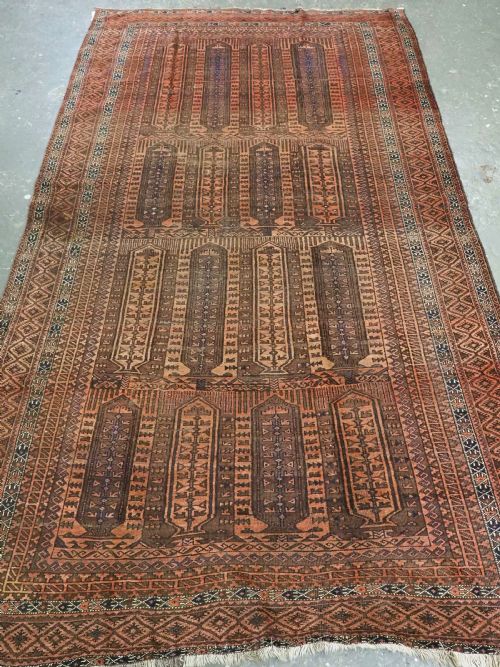
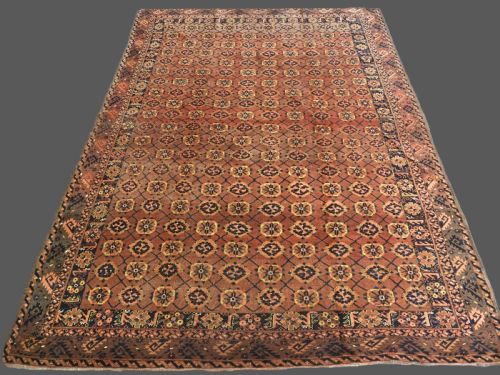
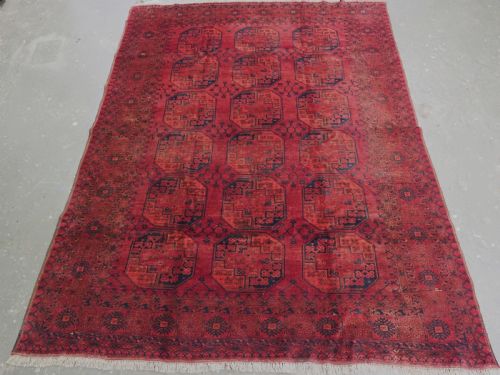
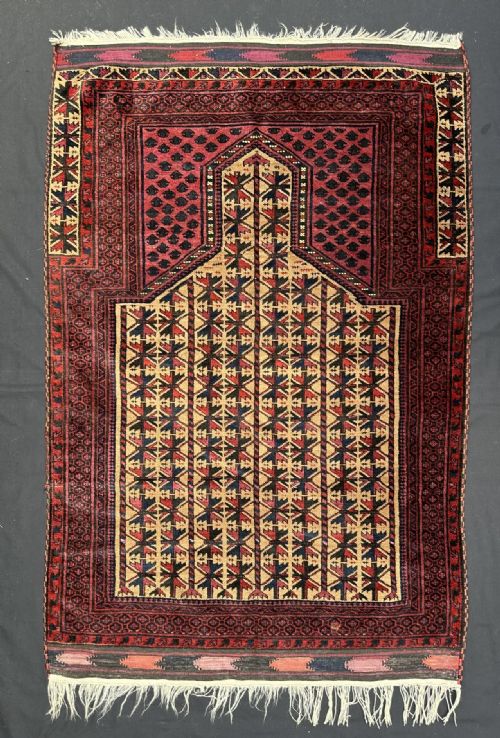
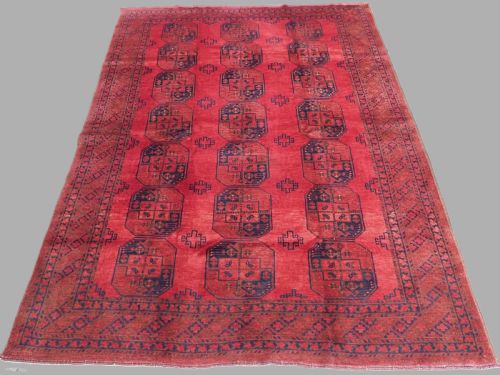
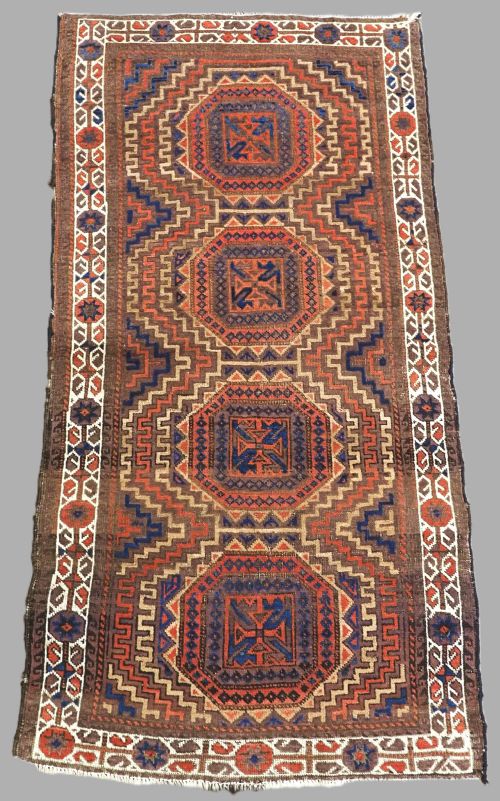
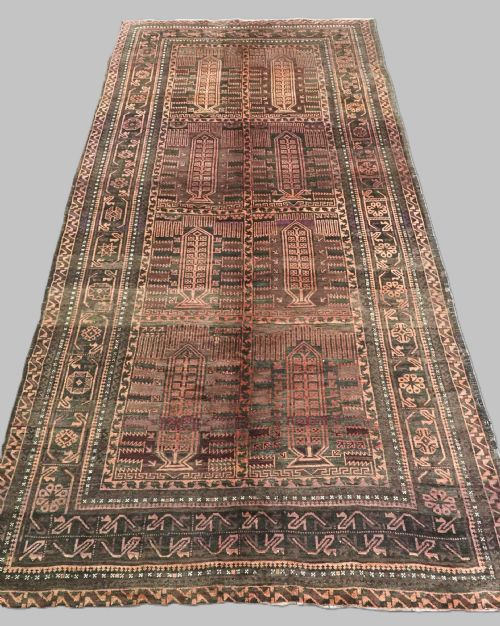
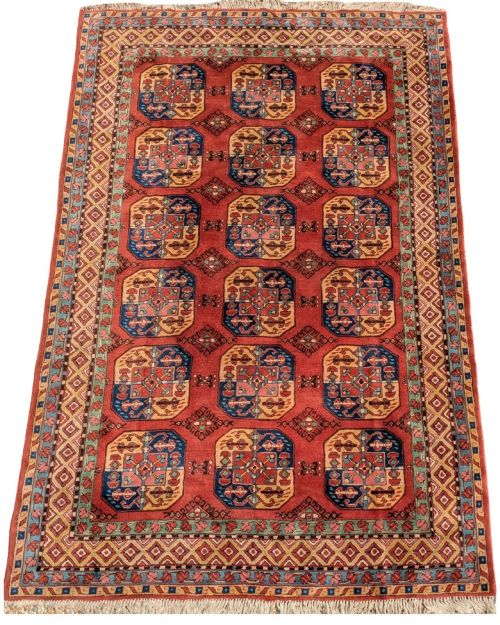
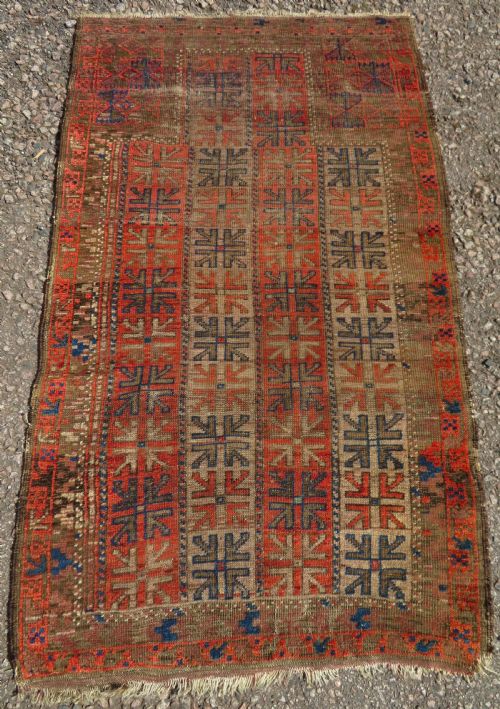
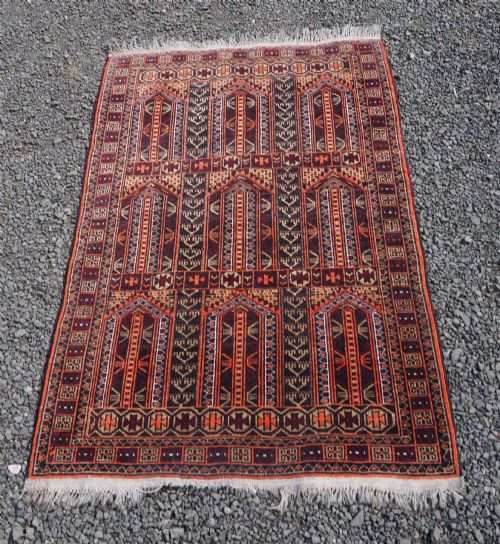
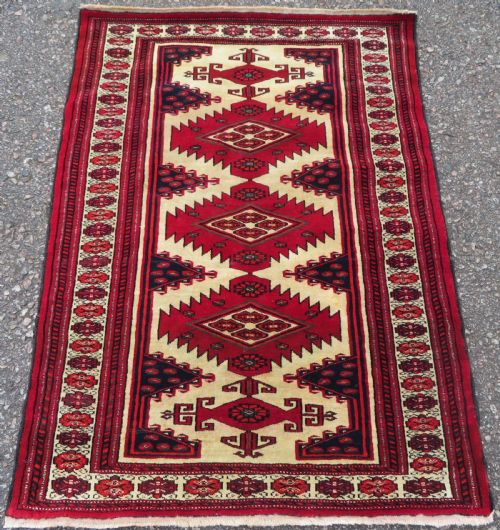
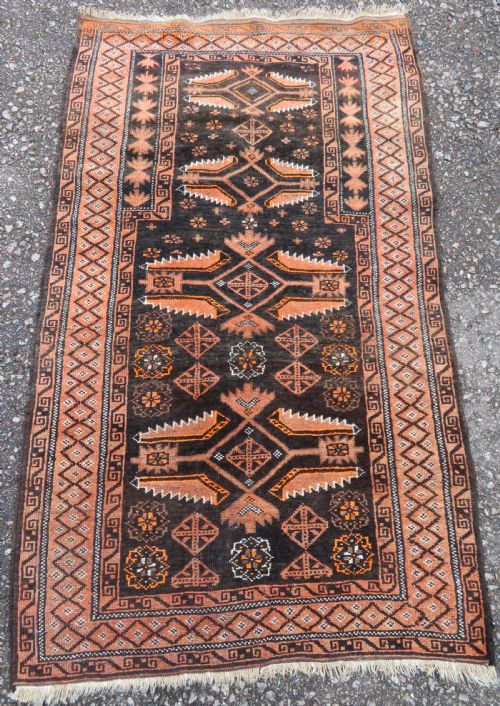
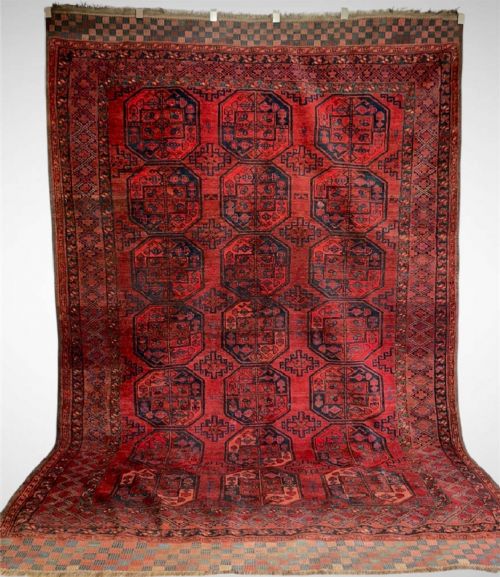
Two weaving traditions carry the category. Turkmen work, mostly Ersari and its sub-groups along with Kizil Ayak, Tekke and Beshir, gives you red-ground rugs filled with repeating guls or divided into quarters as an ensi. Baluch and Timuri weaving from western Afghanistan gives you smaller pieces, largely prayer rugs with a pointed niche at one end.
The single most likely encounter is a Baluch prayer rug or a village Ersari Turkmen rug with a gul or ensi design, dated to the 1900s or 1920s. Rugs are described by tribe and design rather than by maker: no workshop or weaver names appear anywhere in the archive, and attributions are tribal and regional throughout.
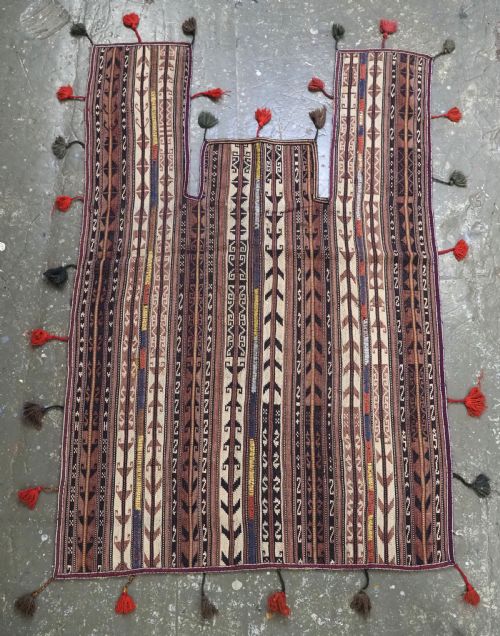
Alongside the pile rugs sit flatweaves and utility weavings, maybe one in ten of what comes up: kilims, sofreh eating cloths, saddle bags, balisht and chuval bag faces, animal trappings. The archive has also thrown up a cradle, a ceremonial horse blanket, a kapunuk door-surround hanging and a lot of seventeen salt bags.
Dating runs from 1850 to 1950, and 350 of 366 listings carry a clean year. The 1920s alone account for 155 of them, more than the 1900s, 1910s and 1930s combined. Nineteenth-century dating is thinner and looser, and titles hedge with phrases like circa 1900/20 or circa 1880 or earlier, so read a single year as a decade.
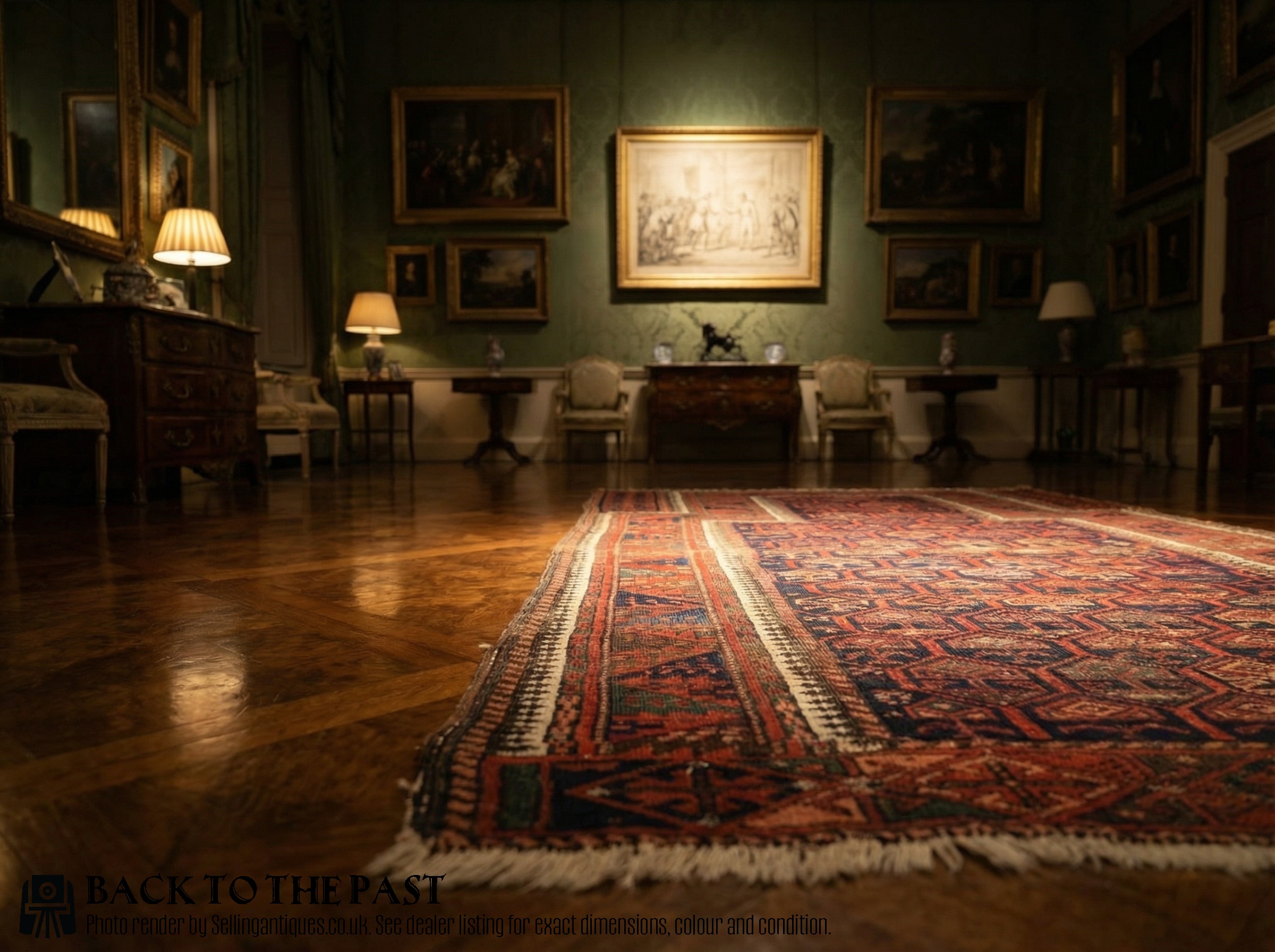
Where Value Sits
Size sets the frame. Large room-size and main carpets sit at the top of the range, described as room size, country house size or kelleh format, with the biggest recorded at 479 by 291 cm. Small mats, saddle bags, bag faces and child-size prayer rugs sit at the bottom.
Colour is the feature dealers cite most, appearing in sixty titles. Deep plum red, rose madder, burnt orange, faded gold and soft brown all get singled out, and red is the overwhelming default across the archive. An ivory ground is called scarce where it turns up in Turkmen work. Wool handle and weave push in the same direction: soft glossy wool and a fine weave lift a piece.
Attribution matters as much as anything woven into the rug. A generic Afghan or village rug clusters low, while named tribes and sub-groups run through the upper range: Timuri, Chakhansur, Sulayman, Taghan, Kizil Ayak, Ersari. Unusual or scarce designs and formats add to that, and a woven date or inscription, which turns up only twice in the samples, is always singled out.
Retail Price Guide 2026
Typical UK retail prices for afghan rugs, calculated from the Sellingantiques database of over a million retail prices indexed since 2003. This retail price guide relies exclusively on Sellingantiques data; no external sources or auction records are used, so the figures do not describe the wider market.
About thirty-six antique Afghan rugs are listed on Sellingantiques each year, spread across seventeen dealers.

The Antique Afghan Rugs Glossary
- Gul
- The repeating octagonal or lozenge medallion that fills the field of Turkmen designs. Chuval gul, Salor gul and Tekke gul are all named in titles.
- Mihrab
- The pointed prayer niche at one end of a prayer rug. Seh mihrab, also written three mihrab, is a three-niche format.
- Ensi
- A rug woven as a tent-door hanging, its field divided into quarters. Sometimes paired with the word purdah in a title.
- Main carpet
- The large principal floor carpet of a tent or household, and the term that marks the big pieces in the archive.
- Chuval and balisht
- A chuval is a large storage bag, usually offered as the woven face and sometimes with its plain-weave back still present. A balisht is a small bag face used as a cushion, recurring in Baluch listings.
- Sofreh
- A flatwoven eating or bread cloth, also called a dastarkhan. Related ru korssi flatweaves from the Timuri and Djhan Beghi tribes appear a handful of times.
Frequently Asked Questions
What does Baluch mean on an Afghan rug listing?
It points to weaving from western Afghanistan and the Persian border districts, and it's the commonest word in the archive after design, turning up in 110 titles.
Baluch pieces are mostly small, and prayer rugs with a mihrab niche dominate them. Rams horn, tree of life and Dokhtar-e-Qazi designs recur.
Which period do most of these date from?
The dated field runs 1850 to 1950. The 1920s account for 155 listings on their own and the 1900s a further 88, so two-thirds of everything falls in those two decades.
Nineteenth-century dating is thin: eighteen in the 1880s, fifteen in the 1890s, four in the 1870s. Eighteenth-century pieces don't appear at all.
Are Afghan rugs always red?
Red is the default. Red or red colour appears in nearly forty titles, and the Turkmen tradition in particular is built on red-ground fields.
Other grounds turn up and get noted when they do. An ivory ground is described as scarce in Turkmen work, and titles single out deep plum red, rose madder, burnt orange and faded gold.
How many come up for sale each year?
Around 36 a year on Sellingantiques, spread across seventeen dealers, so no single dealer sets the tone of the category.
The archive stands at 366 listings covering pile rugs, carpets, flatweaves and bags.
Who made antique Afghan rugs?
Tribes and villages, not workshops. No weaver, workshop or firm names appear anywhere in the evidence, and every attribution is tribal or regional.
The real vocabulary is sub-tribe names, which surface constantly in titles: Taimani, Sistan, Mushwani, Chakhansur, Sulayman, Taghan, Yaqoub Khani, Bahluli, Salar Khani, Firozkohi, Adraskhan, Andkhoy and Aranji.
What sizes do they come in?
Small to medium pile rugs dominate. The smallest thing recorded is a mat of about 107 by 74 cm, and several prayer rugs are described as child-size.
At the other end are main carpets and room-size pieces, the largest an Ersari Turkmen carpet at 479 by 291 cm. Bag faces and saddle bags sit well below the rugs.