
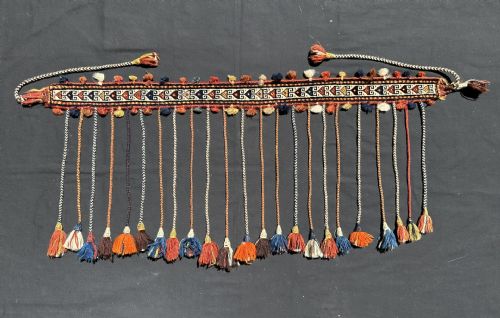


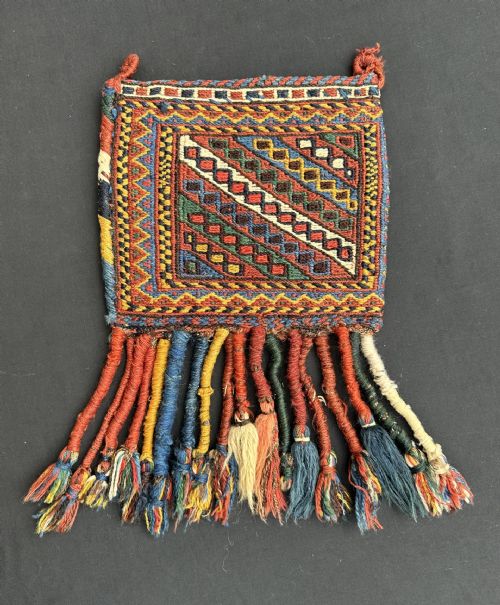


Antique Persian Textile Art
Antique persian textile art brings together tribal weavings and embroideries shaped by nomadic hands across nineteenth and early twentieth century Persia.
Antique Persian Textile Art
When you search for antique persian textile art, you encounter utilitarian and decorative objects made by nomadic and village groups, including the Qashqai, Afshar, Shahsevan, and Bakhtiari tribes. The pieces span from the mid-nineteenth century through the early twentieth century, reflecting distinct regional designs and traditions.
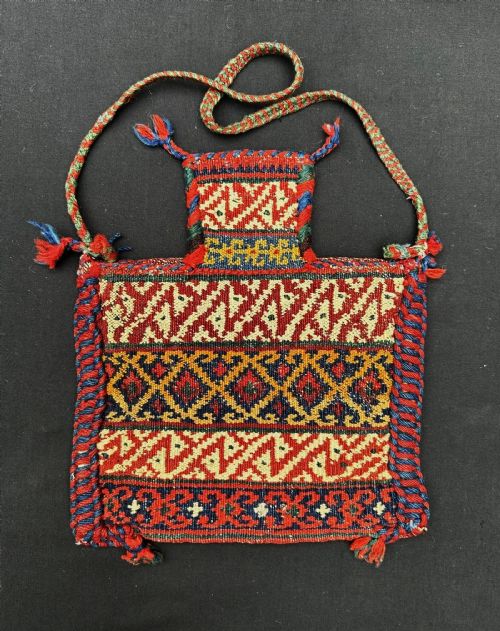
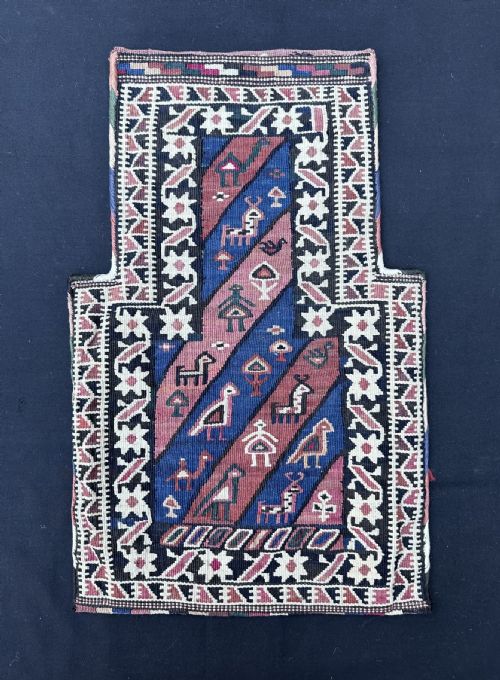
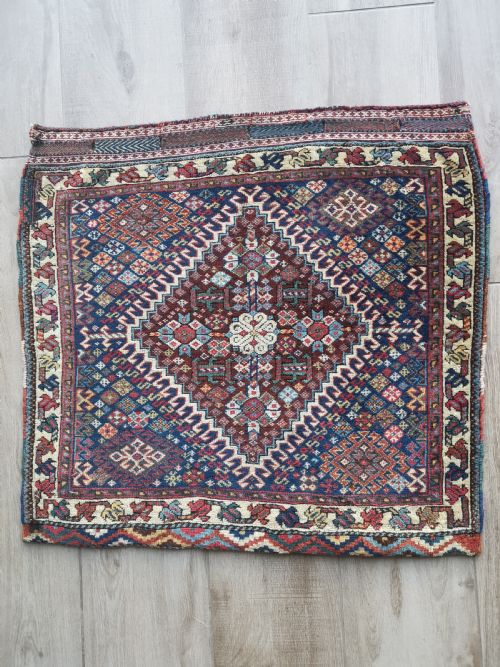
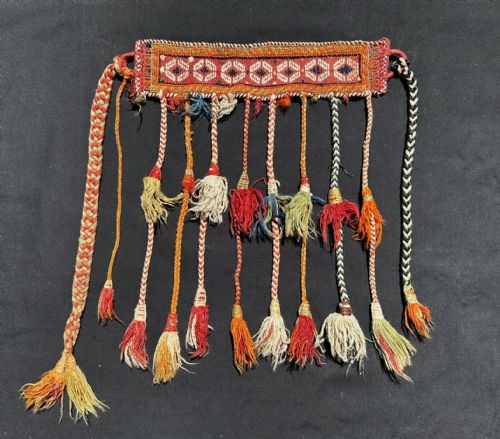
The most common forms on this page are bags, salt bags, bag faces, and saddle bags, alongside wall hangings, animal decorations, and embroidered panels such as Rasht work. These items served practical roles in nomadic life, used for storage, transport, and household use before entering the decorative market.
Origins stretch across specific provinces and regions like Kerman, Fars, Khorassan, and Azerbaijan. Each tribal group utilised particular formats, from flatwoven khorjins to pile-woven chantehs and soumak work.
Materials and construction methods
The foundation of these textiles rests on hand-spun wool and cotton, frequently paired with natural dyes derived from plants and insects. Artisans also incorporated goat hair for durability on structural edges, along with silk and felt applique in specific embroidered pieces.
Weaving techniques vary by tribe and function, encompassing soumak work, kilim flatweaving, and pile knotting. Embroidered items utilise silk threads stitched onto wool, cotton, or felt backings.
Listings feature items from the 1850s to the 1920s, constructed from hand-spun wool, silk, goat hair, and natural dyes.
Judging quality in tribal weavings
Quality depends on the fineness of the weave, the clarity of the tribal motifs, and the complexity of the design structure. Pieces displaying crisp geometry, balanced proportions, and intricate iconography sit higher in the range.
The condition of the material, integrity of the original edges, and depth of the natural dye palette also dictate the standing of a piece. Intact structures with minimal restoration retain greater visual coherence.
The Antique Persian Textile Art Glossary
- Soumak
- A flatweaving technique where pattern threads are wrapped over and under warp threads to create a textured, durable surface. This method appears frequently on salt bags and bag faces.
- Chanteh
- A small nomadic bag or pouch used for personal items or documents. These pieces often display the distinct weaving patterns of Kurdish and other tribal groups.
- Bag face
- The front decorative panel of a larger storage sack that survived after the plain back disintegrated or was cut away. Collectors prize them for concentrated design work.
- Rasht embroidery
- A traditional Persian textile art involving detailed silk and felt applique work originating from Gilan province. Panels typically feature intricate floral and curvilinear motifs.
- Sofreh
- A flatwoven textile used for spreading meals or handling bread within nomadic households. They often feature geometric field patterns framed by multiple borders.
Antique Persian Textile Art: Frequently Asked Questions
What are antique persian textile art pieces?
These items are functional weavings and embroideries produced by nomadic and village tribes across nineteenth and early twentieth century Persia. They include storage bags, salt bags, animal trappings, and decorative panels.
Nomads created them for daily life, utilising durable materials like hand-spun wool, cotton, and natural dyes to withstand harsh environments while expressing tribal identity through pattern.
How were salt bags used?
Salt bags, or namakdan, served as specialised containers for storing and transporting rock salt within nomadic tents. Their narrow necks prevented the contents from spilling during travel.
Families hung these pouches inside their dwellings, combining practical utility with fine weaving techniques such as soumak work or pile knotting.
How do I live with these textiles?
Smaller bags and embroidered panels suit mounting on walls or framing behind glass to protect fragile fibres from direct handling. Rugs and larger flatweaves function well on floors with appropriate underlays.
Keep pieces away from direct sunlight to preserve the integrity of natural dyes and rotate them periodically to ensure even exposure to light.
How do I tell tribal styles apart?
Tribal styles differ through colour palettes, structural techniques, and specific geometric or animal motifs. Qashqai and Afshar pieces often feature hooked polygons, medallions, and birds, while Shahsevan works frequently display intricate soumak dragons and stripes.
Examining the weave structure, fringe finish, and sidecord construction helps identify the specific regional workshop or nomadic group behind the piece.