

Vintage Nomadic Rug Bag
A vintage nomadic rug bag brings the texture and geometry of tribal weaving into a modern interior.
Vintage Nomadic Rug Bag
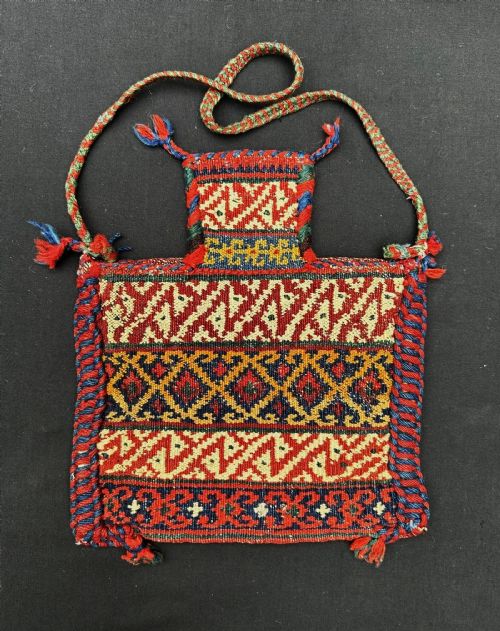
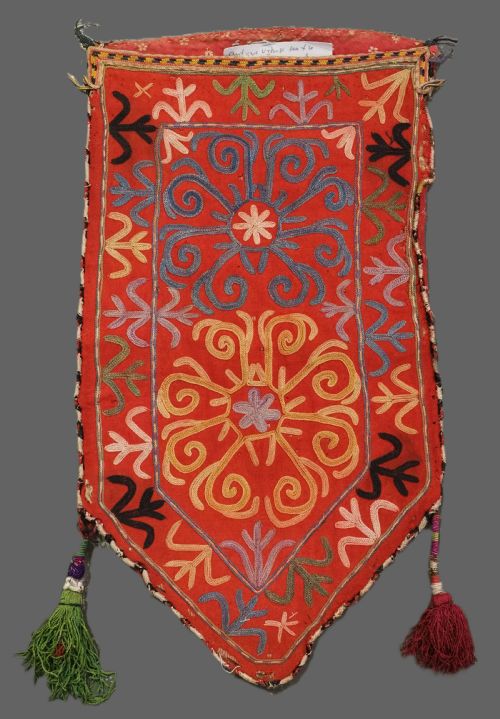
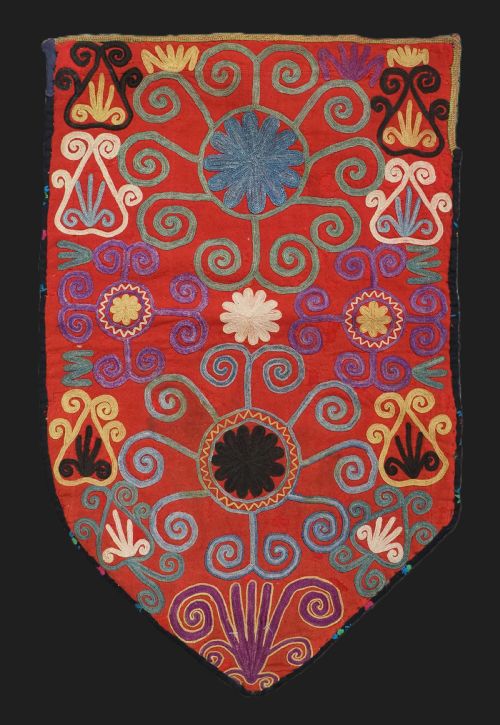
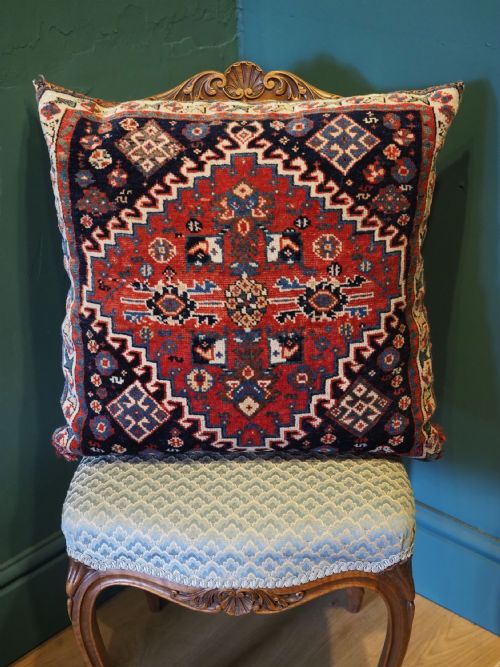
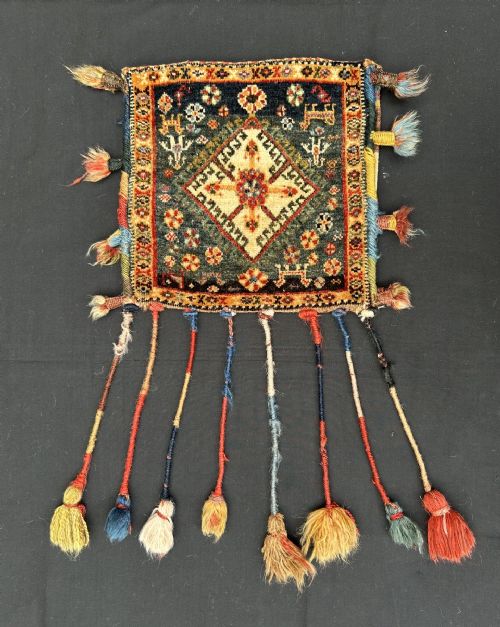
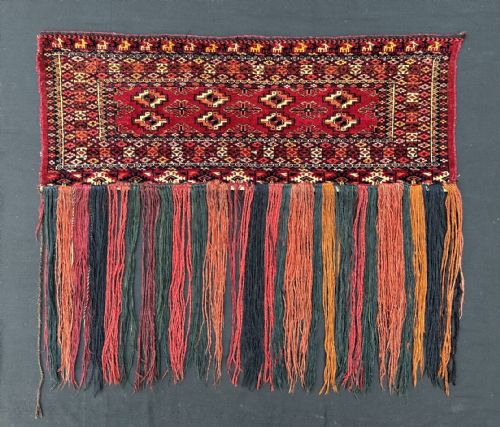
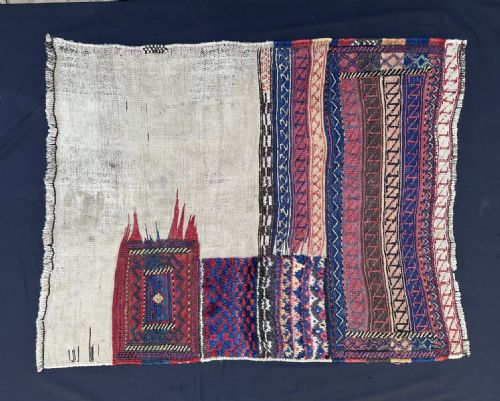
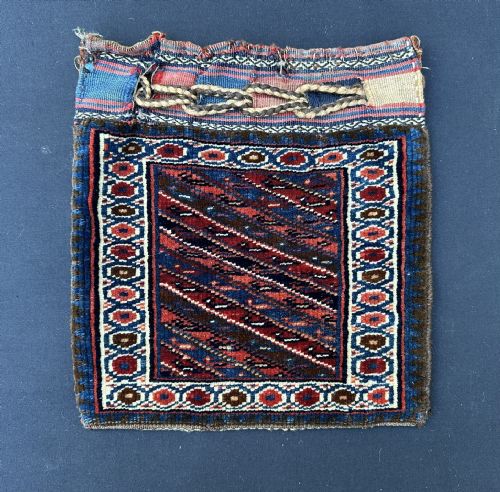
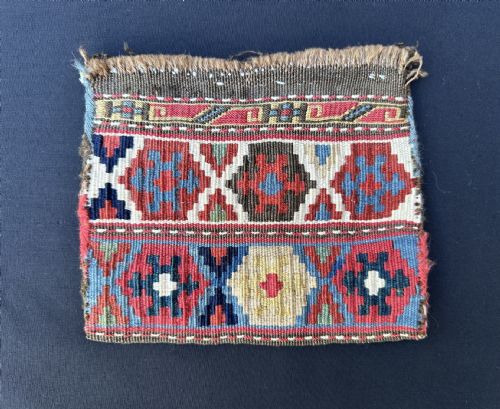
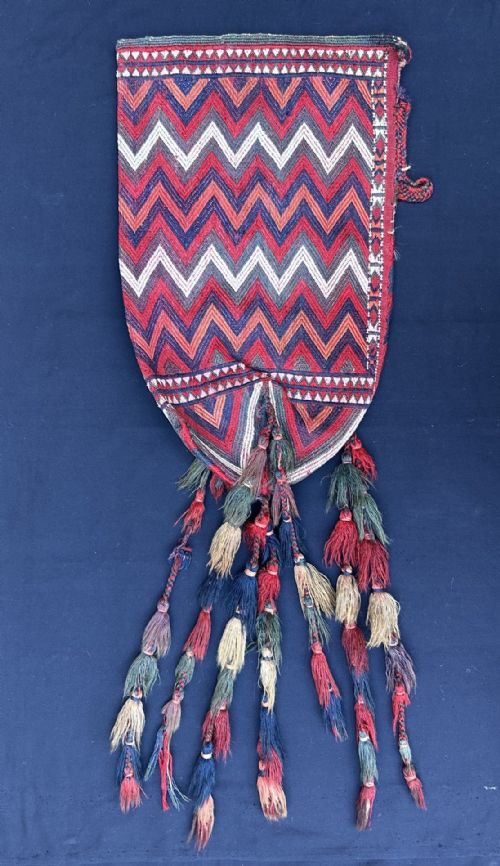
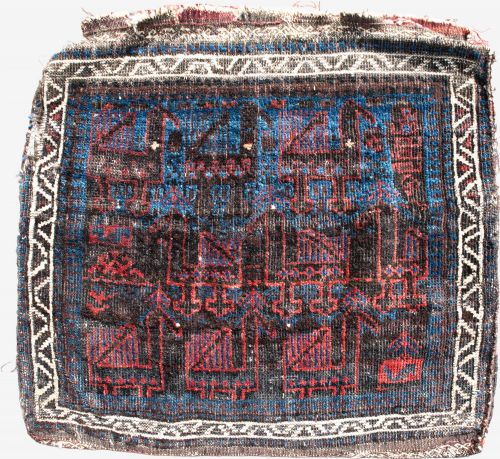
A vintage nomadic rug bag represents functional utility woven by tribal groups across Persia, Central Asia, and the Caucasus for daily transport and storage. These utilitarian textiles include saddle bags, storage pouches, vanity cases, and hanging wall pockets produced by groups such as the Qashqai, Afshar, Yomut, and Uzbek Lakai. Collectors encounter everything from complete double-sided saddle bags to individual bag faces and small personal pouches.
Makers fashioned these pieces for domestic life, utilising them to store salt, tobacco, bedding, and personal belongings within tents and dwellings. Surviving examples reflect the specific regional weaving traditions and tribal motifs passed down through generations. The selection spans the mid-nineteenth century through to the early twentieth century, capturing a period when nomadic weaving remained entirely traditional.
How they were made
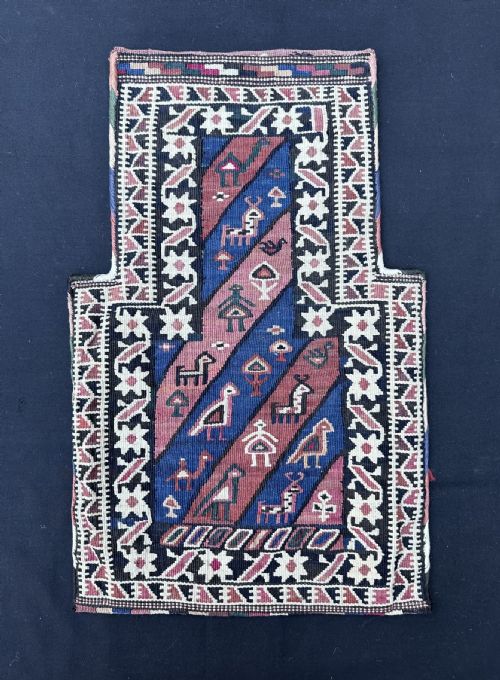
Weavers constructed these pieces predominantly from hand-spun wool and cotton foundations, occasionally incorporating silk embroidery and goat hair for structural durability. Natural dyes provided the rich reds, blues, and earthy tones derived from local plants and minerals. Many Turkmen and Persian examples combine pile weaving with flatweave techniques such as sumac or plain weave on the reverse.
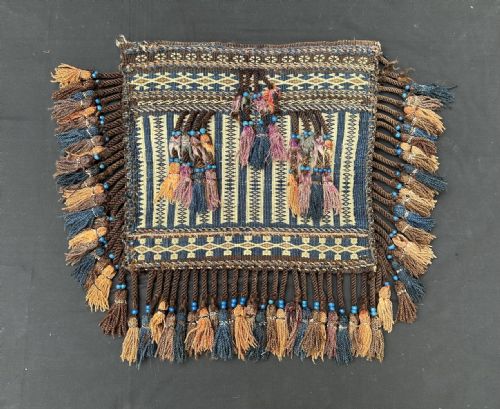
Nomadic women worked on portable horizontal looms set up in camps, producing dense pile structures and intricate embroidered details like those found on Lakai hanging pieces. Glass beads sometimes supplemented the wool and silk decoration, adding tactile contrast to the surface design. Every construction method served the practical need for resilience during travel and daily camp use.
Some small personal pouches still carry the faint, lingering scent of desert dust and woodsmoke from nineteenth-century campfires.
What varies in quality
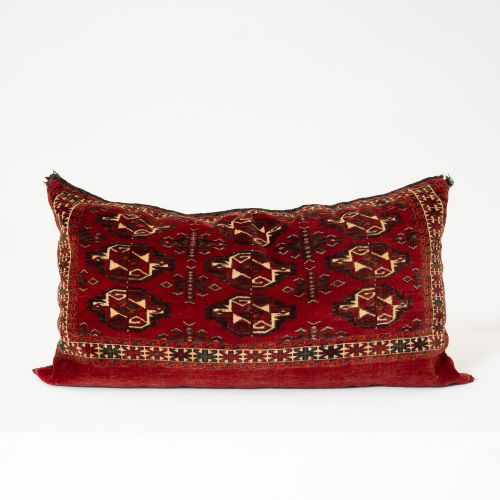
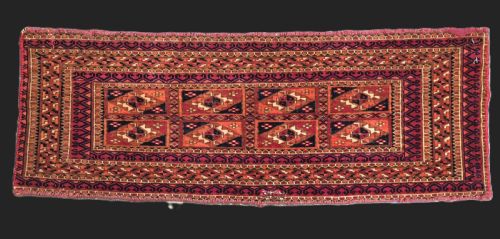
Quality rests upon the tightness of the knotting or the precision of the embroidery, alongside the integrity of the natural dyes. Pieces retaining their original backs, hanging loops, or complete paired halves command greater attention from purists. The clarity and complexity of tribal motifs, such as guls or repeating field patterns, dictate the visual strength of the textile.
Wear distribution affects the assessment of a bag face, distinguishing between honest historical use and structural compromise. Finer wool preparation and sophisticated colour palettes separate ordinary utility items from exceptional tribal works. The balance of proportions and the saturation of the dye bring depth to the finer surviving specimens.
Afshar Nomads·Tekke Tribes·Yomut Tribes·Lakai Uzbeks·Shahsavan Nomads
The Vintage Nomadic Rug Bag Glossary
- Torba
- A small Turkmen storage bag traditionally hung inside a yurt. These rectangular pieces often featured rows of guls across the face.
- Chuval
- A large Turkmen tent bag utilised for storing bedding and household goods. They frequently display multiple major guls and strong geometric borders.
- Guls
- Octagonal medallion motifs repeated across Turkmen and tribal weaving. Each pattern identified the specific tribe or clan that produced the textile.
- Khorjin
- The Persian term for a double-sided saddle bag designed for transport on animals. Many surviving examples have been separated into individual bag faces.
- Sumac
- A warp-wrapping flatweave technique that creates a durable, textured surface without pile. It often appears on Shahsavan and Turkmen utility bags.
- Chanteh
- A small personal vanity bag or container used by nomads. These portable pouches typically featured intricate pile or embroidered decoration.
Vintage Nomadic Rug Bag: Frequently Asked Questions
What were vintage nomadic rug bags used for?
Nomadic groups utilised these woven containers for carrying goods on animals and storing household items inside tents. They held everything from salt and tea to bedding and personal possessions.
Over time, many of these utilitarian objects transitioned into decorative domestic roles as families settled or traded their belongings.
How do I hang a bag face on the wall?
Many bag faces feature original hanging loops or reinforced edges designed for suspension against tent poles or walls. Conservators recommend using a custom-sleeved fabric mount that distributes the weight evenly across the textile.
Avoid direct piercing with nails or pins, which can strain the wool foundation and damage the historic structure.
How can I tell a torba from a chuval?
A torba is generally smaller and wider in proportion, designed for specific hanging storage within a dwelling. A chuval is significantly larger, built to hold bulky bedding and heavy household goods.
Both formats share the characteristic guls and tribal iconography typical of Turkmen weaving traditions.
Are these bags made with natural dyes?
The majority of pieces from the nineteenth and early twentieth centuries rely on natural dye sources such as madder, indigo, and walnut shells. These materials yield rich, harmonious tones that age gracefully with exposure to light.
Subtle variations in colour shade across the field often indicate natural dyeing processes and batch variations.