

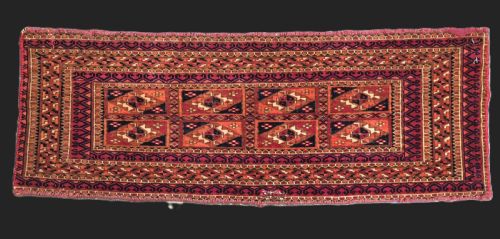
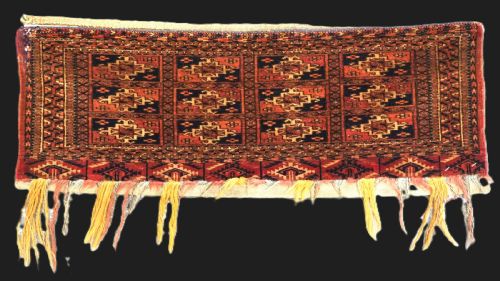


Hand Knotted Wool Torba
These hand knotted wool torba examples are Central Asian nomadic storage bags woven with traditional tribal patterns for household use.
Hand Knotted Wool Torba
A hand knotted wool torba is a traditional Central Asian tribal storage bag produced by nomadic groups across the Trans-Caspian steppes. These pieces function historically as practical tent bags for household storage, woven in formats that include complete pouches with backs, individual bag faces, and fragments.
The selections available here stem largely from the nineteenth century, ranging from the mid-nineteenth century up to the early twentieth century. Common tribal attributions appearing across the inventory include Tekke, Yomut, Ersari Beshir, and Saryk groups from Turkmenistan.
Buyers encounter distinct regional formats such as the small storage bag, the mafrash face, and pieces displaying specific primary motifs like the aina gul, kepse gul, and chuval gul. These textiles represent the domestic weaving traditions of nomadic weavers working with wool and cotton foundations.
How they were made
Weavers construct each hand knotted wool torba using hand-spun wool for the pile and structure, often combined with cotton elements. Natural dyes provide the traditional palette seen across the pieces, creating deep grounds in shades like ivory alongside contrasting tribal motifs.
The technical execution relies on precise knotting techniques carried out on vertical looms set up by nomadic and tribal weavers. Examples range from standard tribal densities to exceptionally fine weaves found in mid-nineteenth-century Tekke productions.
Hand Knotted Wool Torba Retail Price Guide 2026
Typical asking prices for hand knotted wool torba among the pieces listed under this phrase on Sellingantiques today, from the lower quarter to the upper quarter. They describe what is for sale here now, not the wider market.
The inventory spans production dates from the 1850s to the 1920s, utilising wool, cotton, and natural dyes.
What varies in quality
Quality in a hand knotted wool torba depends on the tightness of the knotting and the crispness of the tribal design work. Pieces with a very fine weave demonstrate superior technical control by the weaver.
The preservation of the original format alters the character of each piece, distinguishing complete bags with intact backs from surviving bag faces or fragments. The depth and clarity of the natural dye colours also influence the visual impact of the primary motifs.
The Hand Knotted Wool Torba Glossary
- Torba
- A traditional Turkmen nomadic storage bag used within the tent for household possessions. These pieces are wider than they are tall.
- Gul
- A primary medallion or repeating motif used in Turkmen carpet and textile design. Each tribal group utilises distinct geometric forms to identify lineage.
- Mafrash
- A rectangular storage container or long box bag used by nomadic groups for bedding and household goods. Faces often survive independently as flat textiles.
- Tekke
- A major Turkmen tribal group known for producing finely knotted rugs and torbas with repetitive guls. Their work frequently employs symmetrical knots.
- Yomut
- A prominent Turkmen tribe originating from the Trans-Caspian steppes. Their weaving style incorporates distinct secondary motifs and open field arrangements.
- Ersari
- A Turkmen tribal group occupying regions along the Amu Darya river. Their textiles often display broader design influences, including ikat patterns.
Hand Knotted Wool Torba: Frequently Asked Questions
What is a hand knotted wool torba?
A hand knotted wool torba is a traditional Central Asian nomadic bag utilised for storage inside tribal tents. These textiles were woven by women within groups such as the Tekke, Yomut, and Ersari.
They display geometric tribal designs characteristic of their specific region and tribe of origin. Today, collectors value them as decorative wall hangings or flat textiles.
How were these bags used originally?
Nomadic families used these bags to store household items, clothing, and bedding inside traditional dwellings. Their horizontal proportions suited hanging against the lattice walls of a yurt.
Complete examples often retain back panels and suspension loops for attachment inside the tent. Bag faces were also utilised as decorative covers or functional domestic containers.
How do you date an antique torba?
Dating relies on examining the materials, natural dye palette, and structural characteristics of the weave. Mid-nineteenth-century pieces often feature extremely fine knotting and specific wool preparation techniques.
Later examples from the early twentieth century display shifts in design execution and dye usage. Tribal attributions also help place pieces within specific historical production periods.
What are tribal guls?
Tribal guls are repeating octagonal or geometric medallions positioned across the field of Turkmen textiles. Different tribes such as the Tekke, Yomut, and Saryk used distinct gul variations.
Recognising these primary motifs allows collectors to identify the specific nomadic group responsible for weaving the piece. The aina gul and kepse gul are prominent examples.
How should I care for a textile bag face?
Display these textiles away from direct sunlight to protect the natural dyes from fading over time. Gentle vacuuming through a mesh screen helps remove dust without disturbing the wool pile.
Professional textile conservators should handle any major cleaning or mounting requirements. Flat display methods prevent strain on the wool and cotton foundation.