


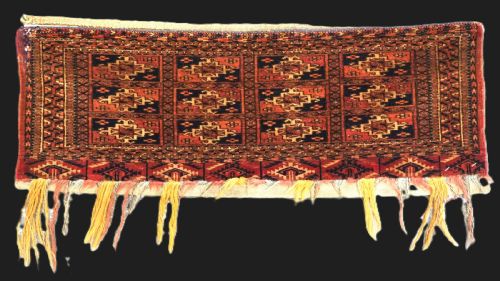
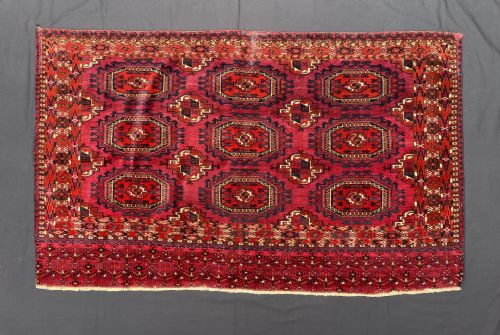


Crimson Turkmen Rug
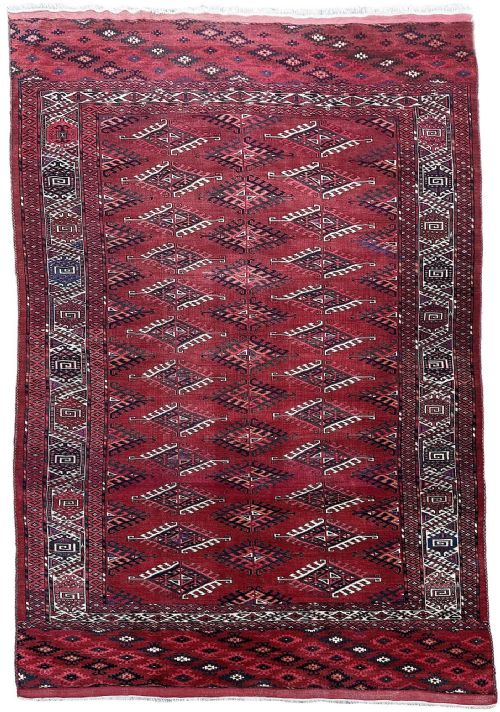
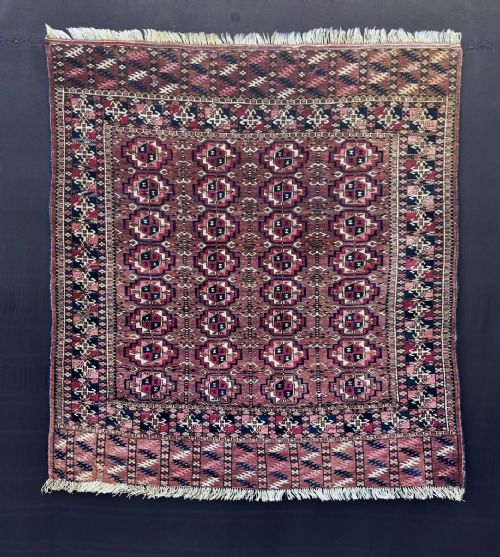
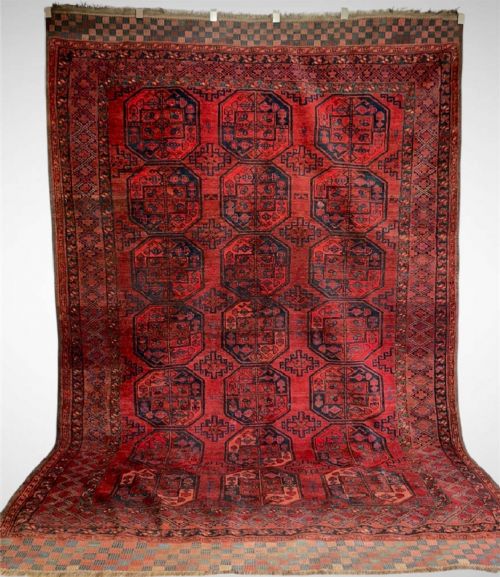
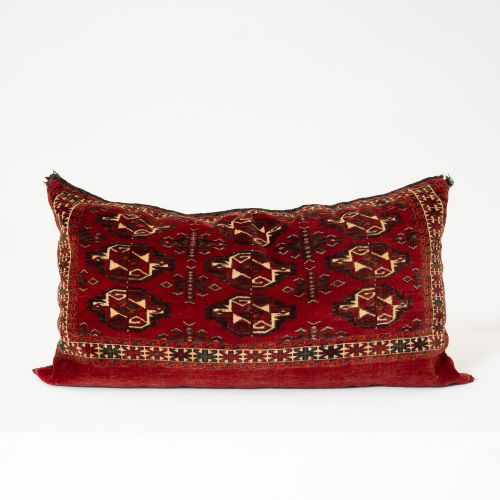
When you handle a crimson turkmen rug, you encounter centuries of tribal weaving traditions anchored by deep red wool and precise geometric guls.

Crimson Turkmen Rug
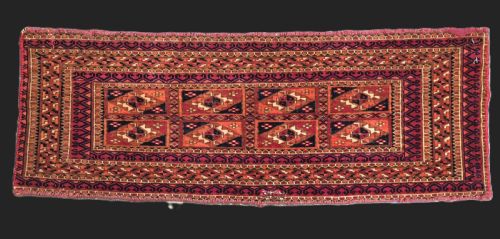
When searching for a crimson turkmen rug, a buyer looks at hand-knotted tribal textiles originating from Central Asia, including carpets, tent bags, and wedding rugs. These pieces encompass specific tribal groups such as the Tekke, Yomut, Ersari, Saryk, and Kizyl Ayak.
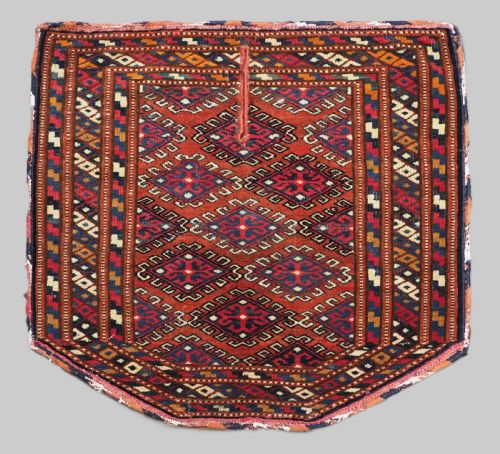
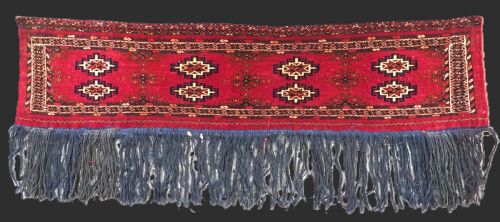
The examples most frequently met on this page date from the nineteenth and early twentieth centuries, featuring traditional formats like chuvals and torbas alongside larger main carpets. Each object reflects the nomadic or settled heritage of weavers across the Trans-Caspian steppes and oases.
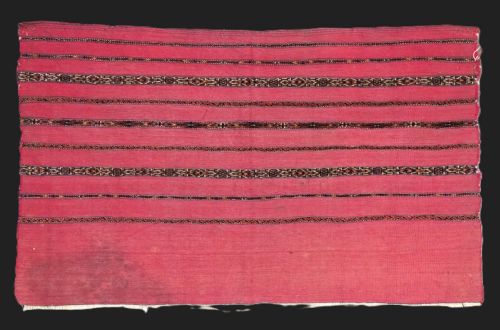
The form often dictates the function, ranging from functional storage bags complete with original plain-weave backs to ceremonial wedding weavings and saddle covers. The recurring presence of medallion guls and banded designs provides a clear visual continuity across the selection.
Materials and Construction
The construction relies heavily on wool, frequently hand-spun to create a dense pile that withstands heavy daily use. Artisans utilised natural dyes to achieve the rich crimson and deep red tones characteristic of these regional textiles.
Foundation threads typically incorporate cotton or linen alongside wool, providing structural stability to the finer weaves found on torba faces and chuvals. Knot density varies significantly, supporting everything from durable utility carpets to finely detailed dowry pieces.
Crimson Turkmen Rug Retail Price Guide 2026
Typical asking prices for crimson turkmen rug among the pieces listed under this phrase on Sellingantiques today, from the lower quarter to the upper quarter. They describe what is for sale here now, not the wider market.
Several survival bags still retain their original hanging loops, ready to be mounted just as they were inside nineteenth-century tents.
Evaluating the Weaving
Quality reveals itself in the precision of the drawing and the clarity of the repeating gul motifs across the field. Tighter knot counts and finer wool preparation elevate certain torbas and main carpets above standard utility pieces.
The depth and saturation of the natural dyes, combined with the survival of original plain-weave backs and hanging loops, distinguish exceptional pieces. Excellent condition and careful handling over generations preserve the structural integrity of the pile.
The Crimson Turkmen Rug Glossary
- Gul
- A primary medallion motif repeated across Turkmen carpets and tent bags. These octagonal or principal designs often identify the specific tribe or sub-group that produced the textile.
- Chuval
- A large tent storage bag used by nomadic families for domestic possessions. They frequently survive as cut-down faces or complete pieces retaining their original flat-woven backs.
- Torba
- A smaller storage bag utilised within the yurt for household items. They commonly display multiple guls and delicate borders.
- Azmalyk
- A richly decorated triangular camel trapping associated with wedding processions among Yomut tribes. These scarce ritual pieces feature elaborate geometric ornament.
- Beshir
- A regional style associated with Ersari weavers residing along the Amu Darya basin. They are known for incorporating ikat-inspired patterns and atypical layouts.
Crimson Turkmen Rug: Frequently Asked Questions
How were these bags used?
Nomadic families utilised chuvals and torbas inside felt tents for storing bedding, clothing, and household goods. Their sturdy construction ensured contents remained protected during seasonal migrations.
Many examples survive today as detached faces or complete units with their original flat-woven wool backs still attached.
What distinguishes Tekke and Yomut work?
Tekke weavings typically display precise, repeating octagonal guls rendered in fine wool with a deep red ground. Yomut pieces often incorporate alternative secondary motifs and distinct border structures.
Both groups operated within Central Asia but maintained separate design vocabularies and knotting techniques.
How do I care for an antique rug?
Vacuum gently without a rotating brush to remove dust from the wool pile. Keep the textile away from direct sunlight to protect the natural dyes.
Professional cleaning should be undertaken sparingly by specialists familiar with antique tribal weavings.
Are these pieces from Turkmenistan?
The majority originate from historical regions across Turkmenistan, the Trans-Caspian steppes, and neighbouring areas of Central Asia. Tribal groups moved across borders, influencing designs shared with Afghan weavers.
Attributions often reference specific oases such as Merv or Akhal.