


Tekke Turkmen Rug
A tekke turkmen rug brings dense tribal geometry and rich madder red tones into a room, offering tactile warmth and centuries of nomadic weaving tradition.
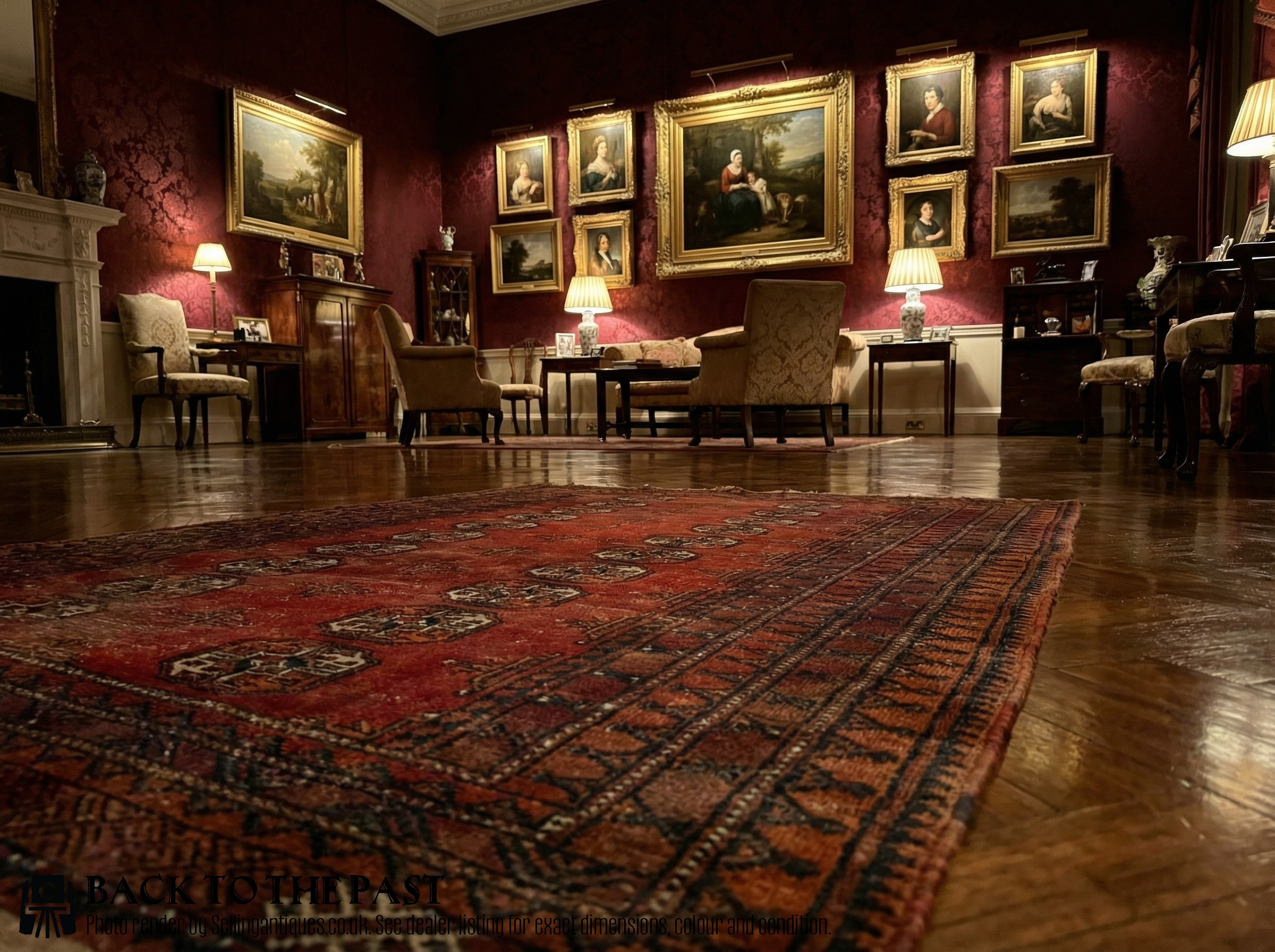
Tekke Turkmen Rug
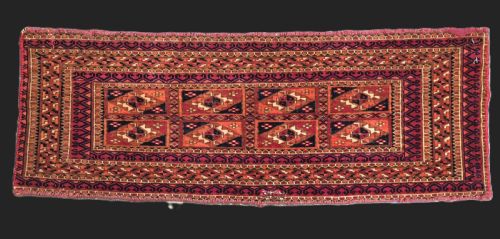
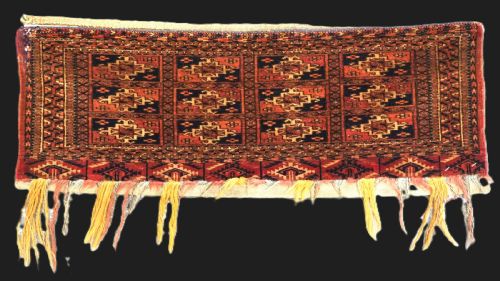
When you search for a tekke turkmen rug, you encounter hand-woven tribal textiles originating from Central Asia, produced by nomadic and semi-nomadic groups. These textiles encompass functional household objects such as large main carpets, wedding dowry rugs, door rugs known as ensis, and storage bags like chuvals and torbas.
The pieces available on this page most commonly date from the nineteenth and early twentieth centuries, reflecting a period of traditional tribal production before commercial standardisation. Buyers frequently find smaller format weavings, including torba faces and square wedding rugs, alongside occasional runners and tent bands.
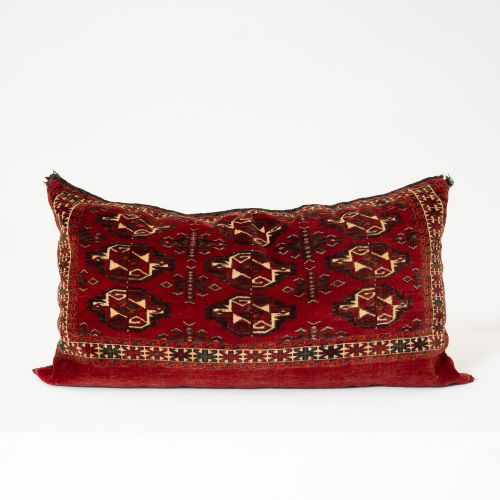
The visual vocabulary relies heavily on repeating primary motifs known as guls, arranged in precise rows across deep red fields. Variations include specialised designs such as the aina gul, kizil chuval patterns, and curled leaf motifs, each demonstrating the distinct cultural heritage of the weavers.
Assessing Quality and Execution
The distinction between average and exceptional examples rests primarily on the density of the weave and the precision of the drawing. Finer knots allow for sharper definition within complex gul designs and secondary motifs.
Colour saturation and dye consistency heavily influence visual appeal, with vibrant madder grounds and well-preserved cochineal or silk highlights indicating superior material selection. The softness of the wool and the overall handle of the textile further separate standard utility pieces from masterwork dowry items.
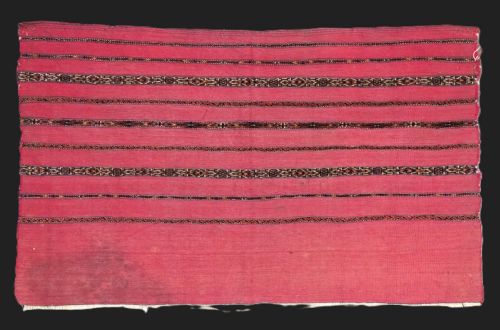
Condition and completeness play a definitive role, as examples retaining original plain weave backs, tassels, and hanging loops preserve their historical integrity more completely than fragmented or heavily restored counterparts.
Tekke Turkmen Rug Retail Price Guide 2026
Typical asking prices for tekke turkmen rug among the pieces listed under this phrase on Sellingantiques today, from the lower quarter to the upper quarter. They describe what is for sale here now, not the wider market.
Current listings feature pieces dated across the nineteenth and early twentieth centuries, utilising wool, cotton, silk, and natural dyes.
The Tekke Turkmen Rug Glossary
- Gul
- The primary octagonal medallion motif repeated across the field of the textile. Different tribal groups utilised distinct gul patterns to signal lineage and identity.
- Chuval
- A large tent storage bag produced by nomadic weavers. These pieces were often utilised within the yurt for bedding and household possessions.
- Torba
- A smaller rectangular storage bag hung inside the nomadic tent. They frequently feature elaborate repeating guls and refined border designs.
- Ensi
- A specialised carpet used as a tent door hanging. They typically feature a quartered field design separated by a candelabra motif.
- Cochineal
- A natural red dye derived from scale insects, prized for producing vibrant crimson and magenta highlights within the wool pile.
- Madder
- A natural dye extracted from the roots of the Rubia tinctorum plant, forming the foundational red background colour seen across most examples.
Tekke Turkmen Rug: Frequently Asked Questions
What is a tekke turkmen rug?
These pieces are hand-woven tribal textiles created by Turkmen nomadic groups in Central Asia. They are defined by repeating octagonal motifs and deep red wool foundations.
Historically used for domestic furnishing, dowries, and tent storage, these antique rugs represent a sophisticated tradition of nomadic floor and wall coverings.
How were these rugs used originally?
Nomadic families utilised these textiles for multiple practical purposes inside traditional tents and yurts, ranging from floor coverings and sleeping mats to specialised door hangings.
Smaller bags and dowry pieces served as storage for personal possessions and ceremonial items, reflecting the wealth and social standing of the weaver's family.
How should I live with an antique rug?
These durable wool textiles adapt well to low-traffic living areas, studies, and bedrooms where their rich colours and fine geometry can be appreciated.
Placing them on breathable underlays helps protect the historical foundation, while regular gentle vacuuming without a rotating brush keeps the wool pile clean and intact.
How do I date an antique piece?
Dating relies on assessing material composition, dye types, and structural wear characteristics observed across nineteenth and early twentieth-century examples.
Earlier nineteenth-century pieces often display softer wool handles and complex natural dye variations, whereas early twentieth-century examples shift slightly in palette and knot density.