
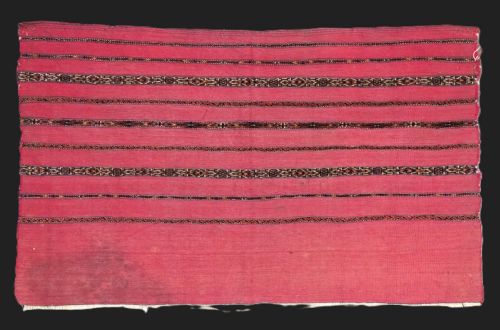
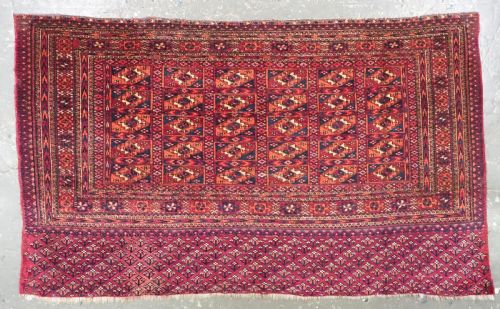


Nineteenth Century Chuval
Nineteenth century chuval bags are tribal storage pieces woven by nomadic groups, prized by collectors for their intricate guls and rich wool.
Nineteenth Century Chuval
When you examine a nineteenth century chuval, you are looking at a traditional storage bag woven by Turkmen tribes. These items were originally utilised inside tents for storing household goods and bedding.
The pieces you are most likely to encounter on this page appear as chuval faces or complete bags originating from nomadic and tribal makers. They span the decades from the mid to late nineteenth century, reflecting classic Turkmen aesthetics.
Makers primarily executed these textiles within specific regional traditions, frequently showcasing characteristic tribal patterns. Collectors seek them for their authentic cultural utility and strong geometric presence.
How they were made
Weavers constructed these tribal bags using durable wool foundations and piles, occasionally incorporating white cotton and crimson silk highlights for contrast. The materials were sourced locally to ensure resilience during nomadic migration and daily use.
Craftsmen applied tight knotting techniques to achieve fine weaves that display crisp pattern outlines. Natural dyes imparted deep tones to the wool, securing long-lasting colour across the patterned faces.
Nineteenth Century Chuval Retail Price Guide 2026
Typical asking prices for nineteenth century chuval among the pieces listed under this phrase on Sellingantiques today, from the lower quarter to the upper quarter. They describe what is for sale here now, not the wider market.
Nomadic weavers occasionally smuggled extra crimson silk into storage bags just to make the small flowers smile.
What varies in quality
Quality in these textiles depends heavily on the density of the weave and the precision of the design execution. Pieces featuring finer knots and sharply defined guls represent the superior end of the spectrum.
The presence of complete original backs and uncommon structural variations elevates certain examples above standard faces. Furthermore, the skillful integration of contrasting highlights such as silk details distinguishes finer weaving from simpler output.
The Nineteenth Century Chuval Glossary
- Chuval
- A large tribal storage bag made by Turkmen nomads. These pieces were traditionally used for domestic storage inside yurts.
- Gul
- A medallion motif repeated across Turkmen carpets and bags. Each design often signifies a specific tribal lineage.
- ELEM
- The decorative lower panel of a textile, positioned beneath the main field of guls. It typically displays secondary geometric or floral motifs.
- Kizil
- A term denoting red ground colours characteristic of certain tribal weaving traditions. These rich hues dominate the visual field.
Nineteenth Century Chuval: Frequently Asked Questions
What is a nineteenth century chuval used for?
These textiles served as large storage bags inside traditional nomadic tents. Families utilised them to hold blankets, clothing, and domestic possessions.
Today, collectors mount them on walls or display them as decorative floor textiles. Their durable construction allows them to transition easily into modern interior settings.
How do you identify a Tekke chuval?
Tekke pieces are recognised by their precise geometric layouts and characteristic gul arrangements. They frequently exhibit refined knotting and balanced colour palettes.
Examining the specific border motifs and secondary ornaments helps confirm the tribal attribution. Comparing the central medallions to known examples clarifies the origin.
What materials make up these bags?
Nomadic weavers relied primarily on wool for both the pile and the foundation structure. Cotton and silk were occasionally introduced for highlights and contrast.
These natural fibres provided the strength needed for practical daily storage. The combination also allowed dyers to achieve deep, lasting saturation.
How do I care for an antique textile?
Keep tribal bags away from direct sunlight to prevent natural dyes from fading over time. Gentle vacuuming without a rotating brush removes surface dust safely.
Consult a specialist textile conservator if cleaning becomes necessary. Avoid harsh chemical treatments that can damage historic wool and silk fibres.