
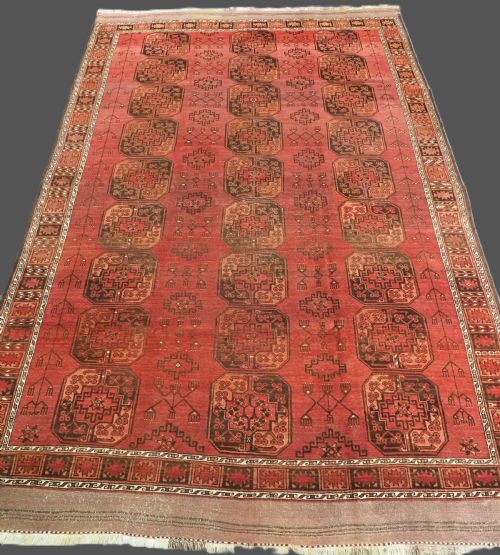


Antique Bokhara Carpet
When you search for an antique bokhara carpet, you seek hand-woven tribal textiles originating from Central Asia.
Antique Bokhara Carpet
An antique bokhara carpet represents the tribal weaving traditions of Central Asia, particularly associated with Turkmen groups such as the Tekke and Ersari tribes. These textiles were produced across the nineteenth and early twentieth centuries by nomadic and village weavers.
Buyers frequently encounter pieces identified through traditional geometric motifs, notably the repeating octagonal gul pattern set against rich red fields. The selection includes large main carpets, smaller dowry and wedding rugs, runners, and specialised formats like torba wall hangings.
These floor coverings and textiles reflect distinct tribal identities through their structural layout and border designs, serving utilitarian and ceremonial roles within nomadic households before reaching the decorative market.
How they were made
Weavers constructed these pieces predominantly from wool, utilising animal fibres spun by hand to create durable foundations and dense pile surfaces. Occasional examples incorporate silk highlights to accentuate specific geometric details within the design.
Natural dyeing traditions provided the characteristic warm red colour palettes seen across the inventory, sometimes augmented by cochineal highlights or contrasting secondary tones. Knotting techniques produced fine, tight weaves capable of withstanding heavy daily use in nomadic and village settings.
Antique Bokhara Carpet Retail Price Guide 2026
Typical asking prices for bokhara carpet among the pieces listed under this phrase on Sellingantiques today, from the lower quarter to the upper quarter. They describe what is for sale here now, not the wider market.
The listings show pieces spanning the nineteenth and early twentieth centuries, constructed from wool with occasional silk highlights.
What varies in quality
Quality depends upon the density and fineness of the weave, where tighter knot counts produce greater definition in the intricate geometric guls and borders. Pieces featuring exceptionally fine execution or scarce structural variations command higher regard.
The handle and condition of the wool also define superiority, with softer, lustrous piles retaining their structural integrity and visual depth over time. Colour saturation and the harmonious balance of natural dye variations further distinguish exceptional specimens from standard examples.
Tekke Turkmen·Ersari Turkmen·Salor Turkmen·Emirate of Bukhara
The Antique Bokhara Carpet Glossary
- Gul
- A repeating octagonal medallion motif that forms the primary decorative element of Turkmen tribal carpets. Different tribes utilised distinct gul designs to signal specific cultural identities.
- Tekke
- A major Turkmen tribal group known for producing finely knotted rugs and carpets with orderly rows of guls. Their work forms a significant portion of surviving nineteenth-century examples.
- Ersari
- A Turkmen tribe inhabiting regions along the Amu Darya river, recognised for producing large carpets with varied and spacious tribal patterns. Their palette often emphasises warm reds and deep secondary shades.
- Dowry rug
- A specialised textile created by weavers as part of a bride's household possessions for marriage ceremonies. These pieces often exhibit particularly careful knotting and thoughtful design execution.
- Torba
- A small storage bag face produced by Turkmen nomadic groups, featuring characteristic geometric patterns designed for tent hanging. Fragments of these functional pieces frequently survive independently.
Antique Bokhara Carpet: Frequently Asked Questions
How do I identify a Tekke carpet?
Tekke carpets are characterised by precise rows of octagonal guls set against a dominant red ground, accompanied by characteristic minor guls and detailed elem panels at the ends. Their construction typically displays a dense, short pile and fine knotting unique to the tribe.
Examining the structural geometry and border arrangements helps differentiate them from other Central Asian tribal weavings, such as Ersari or Afghan productions.
Were these carpets made in Bukhara?
While these textiles are historically marketed under the name bokhara due to trade routes through the city of Bukhara, they were actually woven by nomadic and village tribes across the wider Central Asian region. Bukhara functioned as a primary trading hub where merchants acquired these goods for export.
Consequently, the pieces reflect the distinct tribal weaving traditions of groups living in modern-day Turkmenistan, Afghanistan, and surrounding areas rather than urban workshops within the city itself.
How should I care for an antique rug?
These woolen textiles require gentle, regular vacuuming without rotating brush heads to prevent fibre damage, alongside professional cleaning when necessary. Placing them away from direct, harsh sunlight preserves the natural dyes used in the pile.
Using a suitable underlay helps prevent slipping and reduces friction between the foundation and the floor during daily use.