



Turkmen Area Rug
When you examine a turkmen area rug, you hold centuries of nomadic weaving tradition in your hands.
Turkmen Area Rug
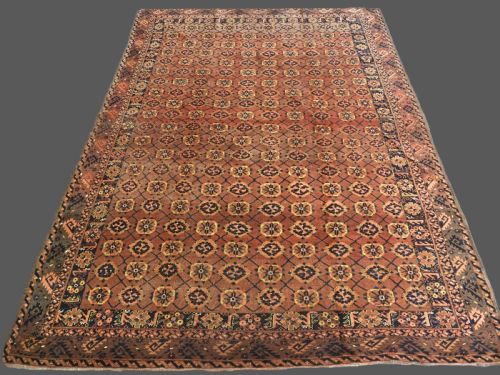
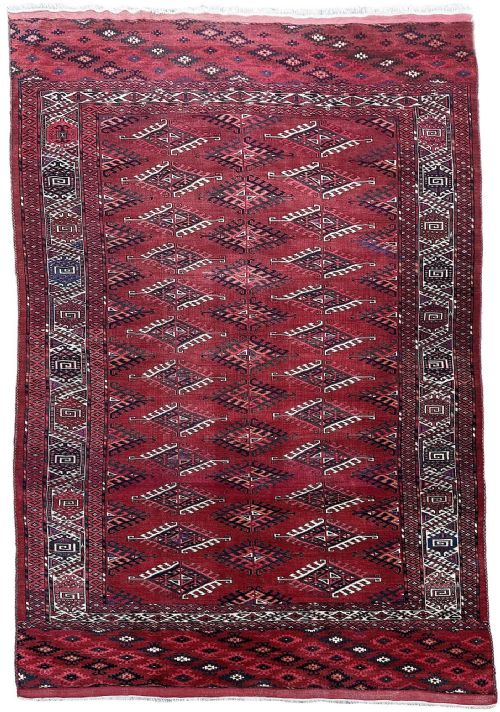
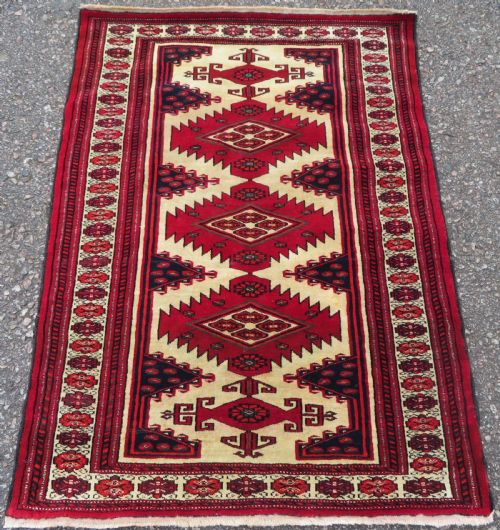
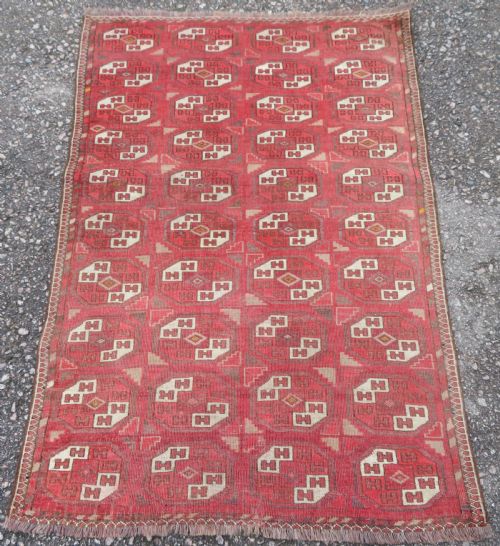
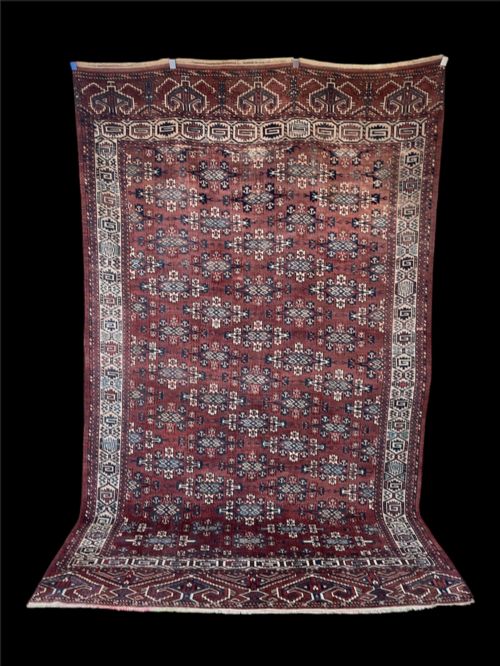
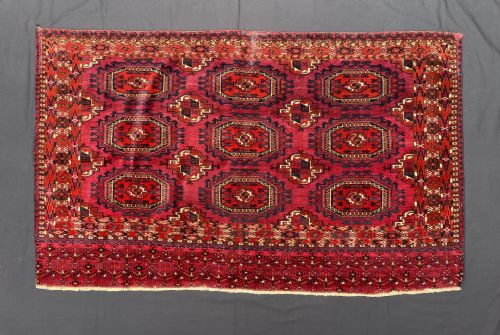
A turkmen area rug encompasses tribal floor coverings and domestic textiles originating from Central Asia, typically produced by distinct groups such as the Tekke, Ersari, Yomut, and Kizil Ayak tribes. These pieces frequently manifest as large main carpets, smaller dowry rugs, tent door hangings, and bag faces displaying geometric layouts.
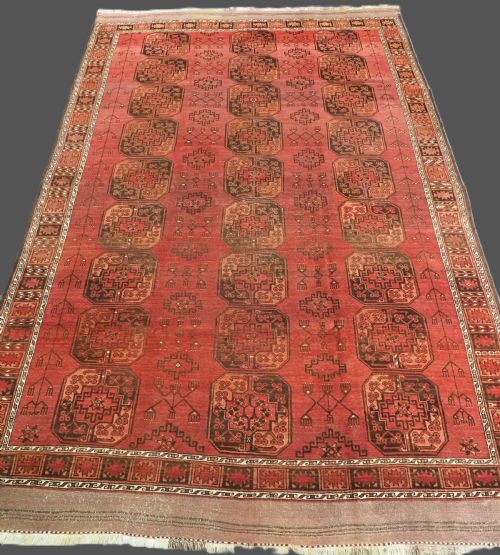
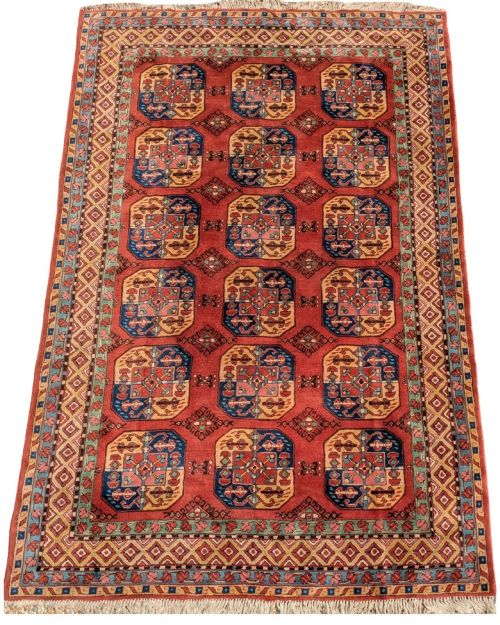
The version most commonly encountered on this page is the antique room-size or scatter carpet dating from the late nineteenth or early twentieth century. Such examples typically exhibit traditional repeating octagonal motifs known as guls across rich red grounds.
Materials and construction methods
Weavers constructed these textiles using hand-spun wool for the pile, often combined with cotton, silk, goat hair, or horsehair utilised in the foundation and warps. Natural dyes provided the deep reds, golds, and browns that define the palette.
The structural integrity stems from dense knotting techniques paired with sturdy selvedges, which enabled these utilitarian floor coverings and tent furnishings to endure decades of domestic or nomadic use.
Current listings feature pieces spanning from the mid-nineteenth century through the 1930s, utilising wool, cotton, silk, and natural dyes.
Factors determining quality
Knot density and the precision of the geometric drawing dictate the foundational quality of each piece, distinguishing utilitarian weaving from finer tribal work. Artisanal mastery shows in the crisp definition of secondary ornaments and the harmonious saturation of natural dye batches.
Preservation of the original pile depth and intact ends or borders elevates an example above specimens with heavy regional wear. Structural soundness in the wool foundation remains paramount for longevity.
Ersari Tribe·Tekke Tribes·Yomut Tribe·Kizil Ayak Tribe·Karadashli Tribe
The Turkmen Area Rug Glossary
- Gul
- The primary octagonal or polygonal medallion repeated across the field of tribal carpets. Each distinct tribal group utilised specific variations to denote heritage.
- Chuval
- A large face used on storage bags within nomadic tents. These squares feature distinct primary guls and detailed lower panels.
- Engsi
- A specialised rug hung over the tent doorway rather than placed on the floor. They display a characteristic quartered design layout.
- Torba
- A smaller wall-hanging bag face produced for household storage. They often mirror the pattern language of larger chuvals in miniature.
- Elem
- The decorative lower panel situated at one or both ends of a carpet. This area frequently depicts floral or tree motifs.
Turkmen Area Rug: Frequently Asked Questions
How were turkmen area rugs used?
Nomadic and village households utilised these textiles for ground cover inside dwellings, bedding storage, and architectural door coverings.
Larger formats served as primary floor furnishings in communal spaces, while smaller bags and torbas stored household possessions.
How do I identify different tribal designs?
Tribal attributions rely heavily on the specific shape and arrangement of the repeating guls across the central field. For instance, Tekke pieces often feature dense octagons, whereas Yomut designs incorporate hooked diamond motifs.
Secondary borders and elem panels provide further clues to the specific regional origin within Central Asia.
Are these rugs suitable for modern floors?
The robust construction of hand-spun wool and sturdy foundations makes them durable enough for everyday foot traffic in contemporary rooms.
Placing an appropriate underlay beneath the textile prevents slipping and reduces friction against hard flooring.
What colours predominate in these pieces?
Natural dyes produced a dominant palette of deep madder reds, soft terracotta, warm golds, and touches of indigo or dark brown.
Over decades of light exposure, these vegetable colours mellow into nuanced, varied tones.